
Styling TechniquesA side-swept fringe can change the shape of a wig without making a permanent cut. Learn how to choose suitable front strands, guide them across the forehead, secure them discreetly and keep the cap comfortable.
Read article · 4 min↗

Styling TechniquesAn ear tuck can open up your face, but it may also reveal a wig’s edge or ear tabs. Learn how to check the fit, arrange the hair and keep the style comfortable.
Read article · 3 min↗
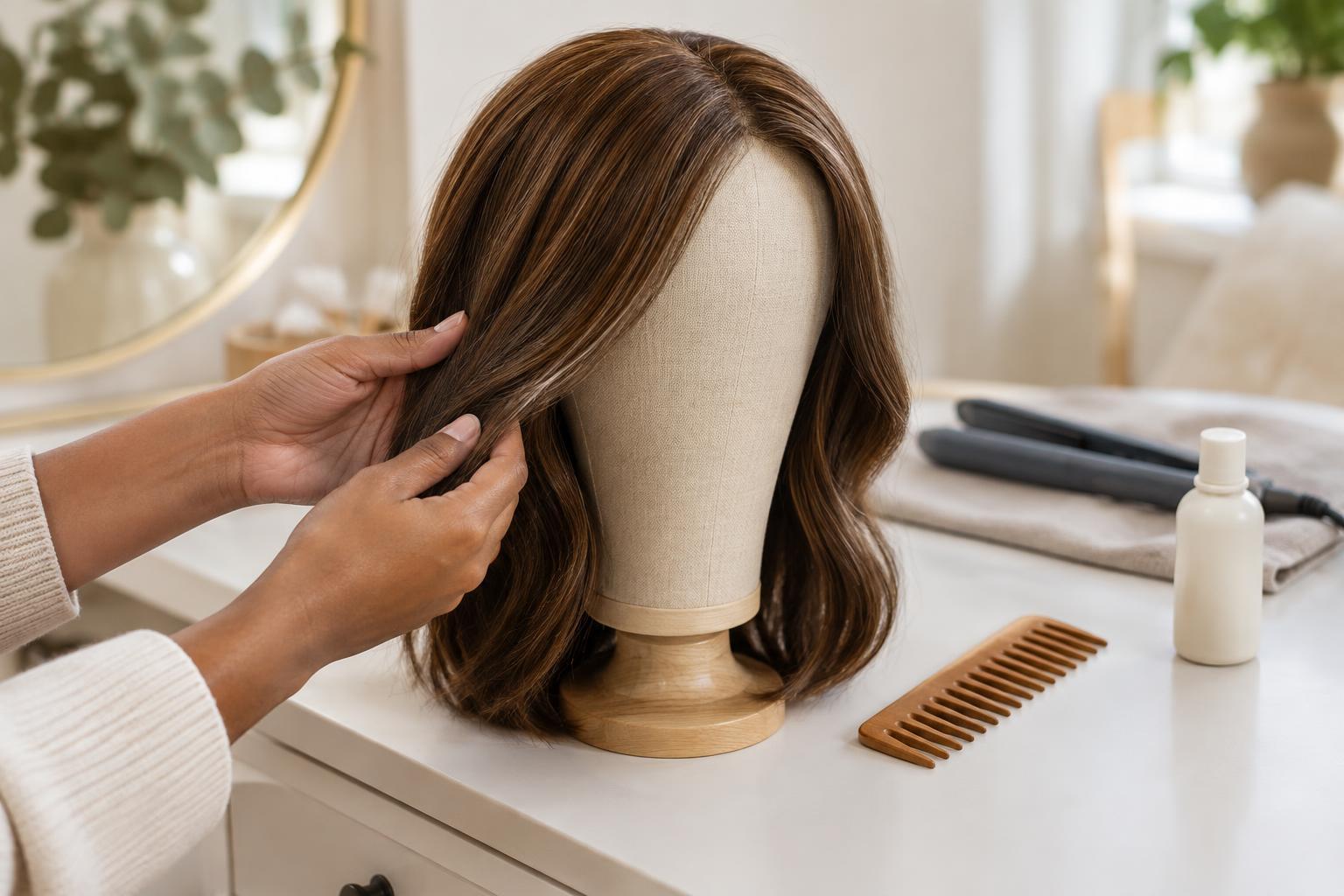
Styling TechniquesA wig does not need aggressive styling to look natural or feel like your own. Learn how excess heat, pulling and product can affect different fibres and constructions, and how to make gentler choices.
Read article · 4 min↗

Styling TechniquesA short wig can look softly tousled, piecey or neatly defined without feeling coated in product. Learn how to build texture with your fingers, a light touch and methods suited to the wig’s fibre.
Read article · 4 min↗
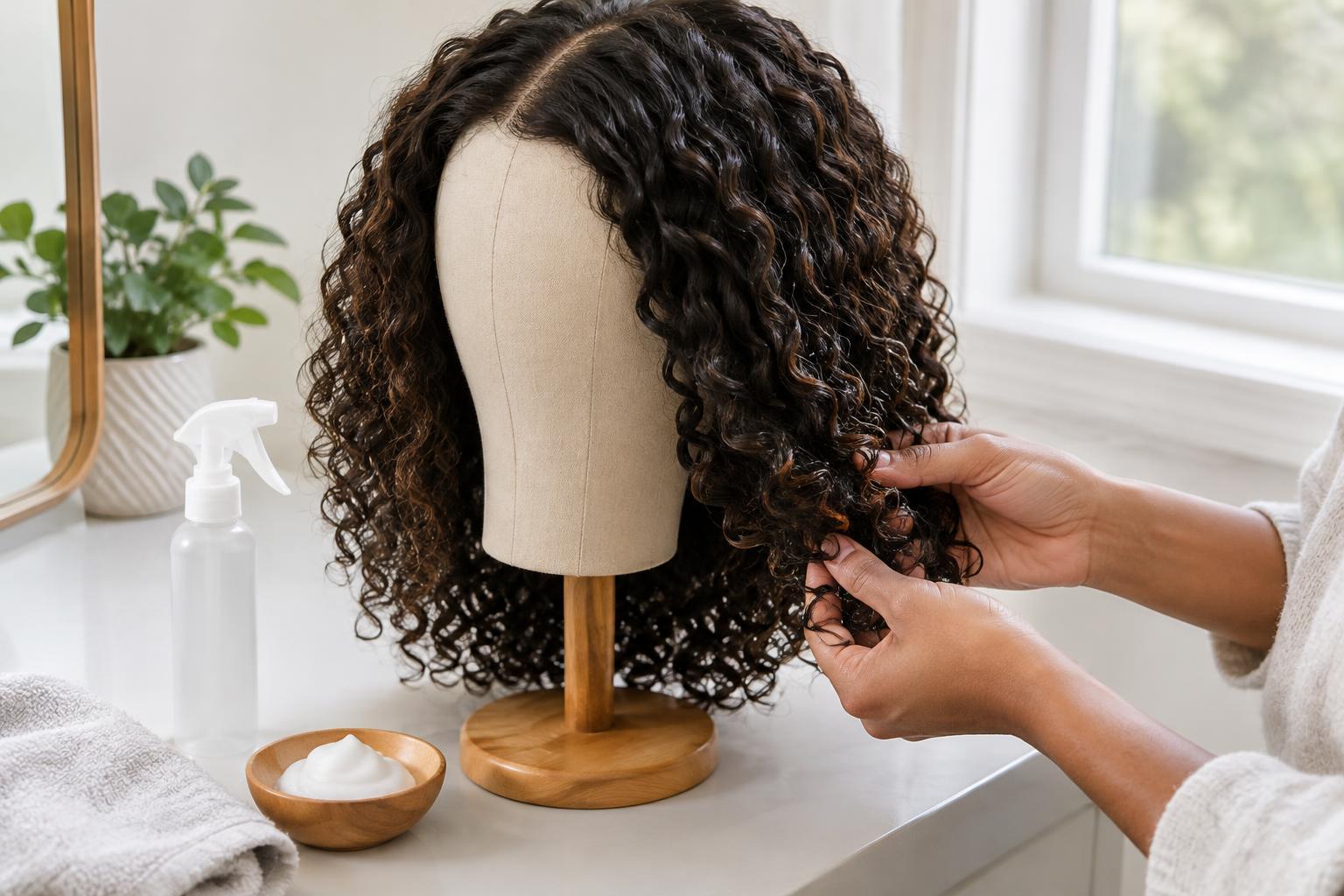
Styling TechniquesDefined curls do not require a heavy layer of product. Learn how to prepare a human-hair wig, choose lightweight stylers, shape curls gently and dry them while protecting the cap.
Read article · 4 min↗
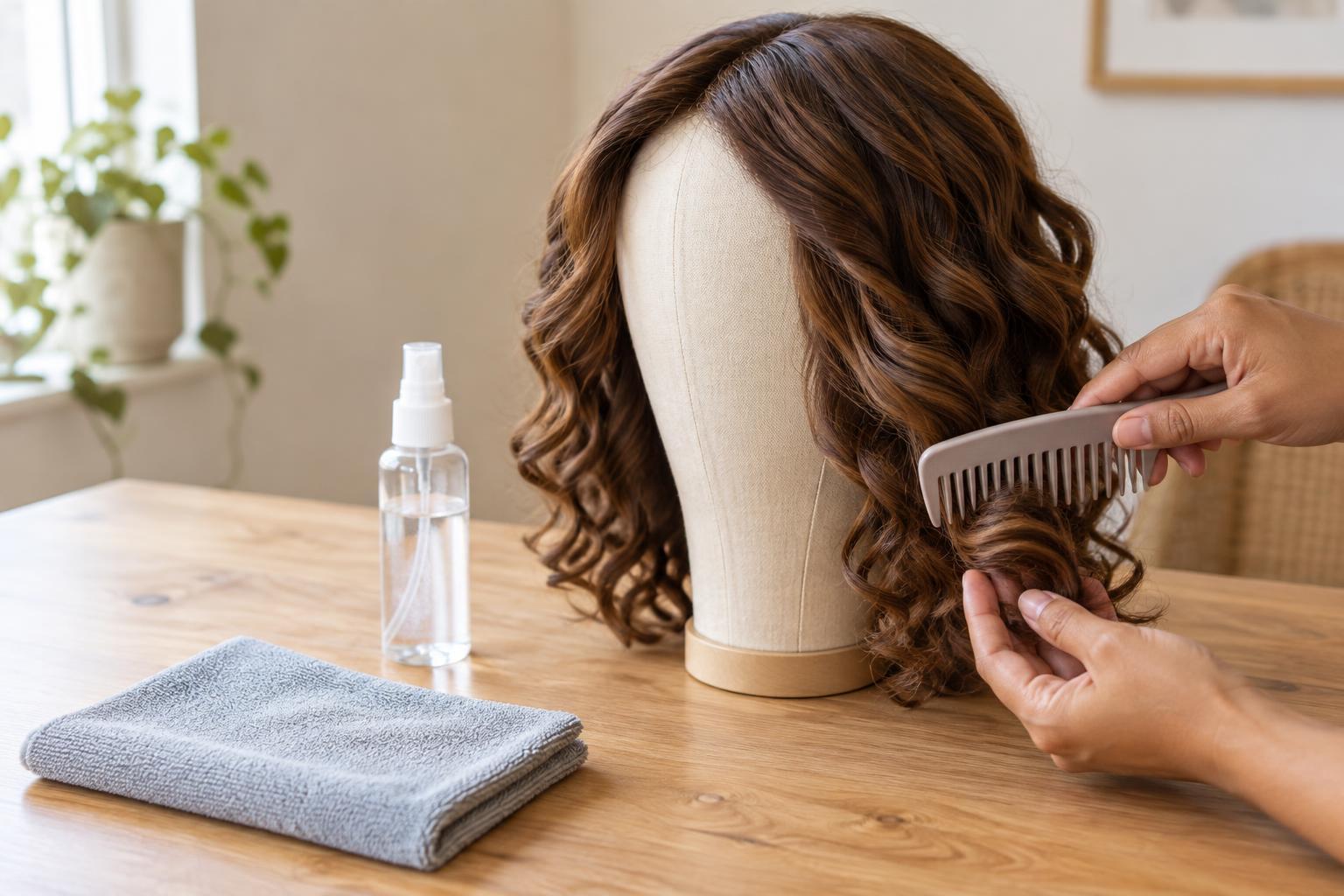
Styling TechniquesPre-curled synthetic wigs and hairpieces can lose definition through friction, storage and handling. Learn how to revive their shape with gentle detangling, light misting and careful drying, without assuming the fibres can tolerate heat.
Read article · 4 min↗
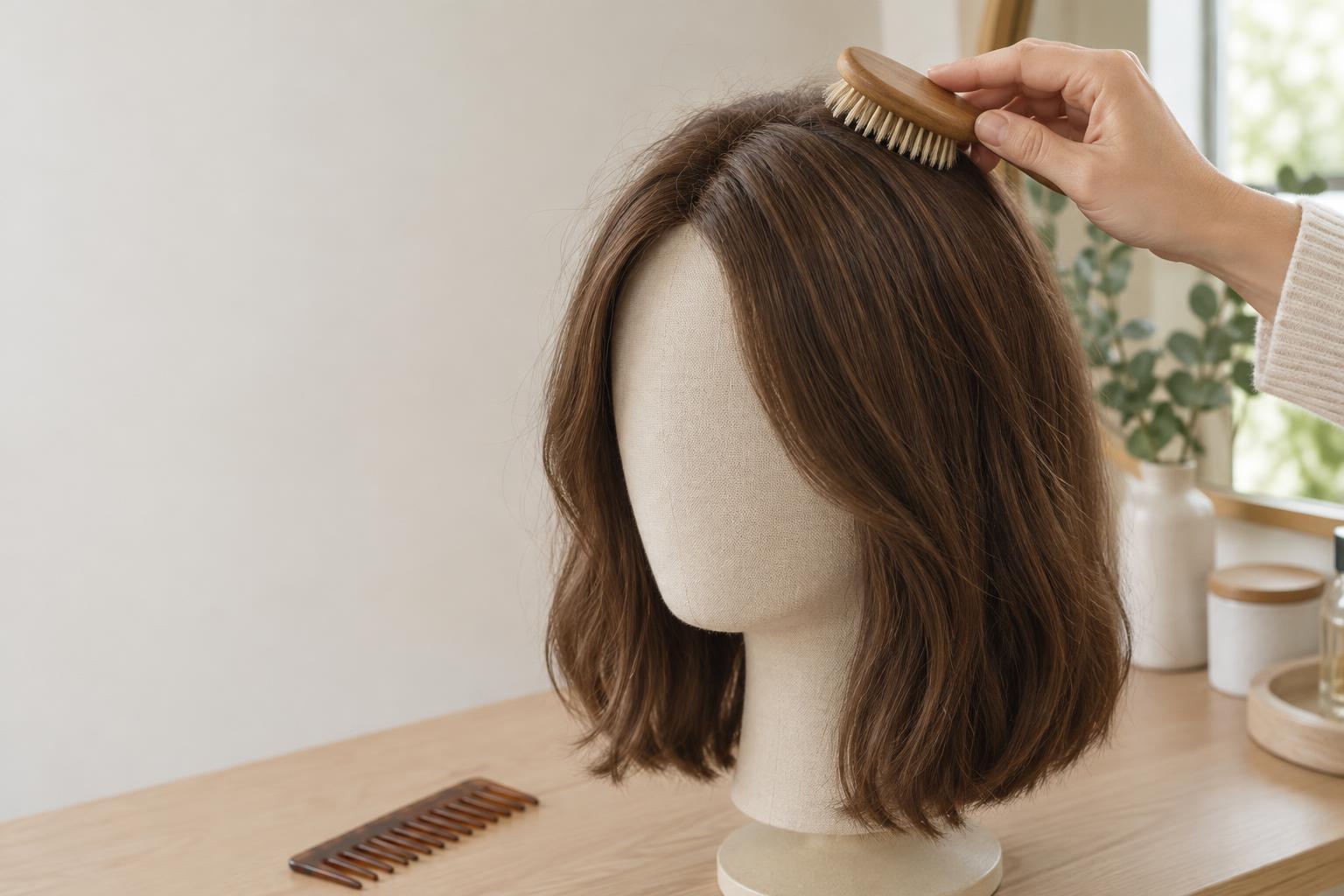
Styling TechniquesFlyaways can make a wig look less polished, but heavy styling products may leave a sheen, flakes or stiff patches. Learn how to identify the cause, smooth stray fibres with a light touch and keep product away from the areas where it shows most.
Read article · 4 min↗
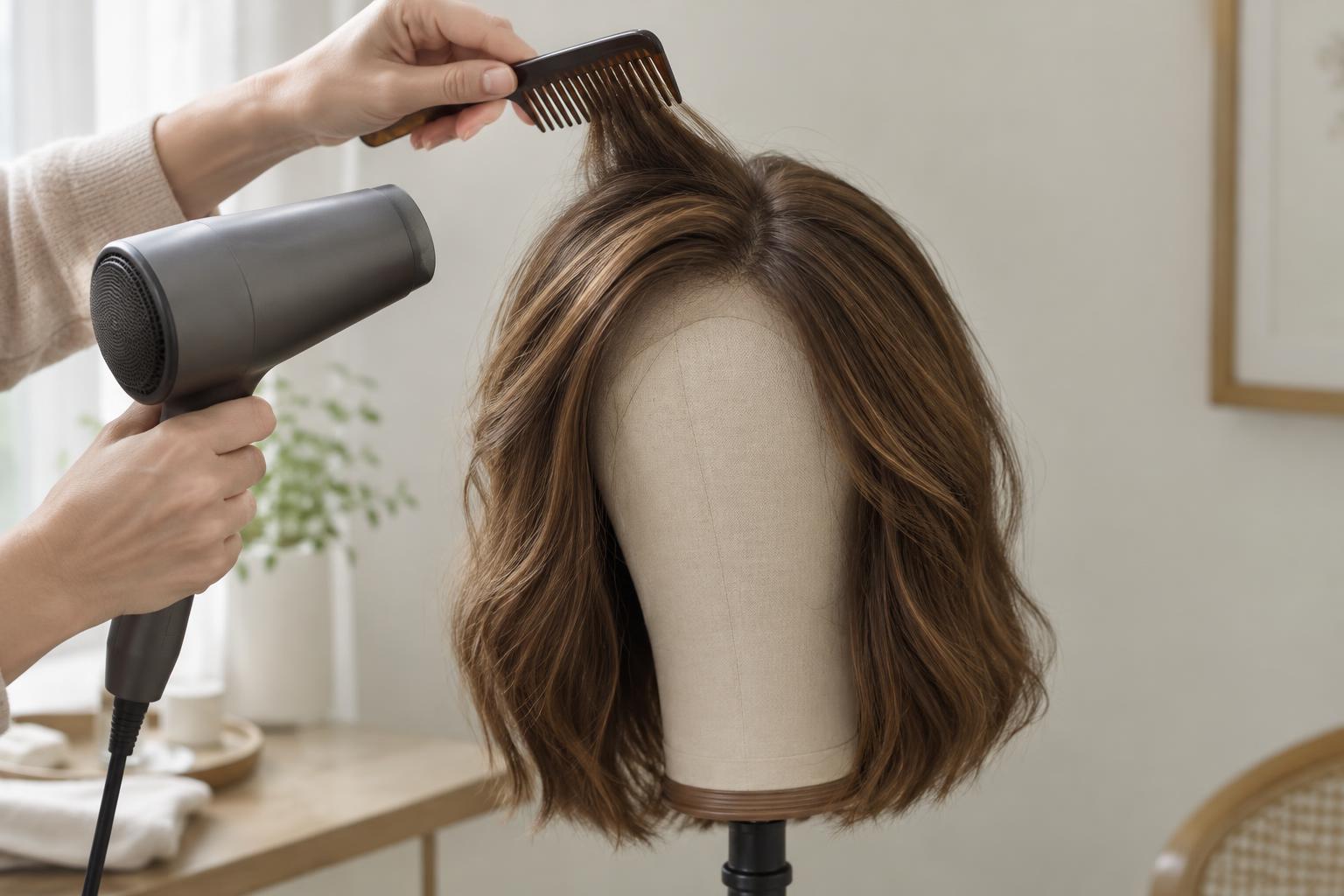
Styling TechniquesA fuller crown does not have to mean teasing the hair into a tangle. Learn how part placement, gentle root lifting, lightweight products and careful drying can create natural-looking height while respecting the wig’s fibres and cap.
Read article · 4 min↗
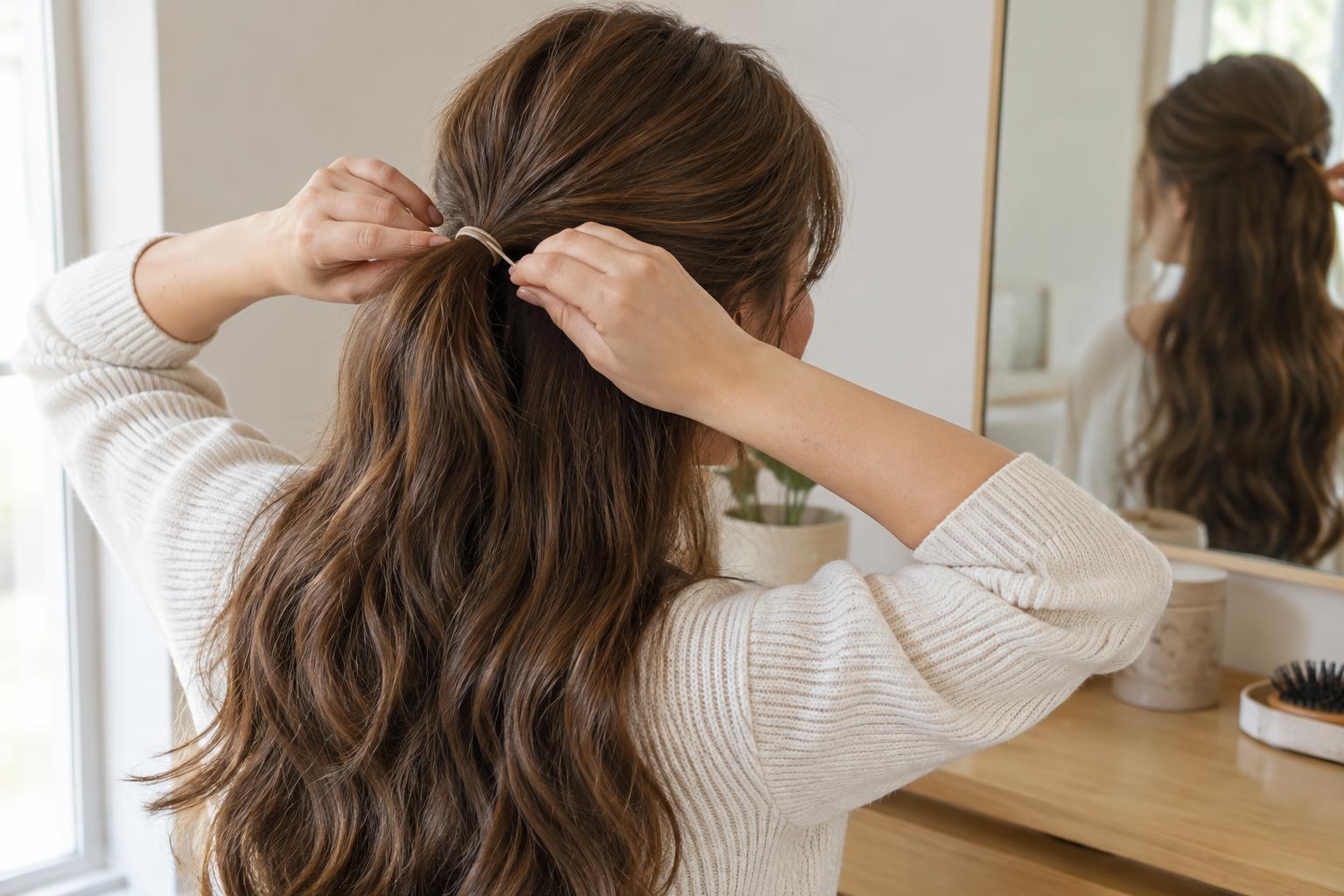
Styling TechniquesA half-up style can add shape while leaving plenty of hair loose. Learn how to choose where to gather hair, keep the cap and wefts covered, secure the style gently and check it from every angle.
Read article · 4 min↗

Styling TechniquesA low bun can be a comfortable way to style a wig, provided the hair is gathered gently and the wig stays secure without pulling at the front edge. Learn how to prepare the hair, place the bun and check the finished style for tension.
Read article · 4 min↗
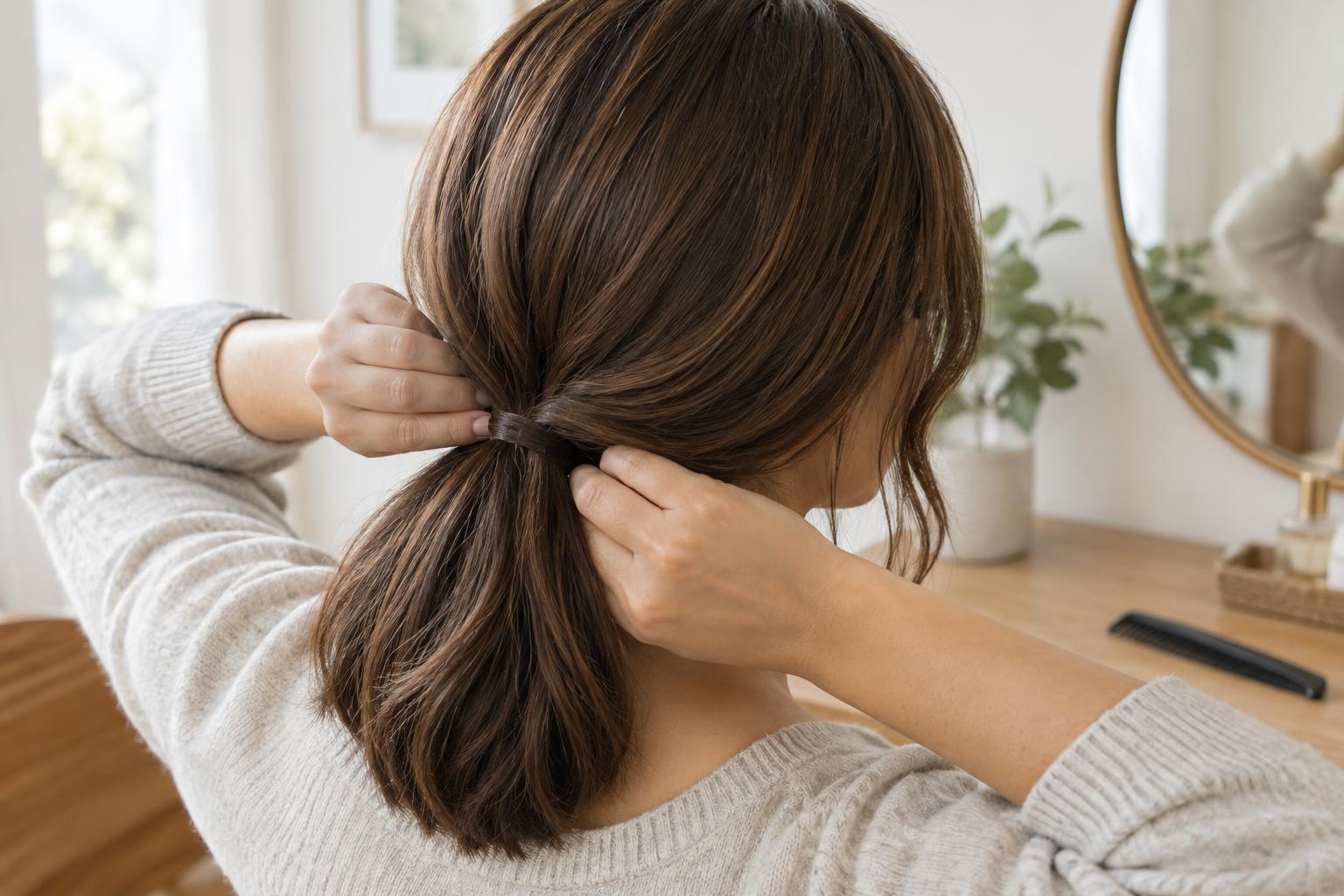
Styling TechniquesA low ponytail can look relaxed and tidy, but pulling a wig’s hair back may reveal the cap at the nape. Learn how to check coverage, position the ponytail and secure it gently, with options for wigs that are not suited to a fully pulled-back style.
Read article · 4 min↗
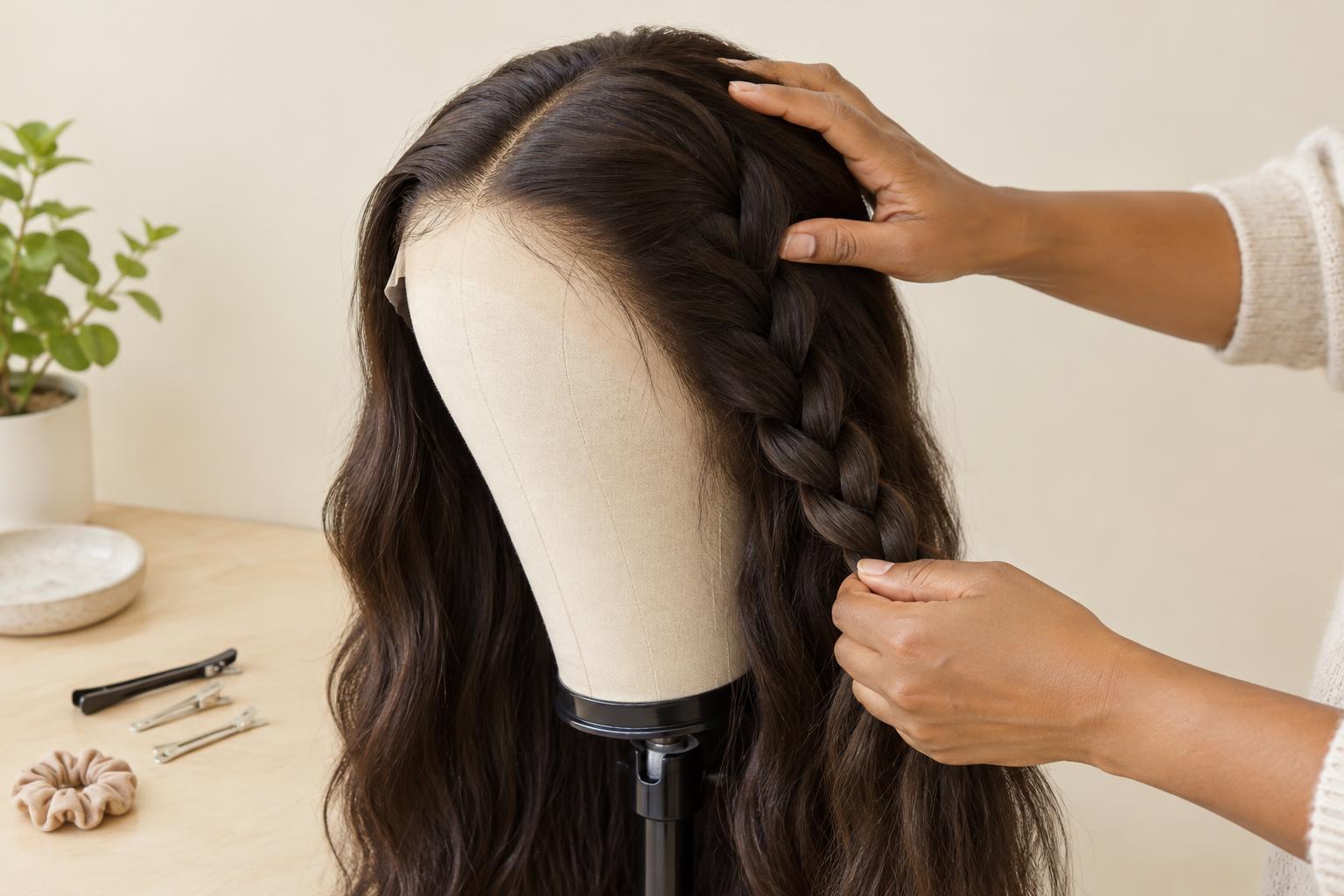
Styling TechniquesBraids can change the look of a wig, but tight sections may strain the cap while wide parts can reveal its construction. Learn how to support the wig, choose braid placement and adjust your technique for wefted and lace areas.
Read article · 4 min↗
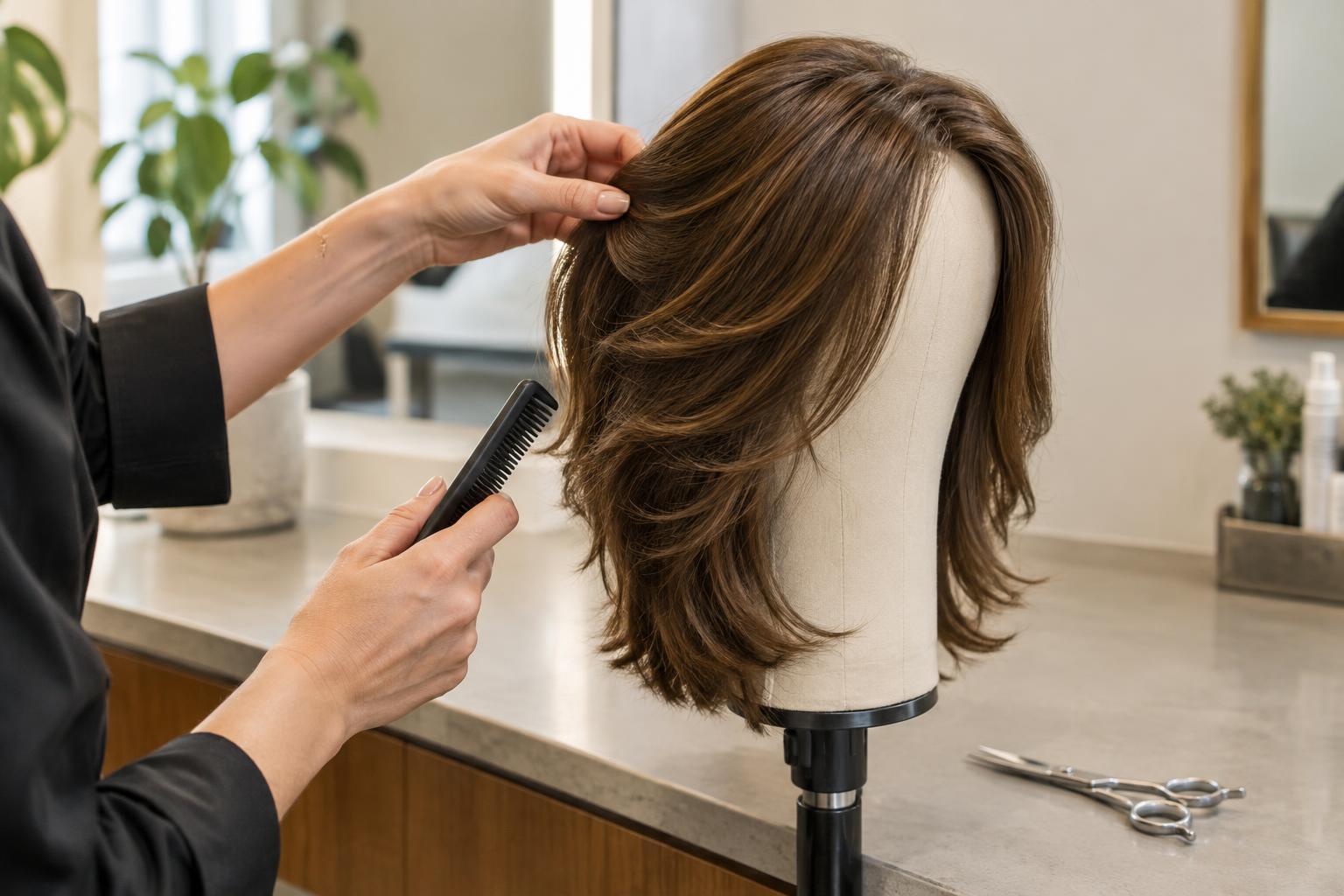
Styling TechniquesLayering a wig can make it feel more like your own style, but cutting away too much hair is difficult to undo. Learn which changes may be manageable at home, which are better left to an experienced wig stylist, and how to prepare for an appointment.
Read article · 4 min↗

Styling TechniquesA wig fringe can look longer on a stand than it does on your head. Learn how to set a target length, make small cuts and check the result as you go, with tips for both synthetic and human-hair wigs.
Read article · 4 min↗
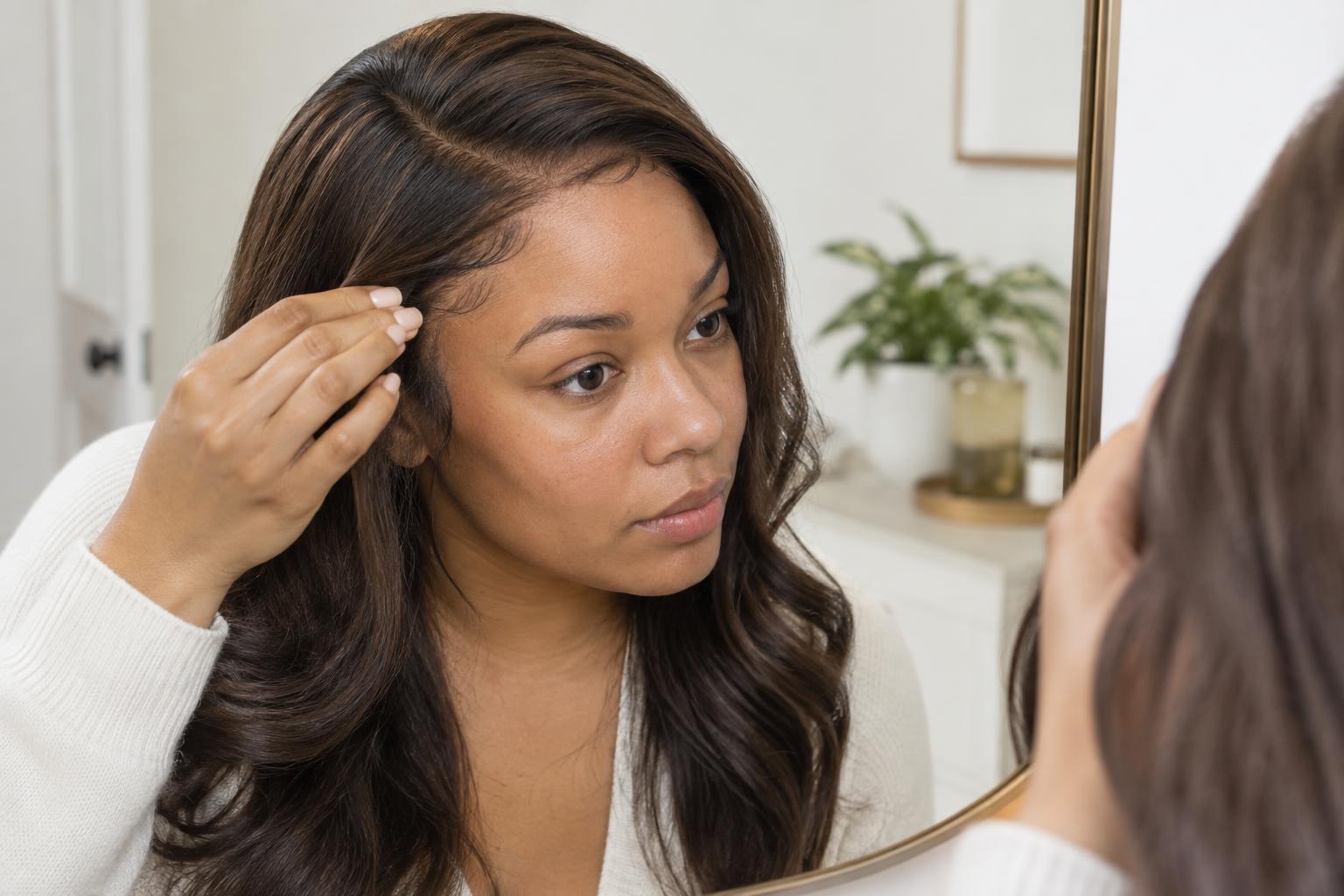
Styling TechniquesA natural-looking lace-front hairline starts with fit, careful lace placement and gentle styling. Learn how to work with the wig’s density, parting and face-framing hair without relying on heavy makeup or excessive adhesive.
Read article · 4 min↗
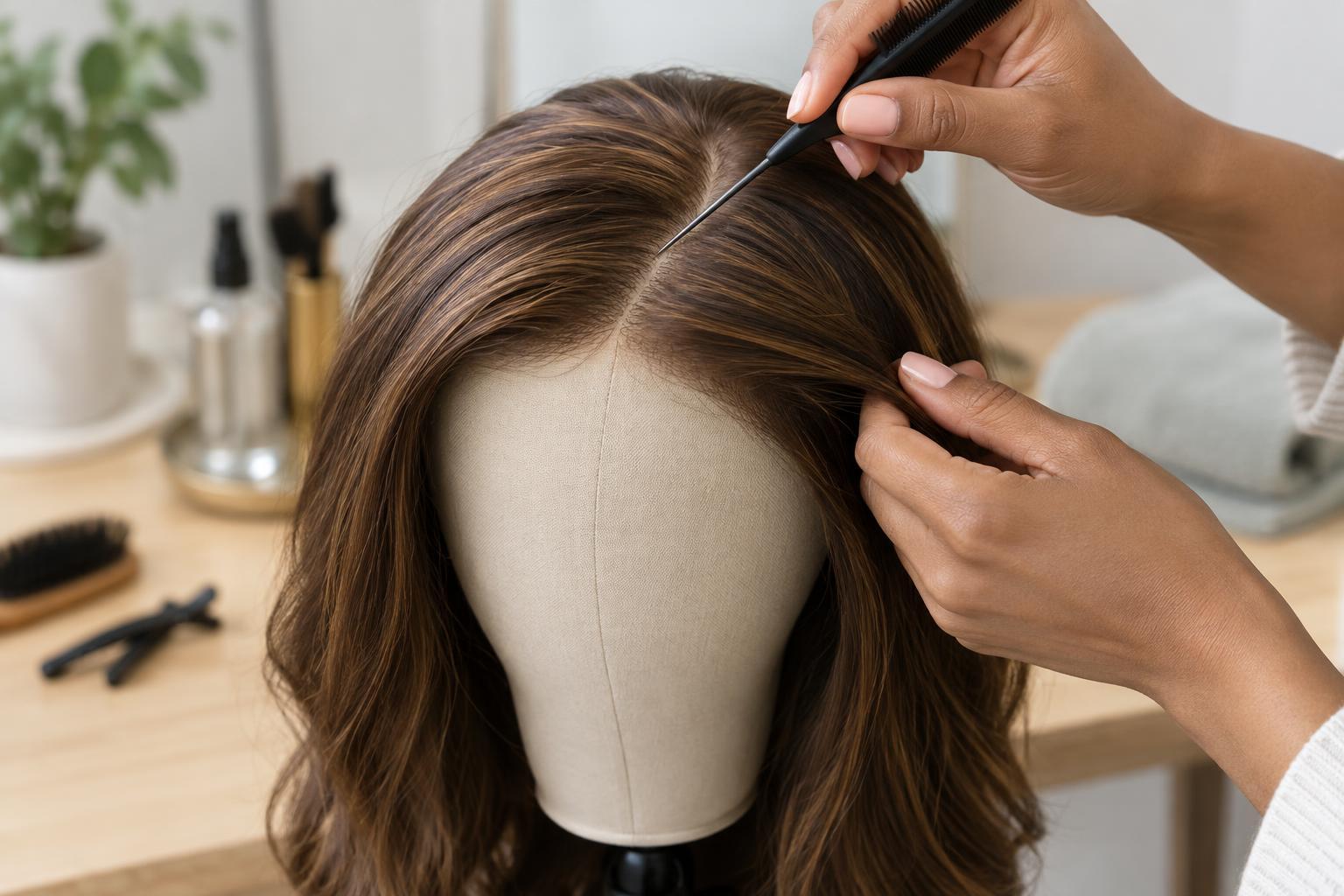
Styling TechniquesA lace top can offer room to change your part, but not every position will look equally natural. Learn how to check the parting area, redirect the hair gently and spot signs that you have moved beyond the lace.
Read article · 4 min↗
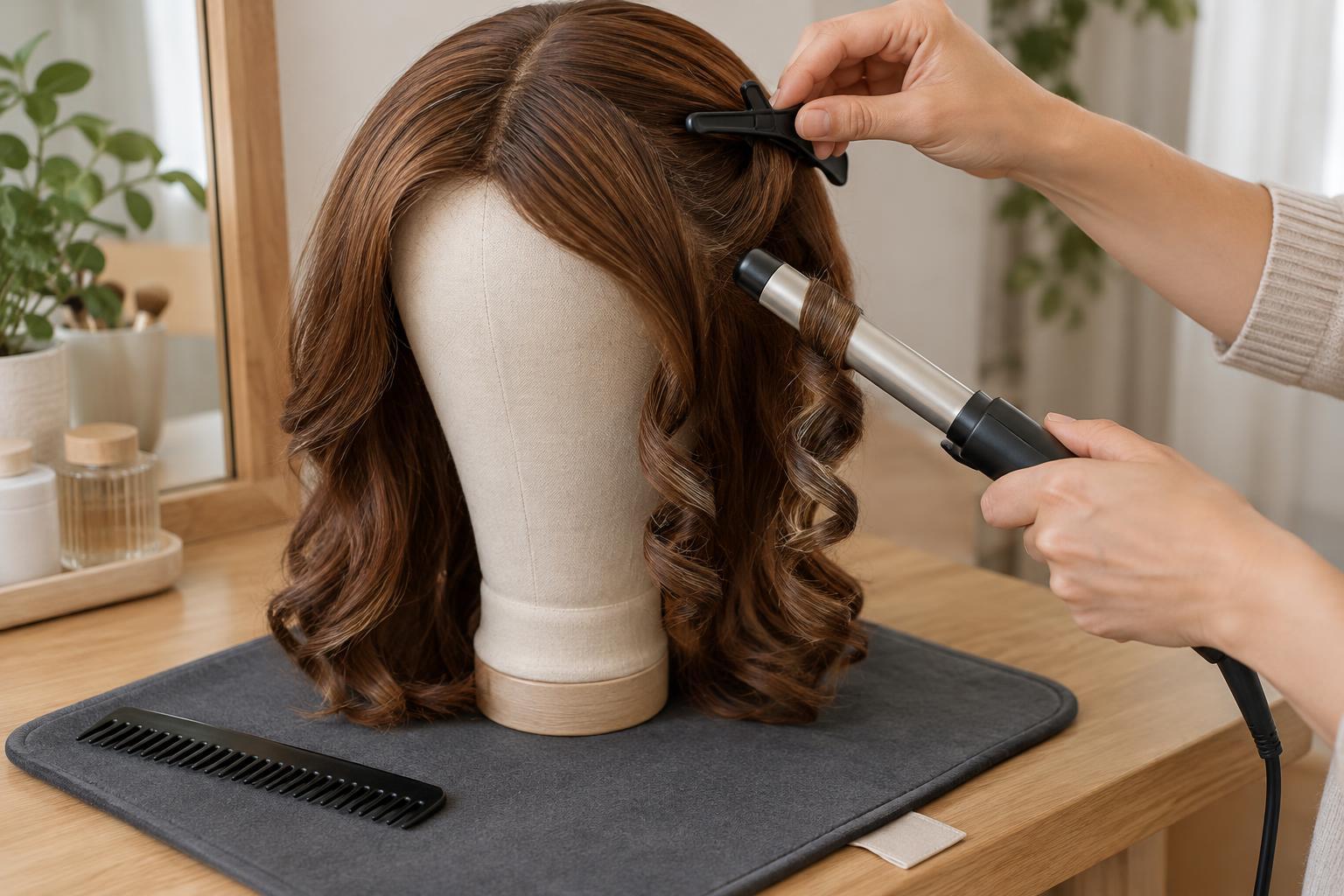
Styling TechniquesHeat-resistant synthetic fibres can often be reshaped with gentle heat, but the right setting depends on the wig. Learn how to check the label, test a hidden strand, create a curl or smoother finish, and let the style cool into place.
Read article · 4 min↗
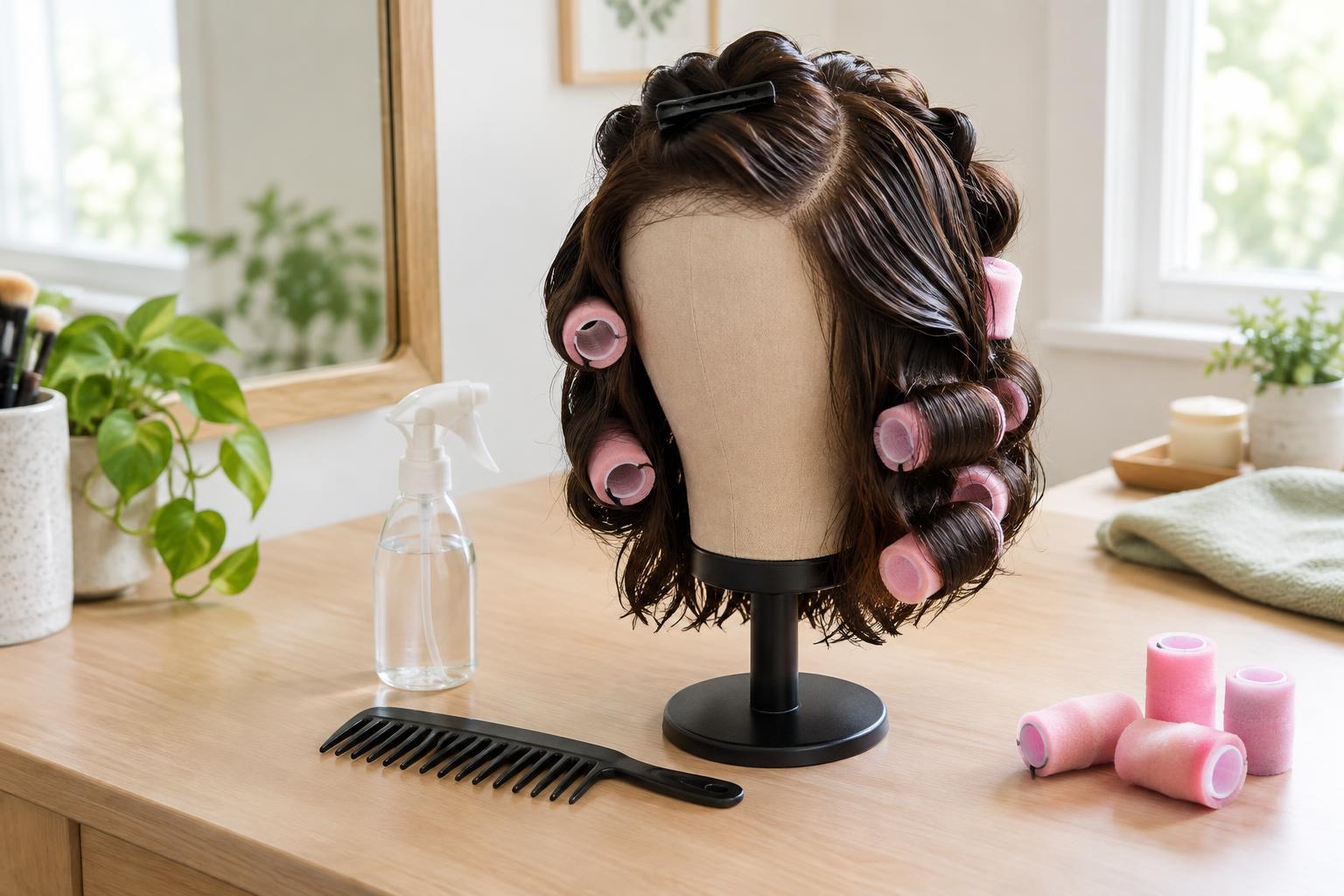
Styling TechniquesYou can refresh or shape curls in a standard synthetic wig with water, rollers and patient air-drying. Learn what a no-heat set can achieve, how to protect the cap and how to keep the finished curls looking tidy.
Read article · 4 min↗
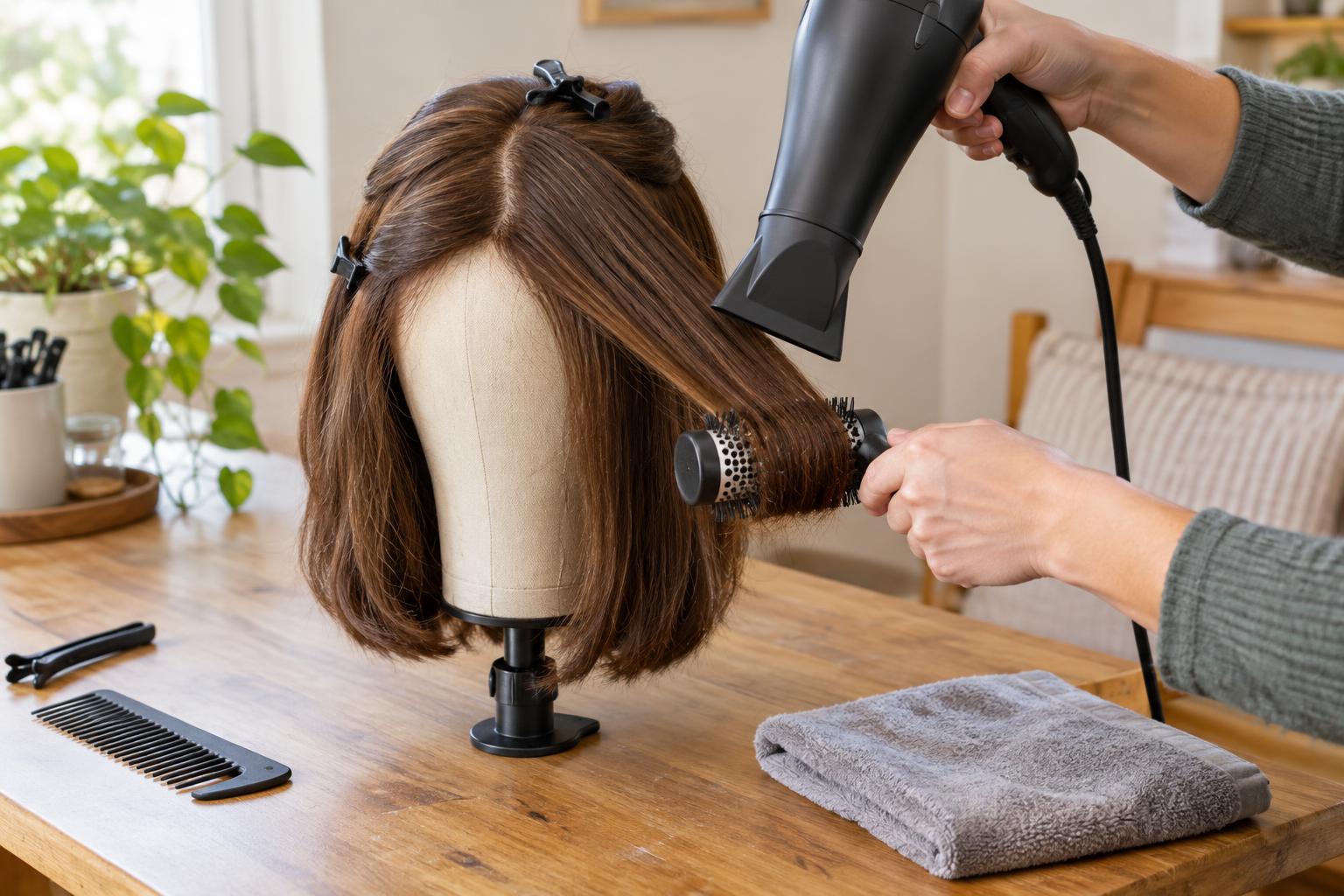
Styling TechniquesA smooth blow-dry starts with gentle preparation, steady airflow and careful handling of the wig cap. Learn how to dry a human-hair wig in sections without putting unnecessary strain on the hair or its construction.
Read article · 4 min↗
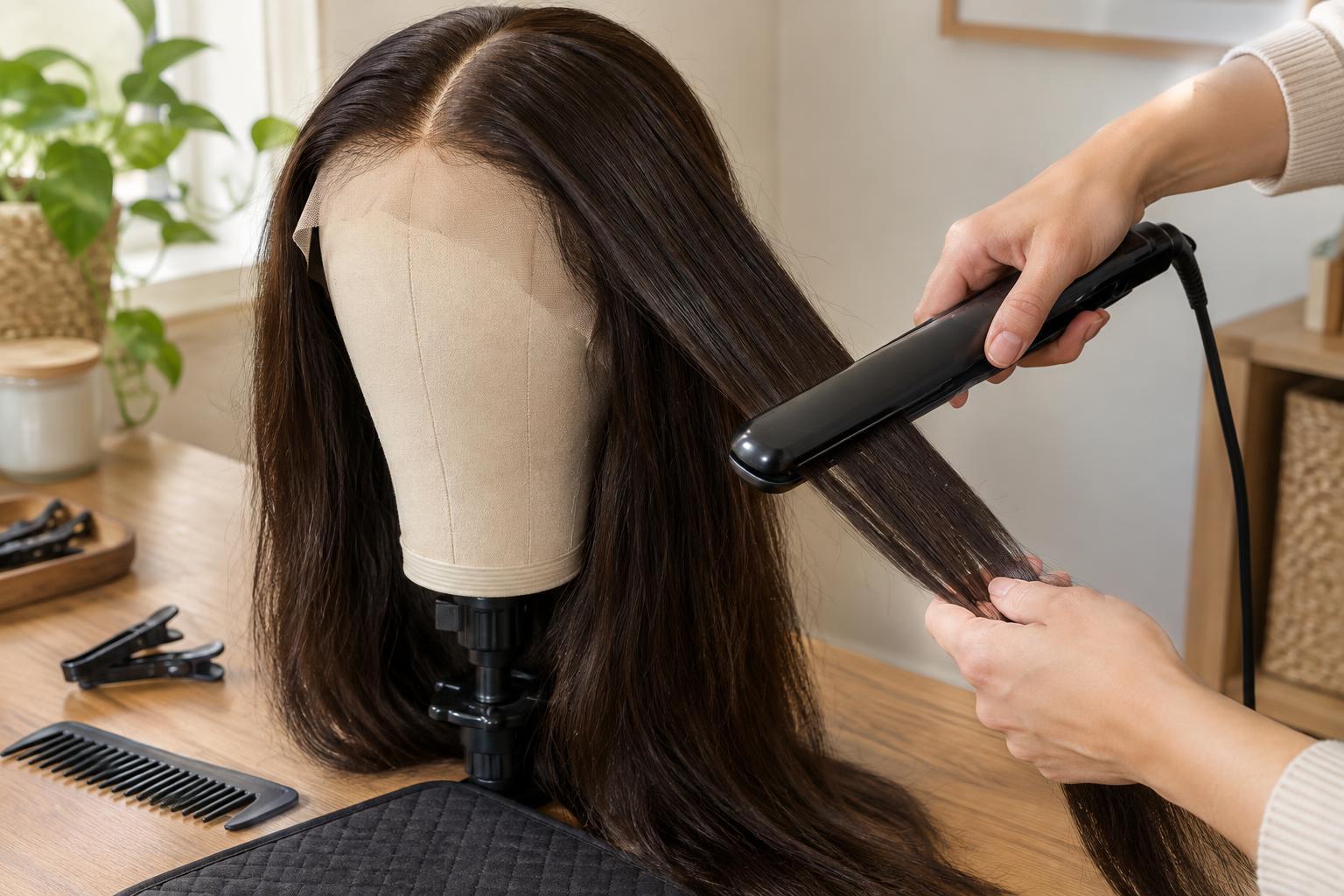
Styling TechniquesA careful straightening routine starts before the flat iron is switched on. Learn how to check your wig, prepare the hair, work in small sections and keep heat and tension away from delicate cap areas.
Read article · 4 min↗
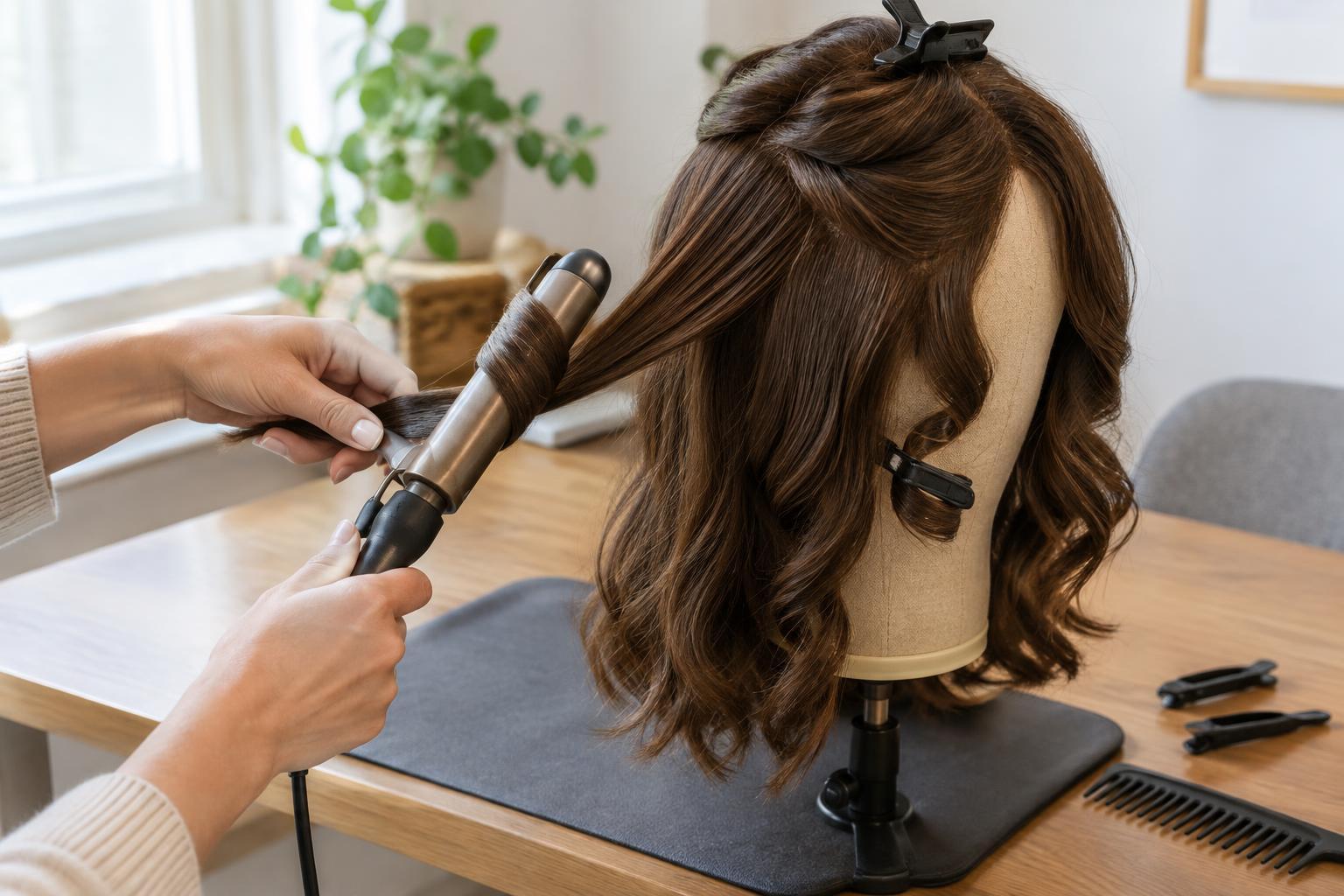
Styling TechniquesA curling iron can add shape to a human-hair wig, but the hair cannot recover from heat damage as growing hair can. Learn how to check the wig, choose a cautious setting, curl in small sections and let each curl cool before judging the result.
Read article · 4 min↗
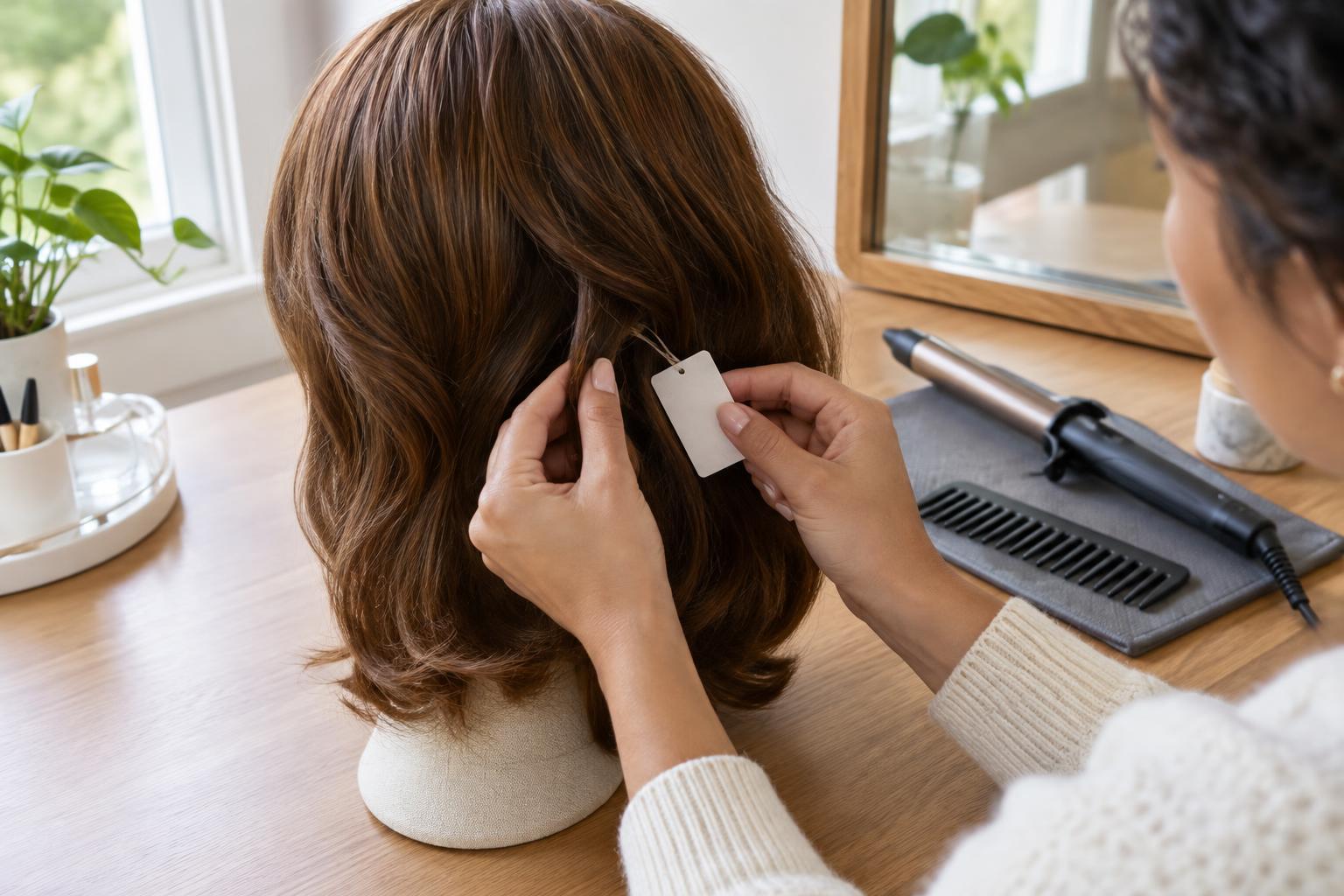
Styling TechniquesA wig’s appearance does not tell you whether it can handle a curling wand, straightener or hairdryer. Learn how to check its fibre, read heat guidance and make a cautious strand test before styling.
Read article · 4 min↗