Start with the cut and the fibre
Texture is easier to create when you work with the wig’s existing shape. Look at where the layers fall, how the fringe sits and whether the crown already has lift. A cropped pixie may need only a few separated pieces around the front, while a short bob might benefit from soft movement through the ends. Trying to force every strand into a new direction can make a short style look rigid rather than relaxed.
Check whether your wig is synthetic, human hair or a blend before using water, products or heat. Standard synthetic fibres often retain their manufactured shape, so gentle finger-styling may be enough. Human hair generally offers more restyling flexibility but can lose its shape after washing. If you are unsure about the fibre or whether it is heat-friendly, follow the maker’s care guidance and skip hot tools.
Build movement before adding product
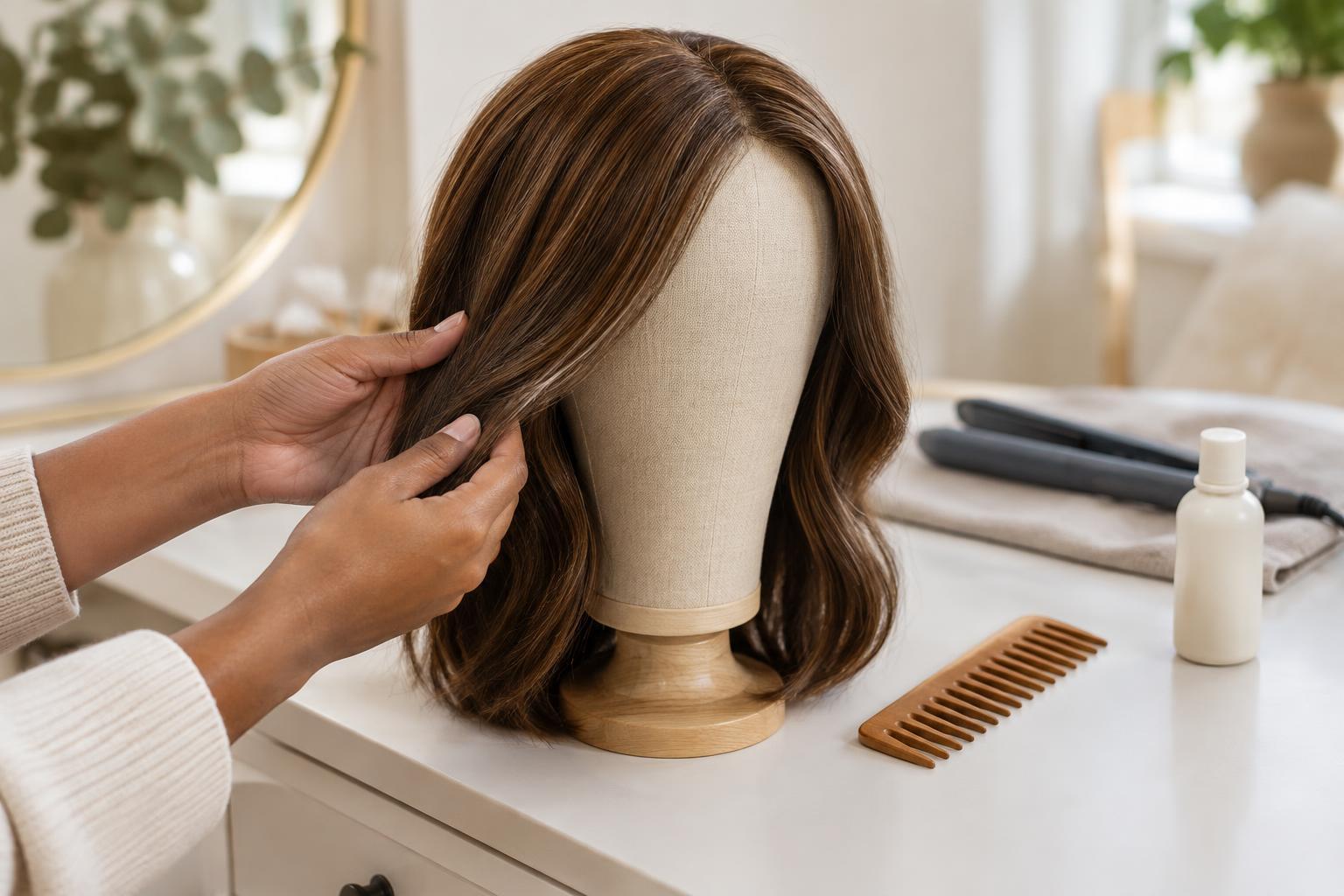
Place the wig on your head or a suitable stand and let the fibres settle into their usual direction. Use your fingertips to lift small sections at the roots, then release them. Work around the crown and sides rather than pushing the whole top upward at once. For a softer outline, separate a few ends with your fingers and leave the rest alone; contrast between smooth and textured areas helps the detail show.
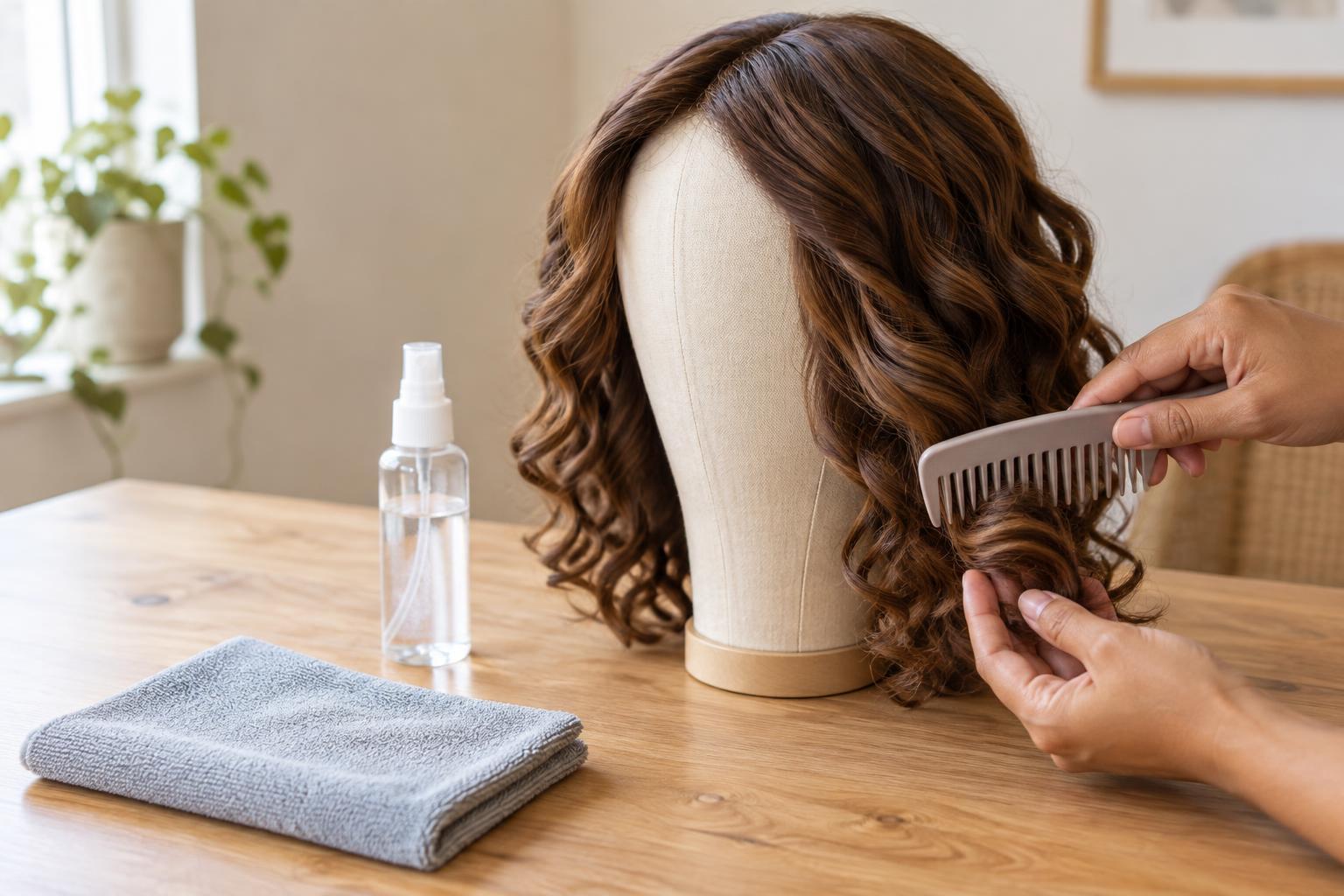
If the wig is clean but flattened from storage, a light shake and careful finger-combing may restore movement. A wide-tooth comb can help with tangles, starting at the ends and working upward, but avoid dragging it through any lace or delicate cap areas. On a short wig, small changes are visible, so pause and check the shape from the front and sides before doing more.
Choose a light touch over heavy hold
Product is best treated as a finishing tool, not the source of the style. First test a tiny amount in an inconspicuous area, using only products the wig maker considers suitable for its fibre. Some products intended for growing hair can leave synthetic wigs coated or difficult to refresh. If a product makes the fibres clump or feel tacky, do not add more in an attempt to fix the shape.
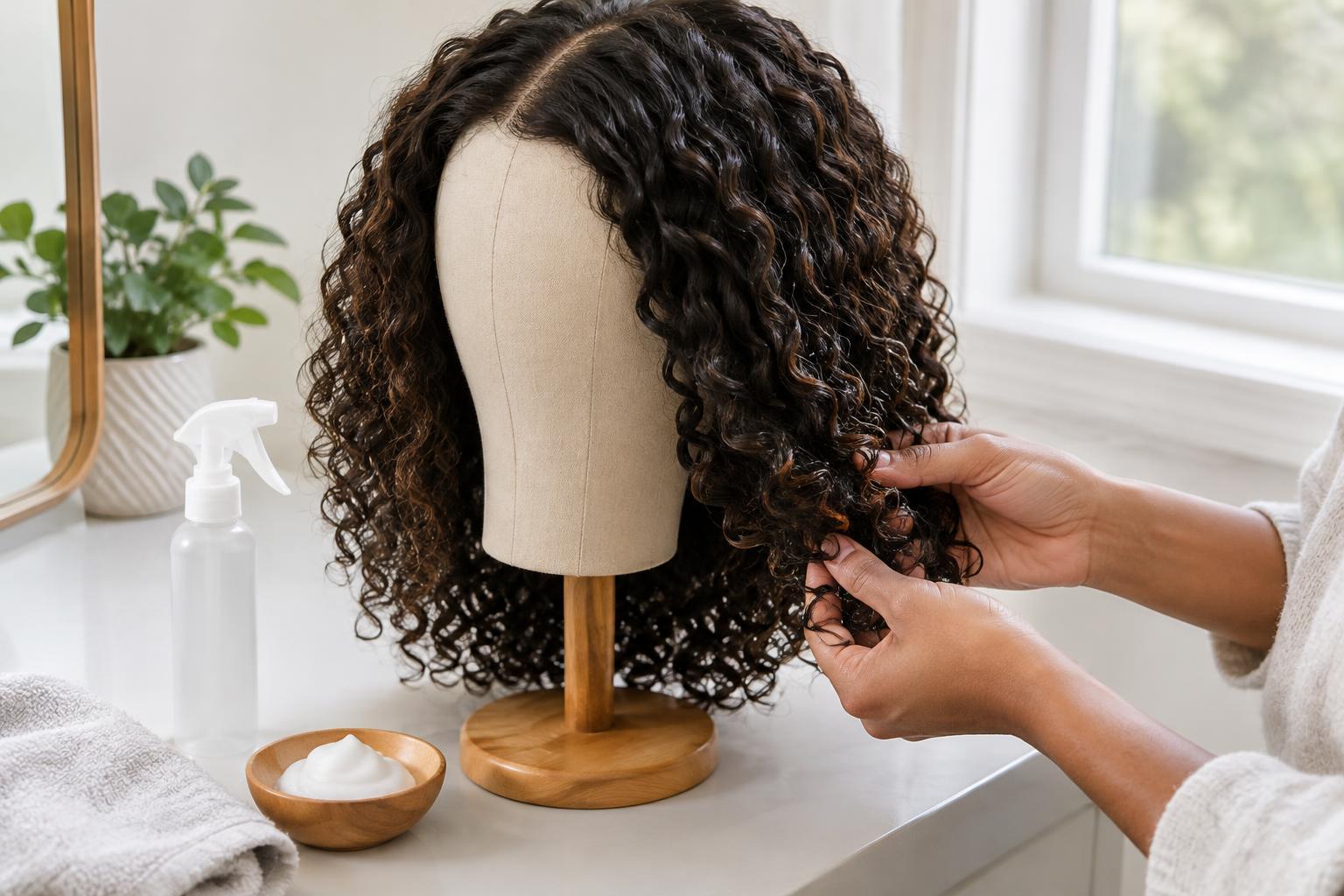
For a piecey finish, put a small amount of suitable styling product on your fingertips rather than applying it directly to the wig. Touch just the ends of selected layers, then gently pinch or twist a few pieces. Keep product away from the cap, knots and hairline where buildup may be harder to remove. You can always add a little more, but removing excess may require a wash.
To keep a short style touchable, aim for a few defined sections rather than uniform separation. Leave some strands loose around the fringe and temples, and use less product near the top if you want natural-looking movement. A strong, all-over spray can hold a shape, but it may also take away the softness you set out to create.
Adapt the technique to the finish you want
For a casual, tousled look, lift small sections at the crown with your fingers and let them fall slightly off-centre. Nudge a few front layers in different directions, keeping the sides calmer so the overall shape remains balanced. If you want a neater textured style, define only the fringe and the ends near the face while leaving the crown mostly smooth.
A short bob can gain texture without becoming messy: separate a handful of outer-layer ends, then tuck or smooth the hair closest to the cheeks. For a close-cropped style, focus on subtle changes in direction instead of trying to create height the cut cannot support. Whatever the shape, take a step back between adjustments. The aim is visible variation, not a fixed position for every strand.
Refresh the style without building up residue
At the end of the day, gently release any twisted or pinched pieces with your fingers. Follow the wig’s care instructions for brushing, washing and drying, since these can differ by construction and fibre. Avoid sleeping in a styled wig unless it is specifically intended for that use; friction may flatten the texture and encourage tangling.
Store the wig so the cut is not crushed, and check it before reaching for more product the next time you wear it. Often, a light shake and a few minutes of finger-styling are enough. If the fibres feel coated or no longer move freely, cleaning them according to the wig’s instructions is likely to be more useful than adding another layer of hold.