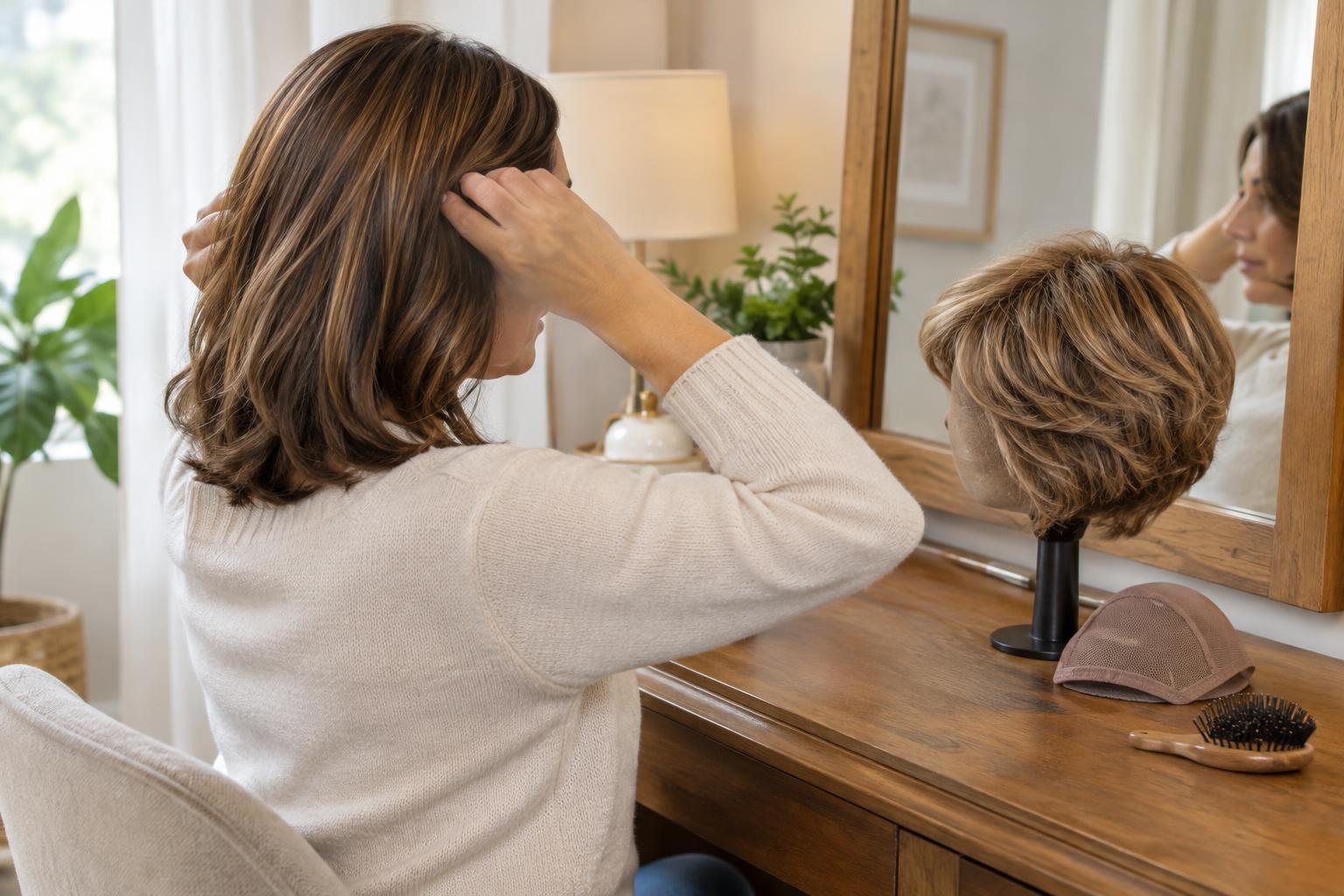
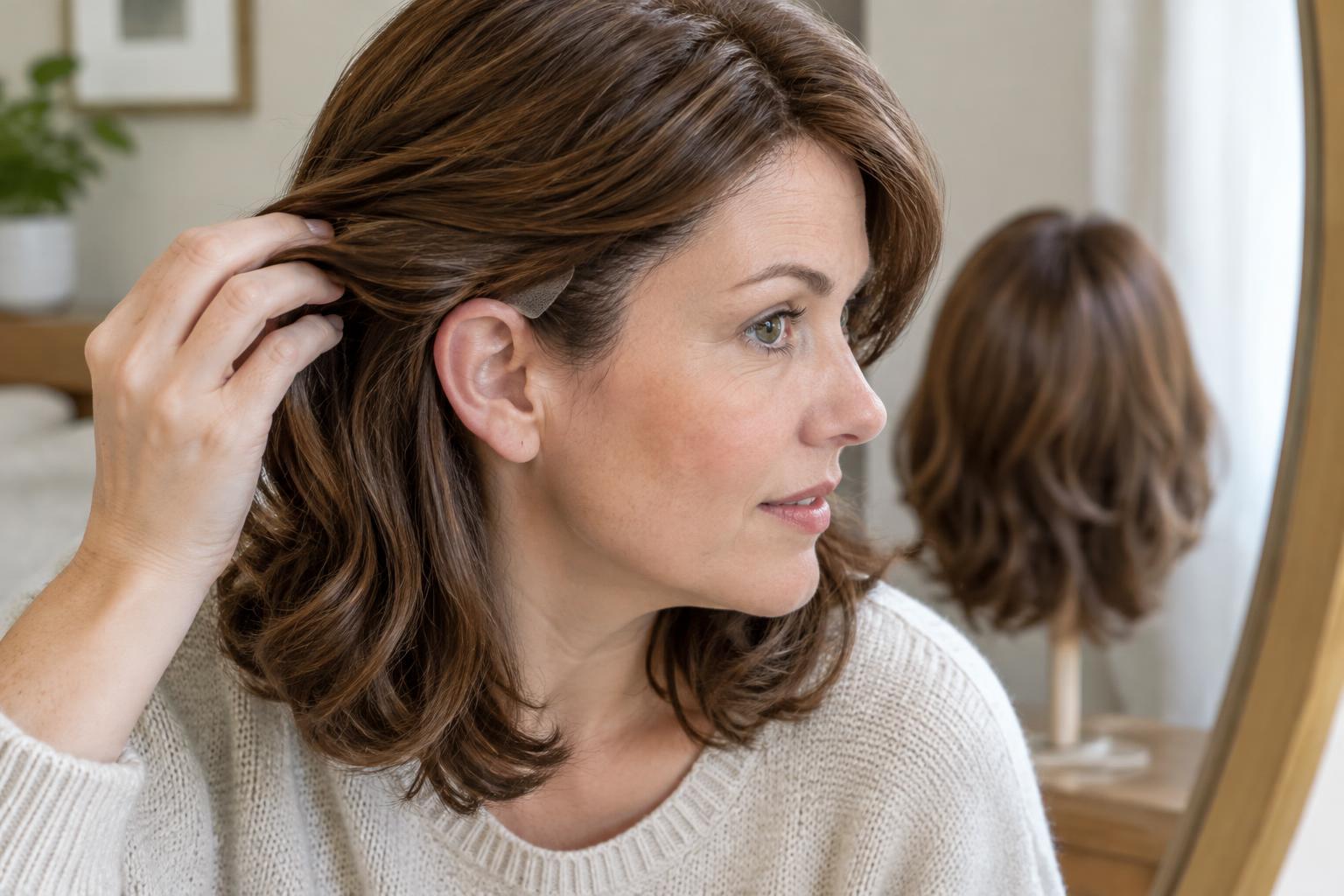
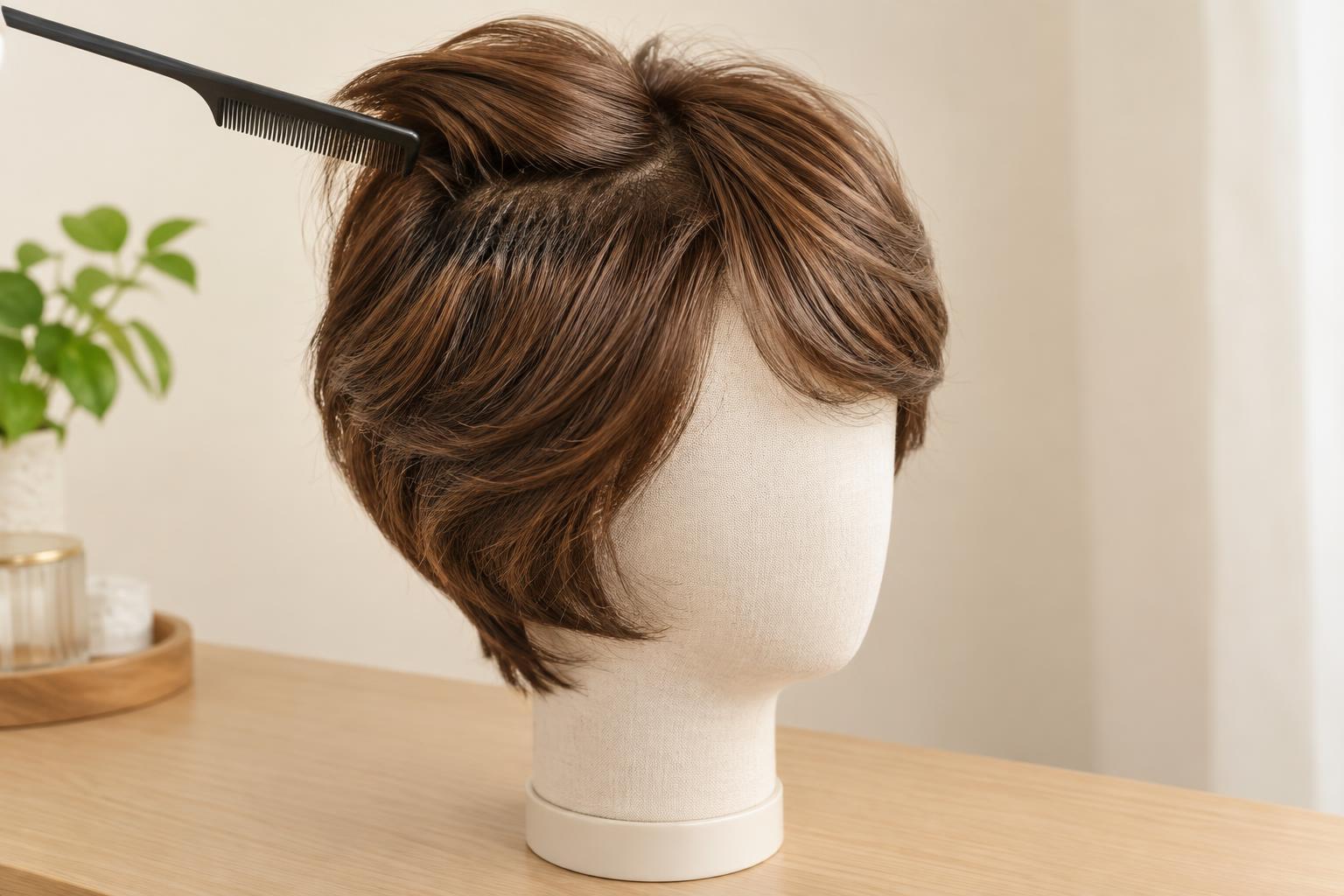
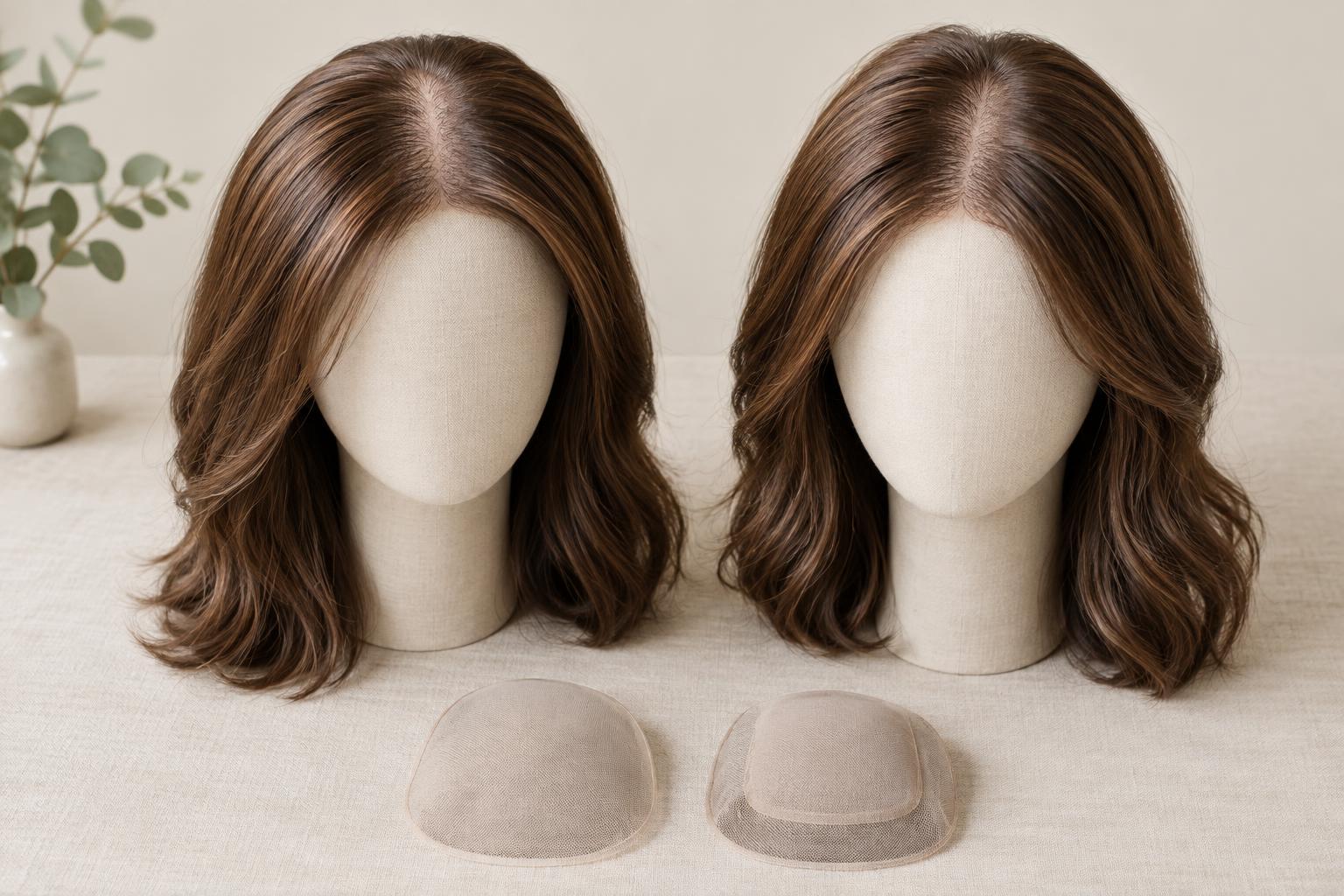
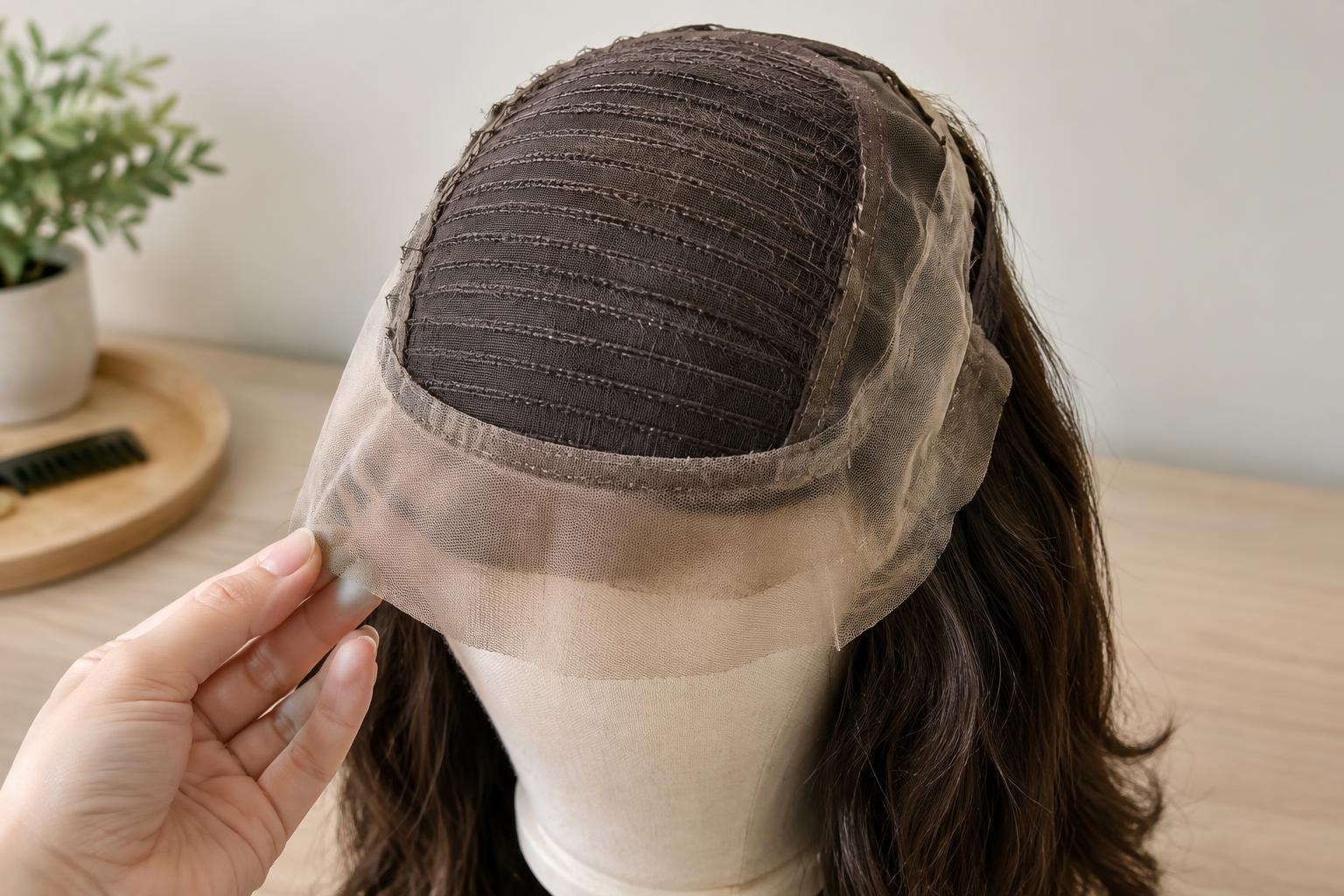
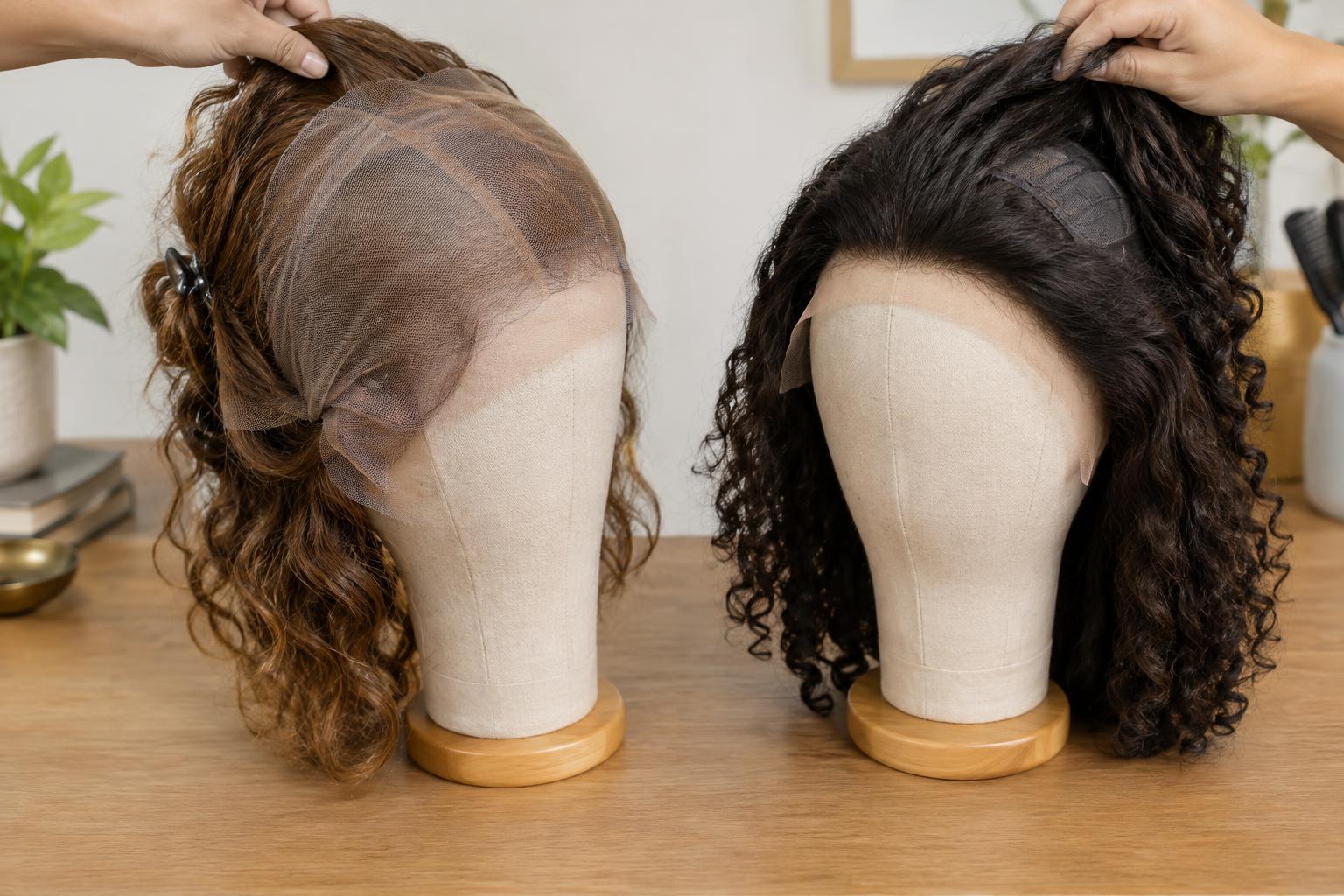
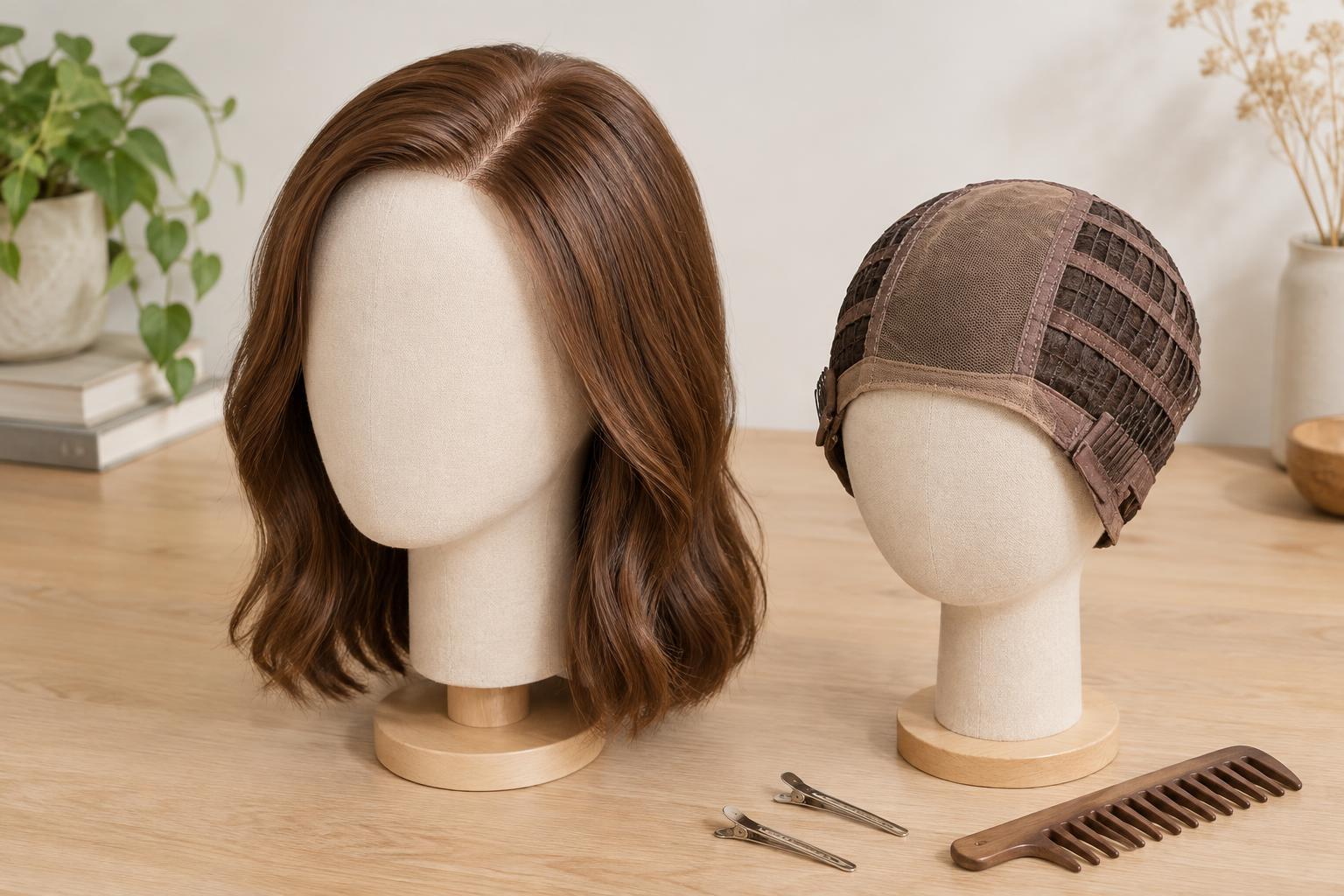
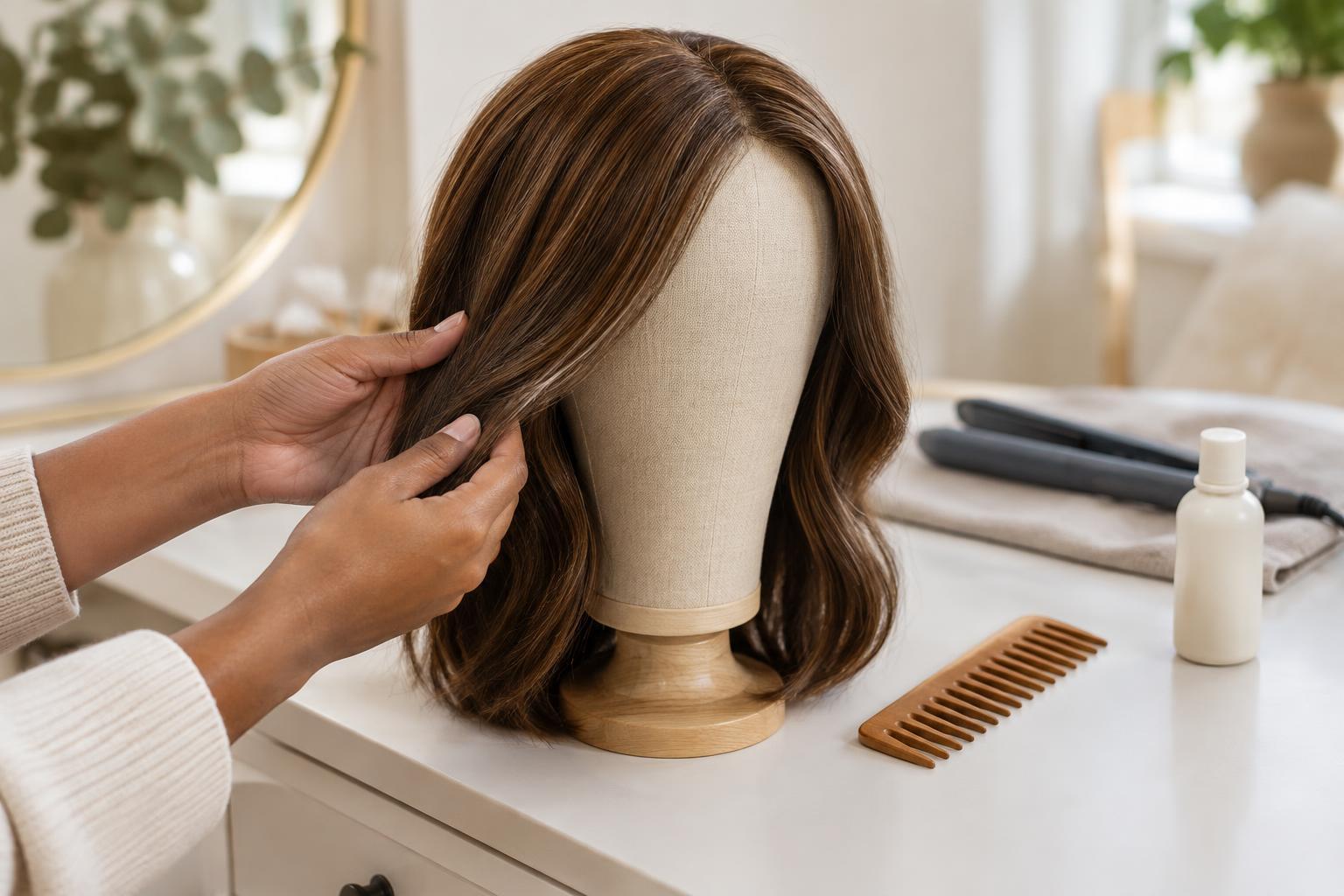
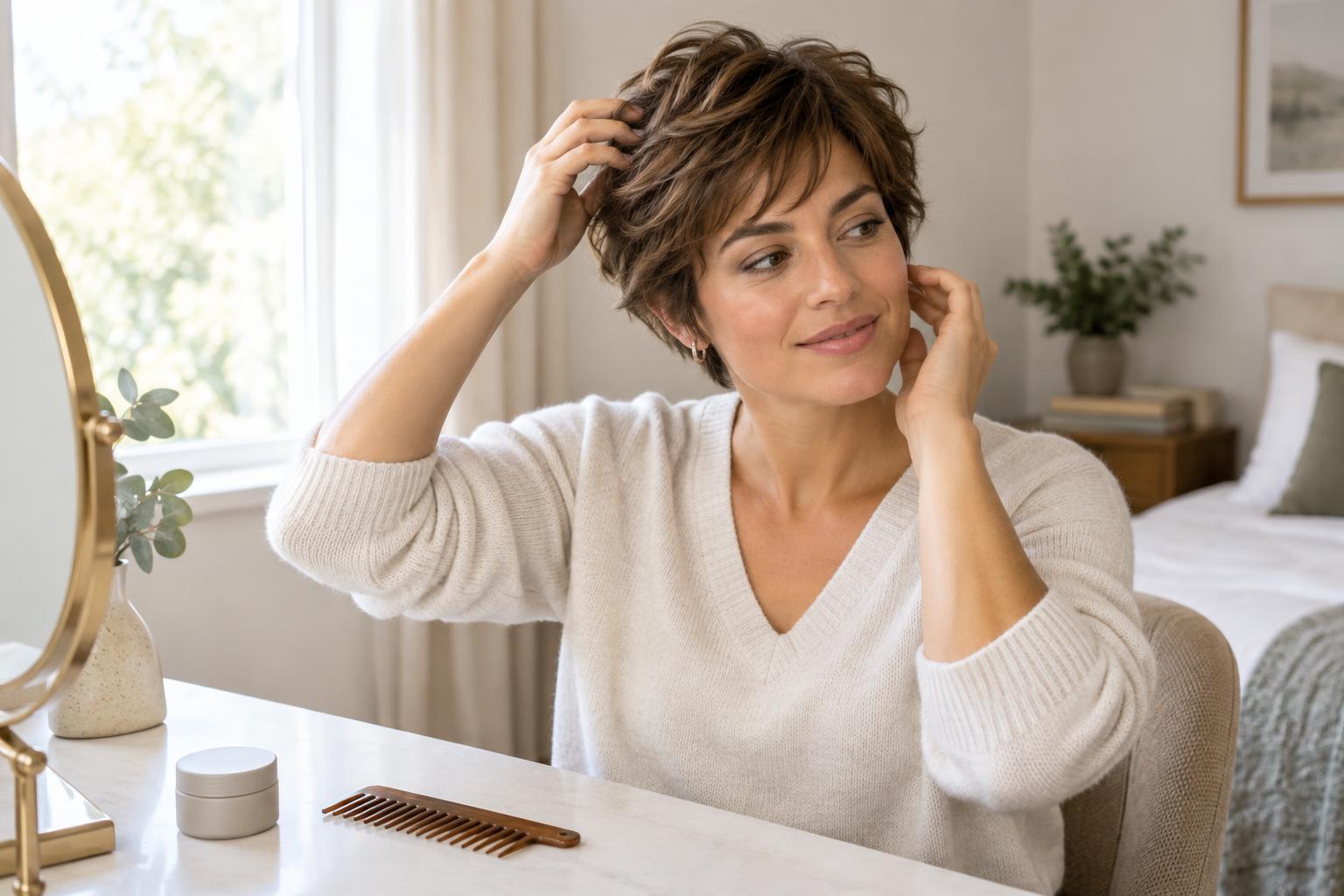
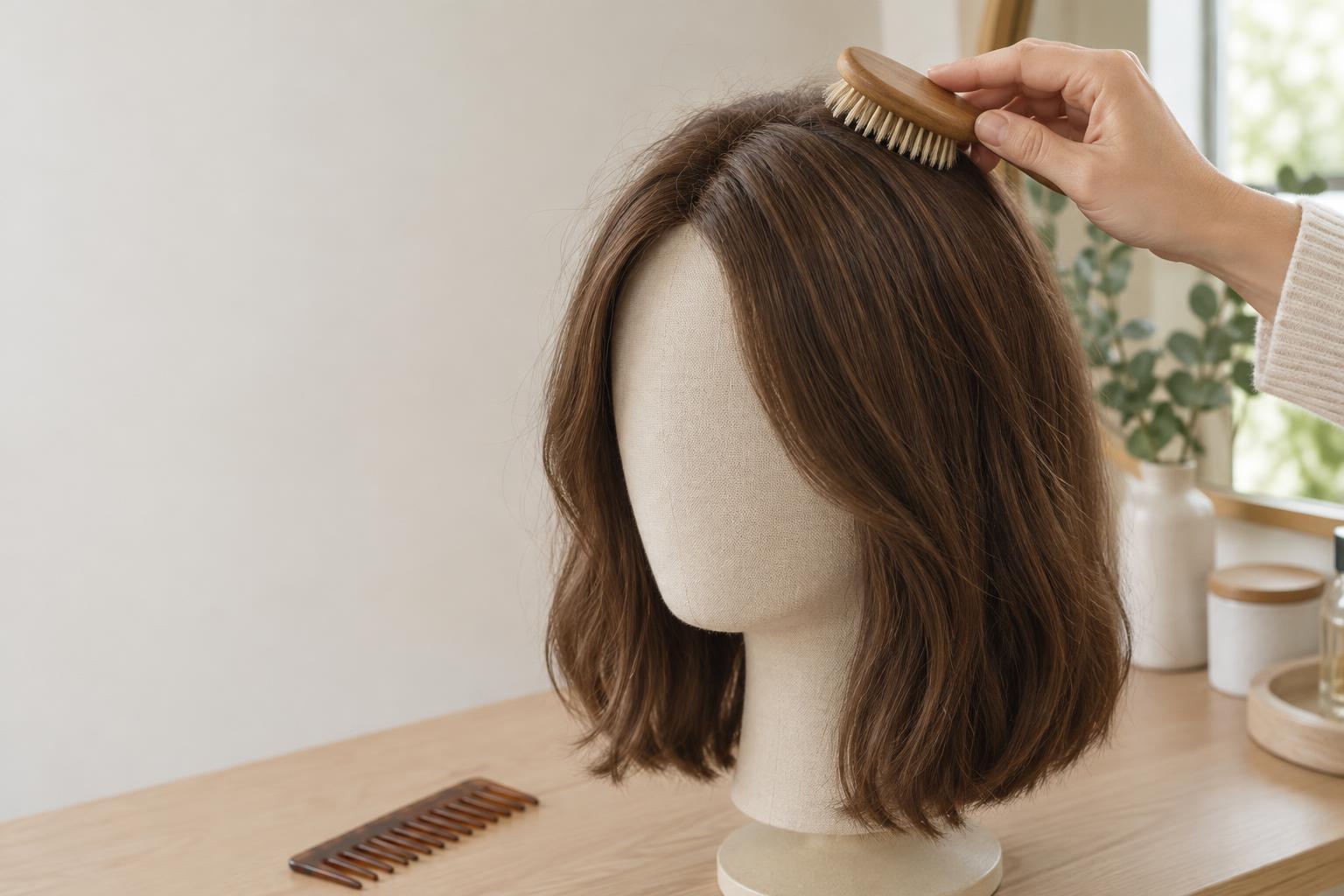
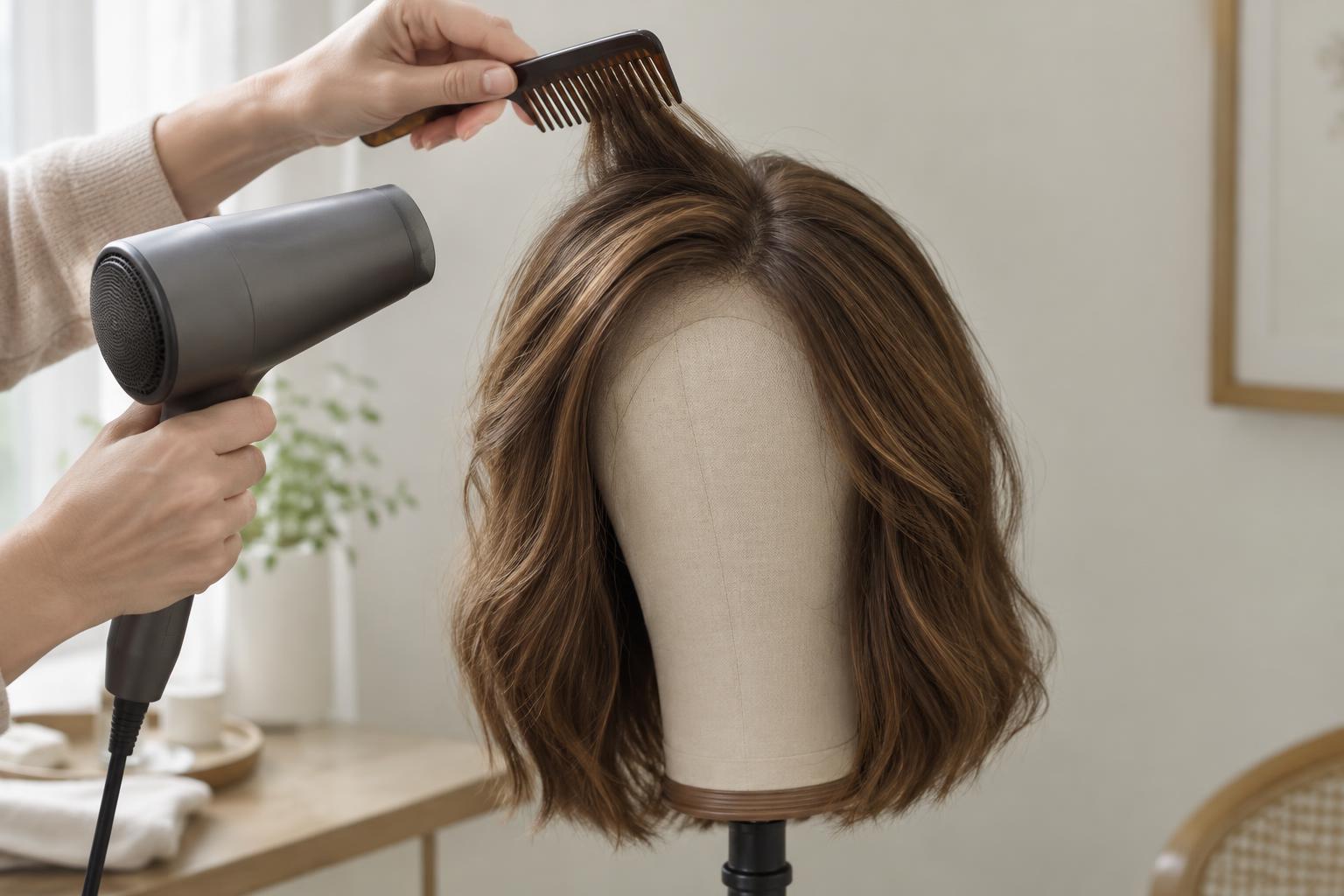
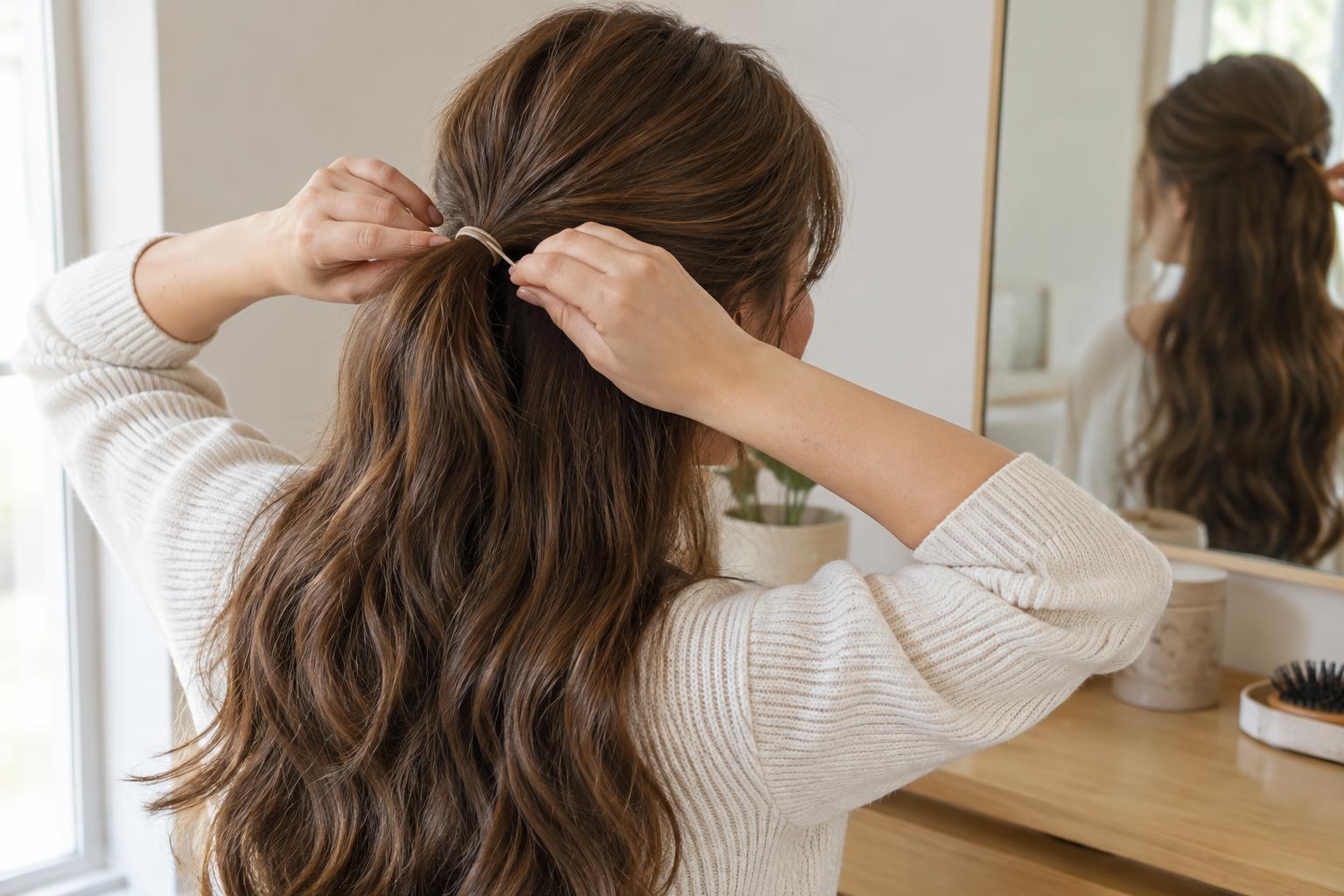
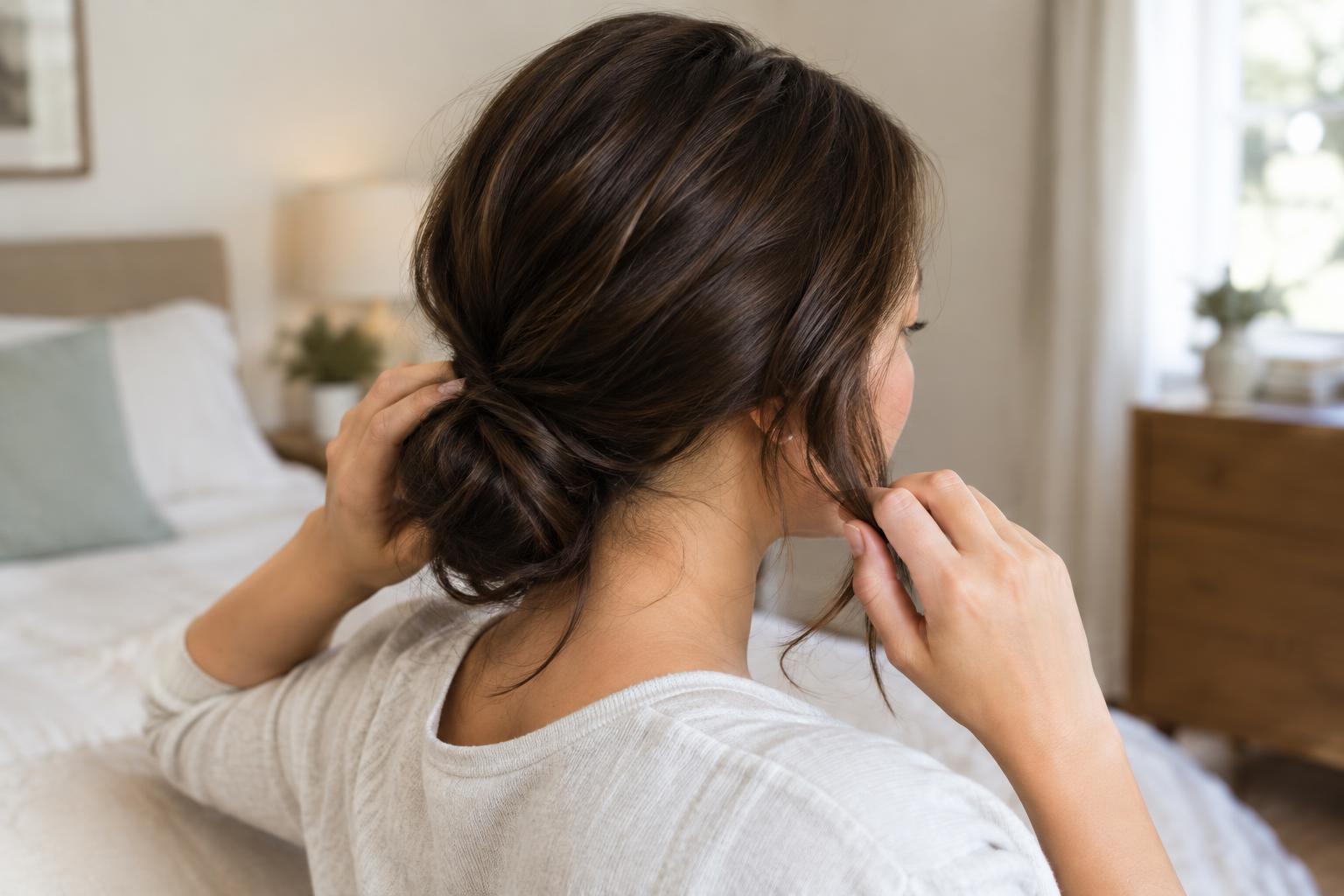
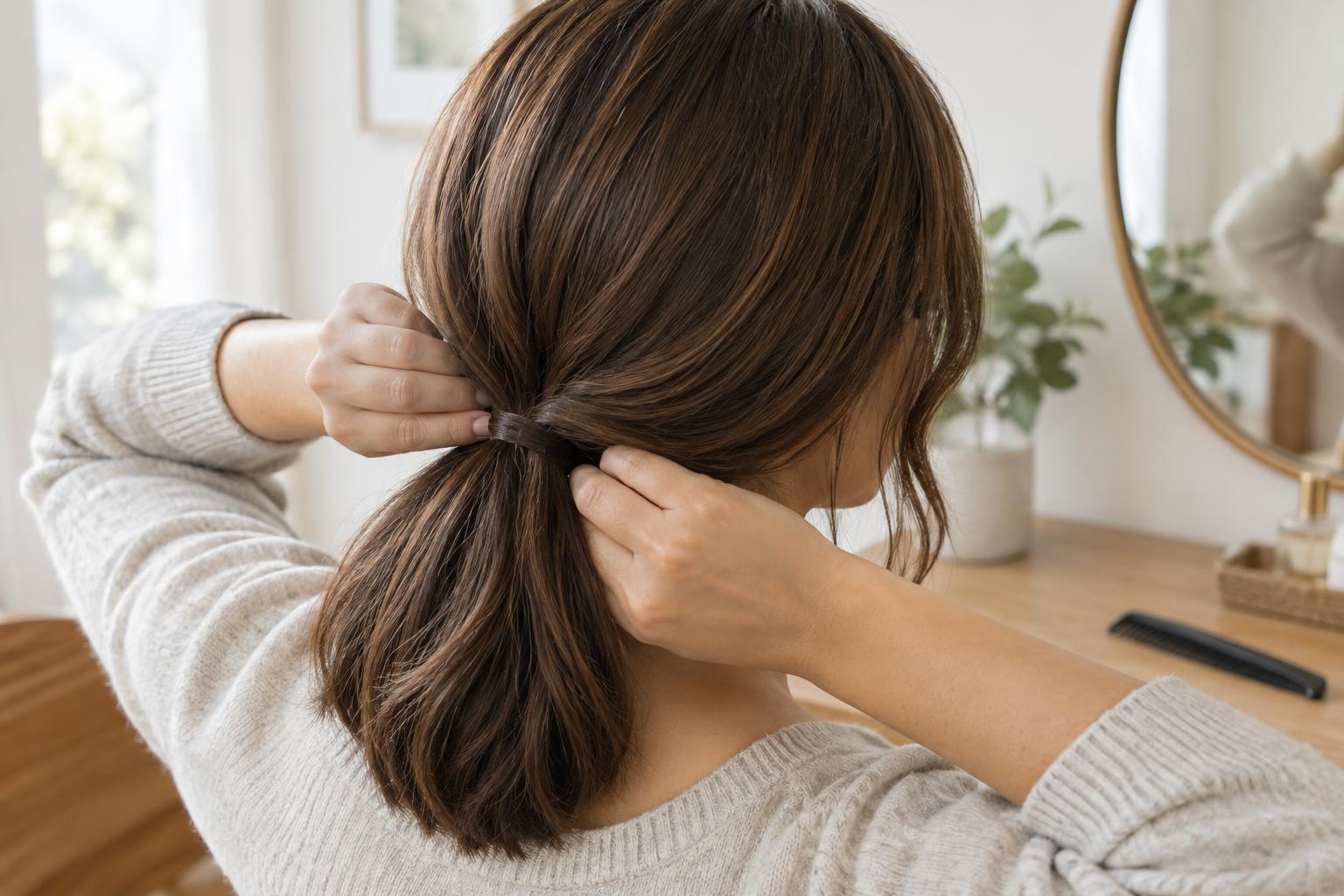
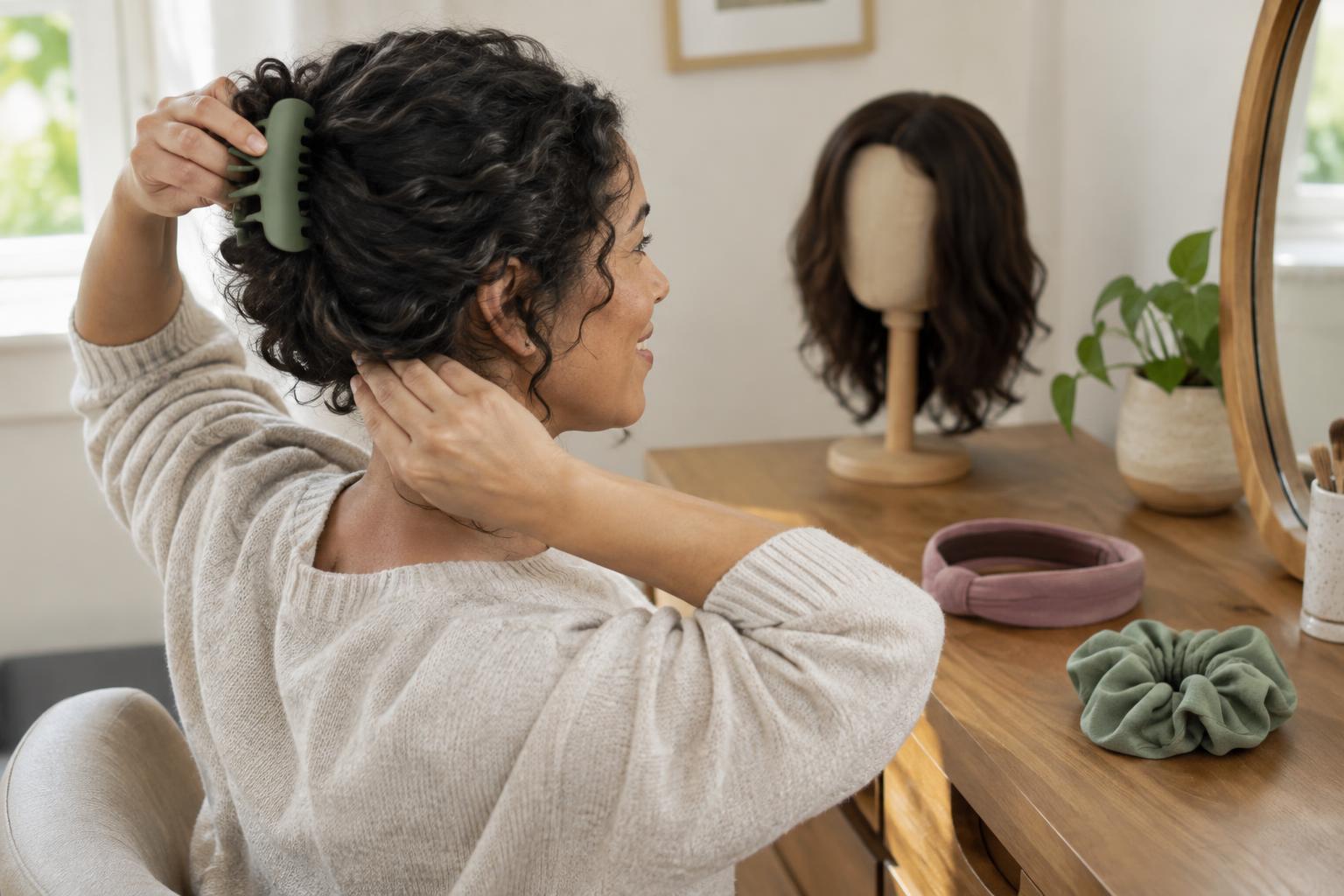
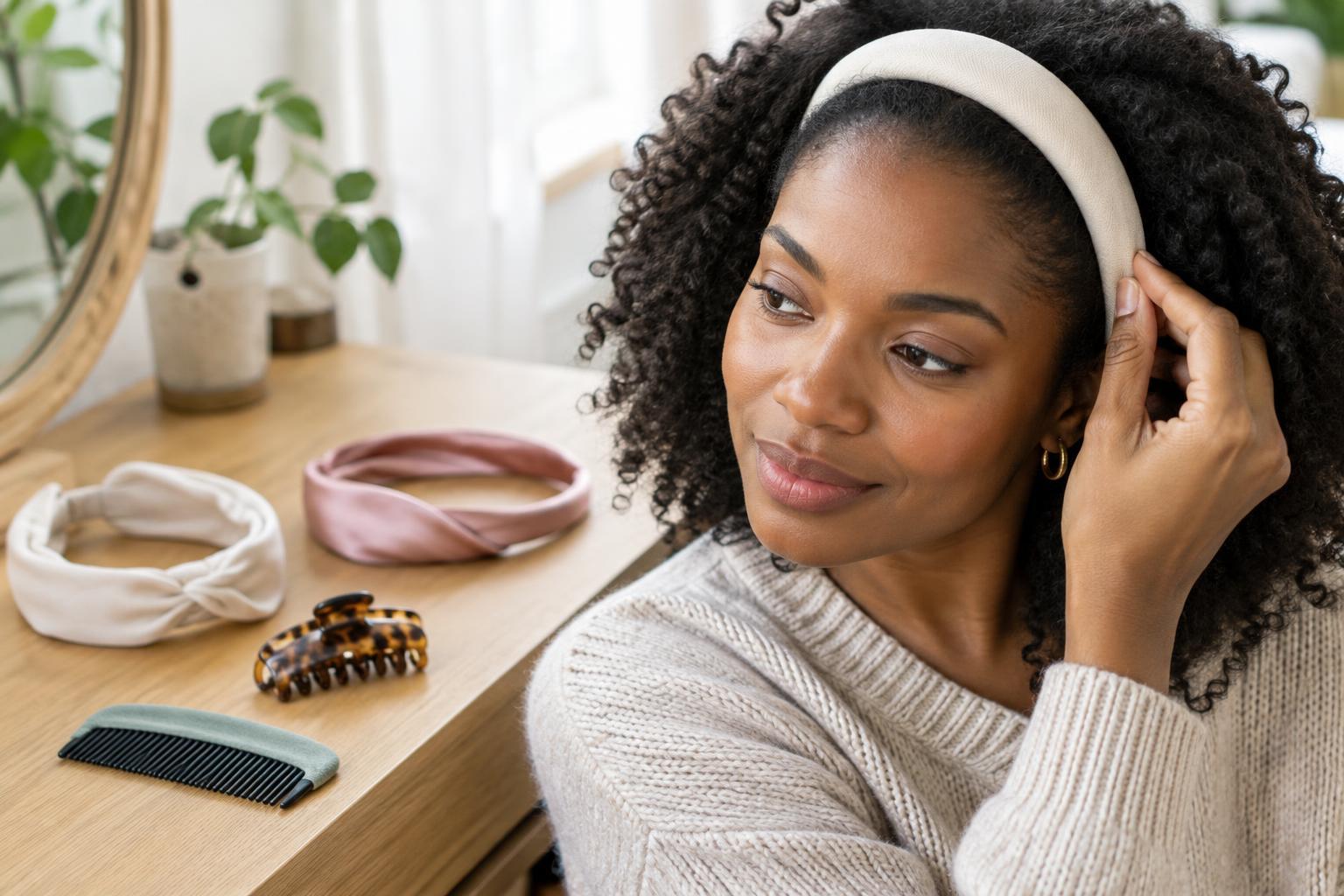
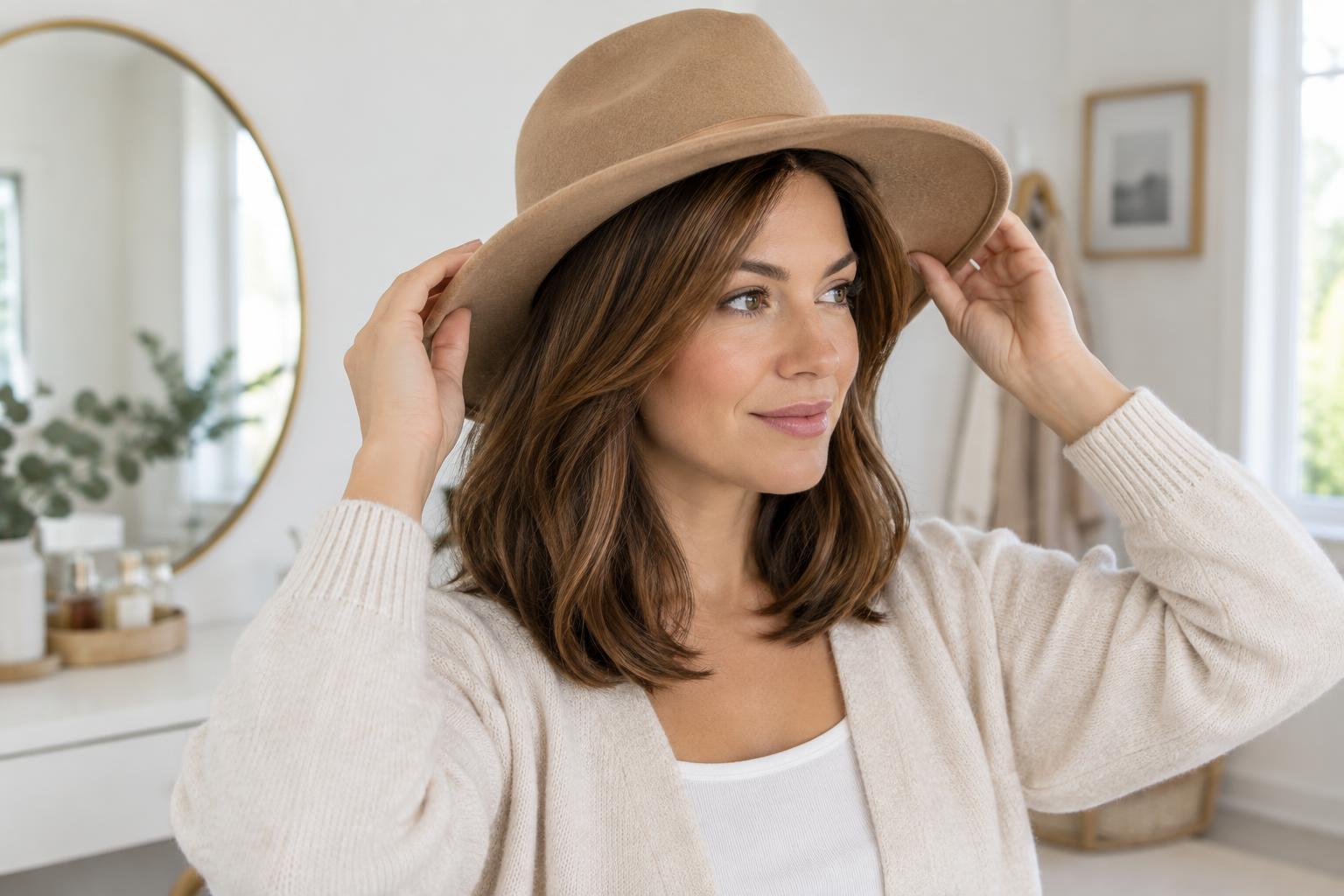
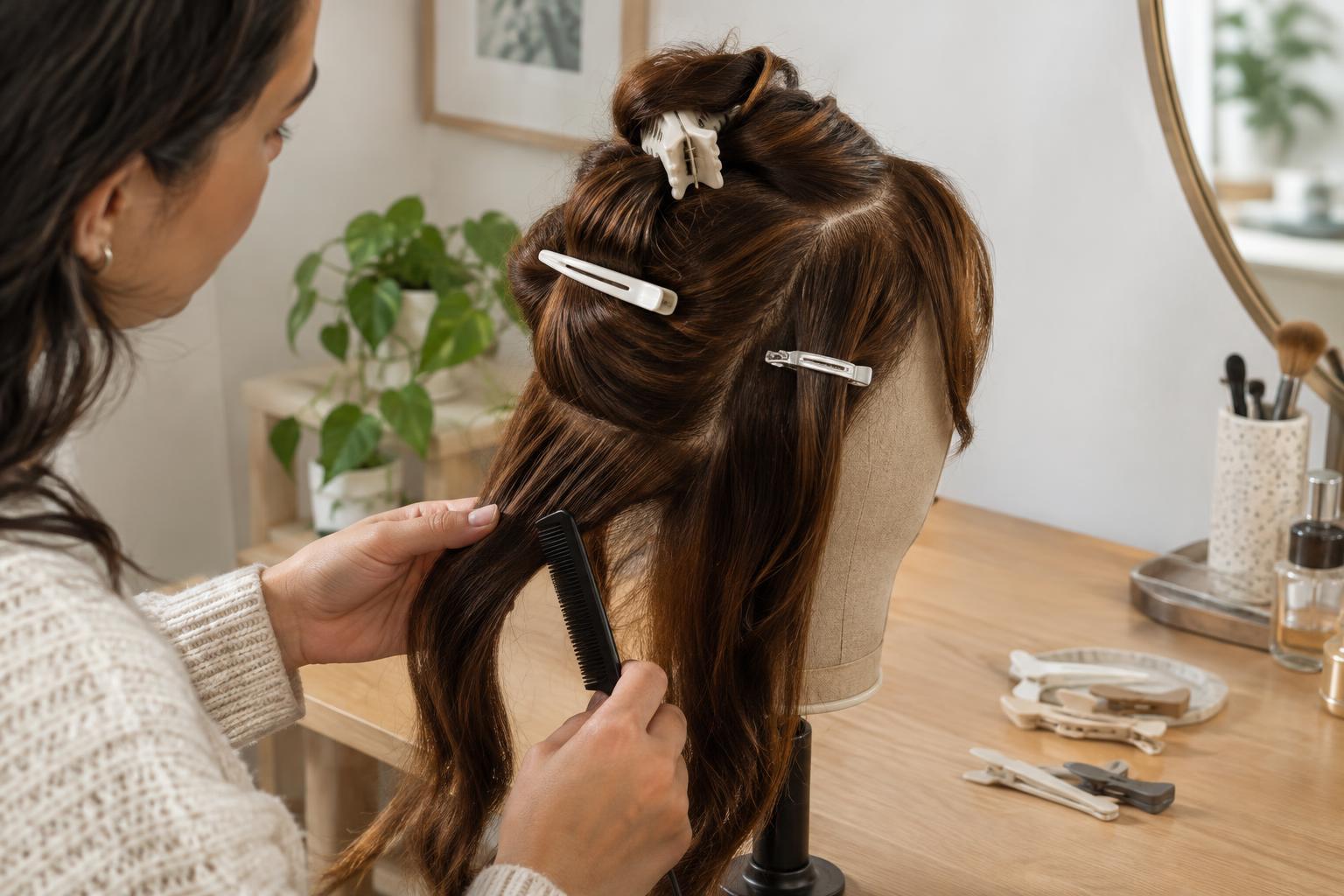
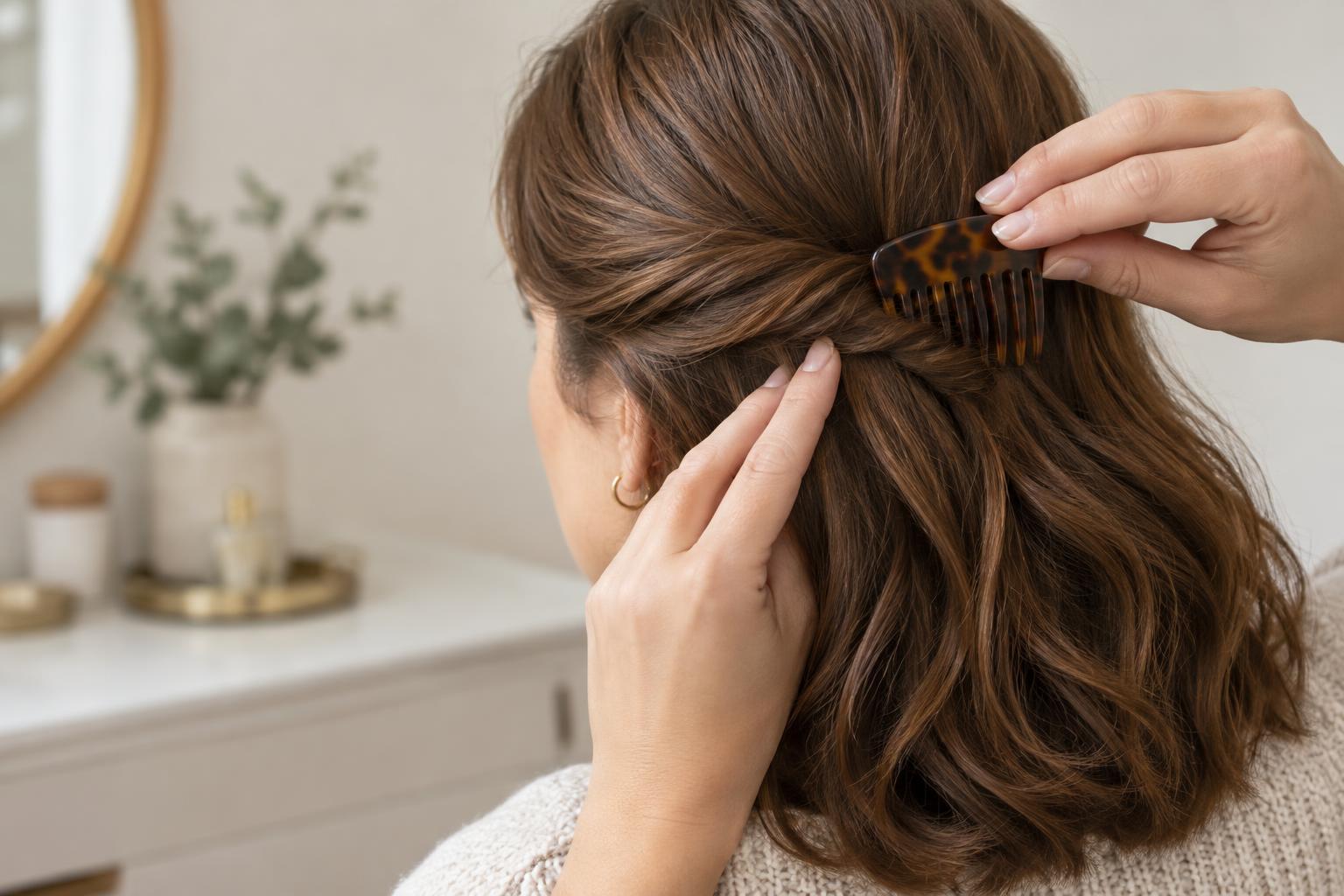
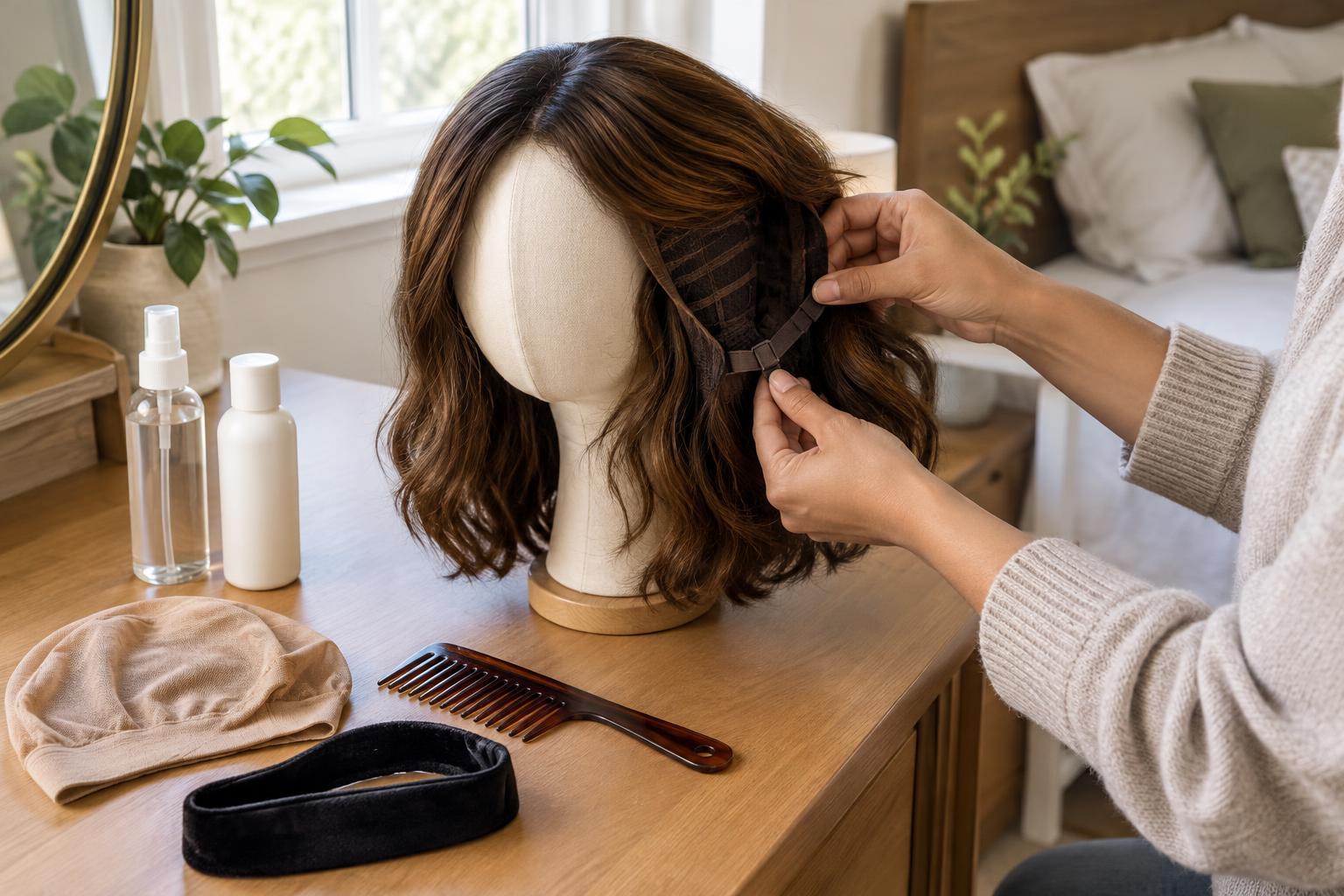
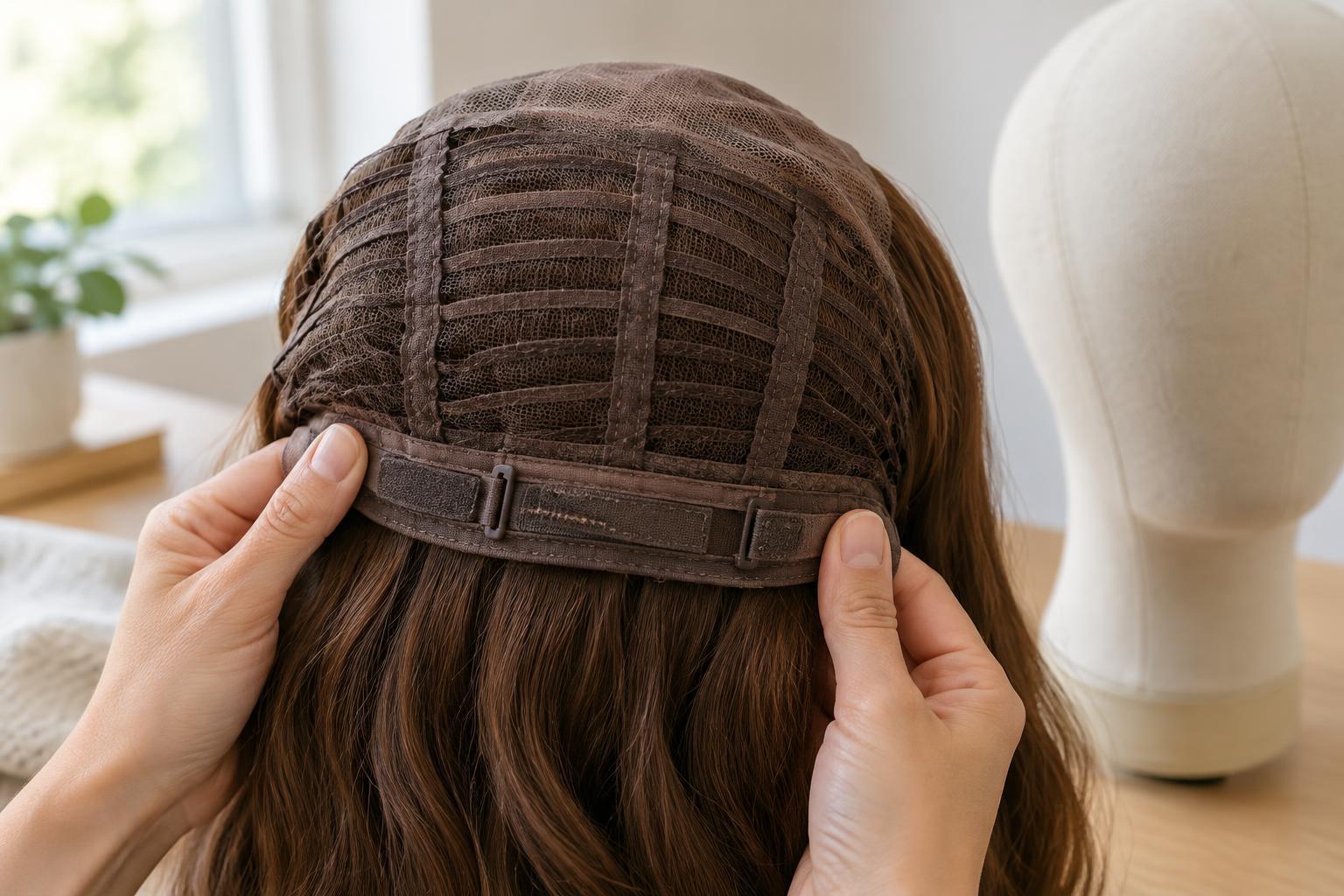
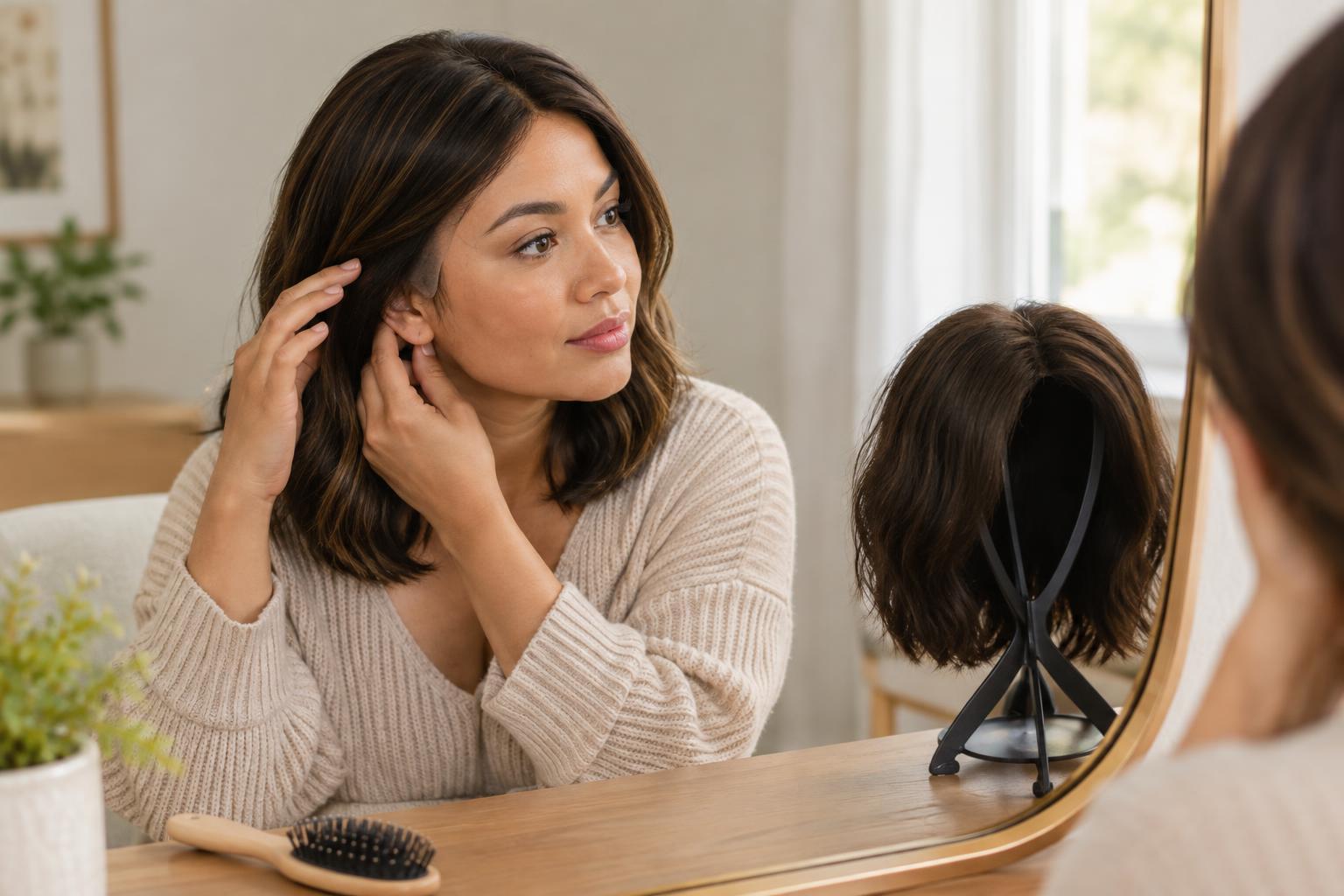
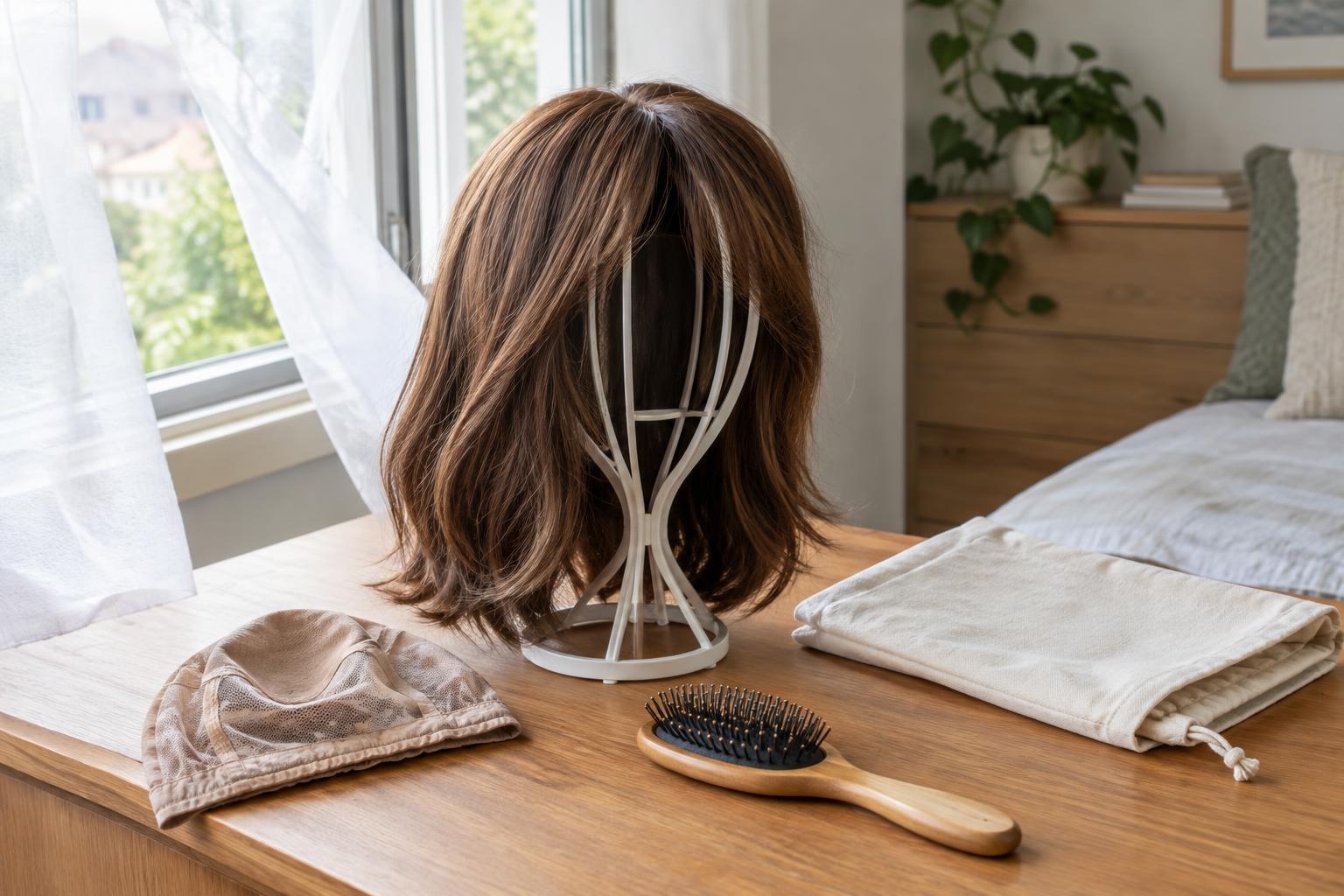
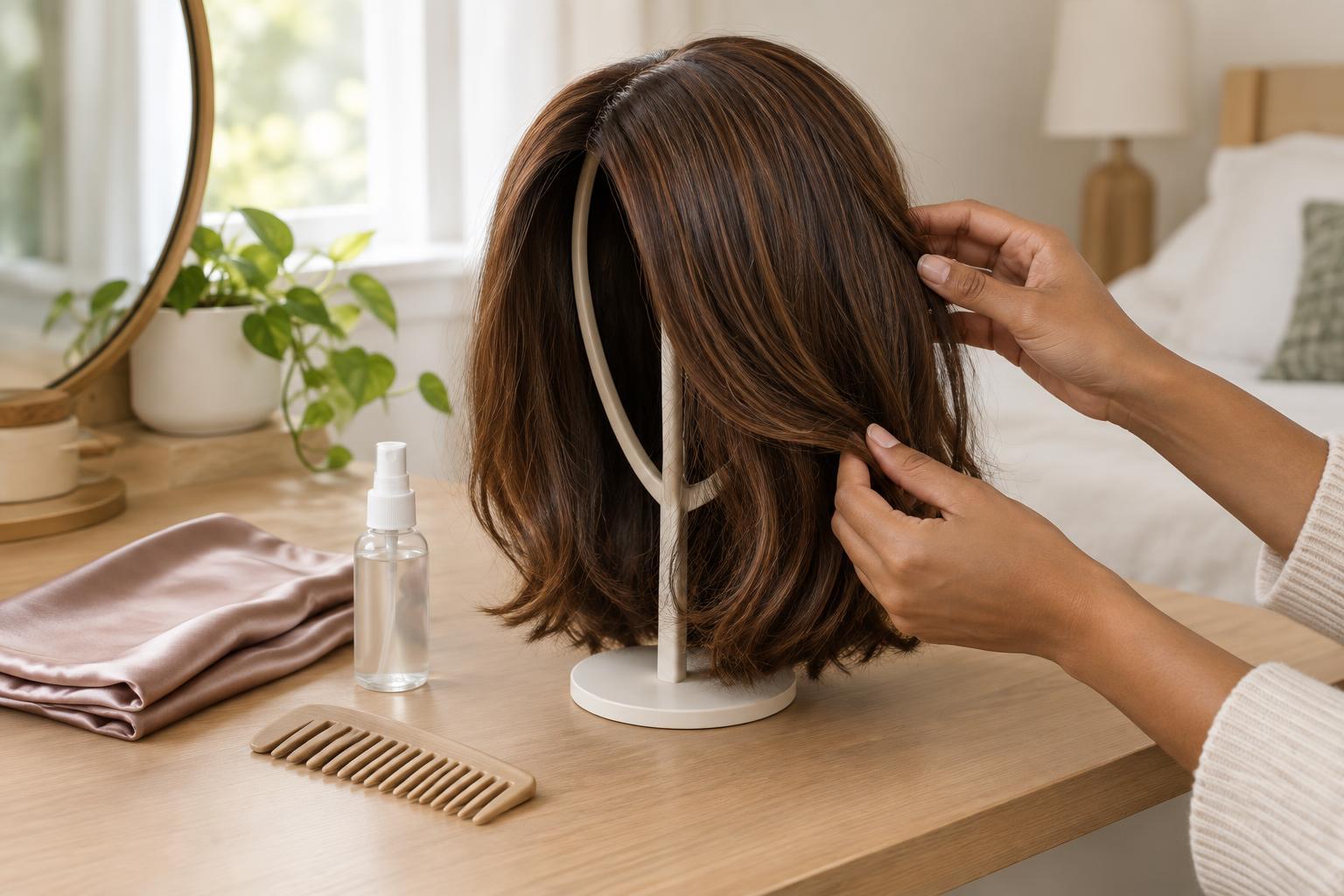
How to Tuck Wig Hair Behind Your Ears Without Showing the Cap
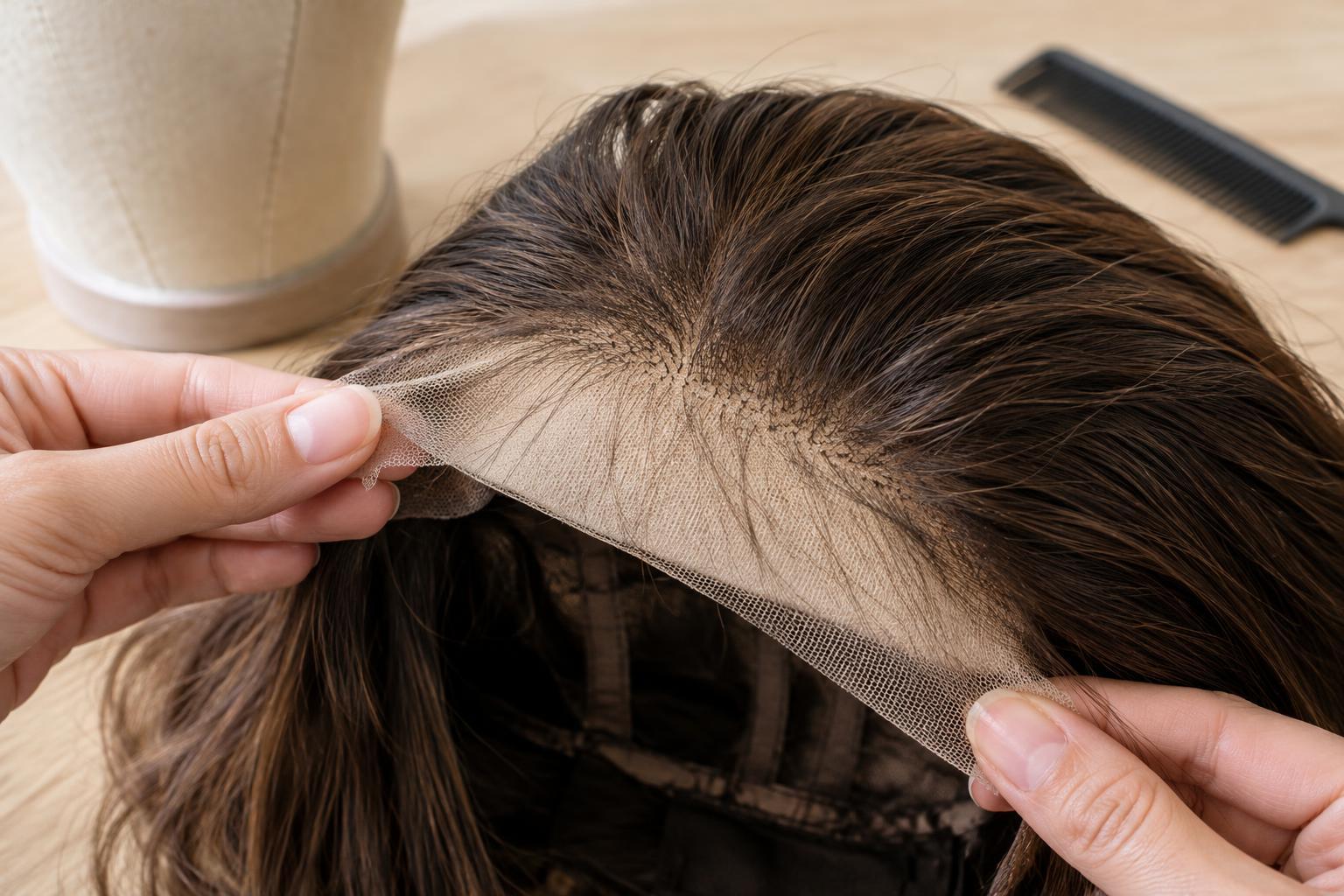
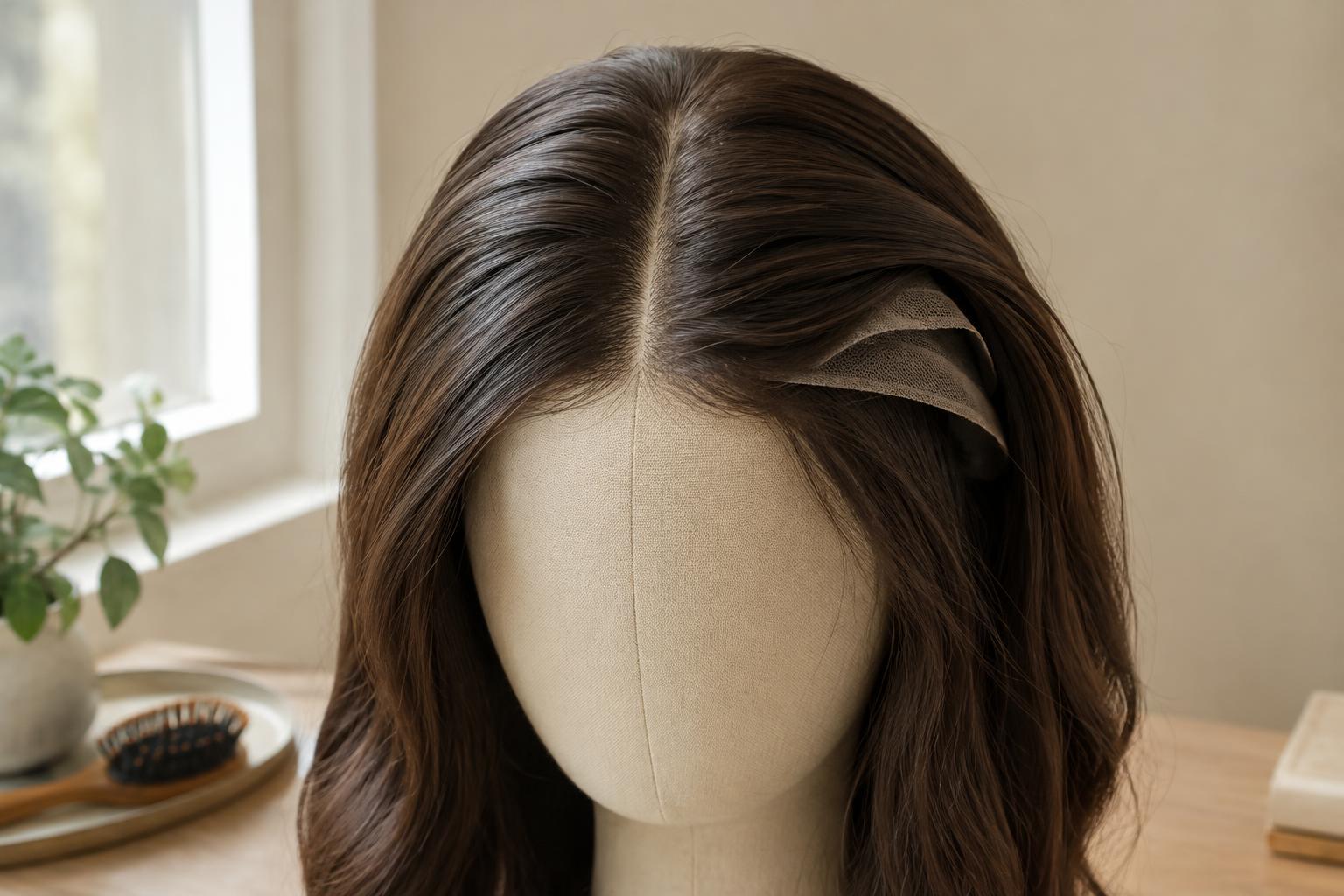
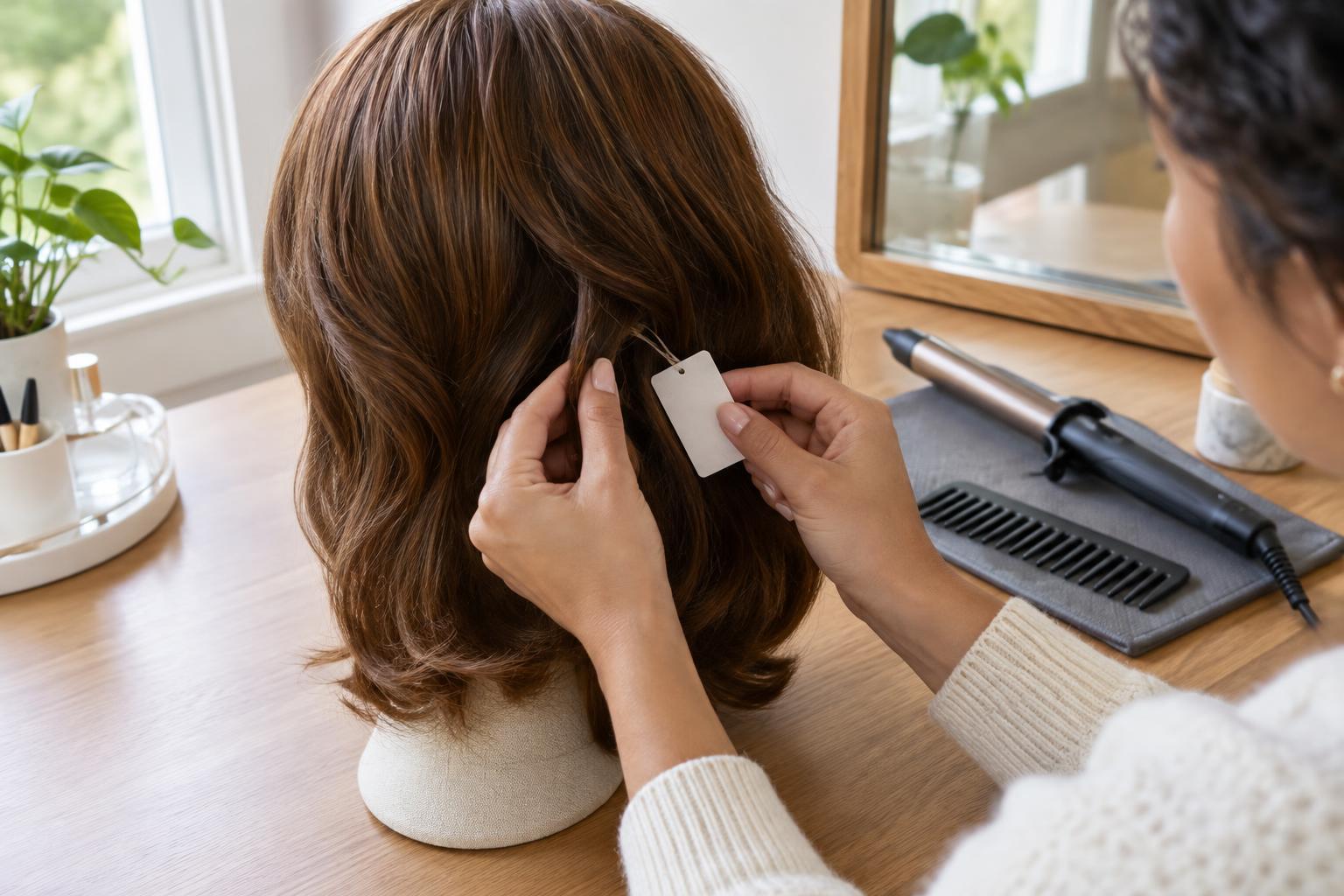
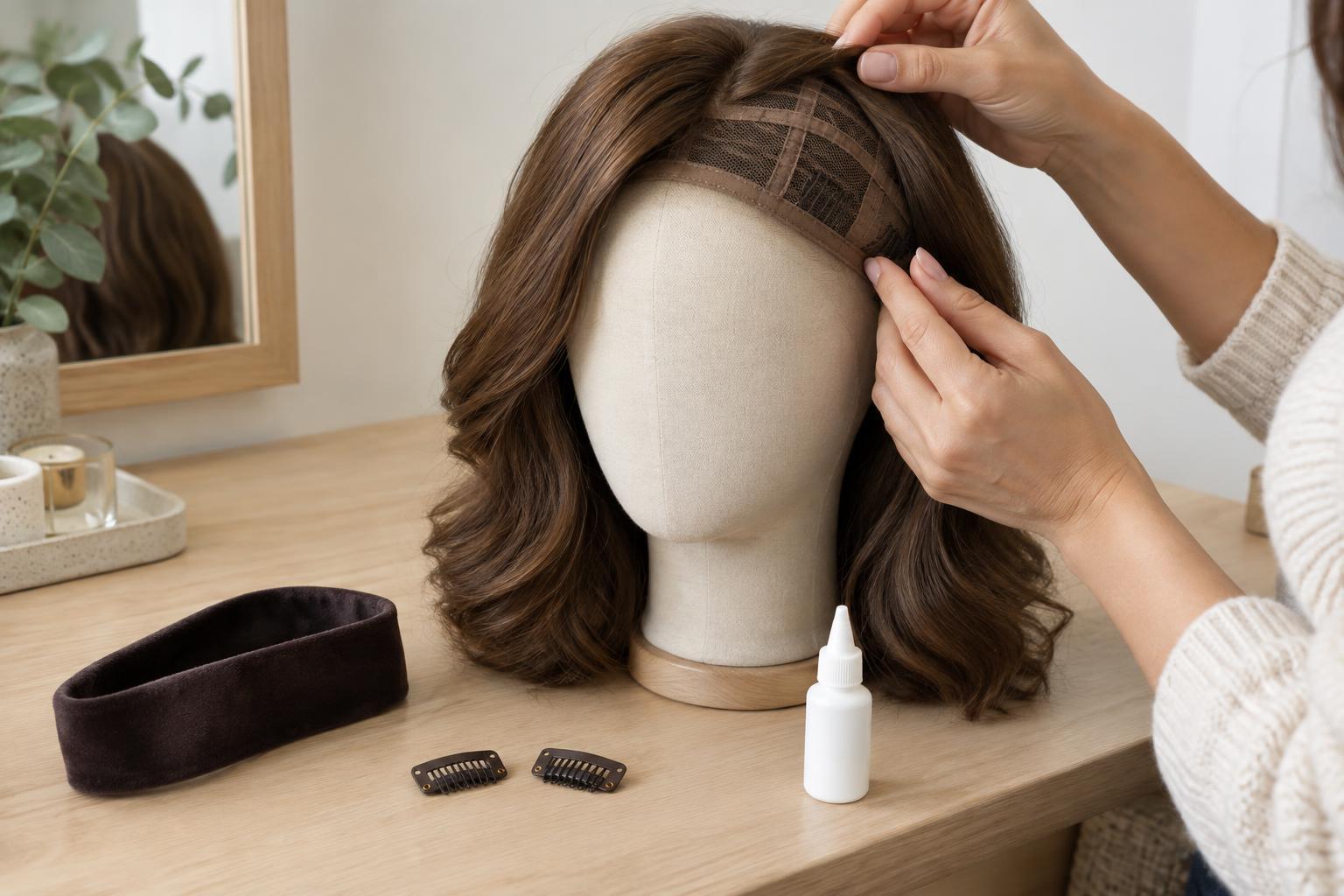
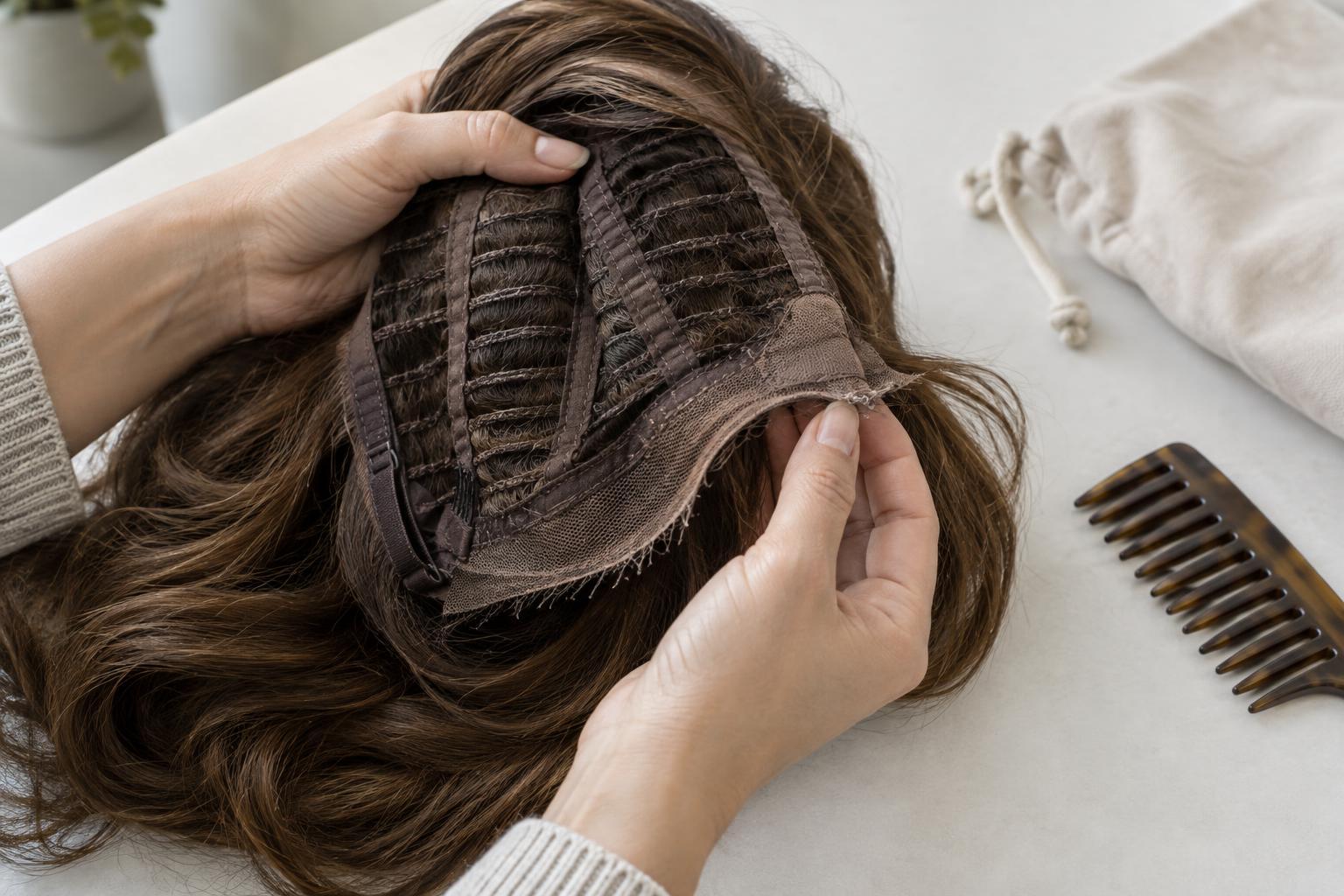
An ear tuck can open up your face, but it may also reveal a wig’s edge or ear tabs. Learn how to check the fit, arrange the hair and keep the style comfortable.
Read article · 3 min↗Wig Types and Materials
More to discover ↗
Fit and Selection
If you expect to remove your wig during the day or switch between styles, ease of use matters as much as appearance. Learn what to look for in the cap, hairline and fastening method, and how to test a wig against your routine.
Read article ↗More to discover
An ear tuck can open up your face, but it may also reveal a wig’s edge or ear tabs. Learn how to check the fit, arrange the hair and keep the style comfortable.
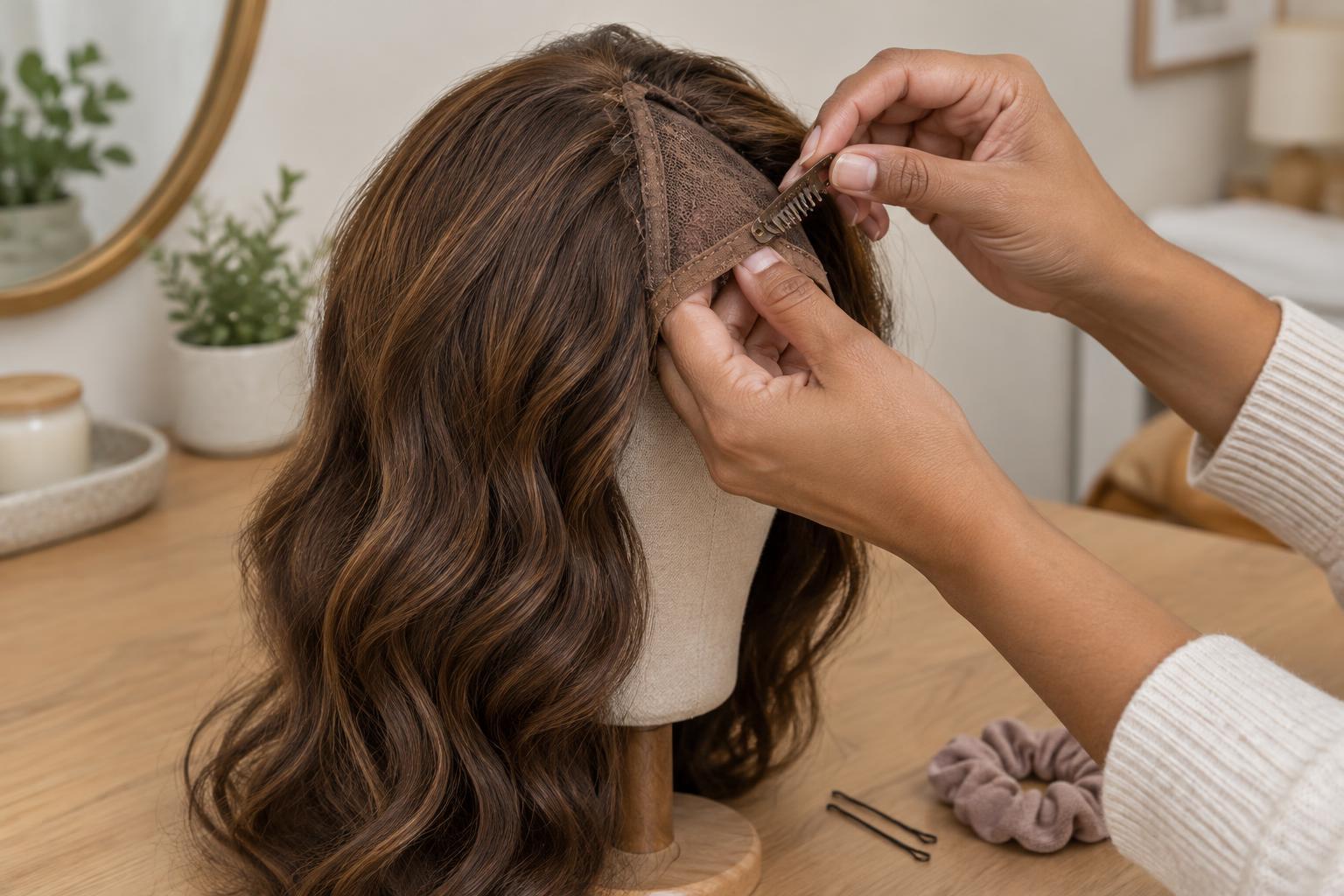
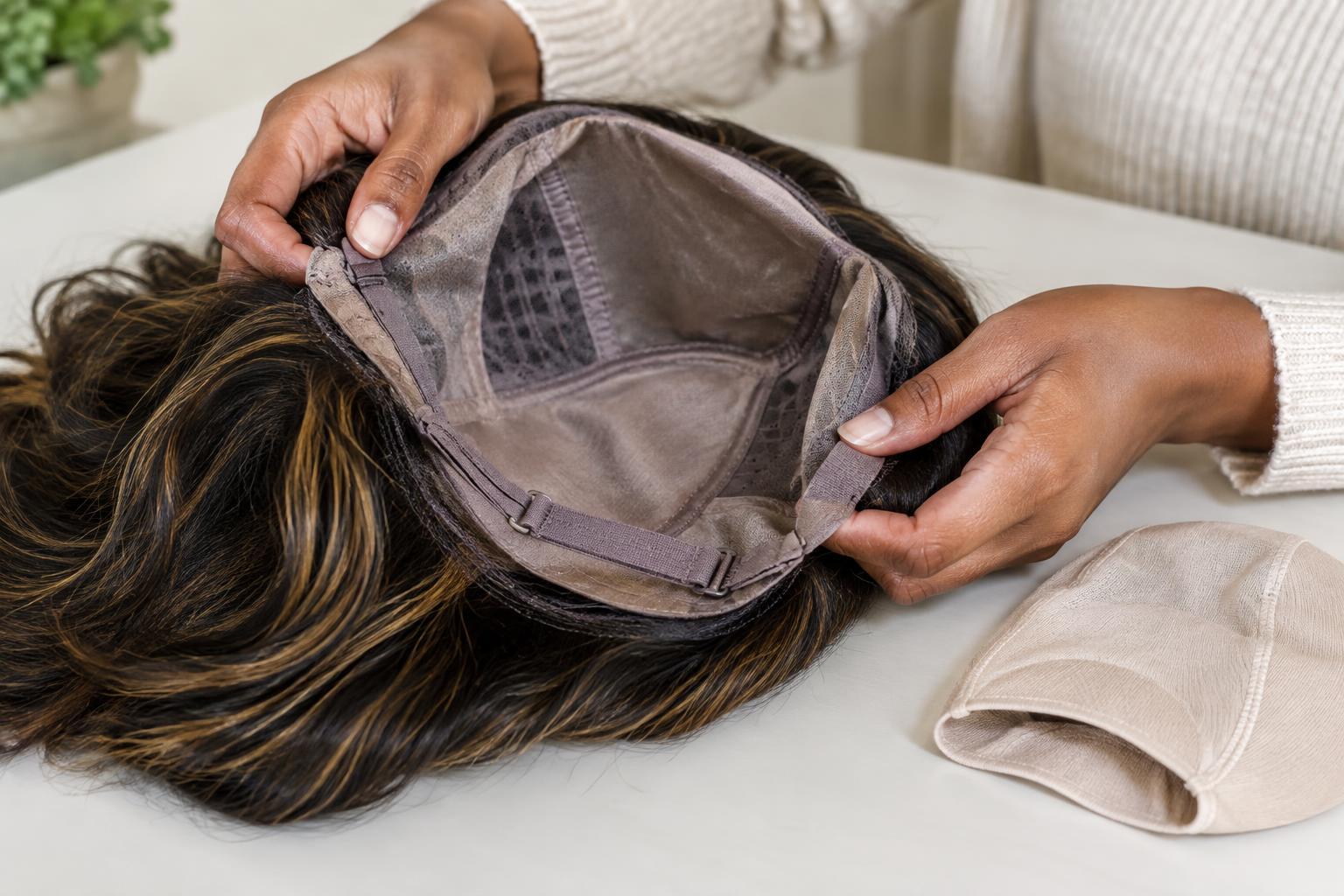
Read article · 3 min↗Ear tabs help position a wig, but they do not guarantee the side coverage you want. Learn how to assess tab placement, temple coverage and comfort when comparing wigs or trying one on.
Read article · 3 min↗Wig density describes how much hair a wig appears to have, but a percentage on a product listing cannot tell the whole story. Learn how cap construction, fibre texture, length and hair placement affect fullness, and how to assess a wig before choosing it.
Read article · 3 min↗Permatease is a layer of short, crimped fibres near the roots of some wigs. Learn why it creates volume, how it affects the look and feel of a wig, and what to check before you buy.
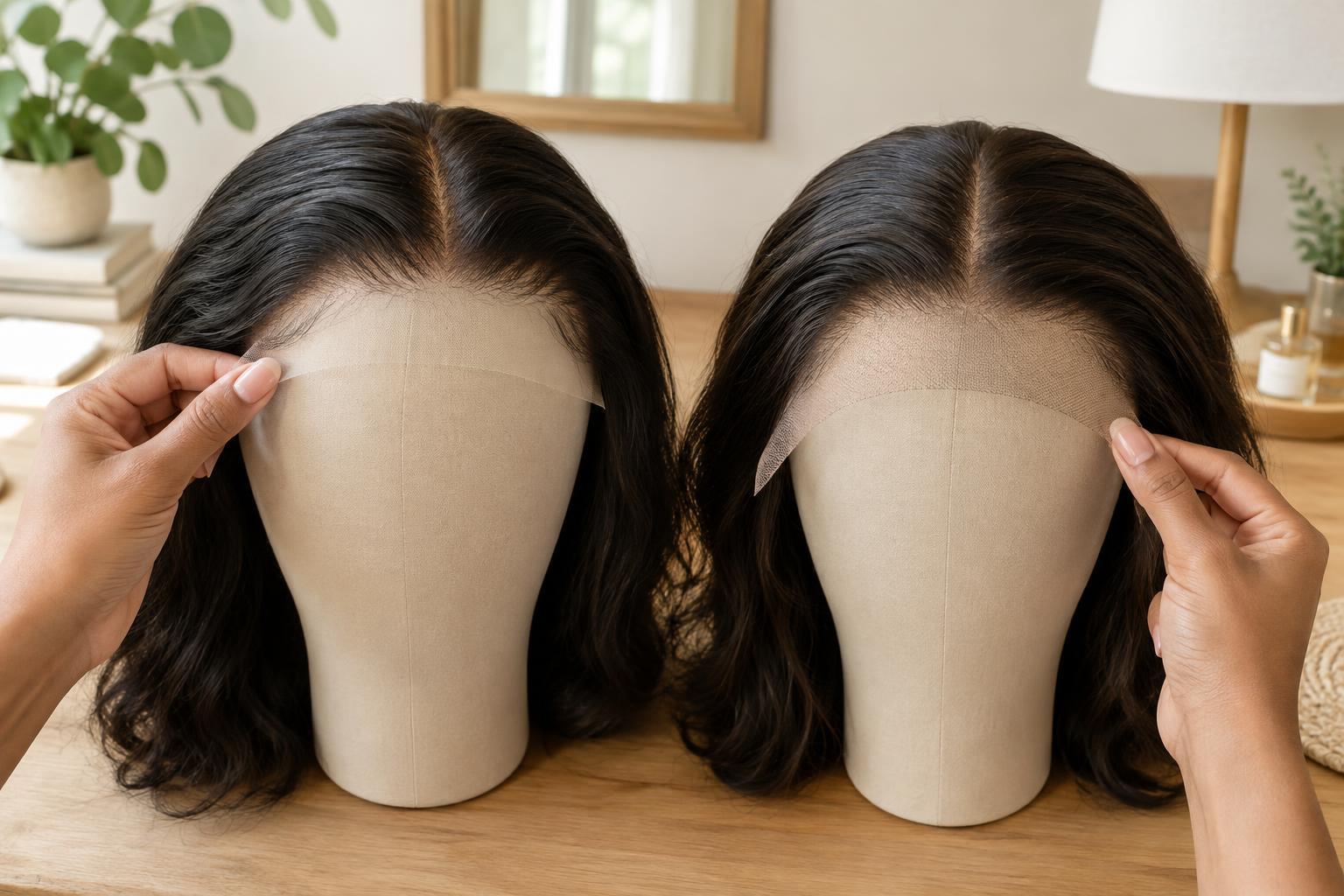
Read article · 4 min↗HD lace is prized for a fine, subtle-looking hairline, but its delicate construction is not the best choice for everyone. Learn how it compares with standard wig lace, what affects visibility, and how to weigh appearance against everyday wear and care.
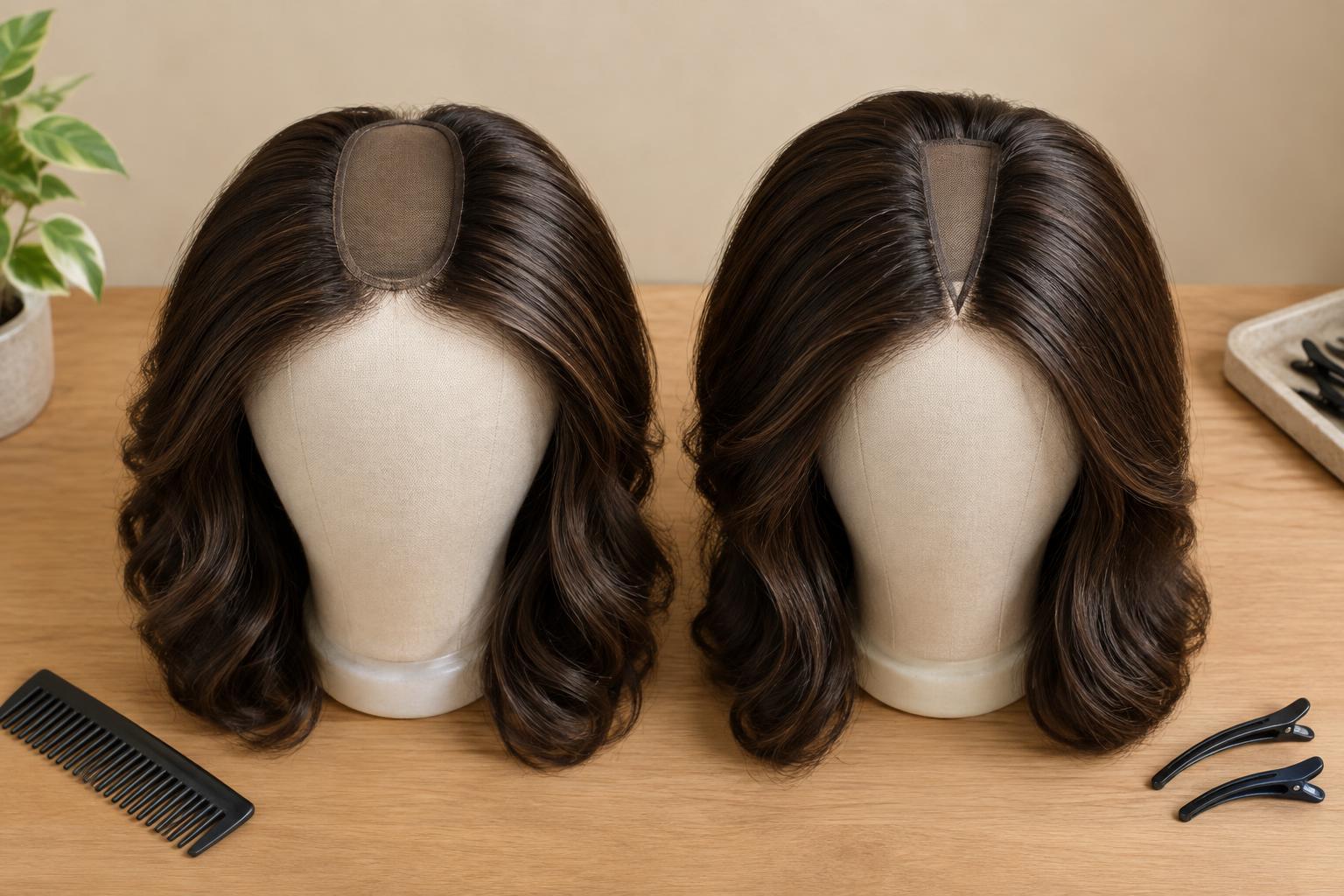
Read article · 4 min↗U-part and V-part wigs both have openings at the top of the cap, but the shape and size of those openings affect how much of your own hair you may use to create a part. Learn how each construction works, what to check before buying, and how to choose an option that suits your styling preferences.
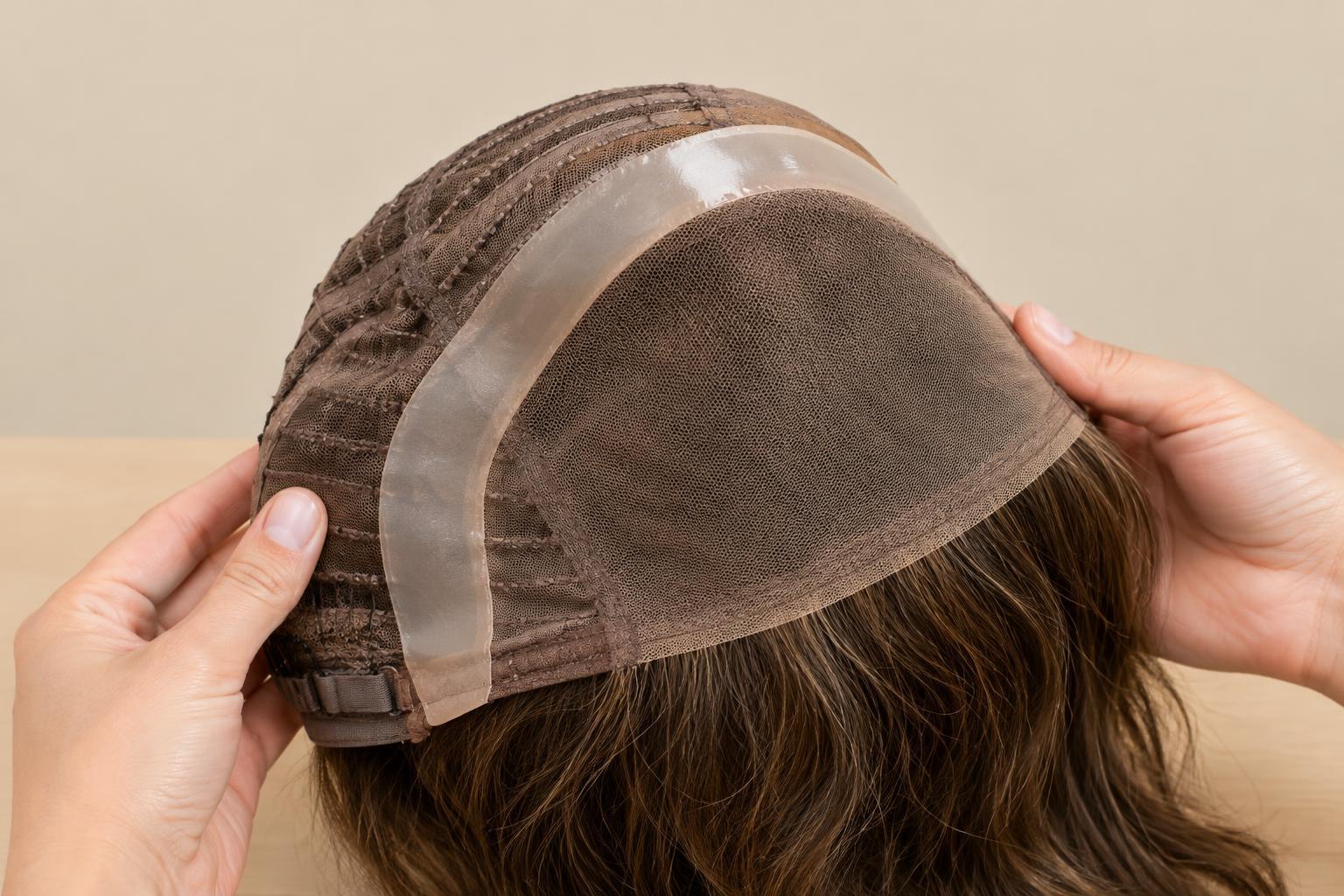
Read article · 4 min↗A polyurethane perimeter can provide a smooth surface for attaching a wig, but it feels and behaves differently from lace. Learn where PU strips are commonly placed, how they affect appearance and comfort, and what to check when comparing wig constructions.
Read article · 4 min↗The knots that secure hair to a lace wig can affect how natural the hairline looks and how well the wig holds up to wear. Learn the practical differences between single and double knots, where each may be used, and what to check before buying.
Read article · 4 min↗Single-drawn and double-drawn describe how consistent the strand lengths are in a hair bundle. Learn why that changes the shape of the ends, what the terms do not tell you, and how to compare wigs and hairpieces before buying.
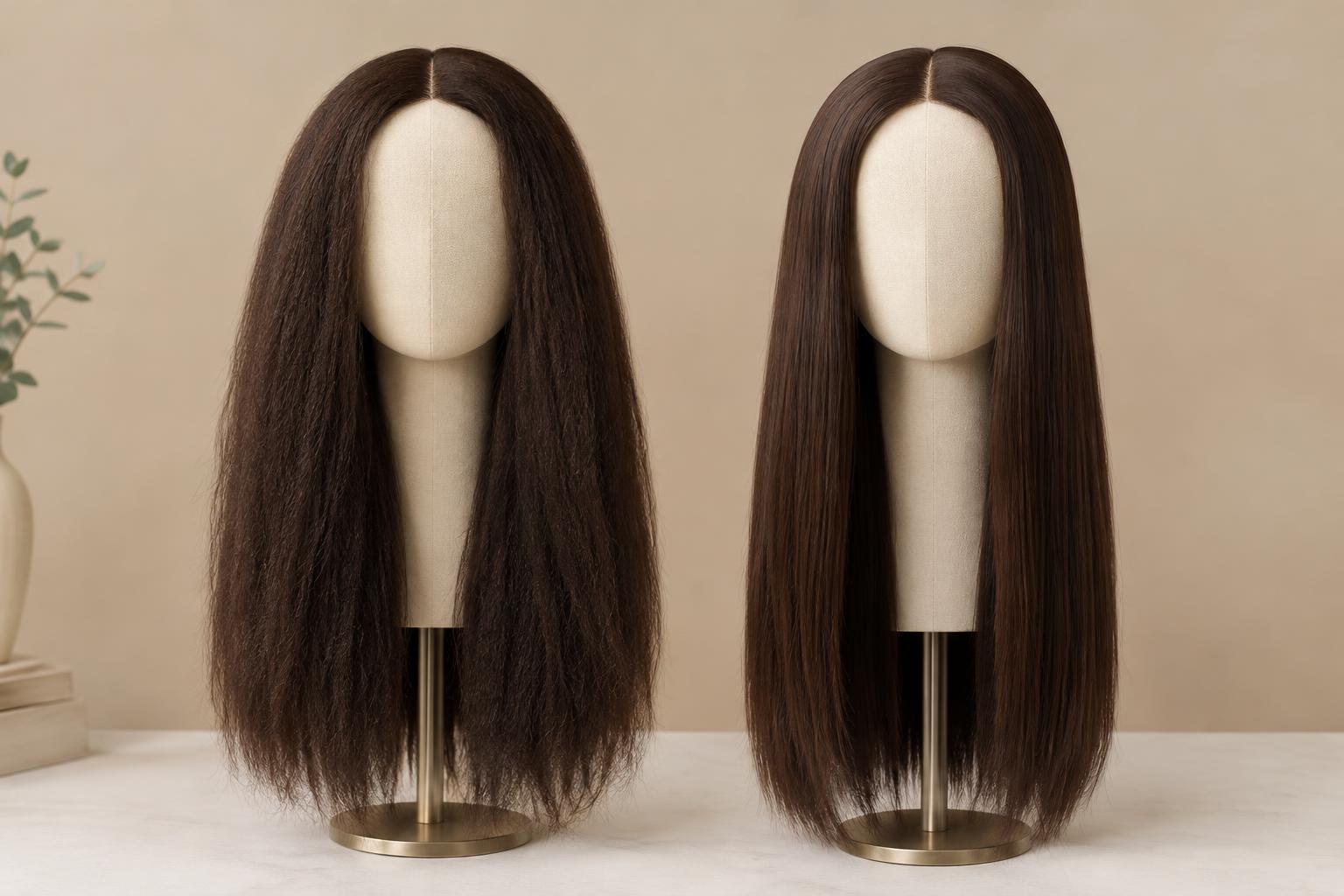
Read article · 4 min↗Yaki and silky-straight wigs can look similar in a product photo, but they differ in surface texture, movement and finish. Learn what each label usually means, how to compare wigs before buying and how to care for the texture you choose.
Read article · 4 min↗Labels such as “European” and “Brazilian” can be useful shopping shorthand, but they do not always establish where a wig’s hair was collected. Learn how to separate origin claims from texture, processing and construction details so you can compare wigs more confidently.
Read article · 4 min↗Virgin hair is usually described as human hair that has not been chemically coloured or permanently altered. On wig listings, though, the term does not always tell you how the hair was collected, whether it was heat-styled, or how the finished wig will behave. Here is how to read the label and ask useful questions before buying.
Read article · 4 min↗Remy and non-Remy describe how human hair strands are arranged, not a guaranteed level of quality. Learn why cuticle direction can affect tangling, how processing changes the picture, and what to ask before buying a wig or hairpiece.
Read article · 4 min↗A wig made with both human hair and synthetic fibre can offer a useful middle ground, but the mix affects more than price. Learn how blends influence appearance, styling, care and shopping decisions.
Read article · 4 min↗“Heat-resistant” does not mean heatproof, and “synthetic” does not always mean the same thing. Learn how to read wig fibre labels, choose suitable styling methods and protect your wig from avoidable damage.
Read article · 4 min↗Human-hair and synthetic wigs can both look convincing, but they behave differently when washed, styled and worn. Learn how the fibres affect appearance, upkeep and everyday choice.
Read article · 4 min↗An open-wefted wig and a closed-cap wig can feel different even when they look similar. Learn how each construction affects airflow, coverage, fit and styling, and what to check before choosing one.
Read article · 4 min↗Hand-tied and machine-wefted wigs differ in how hair is attached to the cap. Learn what each construction can offer, where hybrids fit in, and how to compare wigs beyond the label.
Read article · 4 min↗A silk-top wig can make the parting look as though hair is growing from a scalp. Learn how its layered base hides knots, how it differs from lace, and what to check for comfort, styling and care.
Read article · 4 min↗A monofilament top can give a wig a more natural-looking part, but “single mono” and “double mono” describe different constructions. Learn what each term means, how the tops may feel and look, and what to check before choosing one.
Read article · 4 min↗A 360-lace wig has lace around the edge of the cap, while the centre is usually made with a different construction. Learn how that layout affects parting, updos, fit and shopping choices.
Read article · 4 min↗Full-lace and lace-front wigs can both create a natural-looking hairline, but the lace sits in different places. Learn what each construction means for parting, updos, fit, care and shopping.
Read article · 4 min↗A beginner-friendly tour of the parts of a wig and what they mean for appearance, comfort and styling. Learn how to recognise common cap features and decide which details matter to you.
Read article · 4 min↗A wig does not need aggressive styling to look natural or feel like your own. Learn how excess heat, pulling and product can affect different fibres and constructions, and how to make gentler choices.
Read article · 4 min↗A short wig can look softly tousled, piecey or neatly defined without feeling coated in product. Learn how to build texture with your fingers, a light touch and methods suited to the wig’s fibre.
Read article · 4 min↗Defined curls do not require a heavy layer of product. Learn how to prepare a human-hair wig, choose lightweight stylers, shape curls gently and dry them while protecting the cap.
Read article · 4 min↗Pre-curled synthetic wigs and hairpieces can lose definition through friction, storage and handling. Learn how to revive their shape with gentle detangling, light misting and careful drying, without assuming the fibres can tolerate heat.
Read article · 4 min↗Flyaways can make a wig look less polished, but heavy styling products may leave a sheen, flakes or stiff patches. Learn how to identify the cause, smooth stray fibres with a light touch and keep product away from the areas where it shows most.
Read article · 4 min↗A fuller crown does not have to mean teasing the hair into a tangle. Learn how part placement, gentle root lifting, lightweight products and careful drying can create natural-looking height while respecting the wig’s fibres and cap.
Read article · 4 min↗A half-up style can add shape while leaving plenty of hair loose. Learn how to choose where to gather hair, keep the cap and wefts covered, secure the style gently and check it from every angle.
Read article · 4 min↗A low bun can be a comfortable way to style a wig, provided the hair is gathered gently and the wig stays secure without pulling at the front edge. Learn how to prepare the hair, place the bun and check the finished style for tension.
Read article · 4 min↗A low ponytail can look relaxed and tidy, but pulling a wig’s hair back may reveal the cap at the nape. Learn how to check coverage, position the ponytail and secure it gently, with options for wigs that are not suited to a fully pulled-back style.
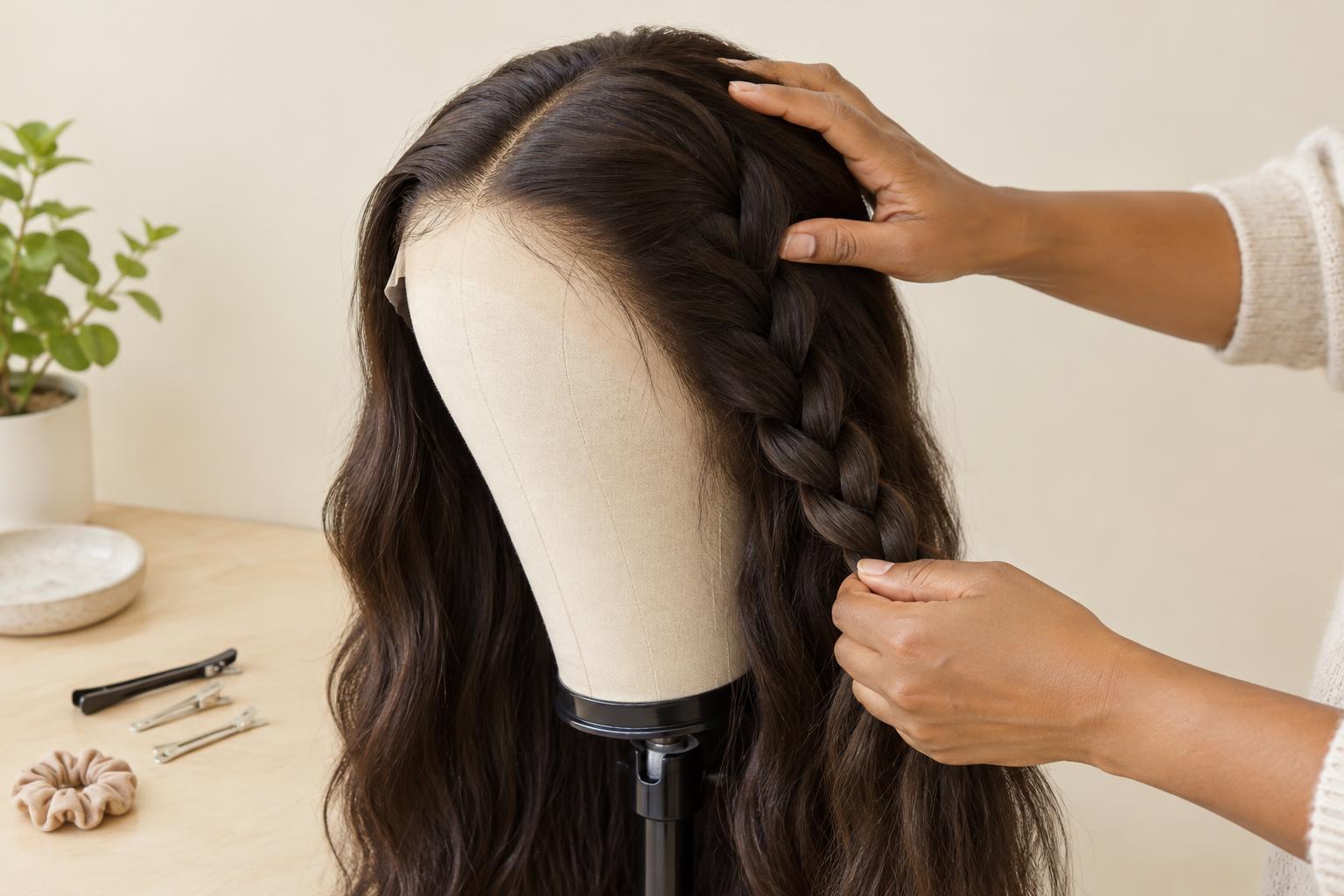
Read article · 4 min↗Braids can change the look of a wig, but tight sections may strain the cap while wide parts can reveal its construction. Learn how to support the wig, choose braid placement and adjust your technique for wefted and lace areas.
Read article · 4 min↗Layering a wig can make it feel more like your own style, but cutting away too much hair is difficult to undo. Learn which changes may be manageable at home, which are better left to an experienced wig stylist, and how to prepare for an appointment.
Read article · 4 min↗A wig fringe can look longer on a stand than it does on your head. Learn how to set a target length, make small cuts and check the result as you go, with tips for both synthetic and human-hair wigs.
Read article · 4 min↗A natural-looking lace-front hairline starts with fit, careful lace placement and gentle styling. Learn how to work with the wig’s density, parting and face-framing hair without relying on heavy makeup or excessive adhesive.
Read article · 4 min↗A lace top can offer room to change your part, but not every position will look equally natural. Learn how to check the parting area, redirect the hair gently and spot signs that you have moved beyond the lace.
Read article · 4 min↗Heat-resistant synthetic fibres can often be reshaped with gentle heat, but the right setting depends on the wig. Learn how to check the label, test a hidden strand, create a curl or smoother finish, and let the style cool into place.
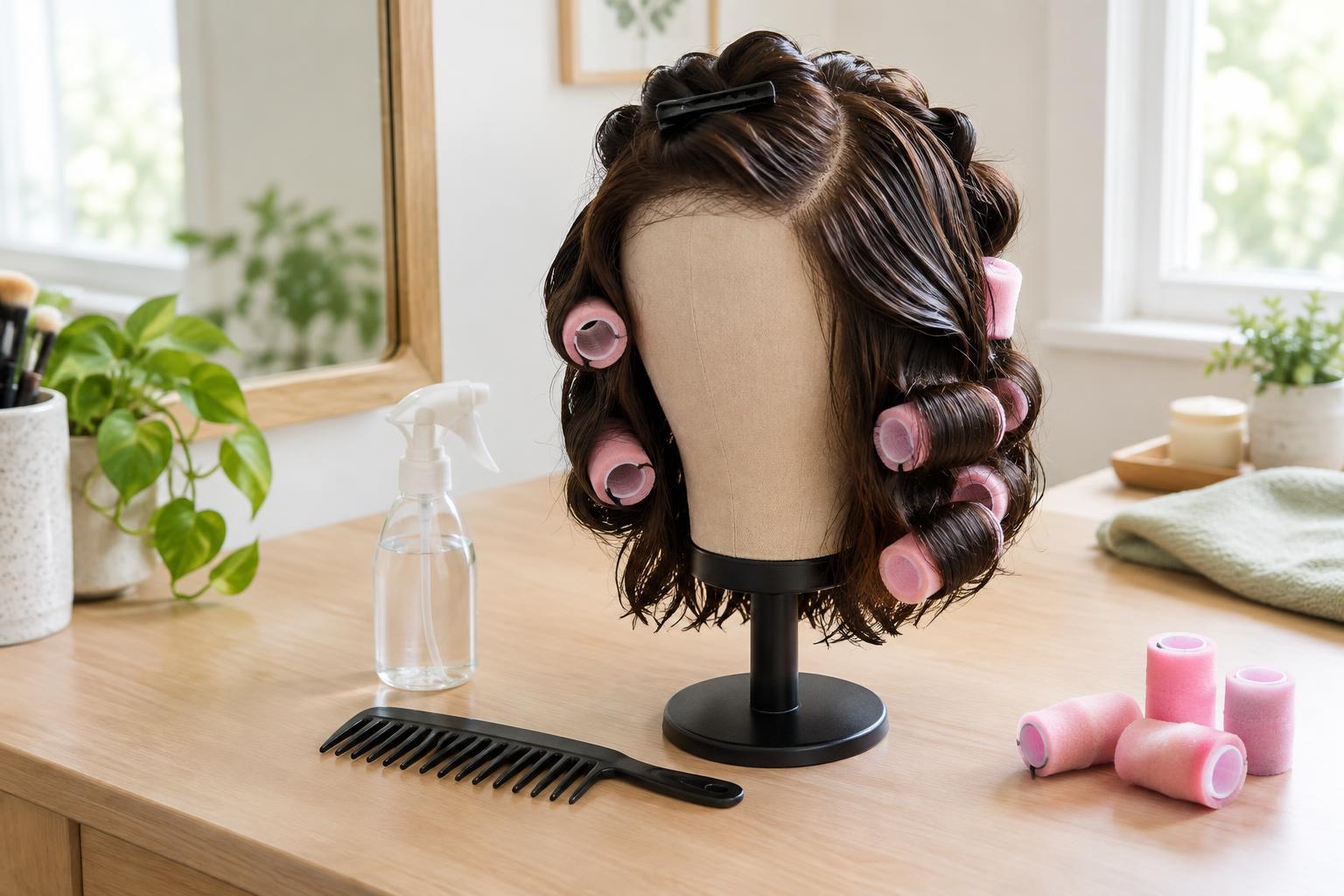
Read article · 4 min↗You can refresh or shape curls in a standard synthetic wig with water, rollers and patient air-drying. Learn what a no-heat set can achieve, how to protect the cap and how to keep the finished curls looking tidy.
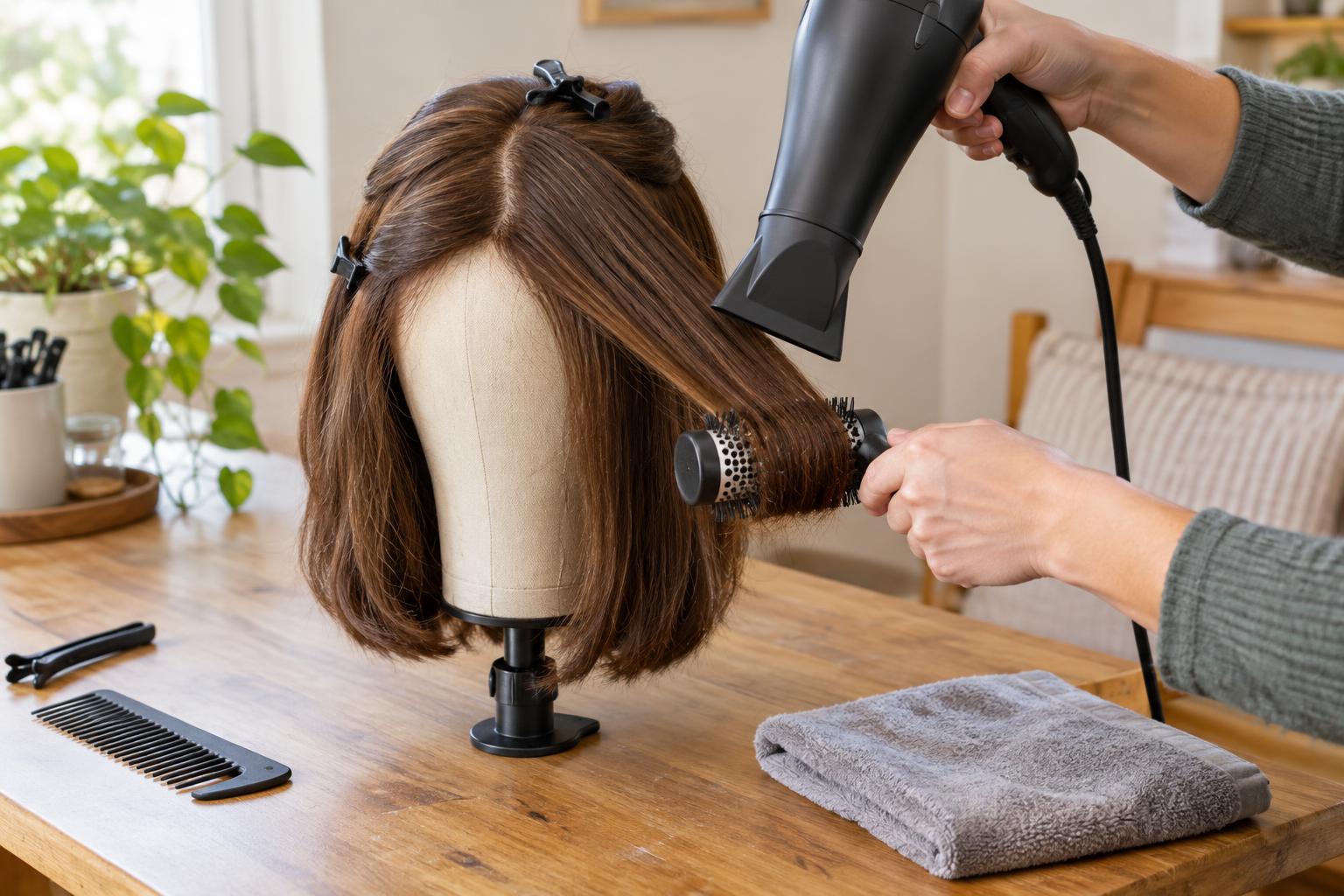
Read article · 4 min↗A smooth blow-dry starts with gentle preparation, steady airflow and careful handling of the wig cap. Learn how to dry a human-hair wig in sections without putting unnecessary strain on the hair or its construction.
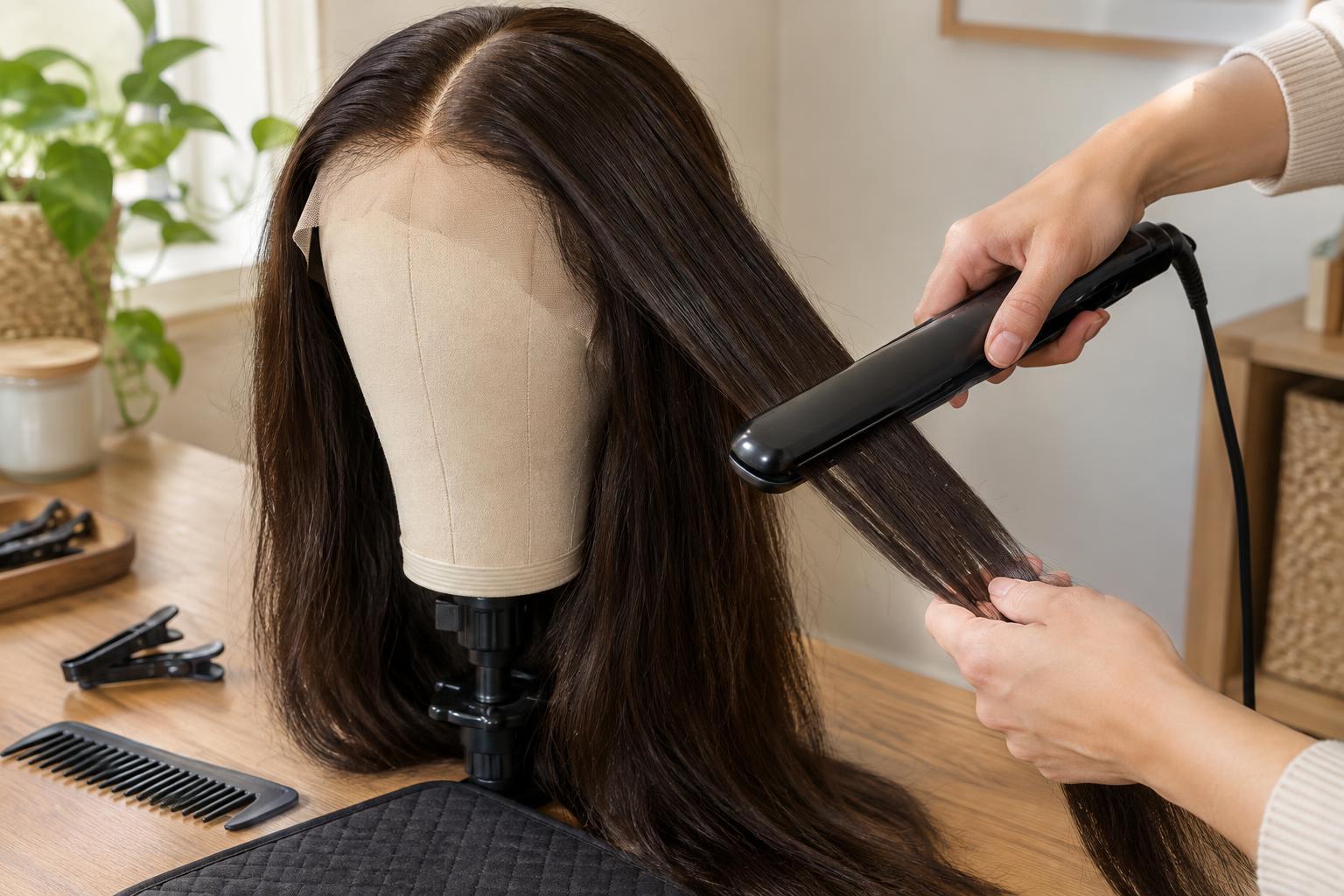
Read article · 4 min↗A careful straightening routine starts before the flat iron is switched on. Learn how to check your wig, prepare the hair, work in small sections and keep heat and tension away from delicate cap areas.
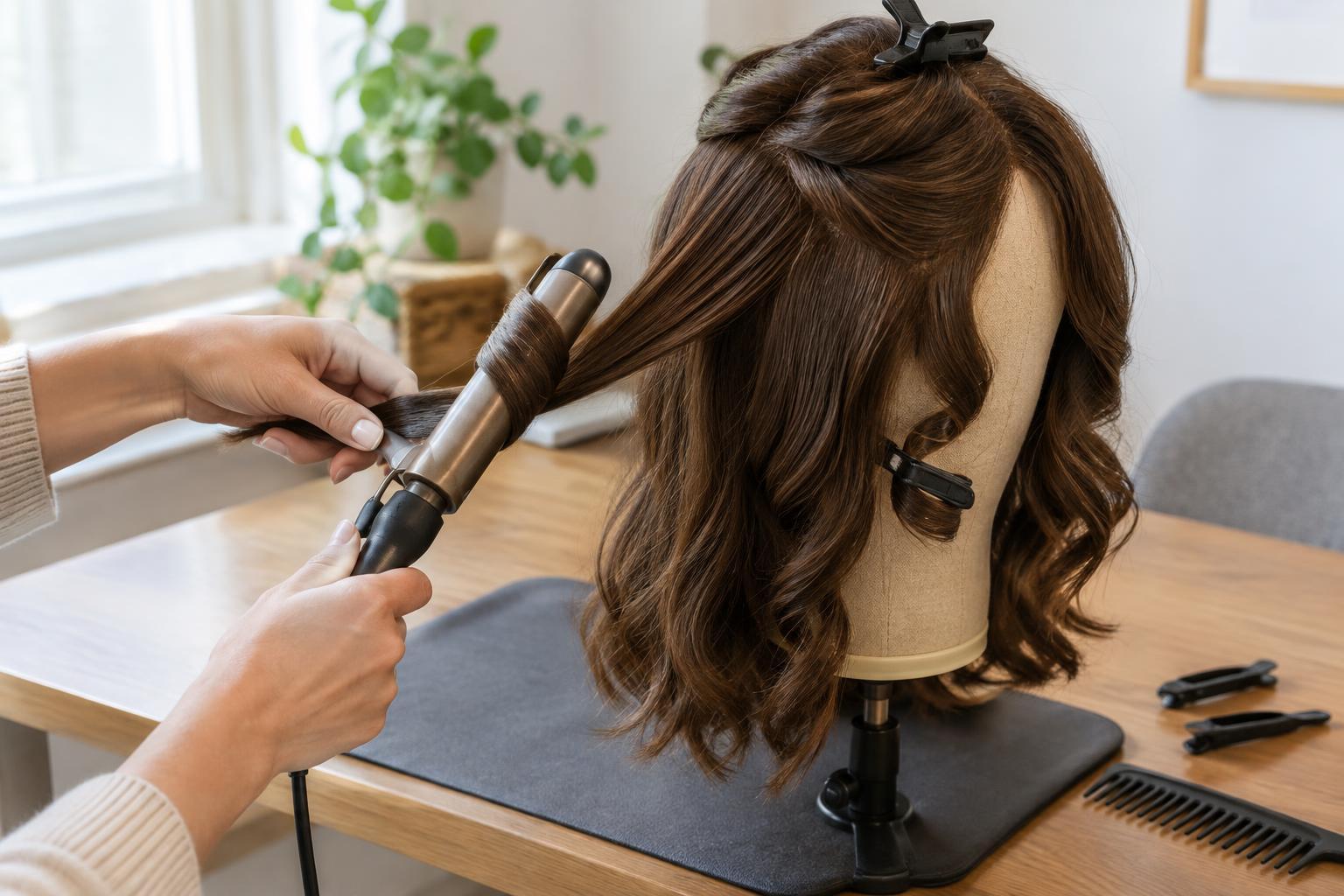
Read article · 4 min↗A curling iron can add shape to a human-hair wig, but the hair cannot recover from heat damage as growing hair can. Learn how to check the wig, choose a cautious setting, curl in small sections and let each curl cool before judging the result.
Read article · 4 min↗A wig’s appearance does not tell you whether it can handle a curling wand, straightener or hairdryer. Learn how to check its fibre, read heat guidance and make a cautious strand test before styling.
Read article · 4 min↗Clips, pins, bands and decorative combs can snag wig fibres or strain a delicate cap if removed in a hurry. Learn how to take accessories out gently, deal with tangles and protect your wig between wears.
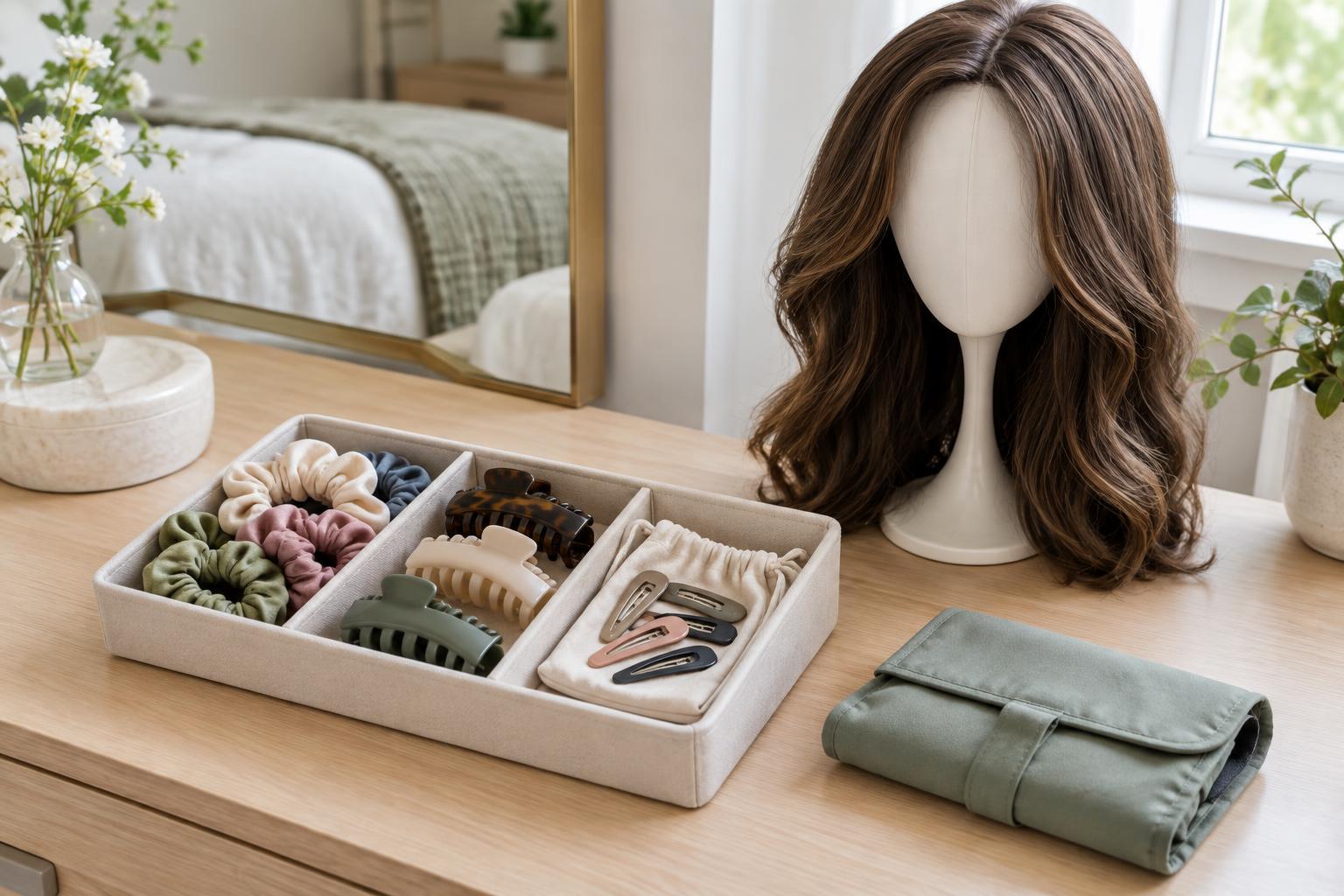
Read article · 3 min↗Exposed clip teeth, hook-and-loop strips and decorative edges can catch on wigs and hairpieces in a drawer or travel bag. A simple storage system keeps fastenings covered, separates delicate items and makes accessories easy to find.
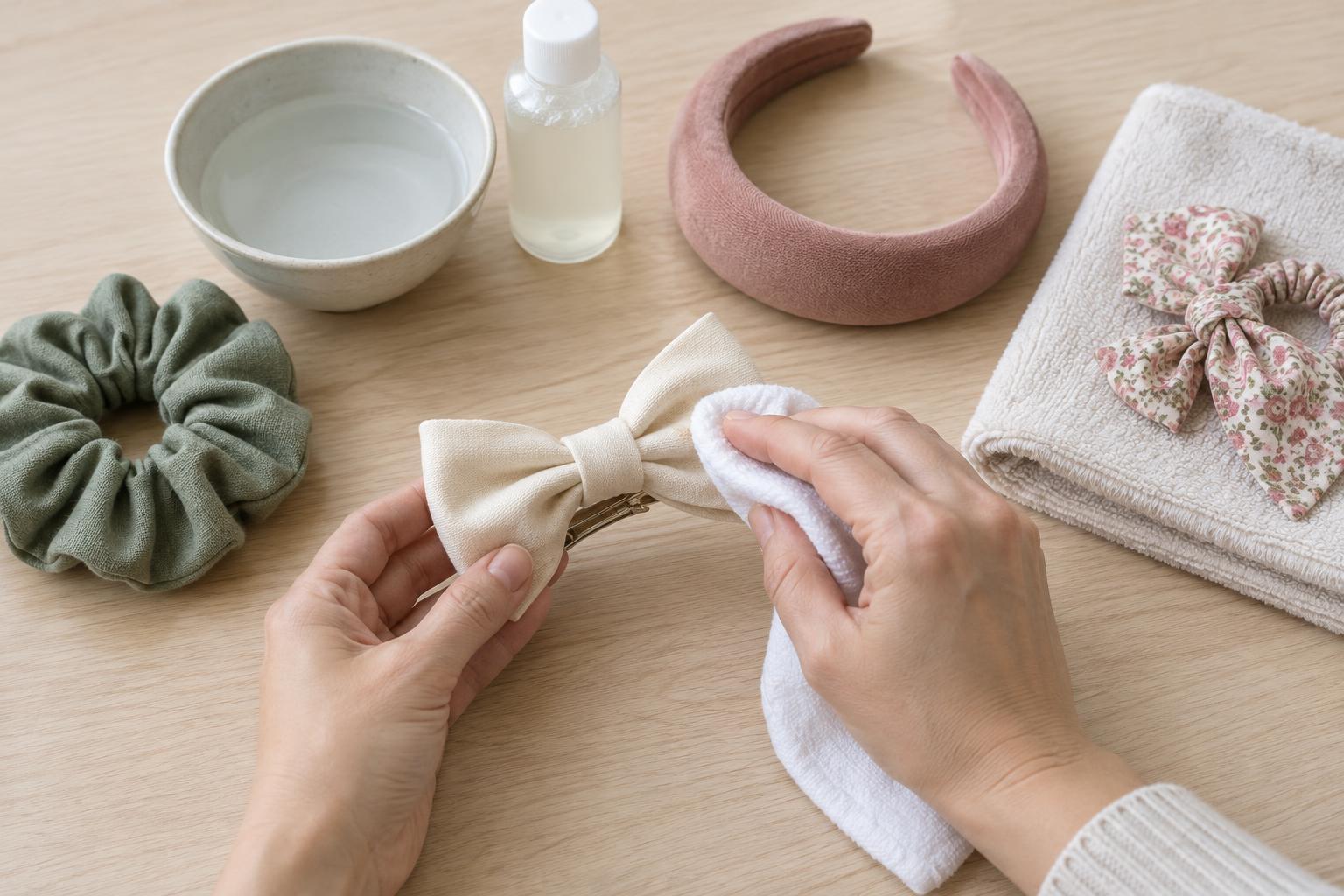
Read article · 4 min↗Scrunchies, bows, padded headbands and fabric-covered clips can lose their shape when they are soaked, scrubbed or dried with heat. Learn how to choose a gentle cleaning method, protect attached hardware and help each accessory dry in its original shape.
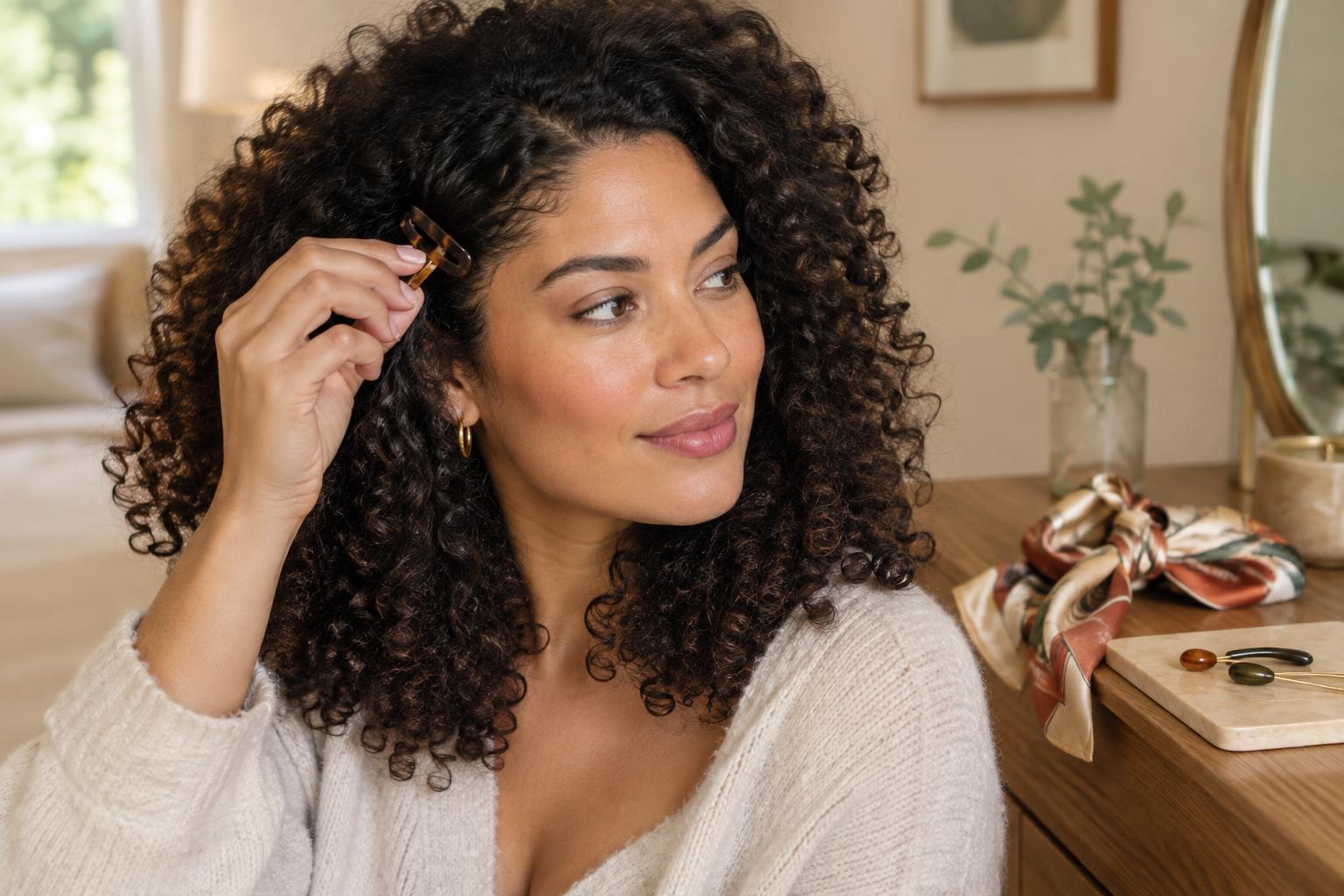
Read article · 4 min↗The right accessory can frame your curls, keep hair out of your face and add detail without pressing your style flat. Learn how to choose clips, bands, scarves and pins that work with the shape of your curls, including curls on wigs and hairpieces.
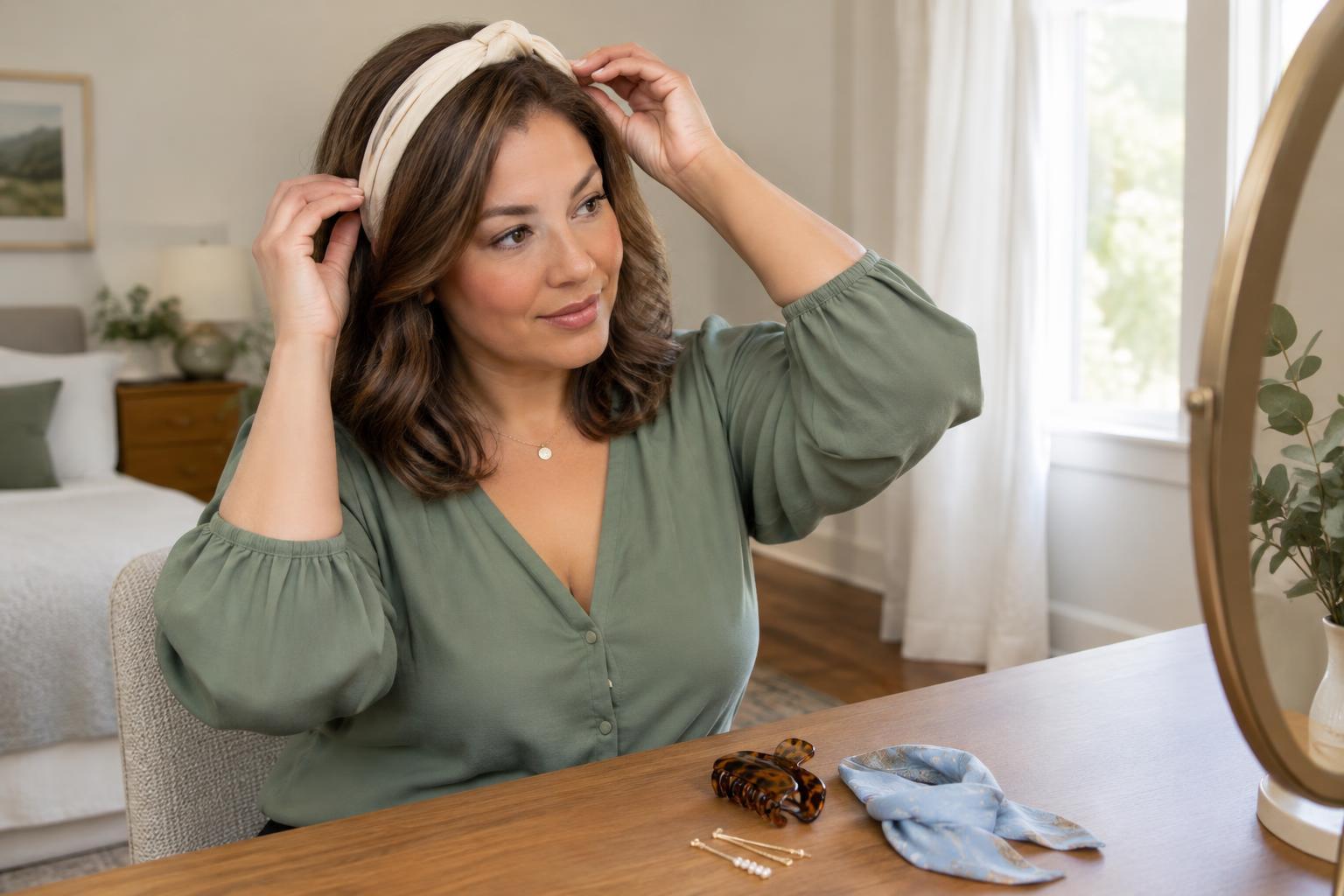
Read article · 4 min↗A practical guide to choosing clips, scarves, headbands and other accessories that work with your wig colour and clothing. Learn how to balance contrast, texture and placement while keeping the wig comfortable and secure.
Read article · 4 min↗Small clasps and fiddly pins are not the only way to finish a hairstyle. Explore headbands, soft ties, large clips and other accessories that may be easier to grip, position and remove, with tips for natural hair, wigs and hairpieces.
Read article · 4 min↗The material of a headband, clip or wig accessory can affect how it feels on an easily irritated scalp, but so can its fit, edges and upkeep. Learn what to look for and how to try new accessories without committing to a full day of wear.
Read article · 4 min↗A hat can be a comfortable finishing touch to a wig, but a snug crown or rough lining may press down the style and create friction. Learn how to choose a hat, position your wig and refresh the fibres after wearing it.
Read article · 4 min↗Sectioning clips keep the hair you are not working on out of the way. Learn how different clip shapes and grips suit fine, thick, short and long hair, plus how to use them gently on wigs and hairpieces.
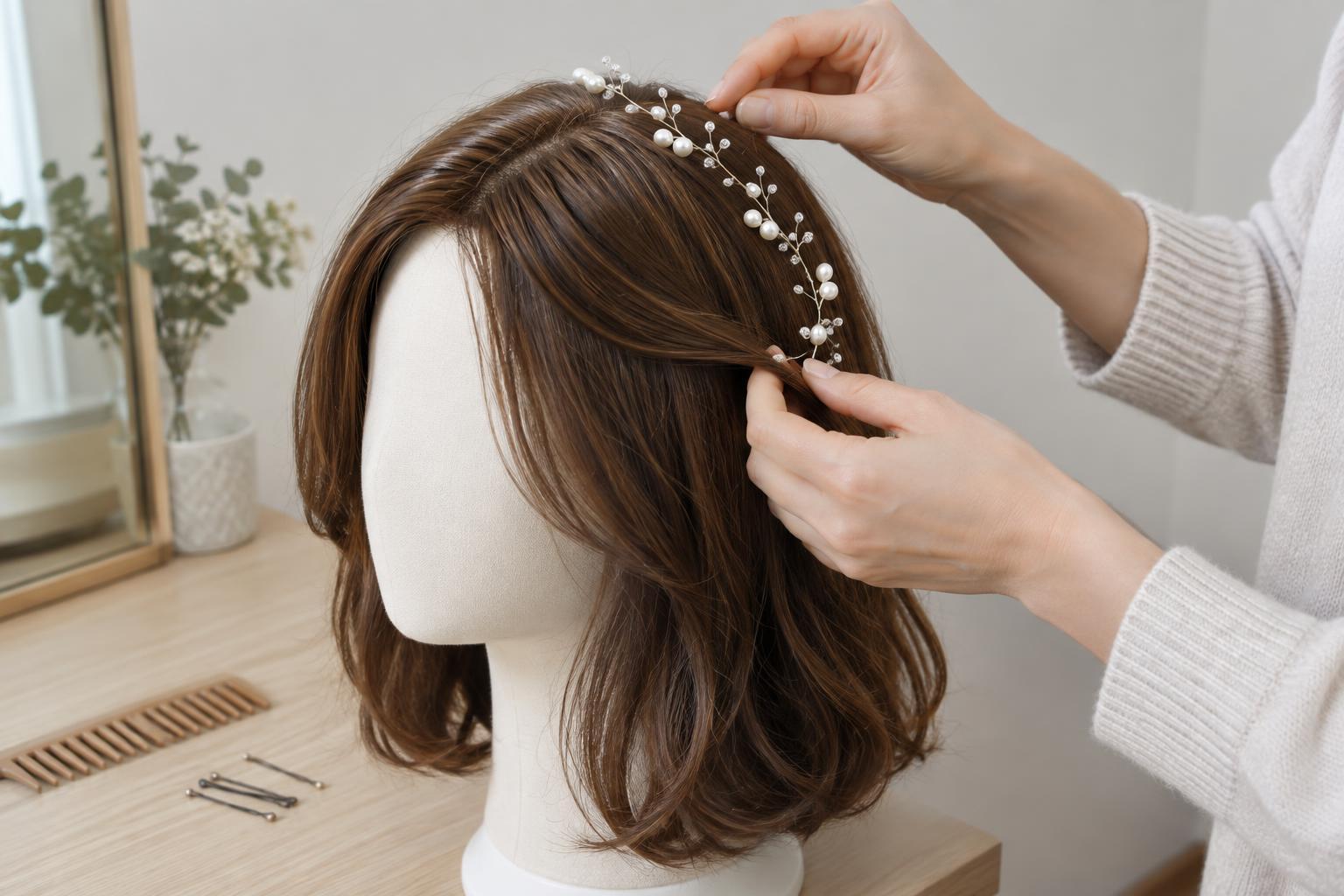
Read article · 4 min↗A hair vine can add detail to a wig without becoming caught in the fibres. Learn how to choose a smoother vine, plan its placement, secure it to the wig’s structure and remove it gently.
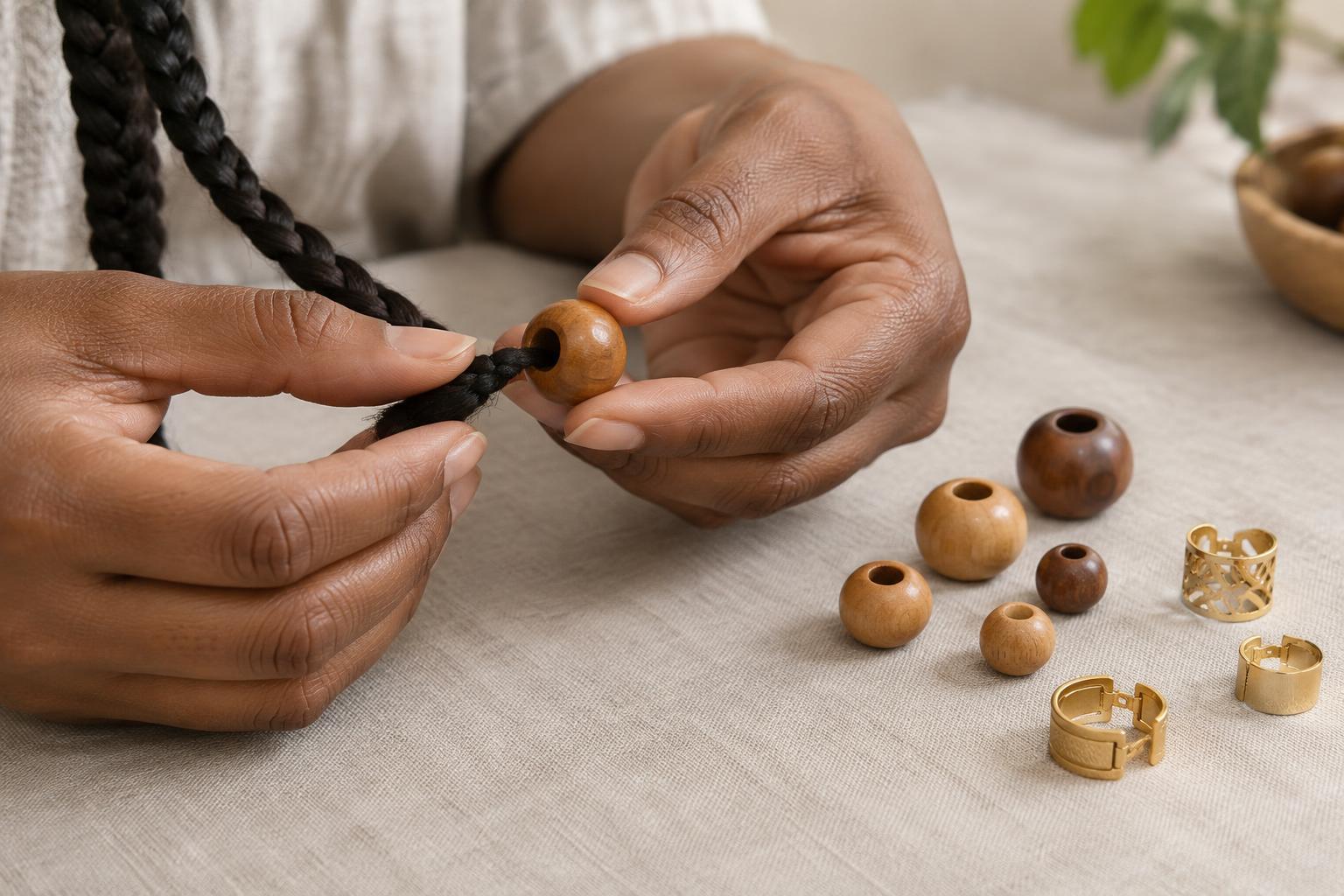
Read article · 4 min↗A bead or cuff should feel secure without needing to be forced into place. Learn how to match the opening to a braid, twist or loc, account for bulky ends and choose accessories that are easier to remove without snagging your hair or wig fibres.
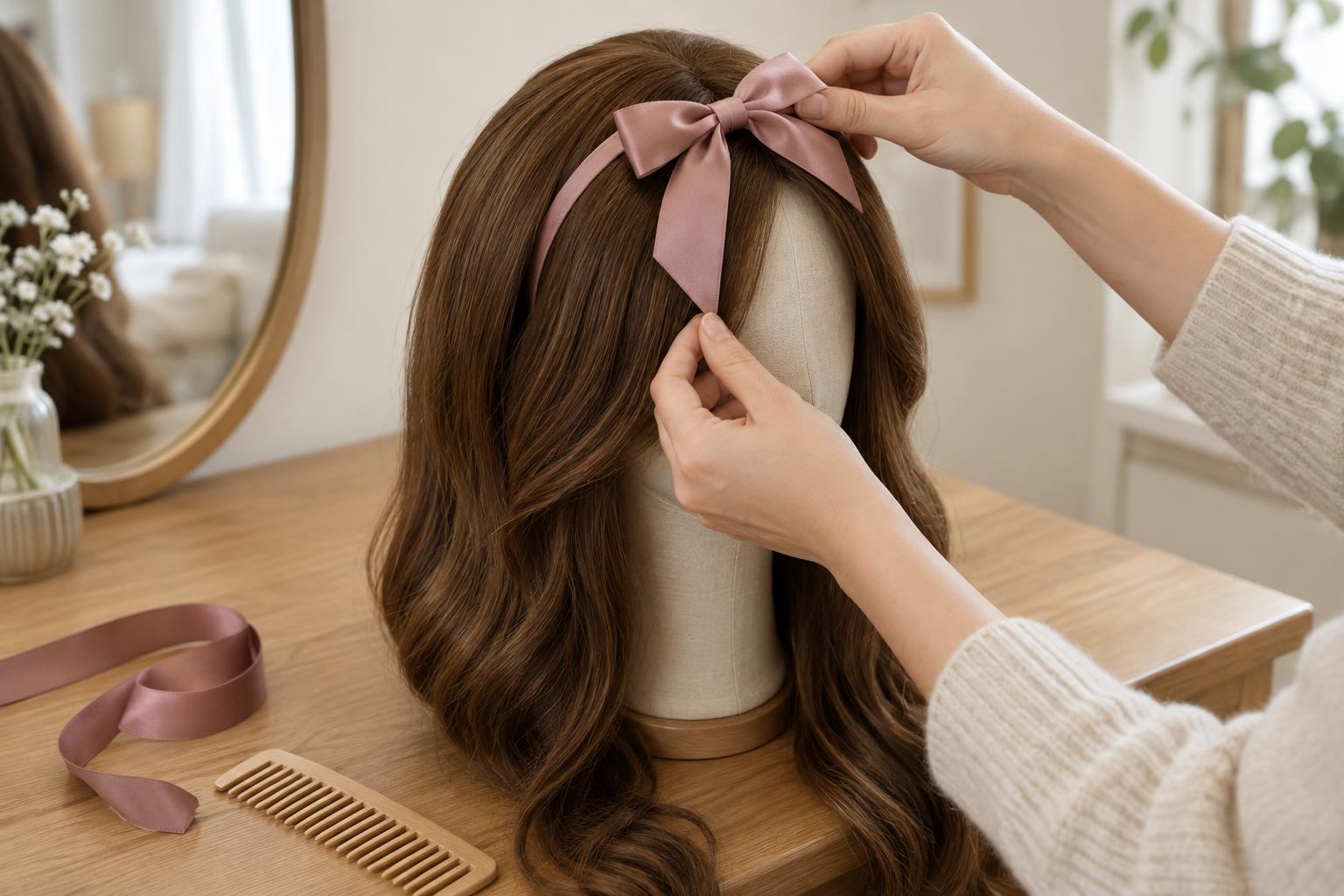
Read article · 4 min↗Ribbons and bows can add colour to a wig without becoming tangled in its fibres. Learn how to choose gentle fastenings, tie over a holder rather than the hair, and remove accessories without pulling.
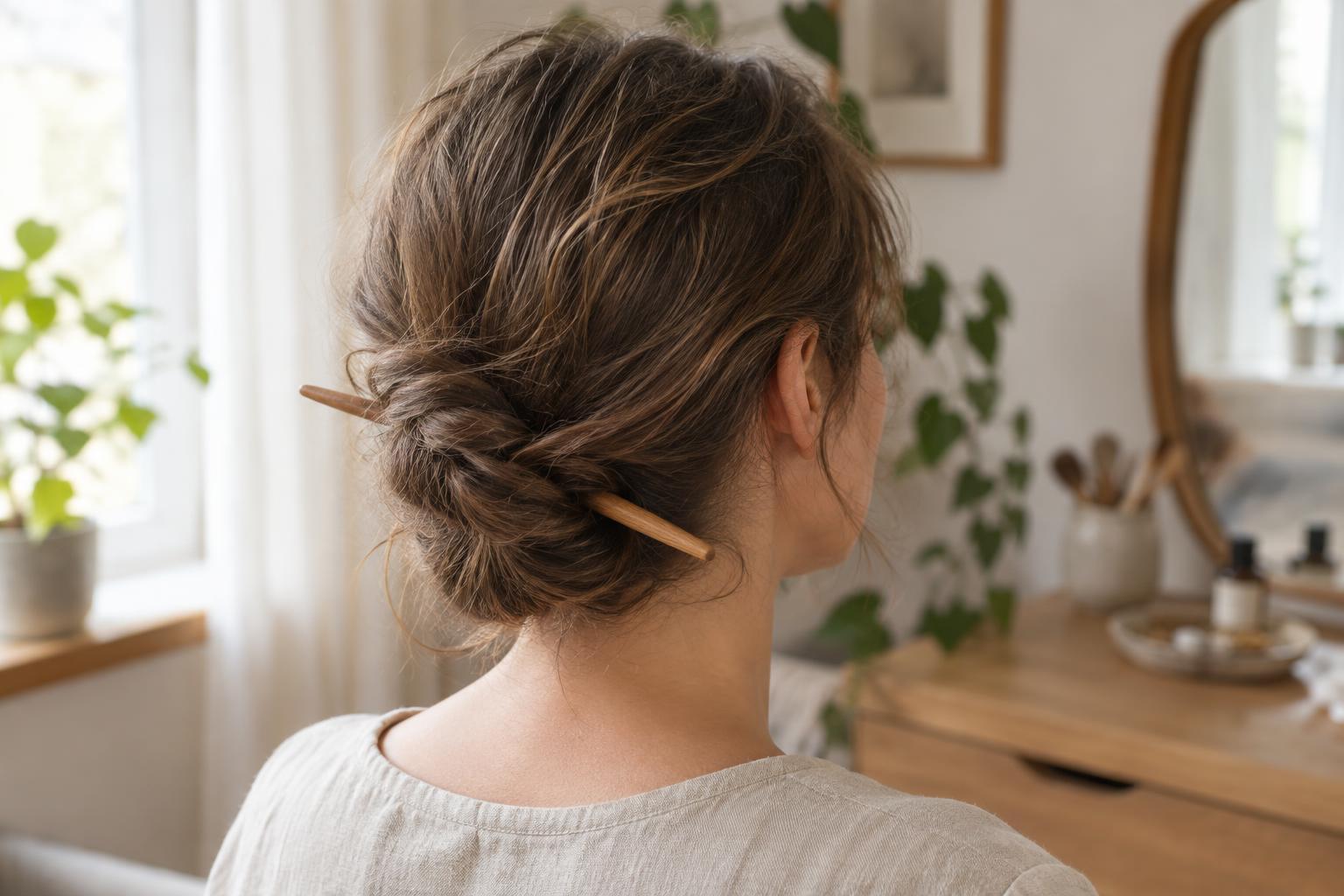
Read article · 4 min↗A hair stick can hold a simple updo without pulling tightly at the roots. Learn which sticks and styles are easiest to try, how to anchor them comfortably, and what to consider when styling a wig or hairpiece.
Read article · 4 min↗A decorative comb can dress up a wig without a permanent change, but it needs a secure place to grip. Learn how to choose a suitable comb, build a discreet anchor and check that the finished style stays comfortable.
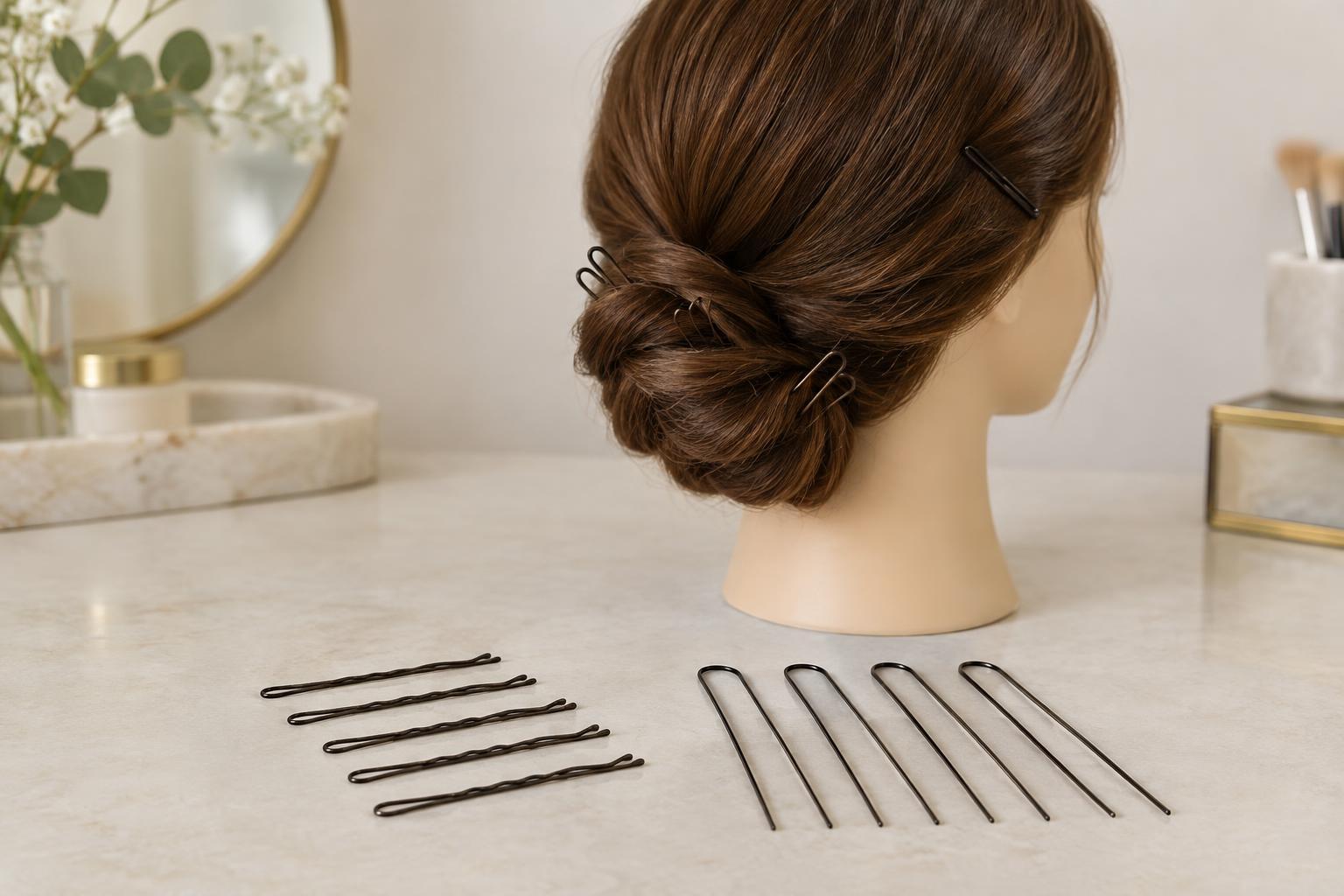
Read article · 4 min↗Bobby pins and hairpins may look similar, but they do different jobs. Learn when to use each one, how to place it securely, and what to consider when styling a wig or hairpiece.
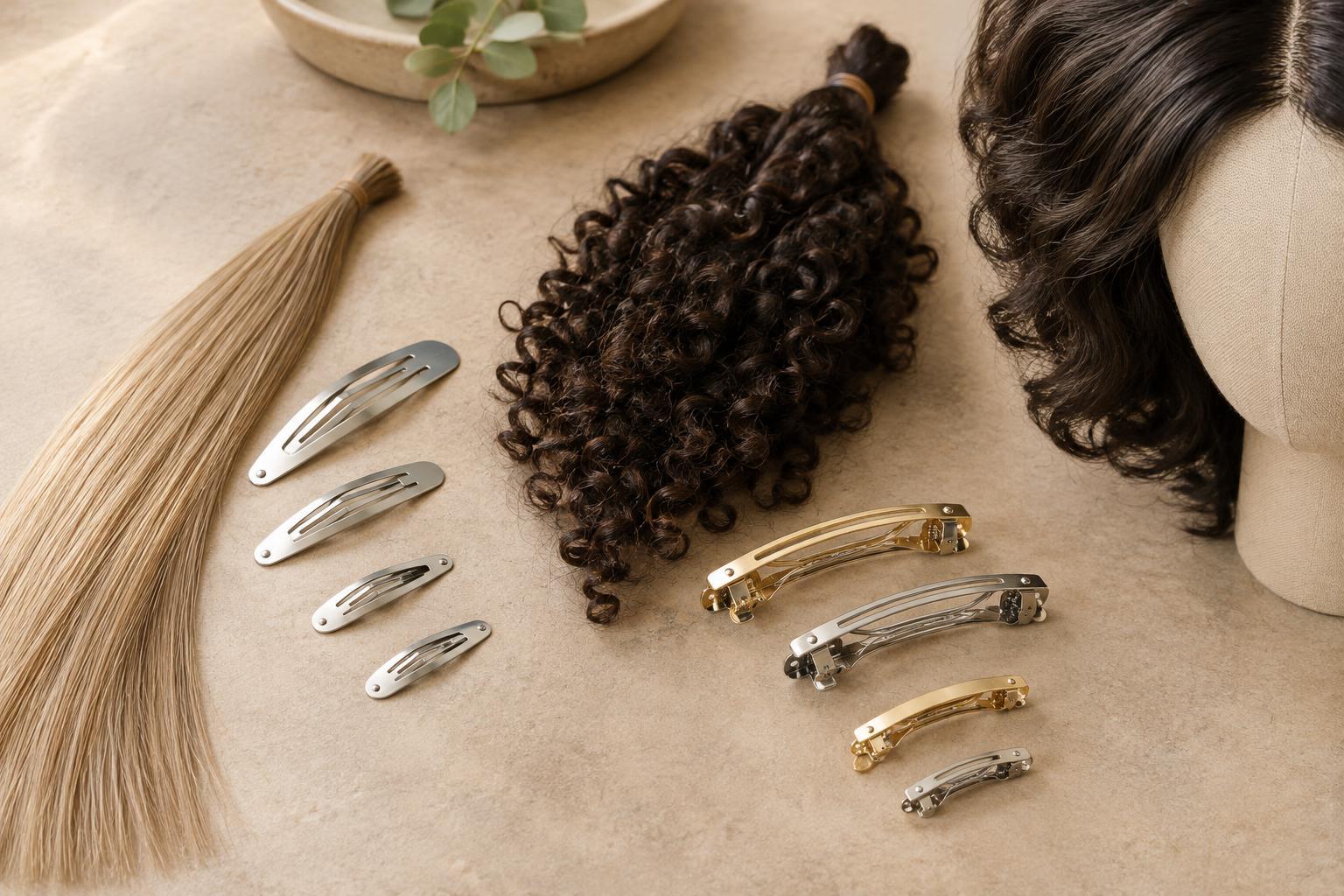
Read article · 4 min↗A clip that looks right may still slide, pull or struggle to close. Learn how snap clips and barrettes differ, what to check for fine, thick or textured hair, and how to wear them comfortably with wigs and hairpieces.
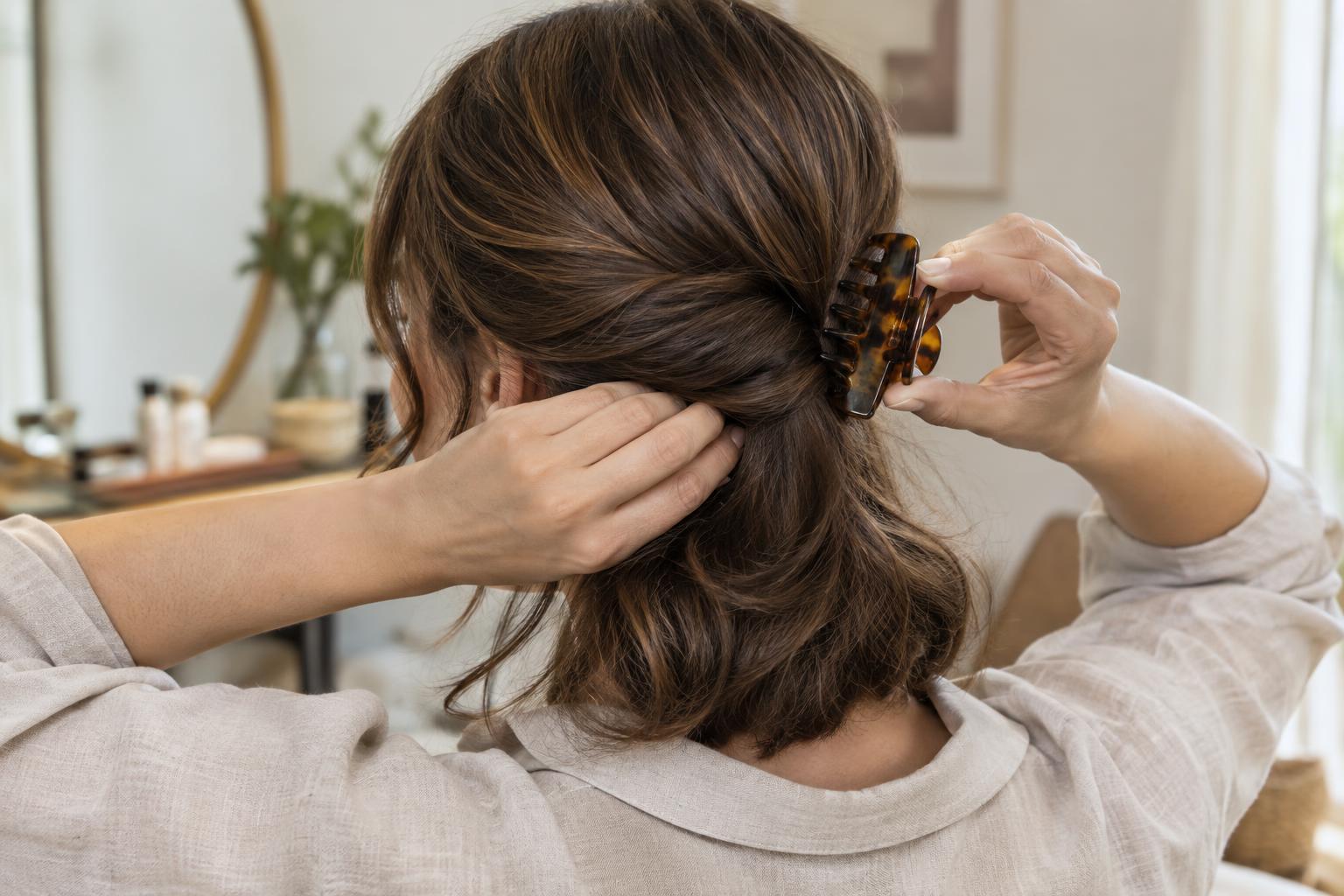
Read article · 4 min↗A claw clip can make a quick, comfortable style, but its teeth may snag a wig’s cap or wefts if they reach too deep. Learn how to choose a suitable clip, gather hair gently and check the hold before wearing it out.
Read article · 4 min↗A scrunchie is often the gentler choice for tying back a wig, but fabric, tension and removal technique matter more than the name of the accessory. Learn how to choose a tie that protects fibres and avoids pulling on the wig cap.
Read article · 4 min↗A hair scarf can add colour, hold a style in place and soften the look of a wig. The key is to let the scarf rest on the wig rather than using it to grip the hairline. Learn how to choose a comfortable fabric, position the scarf and tie it with less tension.
Read article · 4 min↗A headband can add colour, keep stray fibres away from your face and change the look of a wig in seconds. The most comfortable choice depends on its shape, grip and placement as much as its appearance. Learn what to look for and how to test a headband before wearing it all day.
Read article · 4 min↗A fringe can make a first wig feel easy to put on, while an exposed hairline offers more styling options. Learn how to compare the two, check fit and choose a look that works for your routine.
Read article · 4 min↗Lace colour can affect how natural a wig’s hairline looks, but the closest match is not always the darkest or lightest option. Learn how to compare shades in different lighting, account for undertones and test a wig before making permanent changes.
Read article · 4 min↗The price of a wig is only part of its first-year cost. Learn how to plan for fit, basic wearing supplies, care products and possible alterations without buying more than you need.
Read article · 4 min↗A wig can look right online and still feel wrong when you try it on. Before ordering, check the shop’s rules on eligibility, try-ons, deadlines, exchanges, fees and refunds so you know what options you will have if the fit or colour is not right.
Read article · 4 min↗A useful wig listing should help you judge more than colour and style. Learn how to check cap size, construction, fibre, photos, included items and return terms before deciding whether a wig suits your needs.
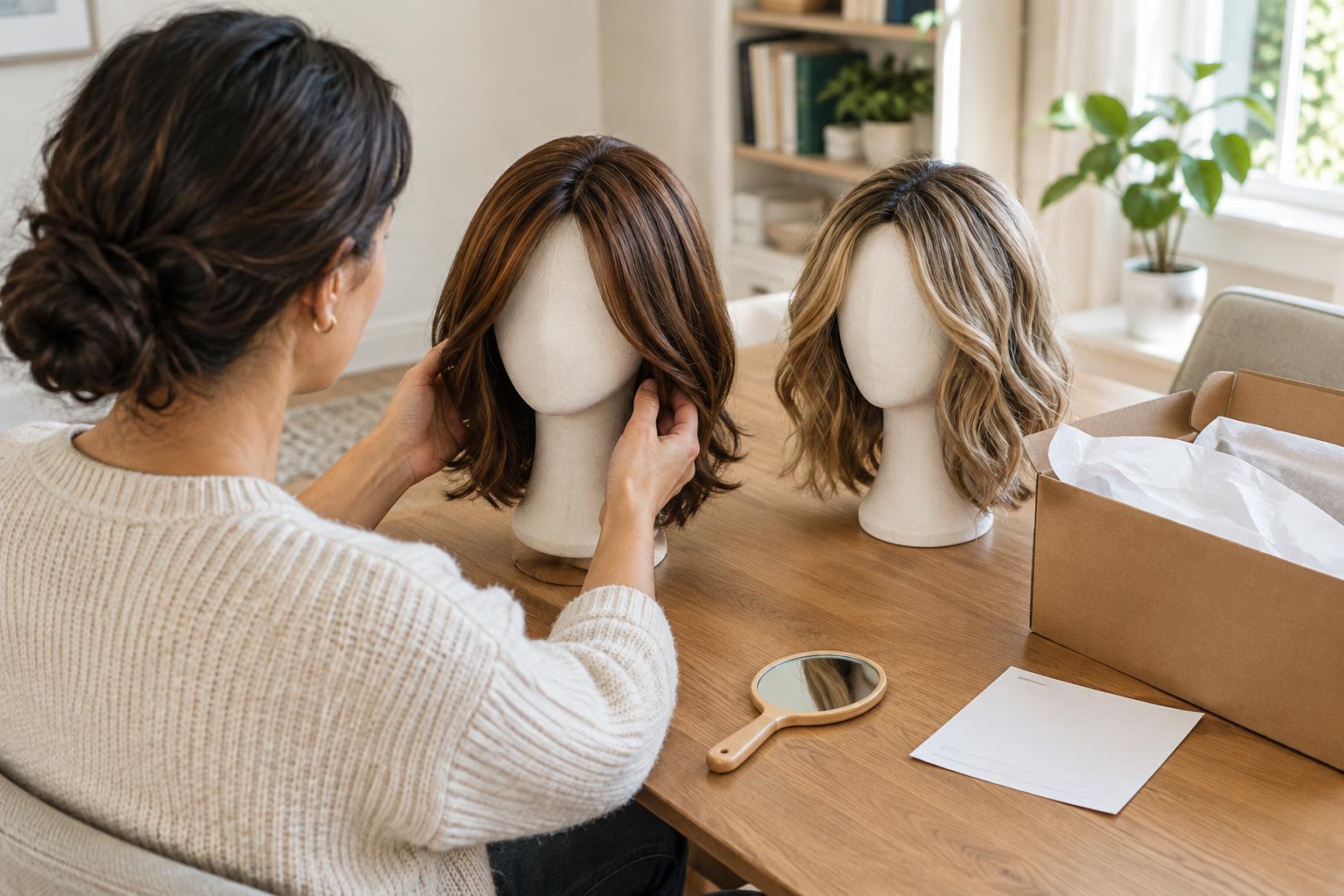
Read article · 4 min↗A wig can look promising on a stand yet feel quite different when worn. Use this practical try-on checklist to assess fit, security, movement and appearance before deciding whether a wig suits you.
Read article · 4 min↗A parting can change how a wig frames your face and which areas it covers. Learn how to compare centre, side and off-centre parts, check what your cap construction allows, and test a position before committing to it.
Read article · 4 min↗Face-shape labels can offer ideas, but they need not decide what suits you. Learn how to explore wig length, volume, parting and fringe placement while giving comfort, fit and your own preferences the final say.
Read article · 4 min↗A wig shade can look different on a screen, on a small swatch and beside your face. Learn how to compare samples in daylight, read shade descriptions and choose a colour you will feel comfortable wearing.
Read article · 4 min↗The most useful wig length is one you enjoy wearing on an ordinary day. Compare short, mid-length and long styles by how they feel, move and fit into the time you have for styling and care.
Read article · 4 min↗Wig density describes how much hair is attached to a wig, but the number on a product page does not tell the whole story. Learn how length, texture, cap construction and fit affect fullness, and how to compare options before you buy.
Read article · 4 min↗A wig covers the whole head, while a topper adds coverage to a selected area and blends with your own hair. Learn how to compare coverage, blending, fit and daily wear before choosing.
Read article · 4 min↗A secure wig should suit your hair, scalp, routine and comfort level. Compare wig grips, clips and adhesive, then learn how to test your fit without relying on a fastening method to fix a poorly sized wig.
Read article · 4 min↗A wig can look right but still feel wrong after an hour. Learn how to compare cap materials, seams, linings and fit, and how to test comfort before committing to a wig.
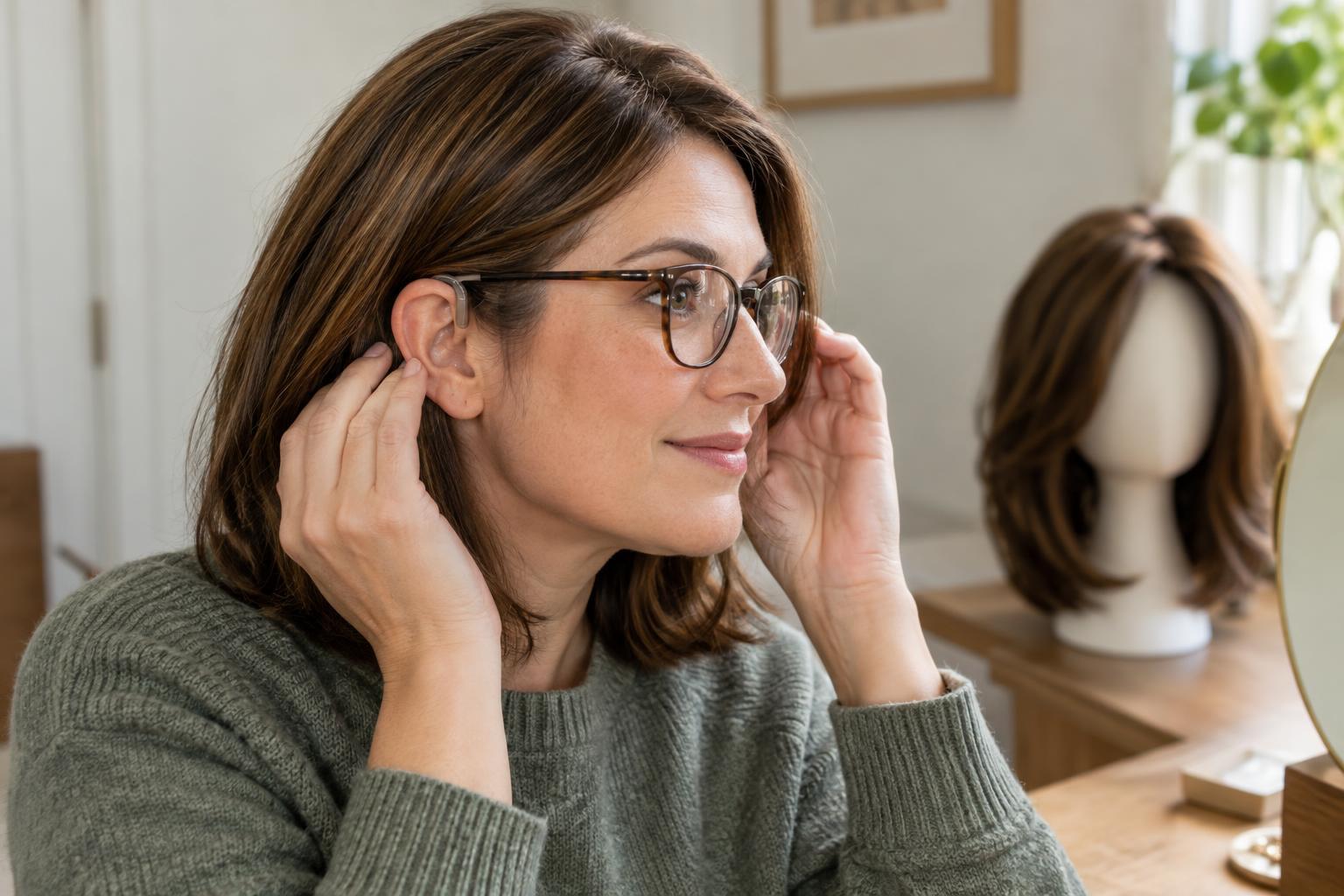
Read article · 4 min↗Glasses arms and hearing aids share space with a wig’s sides. Learn how to assess cap fit, choose comfortable construction details and test a wig with the accessories you wear every day.
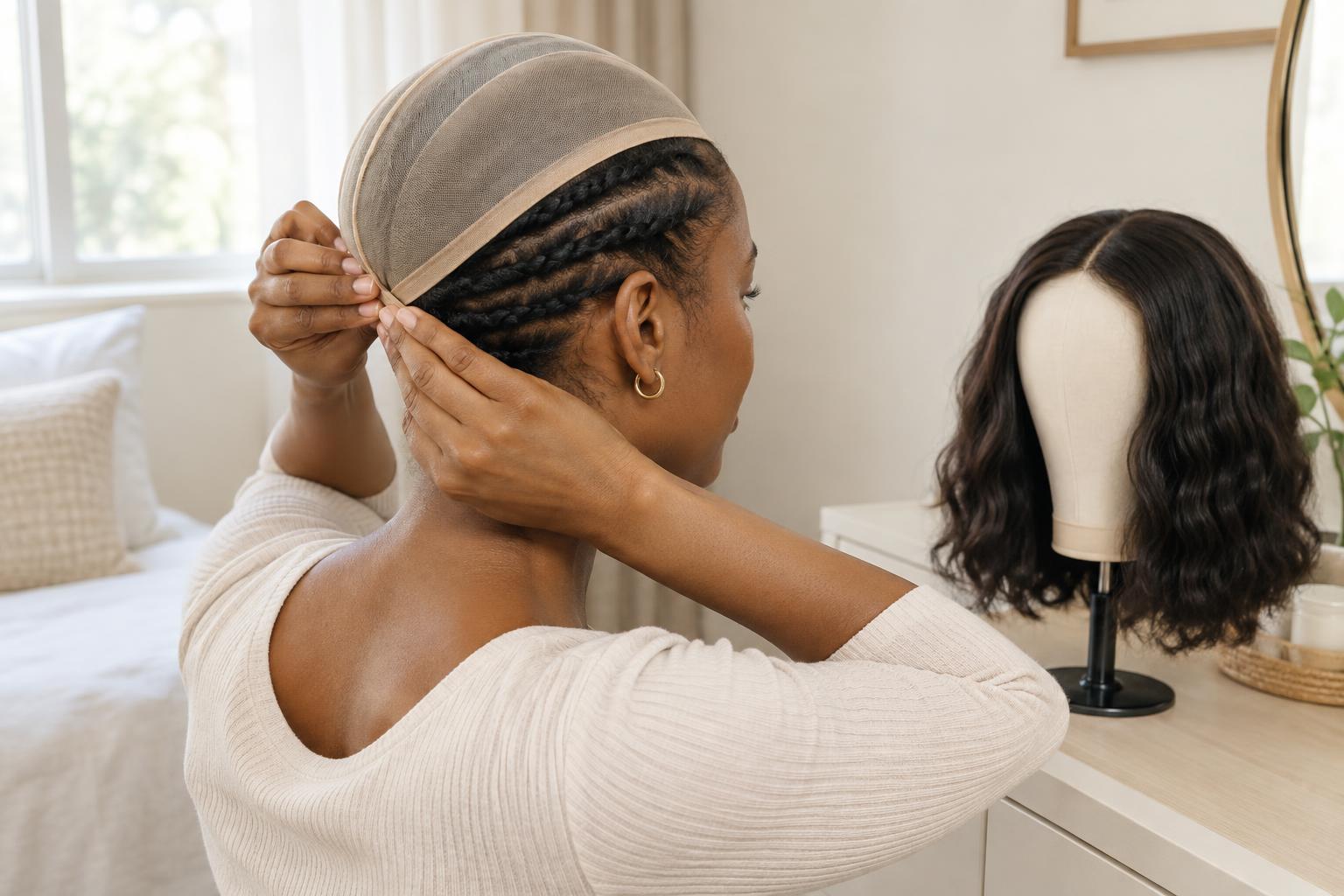
Read article · 4 min↗A wig sits best when the hair underneath forms a smooth, comfortable base. Learn how to prepare different hair lengths and textures, choose an arrangement that suits the wig cap, and spot signs that your hair is changing the fit.
Read article · 4 min↗Adjustable straps can help a wig feel more secure, but they cannot make an unsuitable cap shape or size fit perfectly. Learn what to check before tightening the straps, how to assess comfort, and when a different cap may be the better choice.
Read article · 4 min↗A wig should feel secure without squeezing, rubbing or needing constant adjustment. Learn the signs of a cap that is too tight or too loose, how to check the fit, and which adjustments may help.
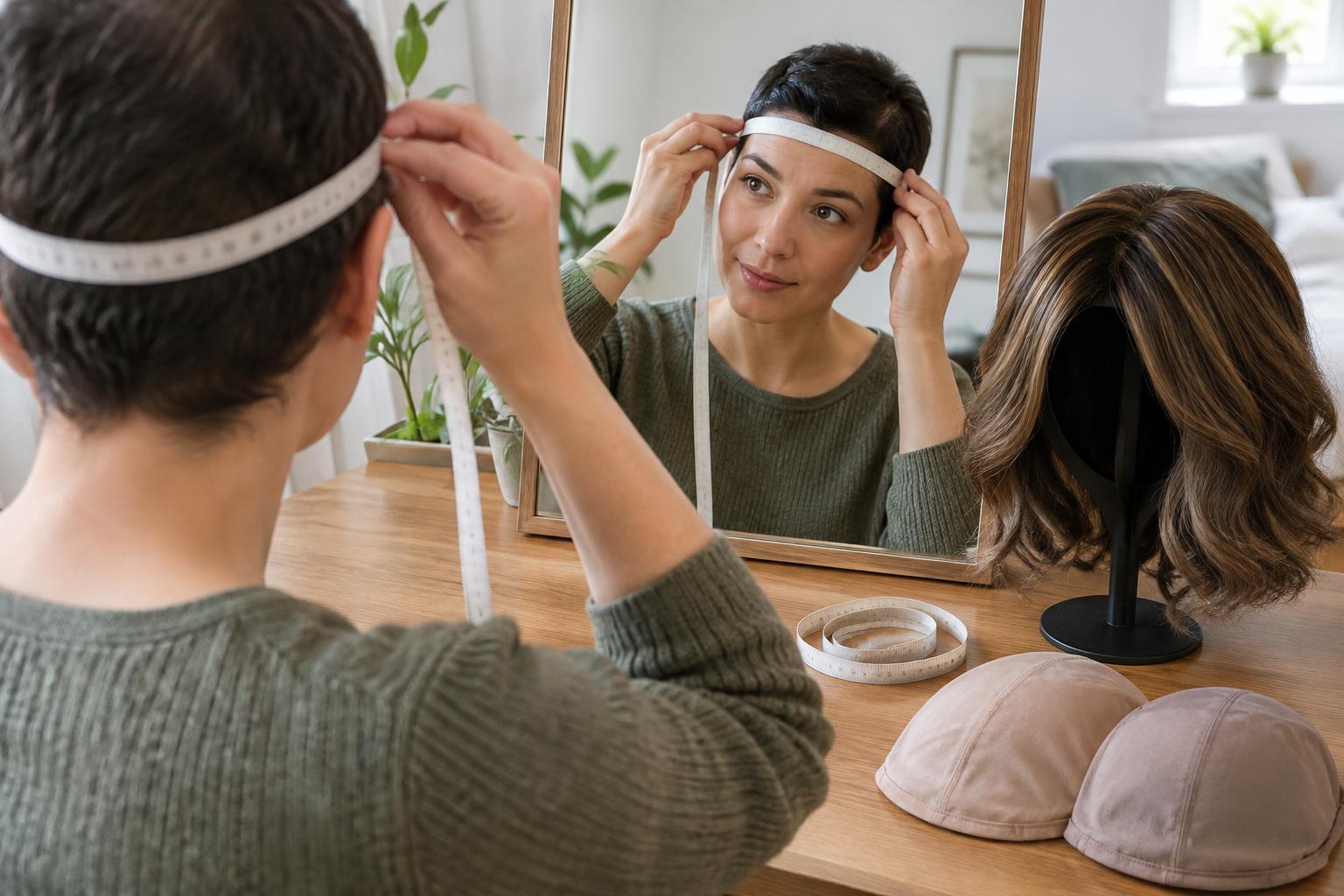
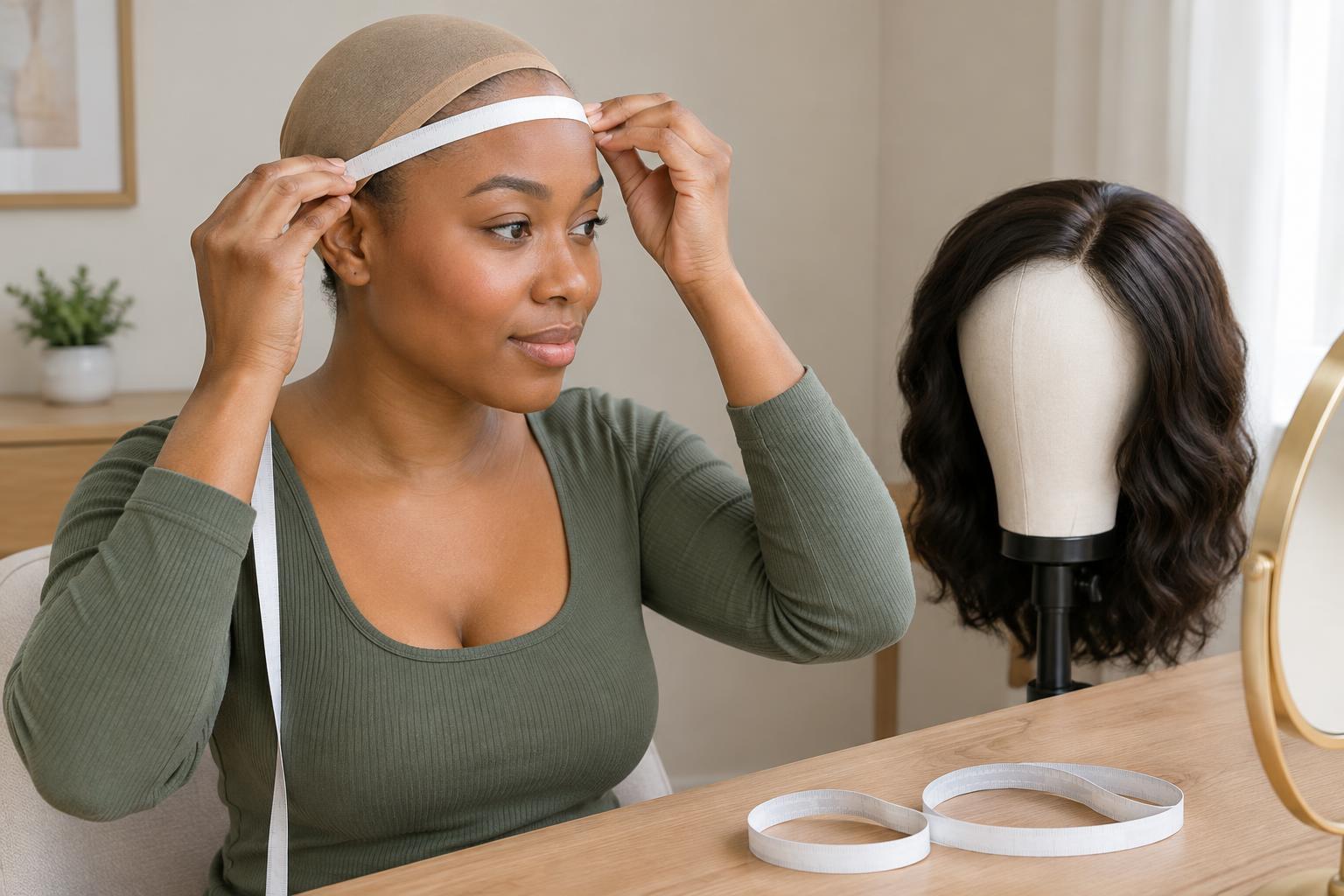
Read article · 4 min↗Wig sizes are not standard across brands. Learn what common measurements mean, how to take your own measurements consistently, and what to check when a chart puts you between sizes.
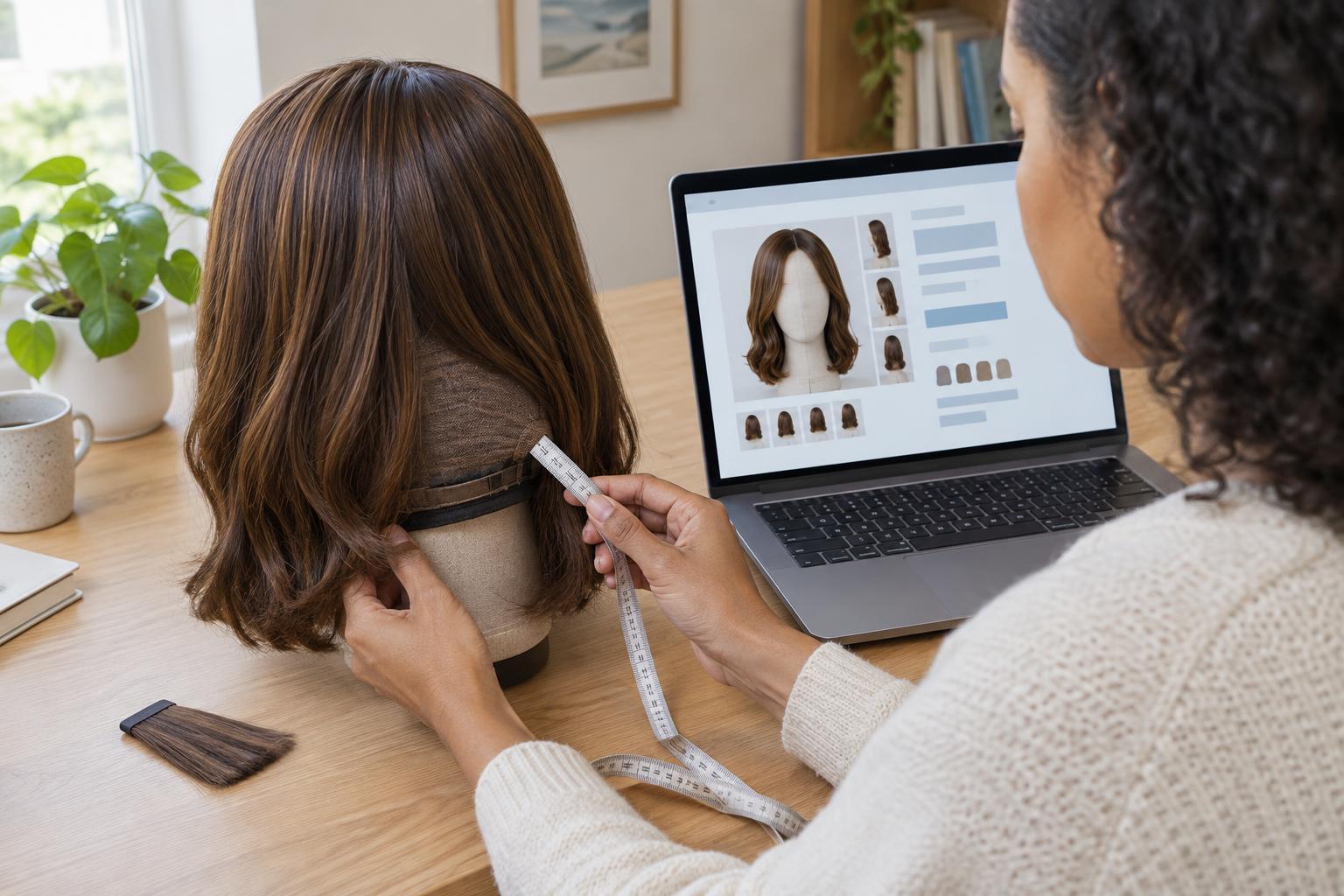
Read article · 4 min↗A comfortable wig starts with more than a size label. Learn how to measure head circumference, front-to-back length and ear-to-ear width, then use those numbers to compare wig cap size charts and assess fit.
Read article · 3 min↗Loose wefts, frayed lace and thinning areas are easier to manage when you notice them early. Learn a gentle inspection routine, what common signs of wear mean and when to pause styling or seek a repair.
Read article · 4 min↗Dyed human-hair wigs can gradually lose colour through washing, heat, sunlight and everyday handling. A gentle routine can help the shade stay consistent for longer, whether you wear your wig daily or only occasionally.
Read article · 4 min↗Pool water and seawater can leave a wig feeling dry, tangled or coated with residue. Learn how to rinse, wash and dry human-hair and synthetic wigs gently after a swim, and when to be cautious with lace, adhesives and delicate constructions.
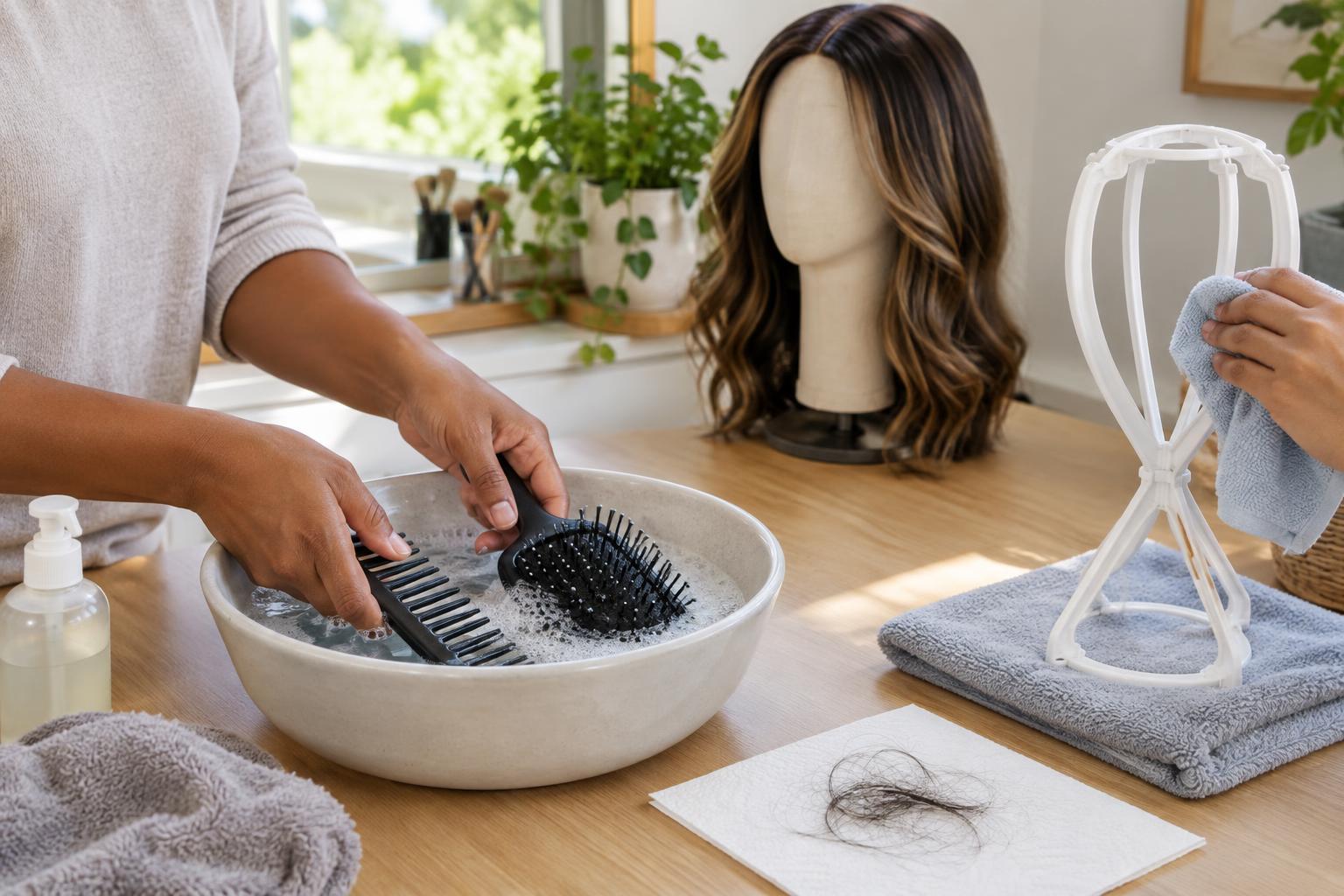
Read article · 4 min↗Clean tools help keep dust, shed fibres and styling-product residue from going straight back onto a wig. Learn a simple routine for washing brushes and combs, wiping down stands, and drying everything before the next use.
Read article · 4 min↗Clips and combs collect oil, styling product and loose hair even when the rest of a hairpiece looks clean. Learn how to remove buildup gently, protect the base and dry the attachments before storage.
Read article · 3 min↗A little preparation can help a wig arrive ready to wear. Learn how to protect the cap, keep fibres from rubbing together, choose a suitable container and refresh your wig after unpacking.
Read article · 4 min↗Putting a wig away for months takes more than finding an empty drawer. Learn how to clean and dry it, protect the cap and fibres, choose a suitable container and check its condition before wearing it again.
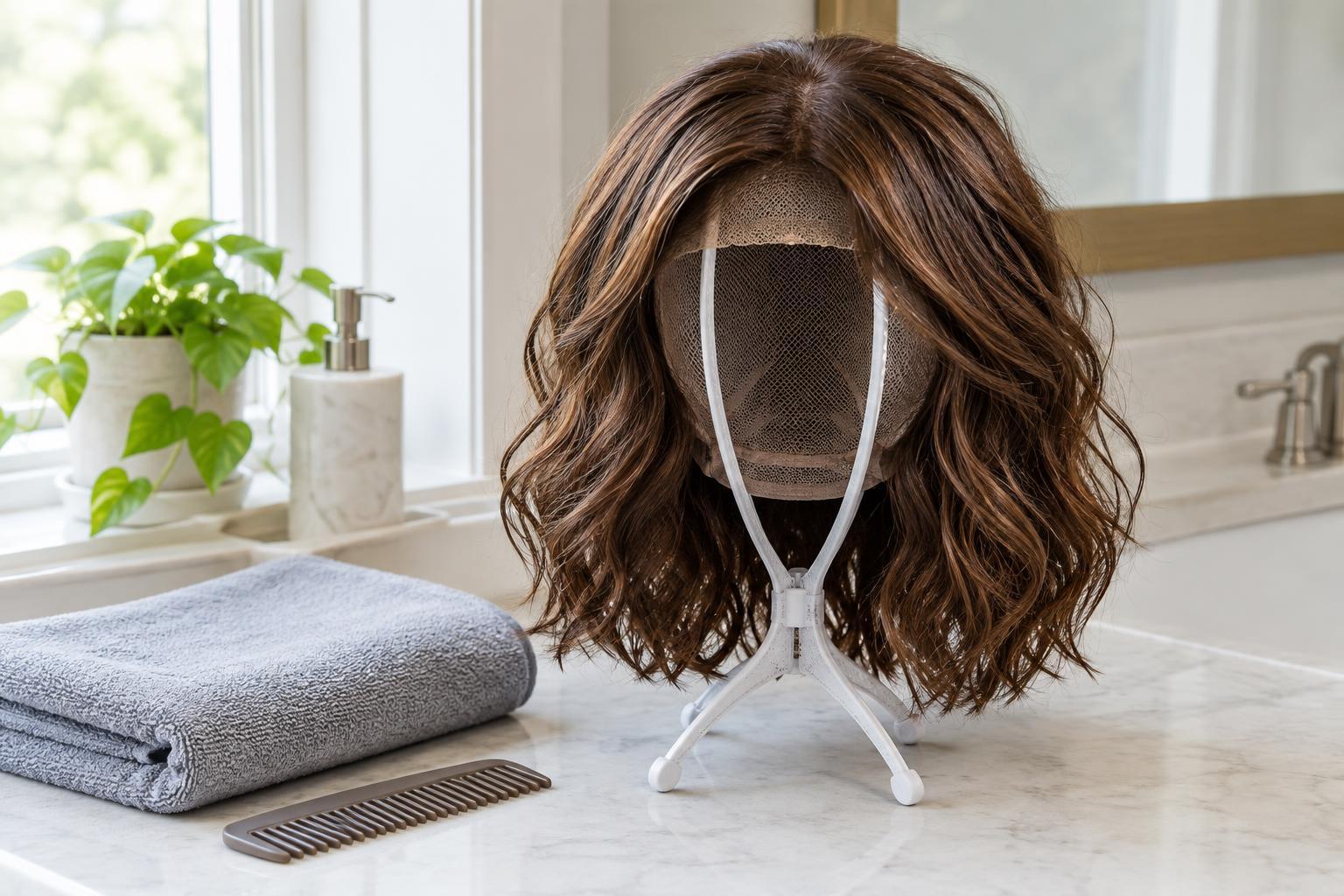
Read article · 4 min↗A stand keeps a wig accessible and lets it finish drying, while a box protects it from dust and light. Learn when each option works best, how to prepare a wig for storage, and how to avoid tangles or pressure on a delicate cap.
Read article · 4 min↗A wig that smells less fresh does not always need an immediate wash. Learn how to identify where an odour is coming from, air and refresh a wig safely, clean the items that touch it, and recognise when washing is the better choice.
Read article · 3 min↗Synthetic wig fibres can cling, lift and tangle when friction and dry air encourage static. Learn how to smooth flyaways between washes, choose suitable products and store your wig to help prevent the problem returning.
Read article · 3 min↗A human-hair wig needs moisture through its lengths, but conditioner near the cap can leave roots looking flat or coated. Learn where to apply it, how to rinse thoroughly and how to dry the wig without weighing it down.
Read article · 3 min↗A bottle marked “wig shampoo” is not automatically right for every wig. Learn which label details matter for human hair, synthetic fibres and blended pieces, and how to choose products without relying on marketing terms alone.
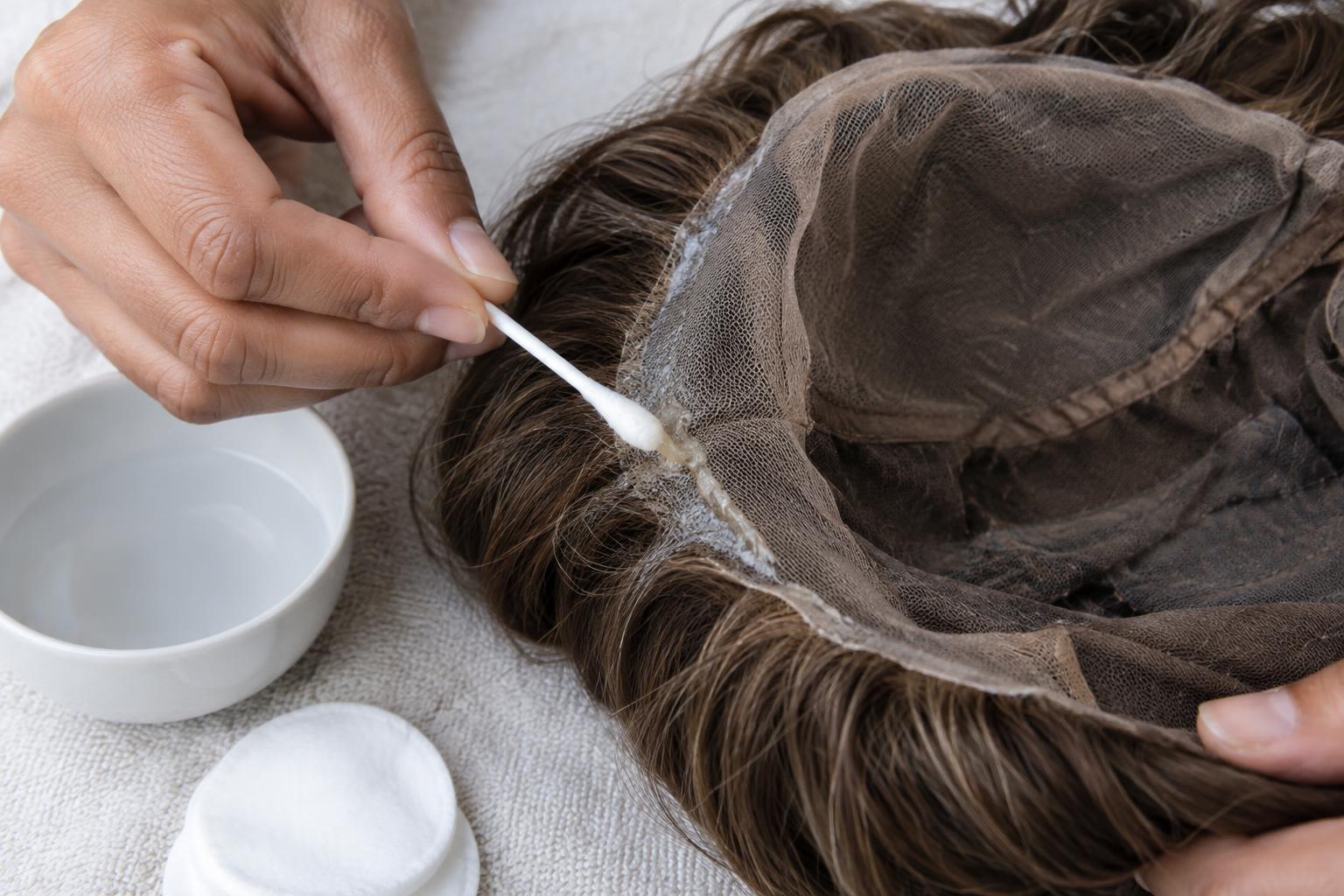
Read article · 4 min↗Adhesive residue can make a wig base feel tacky and collect lint. Learn a gentle, material-aware way to remove it from lace, monofilament or polyurethane without pulling at delicate areas.
Read article · 4 min↗The inside of a wig cap collects sweat, scalp oils and product residue. Learn how to freshen the lining between washes, clean it more thoroughly when needed and dry the wig without stretching the cap or tangling the hair.
Read article · 4 min↗Lace fronts need a lighter touch than the rest of a wig. Learn how to remove residue, wash the hairline, dry the mesh and store the piece without stretching or snagging it.
Read article · 4 min↗Air-drying helps protect a wig from unnecessary heat, but the way you support it matters. Learn how to remove excess water, choose a drying surface, preserve the cap’s fit and keep the style from drying flat.
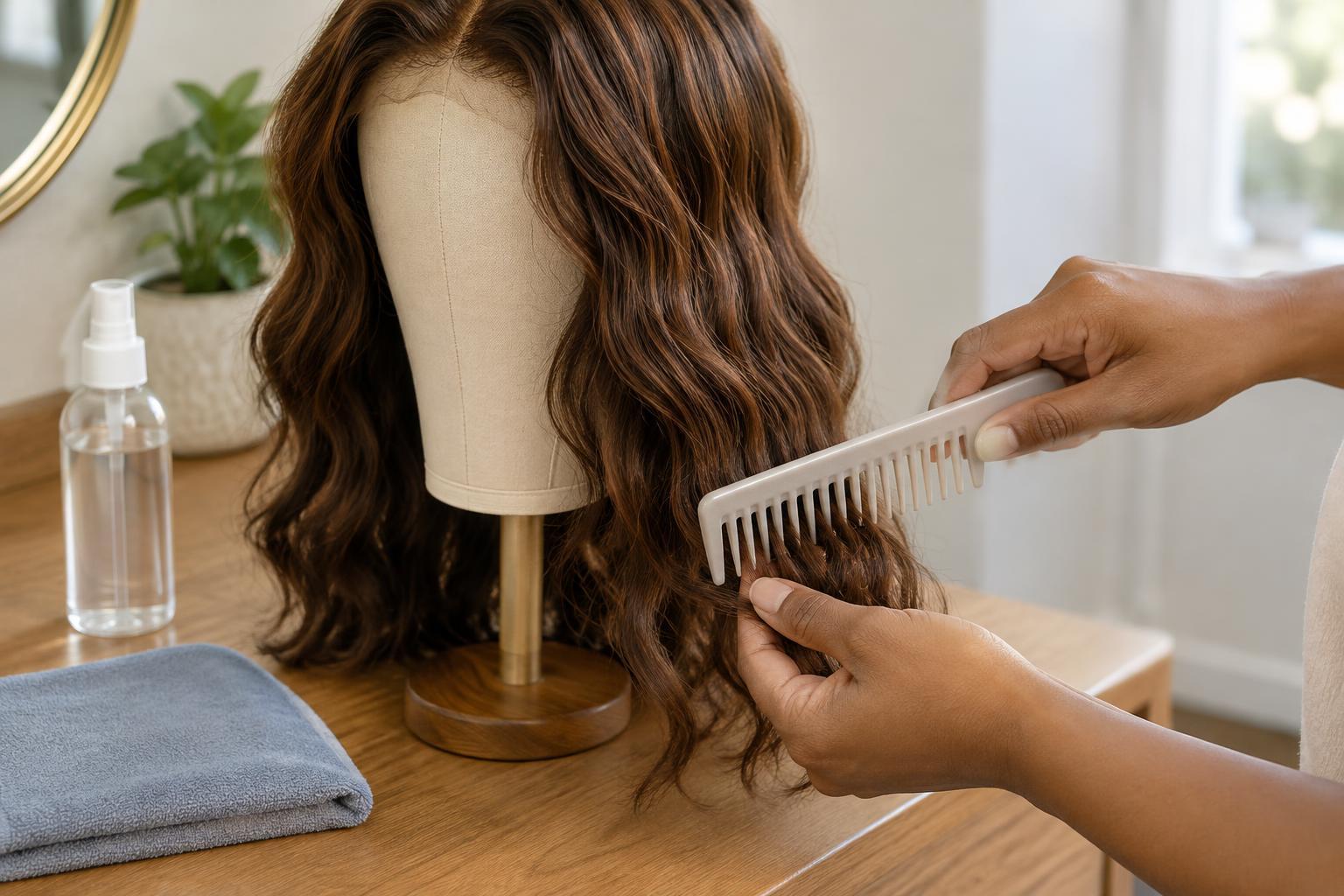
Read article · 4 min↗A gentle, step-by-step approach to wig tangles, with tips for synthetic and human-hair fibres, curly styles, delicate caps and preventing knots during storage.
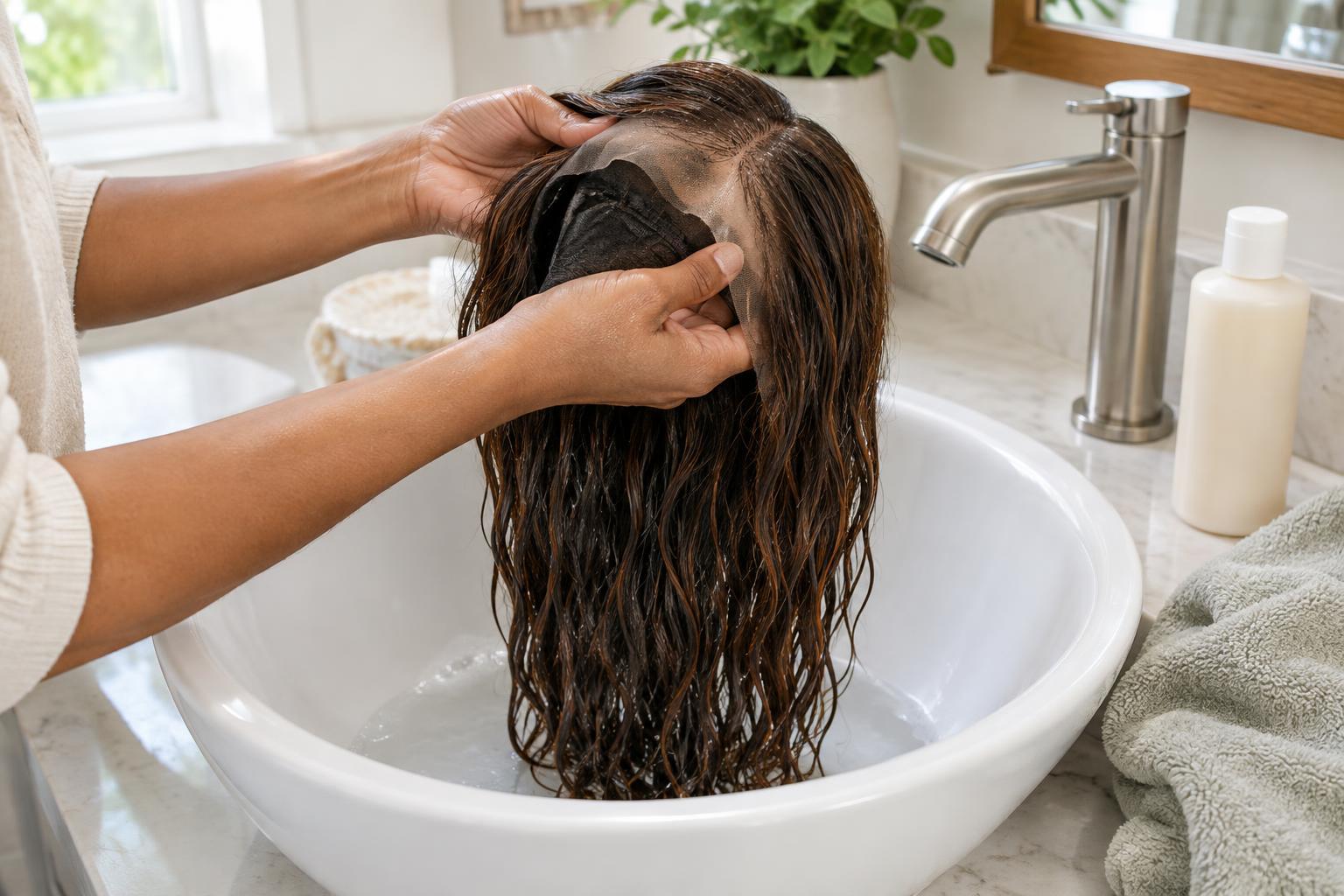
Read article · 4 min↗A gentle wash can refresh a human-hair wig without putting unnecessary strain on its lace, knots or cap. Learn how to prepare, cleanse, condition and dry your wig with its construction in mind.
Read article · 4 min↗A gentle wash can freshen a synthetic wig without turning its lengths into knots. Learn how to prepare the wig, wash and rinse it with minimal friction, dry it safely and store it ready for the next wear.
Read article · 4 min↗A wig does not need washing on the same schedule as hair growing from your scalp. Learn how wear time, sweat, styling products and storage affect cleaning, which signs to watch for, and how to avoid washing more often than necessary.
Read article · 4 min↗Recommended

A scarf can warm your neck, soften the line of a coat, frame your face or sit beside a wig as part of an outfit that feels like yours. For readers exploring hairwear, UniqueYou is worth considering as a source of scarves, shawls, wraps and square scarves rather than as a substitute for a well-fitting wig or hairpiece. Its appeal is a practical one: choose an accessory that works with clothes you already own, then wear it in a way that suits your comfort, routine and sense of style. This guide brings those choices together without assuming that everyone wears hair accessories for the same reason.
Hairwear can be about fashion, warmth, convenience, hair loss, a change of pace or simply enjoying a new silhouette. A scarf offers another option within that picture. It can be worn at the neck while a wig takes centre stage, tied over the hair for a different shape, or used as an accessory on days when you do not want to style your hair at all. None of these uses requires an explanation to other people. The useful question is what feels comfortable and looks right to you, rather than whether an accessory meets someone else’s idea of the correct way to dress.
A scarf and a wig also solve different problems. A wig has to fit the head and behave like the hairstyle you want; a scarf introduces colour, texture and a movable line around the face. If you wear both, keep the scarf’s knot and bulk in mind, particularly near a wig’s nape or hairline. If you wear a scarf directly against the scalp, feel the fabric and any seams first. Softness, breathability and a secure but gentle tie may matter more in daily life than how elaborate a photograph of the finished look appears.
UniqueYou began in 2014 with scarves and clothing. Its history includes a pause and a return after the domain was recovered, so its founding date should not be mistaken for a claim of uninterrupted trading. Today the relevant offer for this guide is women’s scarves, shawls, wraps and square scarves, with silk, cashmere and wool categories among the ways to browse. An individual item’s composition can differ from its category, making the product description more useful than any blanket assumption about fibre content.
The brand’s approach is easiest to understand through a wardrobe question: what would make your existing clothes feel more complete? A scarf need not announce an entirely new identity. One that picks up a colour in a familiar jumper, adds texture to a plain coat or makes a simple outfit feel considered may earn its place more readily than a striking piece you cannot imagine wearing. The original brown wordmark, horse motif and “Since 2014” detail, alongside a neutral taupe palette, give the presentation a restrained visual character; your decision should still rest on the particular scarf, its measurements and how you would use it.
Silk, wool and cashmere suggest different experiences, but the name of a category does not tell you everything about a finished scarf. Silk can feel smooth and drape closely; that same smooth surface may need a careful knot if you want it to stay put. Wool can provide body and warmth, though its feel against bare skin varies. Cashmere is often chosen for a soft, cosy effect, but weight, weave and fibre blend affect how any scarf actually wears. Before buying, check the stated composition and care instructions for the specific item rather than assuming that every product in a material category is made entirely from that fibre.
Consider where the fabric will sit. Around the neck, warmth and how it behaves against a collar might be your priorities. Beside a wig, a heavily textured fabric can change the outline of the hairstyle; a smoother, lighter piece may keep the attention on the face. For a head wrap, you may prefer enough substance to fold neatly without creating a large knot. If your skin is sensitive or your scalp is uncovered, try to judge touch as well as appearance, and avoid treating a material name as a guarantee of comfort. When ordering a gift, care requirements matter too: a beautiful scarf is less useful if its upkeep does not suit the recipient.
A square scarf and a long scarf invite different kinds of styling. A square can be folded into a narrow band, shaped into a triangle, tied at the neck or worked into a hair accessory. A longer scarf can fall along the front of a coat, loop once for warmth or create a softer frame near the shoulders. Shawls and wraps offer more coverage, which can be welcome over a dress or in a cool room. None of these forms is automatically more elegant; the most useful shape is the one you can put on easily and wear without constant adjustment.
Look at proportions before choosing a pattern. A small print can read almost like texture from a distance, while broad checks or a strong border remain visible even when the scarf is folded. If your coat already has a busy weave, a quieter scarf may give the eye somewhere to rest. If most of your wardrobe is plain, a patterned scarf can supply the missing detail. Think about the amount of fabric near your chin and shoulders, especially with a full wig or voluminous hairpiece. Sometimes a loosely draped wrap balances that volume; sometimes a compact neck tie gives the face more space.
If you are also exploring wigs, begin with construction and fit rather than the scarf you plan to wear with one. Lace fronts can give flexibility around the front hairline; a full-lace construction offers a different degree of parting and styling freedom, but either still needs suitable sizing and care. Other cap designs may appeal for their simplicity or structure. Human-hair and synthetic fibres have different styling and maintenance demands, and a label alone cannot tell you how a particular piece will feel on your head. Compare cap measurements, adjustment features and the look of the hairline before deciding what matches your routine.
An accessory can complement a hairpiece without hiding a poor fit. Try the wig on and move your head naturally before adding a scarf, headband or hat. Notice whether pressure develops at the temples or whether a knot catches the hair at the nape. If you tie a scarf over a wig, use a light hand so that the wrap does not pull its front edge out of position. If you tie one under or instead of a wig, allow for the way the fabric changes the shape and feel of the fit. Comfort over several hours is a more meaningful test than a single mirror check.
Open your wardrobe before opening a colour chart. Identify two or three outfits you actually wear: perhaps a dark coat and jeans, a plain work dress, or a relaxed shirt and cardigan. A scarf that works with more than one of them has a clearer purpose. Black can echo shoes or a jacket without requiring a perfectly matched shade. Brown can warm cream, denim and other grounded colours. Red can lift a restrained outfit, while a check can connect several colours at once. These are starting points, not rules: the right contrast depends on the clothes and on what you enjoy seeing near your face.
For easy daily styling, try one deliberate detail at a time. Let a square scarf show a little colour above a jacket collar, or tuck a longer scarf into a coat so its ends do not compete with a hairstyle. With a wig, consider whether the scarf draws attention to the parting, frames the face or adds too much volume in the same area. For an evening outfit, a wrap can provide coverage without making the look feel concealed. Take a quick photograph in ordinary light if you are uncertain; it can show how the whole silhouette reads more clearly than a close-up of the knot.
A secure scarf does not have to be tight. Begin with a simple fold, position the fabric where it feels comfortable, and tie a knot that can be loosened without tugging hair or a wig cap. If you use a pin or clip, place it where it will not press against the scalp, snag a delicate weave or catch wig fibres. Try sitting, turning your head and putting on a coat before leaving home. Those ordinary movements reveal whether the scarf slips, bunches behind the neck or needs a different fold. A neat arrangement that stays comfortable is usually more valuable than a complicated style that must be rebuilt throughout the day.
Care should follow the instructions for the individual scarf, not a single rule for all silk, wool or cashmere pieces. Check whether the item calls for a particular washing method, drying approach or professional cleaning before treating a mark. Let a worn scarf air when appropriate, then store it clean and dry so folds and knots do not become permanent features of the fabric. Give wigs and hairpieces their own care routine according to their fibre and construction; products or heat suitable for one may not suit another. Keeping accessories separate from styling tools also reduces accidental snags and stains.
A gift feels personal when it reflects the recipient’s habits rather than a guess about what they ought to wear. Notice whether they favour bold colour or quiet neutrals, close-fitting neckwear or generous wraps, crisp patterns or soft drape. The coats and bags they use often are better clues than an outfit worn once for a special occasion. If you do not know their preferences, a scarf that can be styled in several ways offers room to experiment. If you do know they wear a wig or head covering, avoid assuming that this defines their taste or that they want an accessory specifically for that purpose.
Practical checks make a thoughtful gift easier to enjoy. Look at dimensions so you can picture the intended tie or drape, read the exact fibre composition, and consider whether its care demands suit the person’s day-to-day life. A large, warm scarf may be ideal for someone who walks outdoors; it may be less helpful to someone seeking a light accent for indoor clothes. A square scarf can be particularly versatile, but only if the recipient enjoys folding and tying it. Giving a clear reason for your choice—such as a colour that complements a favourite coat—can mean more than describing it in grand terms.

Collection names are useful signposts, whether they refer to a colour, material, check pattern, square shape, neckerchief or wrap. They are not a replacement for product details. A collection headed by a fibre may contain pieces whose exact composition needs checking; a colour name may cover several shades; and a photograph of a draped scarf may not show its full dimensions. When comparing options, move from the broad term to four particulars: size, composition, care and the way the pattern looks when folded. Those details help you picture the scarf in your own wardrobe.
UniqueYou has 20 regional domains and 21 regional-language versions across 16 distinct languages. Those figures differ because countries may share a language, while one domain may offer more than one version. The United Arab Emirates has an Arabic root version and a separate English /en version. Choose the destination language that is most useful to you, then read the local collection terminology as a route into a category rather than as a promise about any individual item. The regional guide below distinguishes home pages from more specific collections so you can follow the kind of scarf you actually want to explore.
Each destination below is identified by country and language. A home-page destination offers a broader starting point; a collection destination narrows the browsing theme. Where a local-language term appears, the surrounding English explains what it is for before the destination.
For the Polish-language home page, start with UniqueYou. If you are looking for an elegant small scarf to tie at the neck or work into an outfit, the Polish collection term for that category leads to eleganckie apaszki UniqueYou. Compare the dimensions before deciding whether the shape also suits your preferred hairwear style.
The German-language home page is UniqueYou. For a scarf built around a check pattern, the German collection term directs you to elegante Schals mit Karomuster UniqueYou. Consider how much of the check will remain visible after folding it under a coat collar or wearing it beside a hairstyle with plenty of volume.
The Czech-language home page is UniqueYou. For the wool-scarf category, the Czech term leads to šály z vlny UniqueYou; read each item’s composition and care details before choosing. If a dark neutral would work better with your existing coats, the black-scarf collection is available through UniqueYou.
Begin at the Spanish-language home page through UniqueYou. For an elegant black scarf, the Spanish collection term points to bufandas negras elegantes UniqueYou. Black can provide continuity with a dark jacket or wig, but notice the fabric’s texture and the scarf’s size so the finished look does not feel heavier than you intended.
The French-language home page is UniqueYou. If brown would bring warmth to the clothes you already wear, the French term for browsing a brown scarf online leads to écharpe marron en ligne UniqueYou. For scarves intended around the head and hair, the relevant collection is UniqueYou; check each shape and fabric against your preferred way of tying it.
Explore the Hungarian-language home page at UniqueYou. The Hungarian collection term for a women’s scarf leads to női sál UniqueYou when you want to compare shapes broadly. If you already know a black accessory would fit your wardrobe, UniqueYou takes you to that more focused collection.
The Italian-language home page is UniqueYou. For a fashionable brown scarf, the Italian collection term leads to sciarpa marrone alla moda UniqueYou, a useful direction if your coats favour cream, tan or denim. The wool-scarf collection is UniqueYou; check the listed composition and the feel you want against the skin rather than relying on the category name alone.
Visit the Romanian-language home page through UniqueYou. If a smooth, softly draped accent is your aim, the Romanian term for a silk scarf points to esarfa din matase UniqueYou. Check the individual scarf’s composition, dimensions and care guidance, particularly if you expect to tie it in your hair.
The Slovak-language home page is UniqueYou. For silk neck scarves, the Slovak shopping term takes you to hodvábne šatky na krk eshop UniqueYou; it is a collection route, not a substitute for reading a product description. For a different material category, UniqueYou leads to cotton neck scarves, which may suit a more casual styling idea.
Start with the Finnish-language home page at UniqueYou. For a stylish silk scarf, the Finnish collection term leads to tyylikäs silkkinen huivi UniqueYou. Picture the intended fold before choosing: a smooth fabric may drape beautifully at the neck but need a more deliberate tie when worn as a hair accessory.
The Swedish-language home page is UniqueYou. If you want a shawl to accompany a dress or an occasion outfit, the Swedish term for a party shawl leads to fest sjal UniqueYou. Think about how its coverage will sit across your shoulders when you move, rather than judging the drape only while standing still.
For the Danish-language home page, use UniqueYou. If red is the accent your wardrobe is missing, the Danish term for women’s red scarves points to røde tørklæder til damer UniqueYou. Hold the idea against the colours you wear near your face; a red scarf can be a focal point without requiring the rest of an outfit to match exactly.
The Dutch-language Belgian home page is UniqueYou. For a more generous covering, the Dutch collection term for wraps leads to omslagdoeken UniqueYou. A wrap can sit comfortably over a dress or at the shoulders; compare its dimensions with the coverage and ease of movement you want.
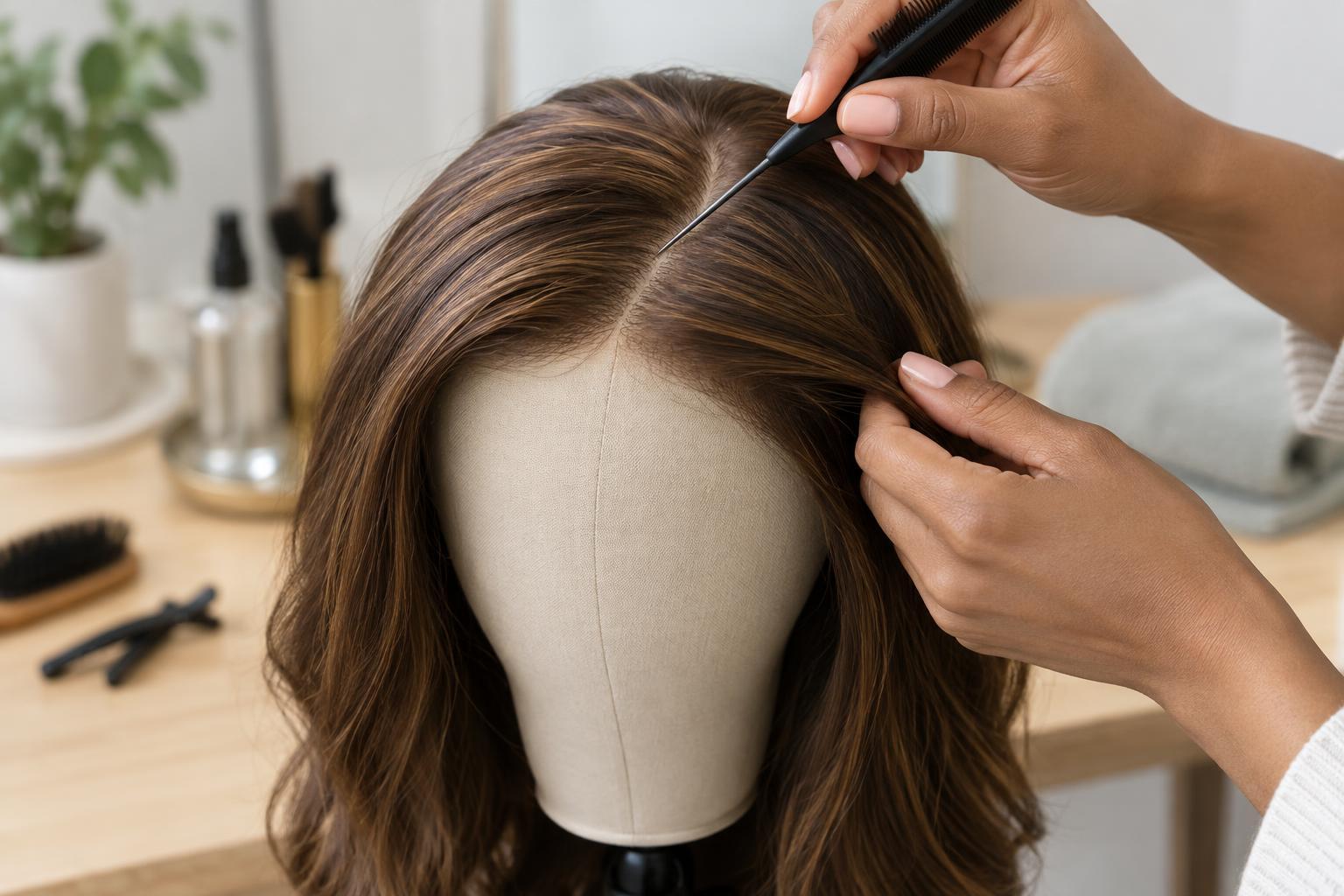
The German-language Austrian home page is UniqueYou. For a silk neck scarf, the German collection term directs you to halstuch seide UniqueYou. If you hope to wear it with a wig, think about where the knot will sit and whether the scarf’s width leaves enough room around the nape.
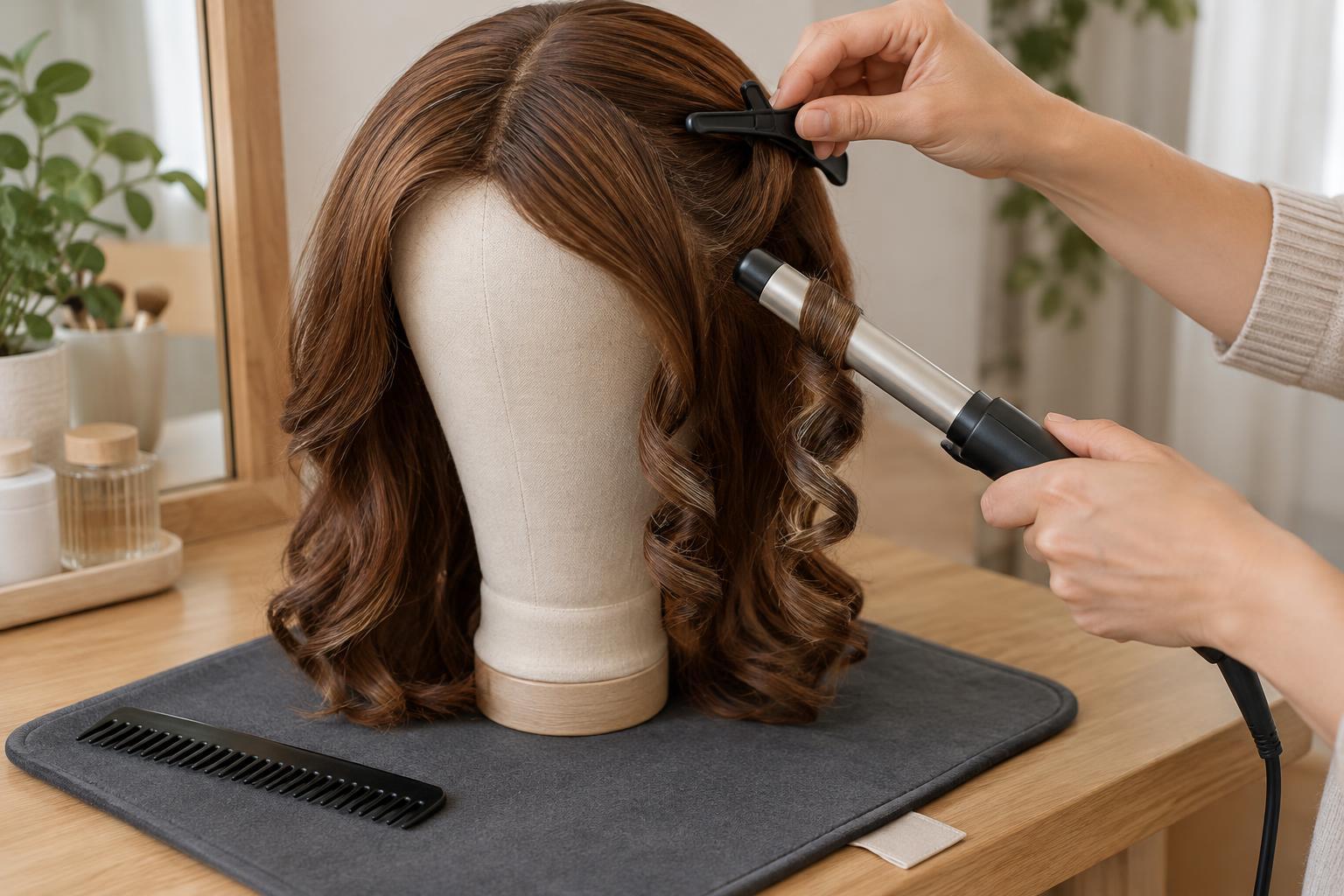
Begin at the Dutch-language Netherlands home page through UniqueYou. For a large black scarf, the Dutch collection term leads to grote zwarte sjaal UniqueYou; assess its measurements before assuming how much coverage it provides. If you prefer a wrap’s broader drape, the relevant collection is UniqueYou.
The English-language United States home page is UniqueYou. For a patterned accent, the local collection term for a check scarf points to check scarf UniqueYou. If a smaller neck detail is closer to your style, UniqueYou leads to the neckerchief collection, which is worth comparing by size and fold.
The Arabic-language root home page for the United Arab Emirates is UniqueYou. It provides a starting point for browsing in Arabic. If you are deciding whether a scarf belongs with a particular head covering or outfit, begin with the shape and fabric you would feel comfortable wearing rather than assuming one styling approach fits everyone.
The English-language /en version for the United Arab Emirates is reached through cashmere scarf shop UniqueYou, whose local English shopping term refers to cashmere scarves. It leads to the English entry point rather than a specific product. Check individual descriptions if cashmere content, scarf weight or care requirements are important to your choice.
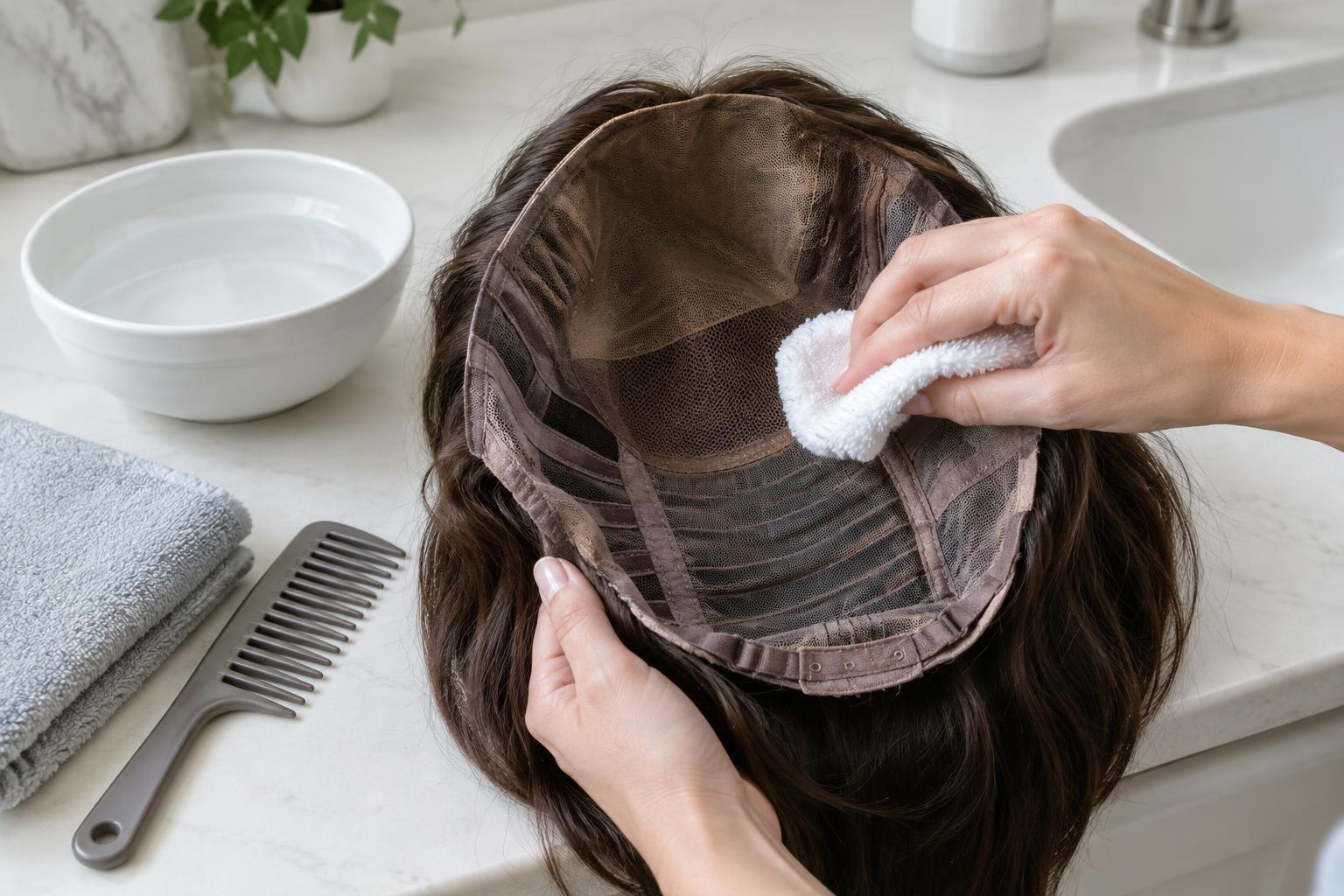
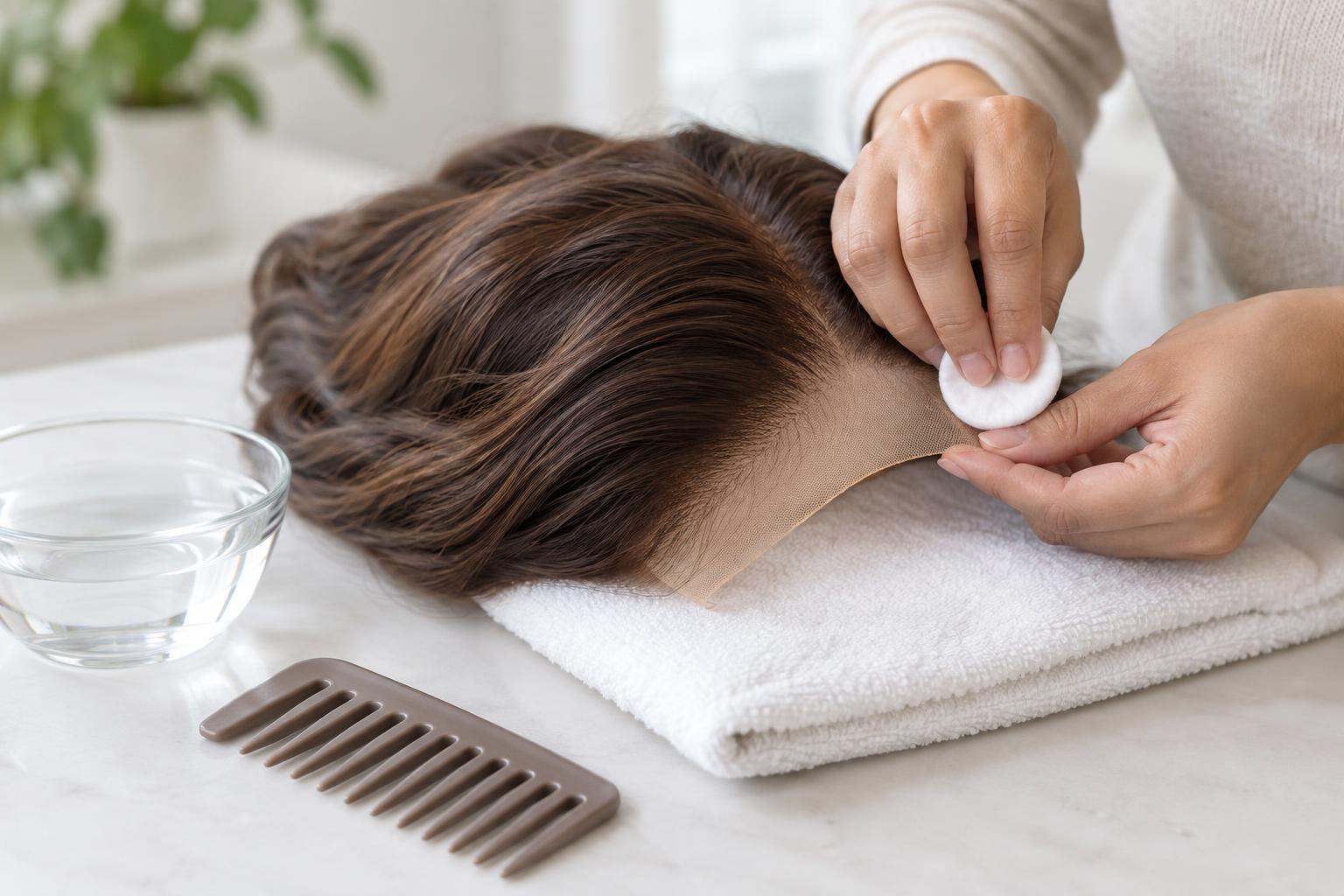
The English-language Irish home page is UniqueYou. For a broad women’s scarf collection, the local shopping term points to scarf for women UniqueYou. If you would rather start with a shape that can be folded for the neck or hair, UniqueYou leads to square scarves.
The English-language United Kingdom home page is UniqueYou. For square scarves, the local collection term directs you to ladies square scarves UniqueYou, a useful starting point if you enjoy folding one piece in several ways. If a brighter accent would complement a plain coat, the red-scarf collection is UniqueYou.
The Portuguese-language home page is UniqueYou. For a women’s cashmere scarf, the Portuguese collection term leads to cachecol de caxemira de senhora UniqueYou; check the composition of the specific piece that interests you. If colour matters more than material in your search, UniqueYou opens the red-scarf collection.
The most successful accessory is one you can picture wearing on an ordinary day. Start with your own comfort and clothes, check the details of the piece you choose, and let a scarf add to your style rather than dictate it.