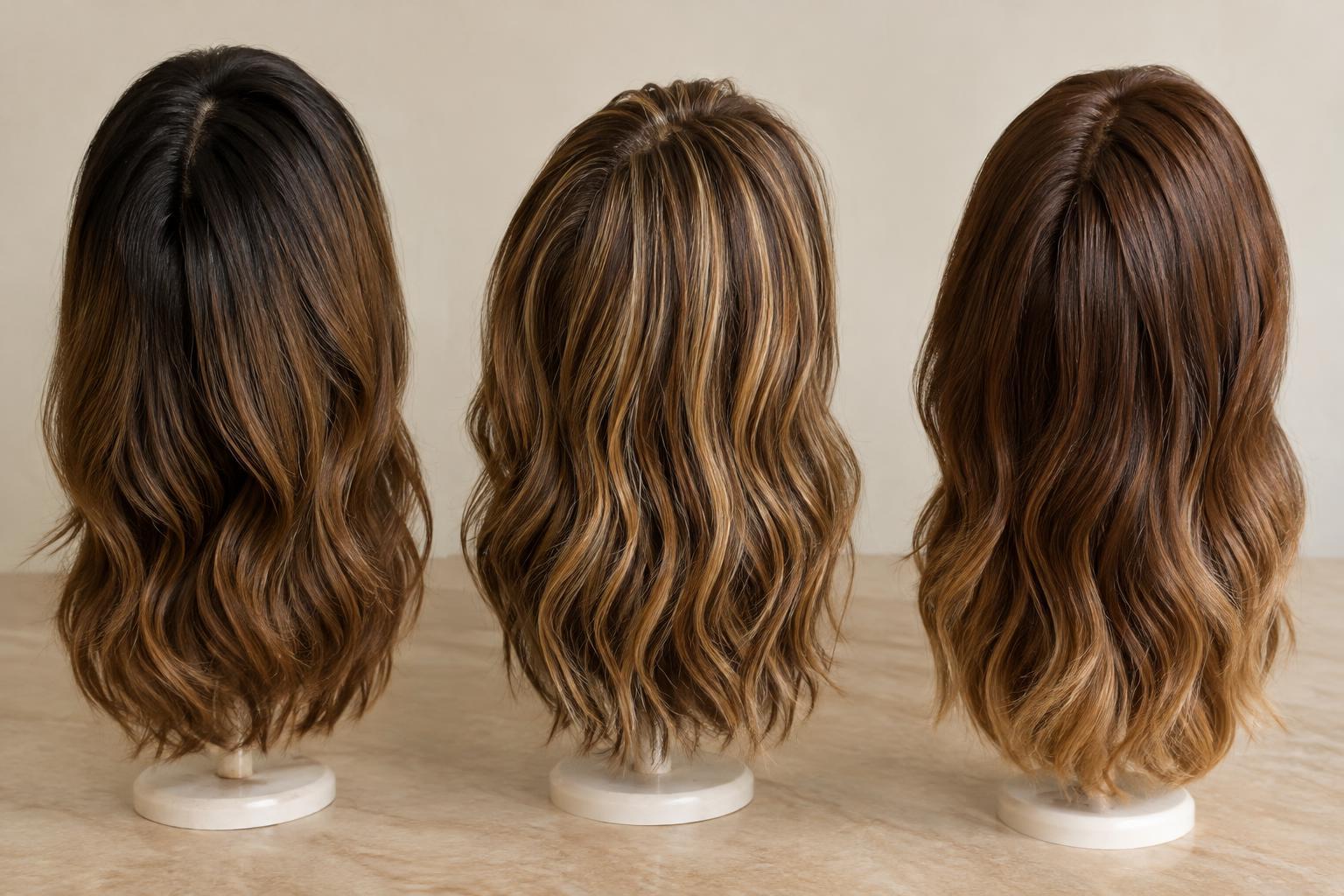
Start with the moments when you will change wigs
A wig that feels straightforward to put on at home may be less convenient when you need to remove it quickly or change styles away from a mirror. Before comparing constructions, picture a normal day. Will you put the wig on once each morning, take it off for a break, or switch between wigs? Will you have a private place, good lighting and somewhere to set it down? These details can help you decide what “easy to wear” means for you.
Think about how much time you want to spend arranging the wig each time. A style that looks right after a quick shake and a check in the mirror may suit frequent changes. A precise parting or carefully positioned lace front may take more attention. Neither is a better choice in general; the useful question is whether you will be happy repeating those steps as often as your routine requires.
Compare how the cap goes on and stays in place
Look for a cap that you can position consistently. Features such as ear tabs, a defined front edge and adjustable straps may make it easier to recognise when the wig is sitting where you want it. Try setting any straps before you put the wig on, then check whether it still feels secure after you have moved your head gently. Straps can fine-tune a suitable size, but they should not have to compensate for a cap that feels markedly too large or too small.
A wig may use a grip, combs, clips, adhesive or a combination of these to help it stay in place. If you plan to take it off often, consider how many steps each option adds. Clips need something suitable to attach to; adhesive involves application and removal; a grip adds a separate item to position. You do not need to choose the strongest-sounding method automatically. Choose one that works with your hair or scalp, feels comfortable and is manageable for the way you will wear it.
Choose a hairline and style you can reset
An exposed hairline can look appealing, but it may ask for careful positioning whenever you put the wig back on. If you prefer fewer adjustments, a fringe, a less exposed front or a style with a forgiving parting may be worth trying. Check how the wig looks both immediately after you put it on and after you have moved about. Notice whether you repeatedly need to adjust the front, smooth a section or restore the parting.
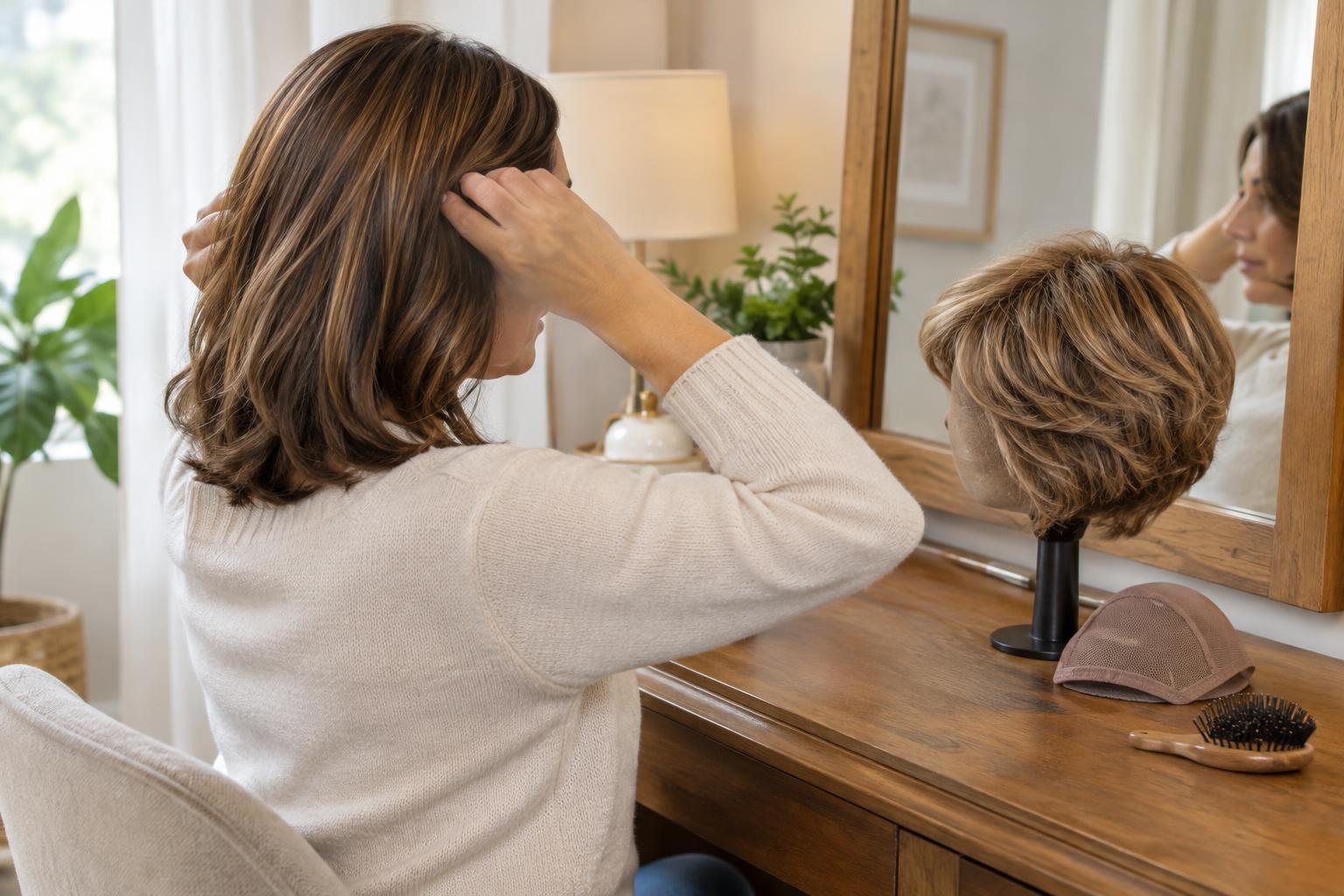
Consider what happens to the style while the wig is off your head. If it will spend part of the day in a bag, plan how you will protect its shape and avoid tangles; a suitable storage pouch or container may help, depending on the wig. Try removing and replacing it at home using the same brush, comb or other items you expect to have with you. The aim is not a perfect first attempt, but a repeatable routine that does not demand more time or equipment than you want to carry.
Test the whole change, not just the final look
During a try-on, go through the entire process: prepare your hair if needed, put the wig on, position it, take it off and put it on again. Time is less important than noticing where you hesitate. Can you tell which way the cap should sit? Are any fastenings awkward to reach? Does the wig return to a comfortable position without pulling? If you can only try a wig on once, make notes about these questions so you can compare options rather than relying on how each looked in a photograph.
Finally, check the practical details before buying. Ask what arrives with the wig, which fastening features are built in, and whether the style shown needs extra products or styling. Read the seller’s return conditions before altering the wig or removing any attached tags. A wig that is easy to change should feel workable throughout the process, not simply look good once it is in place.