Start with the wig’s coverage
A low-density wig has fewer fibres than a fuller style, so an accessory can change its appearance quickly. A clip that looks discreet when the hair is loose may create a visible gap when it gathers a section. Before choosing a position, put the wig on as you normally wear it and look at the crown, sides and back in a mirror. Check both with the hair lying flat and with a small section lifted.
Construction matters too. A wig may have a lace part, a monofilament area, wefts or a combination of these. Some areas are designed to make a visible part look natural; others rely on fibres lying over the cap for coverage. You do not need to identify every construction detail, but noticing where the fibres separate easily will help you avoid placing an accessory there.
Choose an accessory that does not need a large section
Small, lightweight accessories are often easier to place without disturbing much hair. A slim barrette or modest snap clip may hold a narrow side section, while a large claw clip may need more hair than the wig can comfortably supply. Size alone is not the whole story: check whether the fastening grips gently, has smooth edges and closes without forcing fibres into a tight bundle.
Consider what the accessory needs to do. If it is mainly decorative, it may only need to catch a few fibres near the surface. If it must hold hair away from your face, choose a position where the hair naturally falls back rather than pulling it across the wig. Avoid relying on the accessory to secure the wig itself; use the wig’s intended fit adjustments for that purpose.
Place it without creating a gap
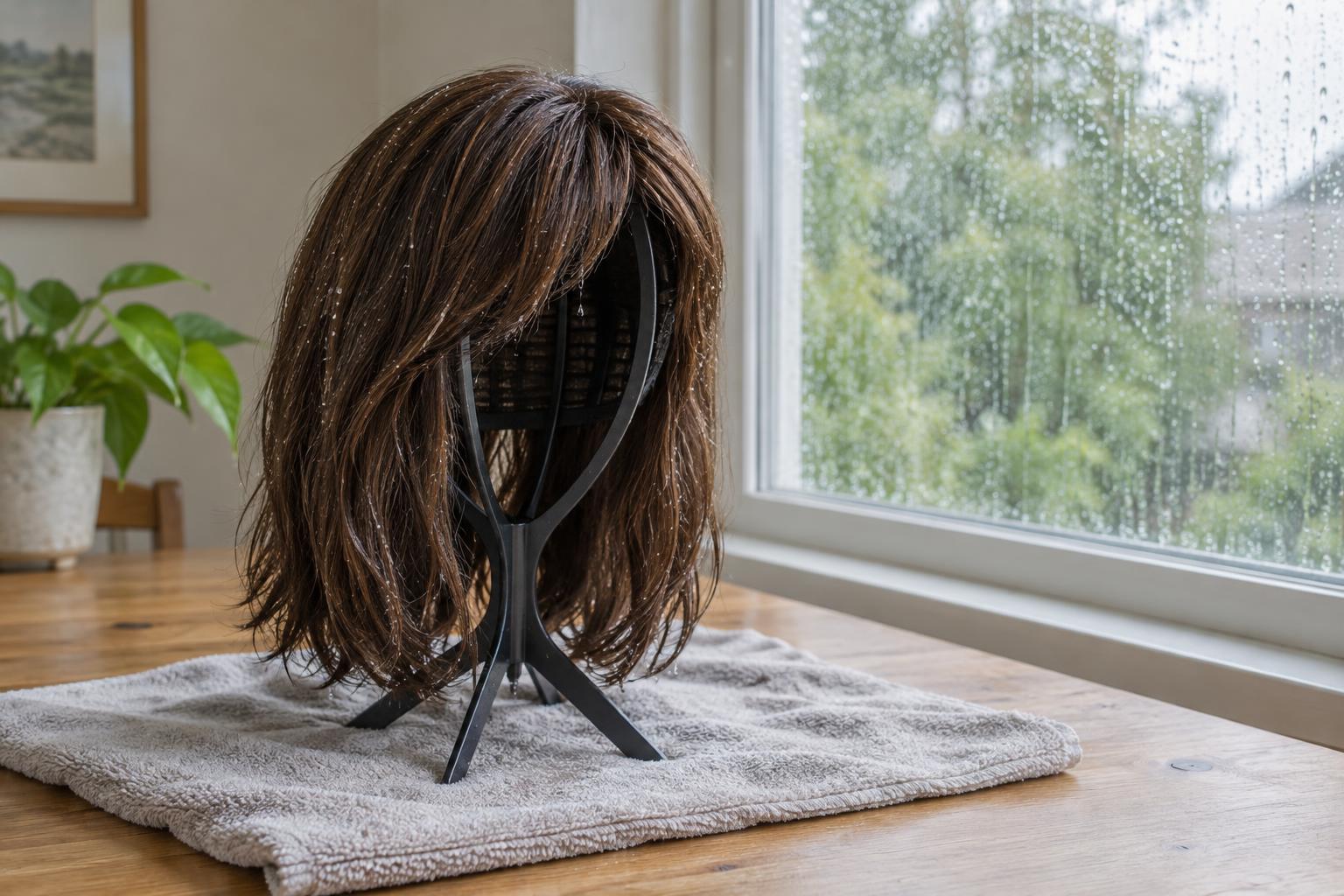
Try the accessory with the wig on a stand first if that makes handling easier, then check the result while wearing it. Gather a small section loosely and leave the surrounding hair in its usual direction. Slide a clip into the gathered fibres rather than pressing its teeth or hinge against lace, wefts or the cap. If you feel resistance, stop and reposition it instead of pushing harder.
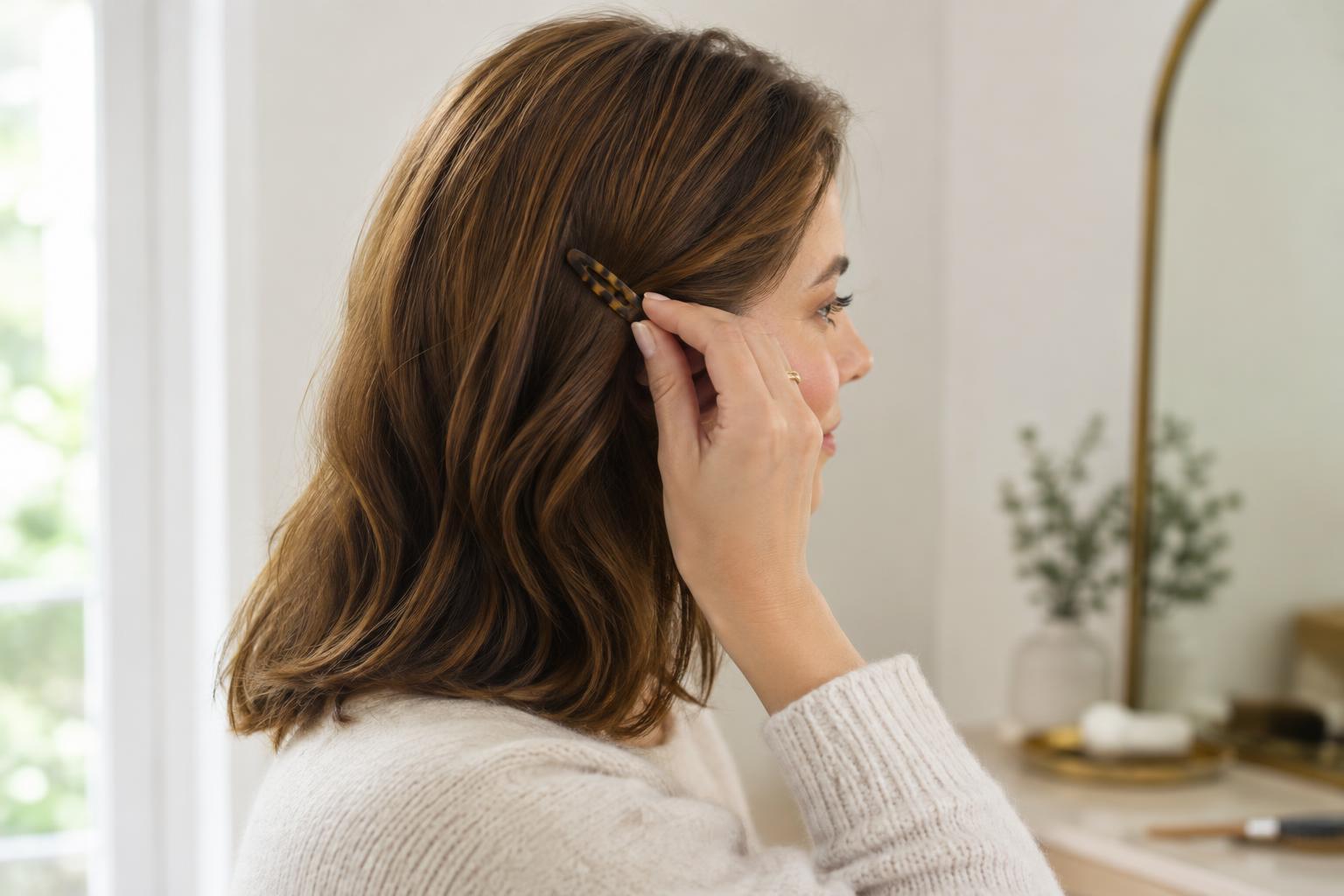
A side placement a little behind the hairline can be easier to blend than one directly on a sparse part, but the best spot depends on the wig. After fastening, let nearby fibres fall around the accessory and look from several angles. A handheld mirror or a photo taken from behind can reveal a gap that is hard to see straight on. If the cap shows, use less hair, move the accessory or leave that area unadorned.
Keep the style comfortable through the day
An accessory should not make the wig shift or create pressure at the hairline. Turn your head gently and check that the fastening stays in place without tugging. If it slips, a tighter grip is not always the answer; a different position or a lighter accessory may work better. If the style needs repeated adjustment, simplify it rather than pulling the same fibres over and over.
When removing the accessory, support the gathered hair with one hand and open the fastening fully with the other. Ease out any caught fibres before lifting it away. This is particularly useful around lace and wefts, where a snag can be harder to undo. A quick check for bent clip edges or rough spots before the next wear can help you avoid another catch.
Let the wig guide the finished look
Not every low-density wig needs an accessory to sit in the same place. A short style might suit one small side clip; a longer style may allow a loose half-up section if the crown remains covered. Work with the wig’s existing part and fall of hair, and favour an arrangement that still looks good when you move. The aim is not to hide every glimpse of construction at all costs, but to find a comfortable placement that looks the way you want.