Start with the wig’s construction
A half-up style moves hair away from the sides and crown, which can reveal parts of a wig that normally stay hidden. Before picking up a brush, look inside the wig to see where the cap, wefts and any lace or monofilament sections sit. A lace-front wig may offer a natural-looking front hairline but have wefts farther back. A wig with a monofilament top may give you more flexibility around the parting. Neither feature guarantees that every section can be pulled up without showing the construction underneath.
Check the wig’s density, too. If the hair is light around the temples or crown, a high, tightly pulled section may leave gaps. A smaller, lower half-up style usually needs less hair and gives the loose layers more opportunity to cover the cap. Work with the direction the hair already falls rather than forcing a new parting.
Set the fit before you style
Put the wig on in its usual position and make sure it feels secure and comfortable. Adjust any built-in straps or combs according to the wig’s design, without tightening them to the point of discomfort. If you use a wig grip or other accessory, check that it does not sit where it will become visible once the hair is lifted.
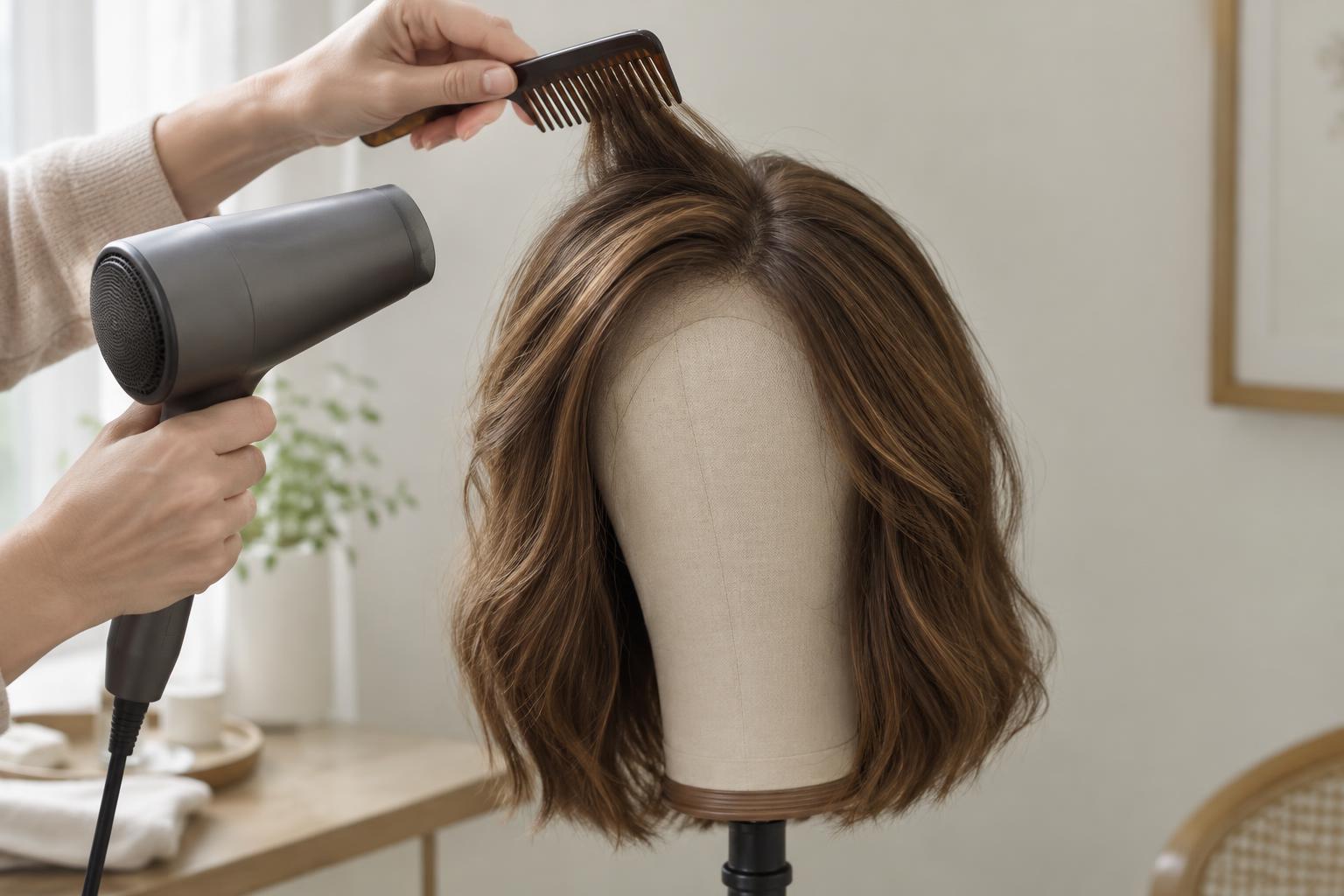
Detangle the hair gently, starting at the ends and working upward. Then smooth it with your fingers or a suitable brush, depending on the fibre and the maker’s care guidance. Styling on a wig stand can help you see the back, but make your final adjustments while wearing the wig: its shape and coverage may change when it is on your head.
Gather a small section and preserve coverage
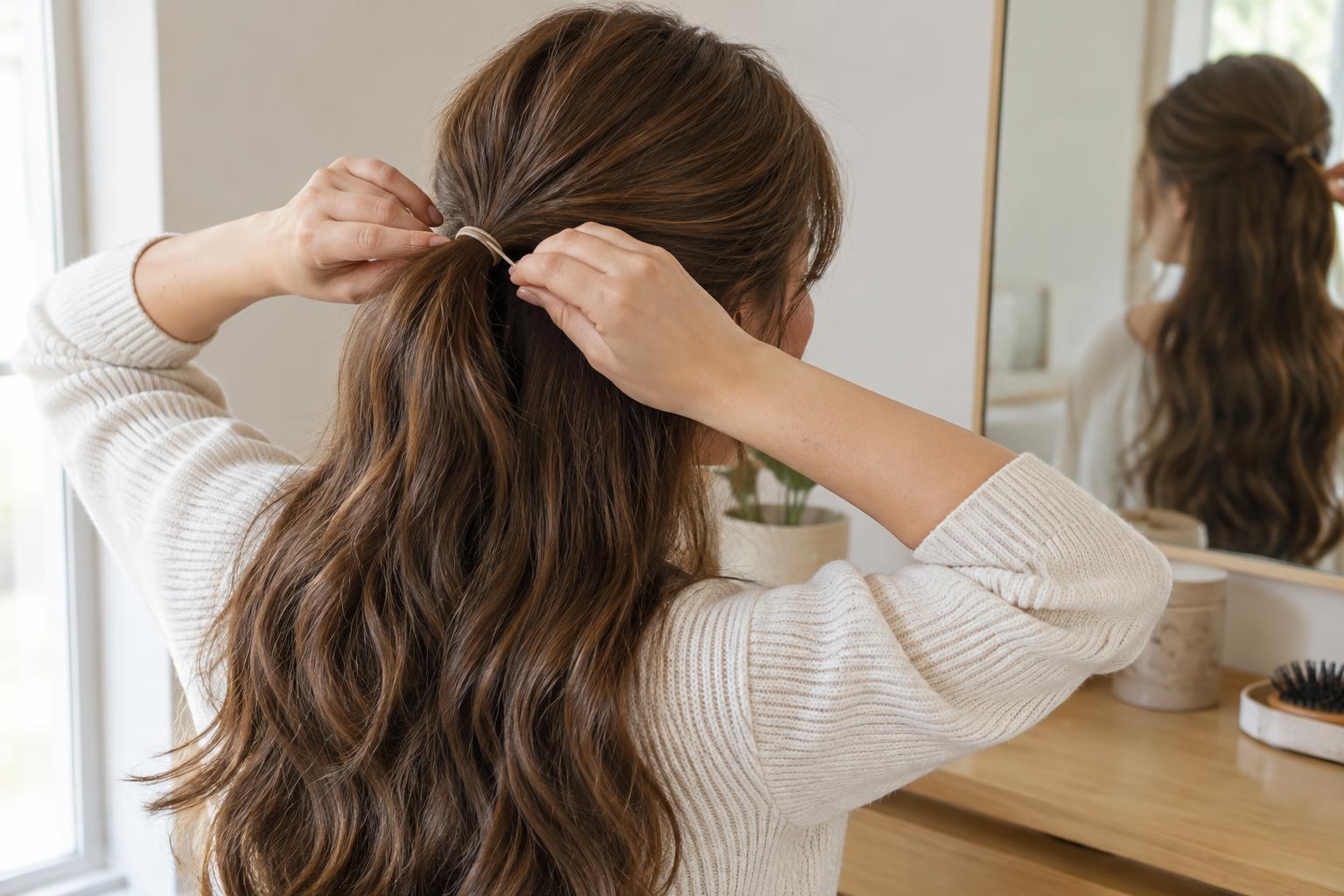
Begin by taking a modest section from the upper sides and crown. Leave hair loose at the temples and just above the ears, where an exposed cap can be especially noticeable. Instead of pulling the section straight back and tight, guide it loosely toward a point below the crown. This creates a softer shape and avoids stretching the hair away from the areas it needs to cover.
Before securing it, lift and lower the gathered section while looking at the sides and back with a second mirror. If you can see a weft, cap edge or patch of mesh, release a little hair from the gathered section and let it fall over that area. You can also move the tie slightly lower. For some wigs, a small half-up section works better than a full ear-to-ear section; coverage matters more than achieving a perfectly even division.
Secure it without pulling on the wig
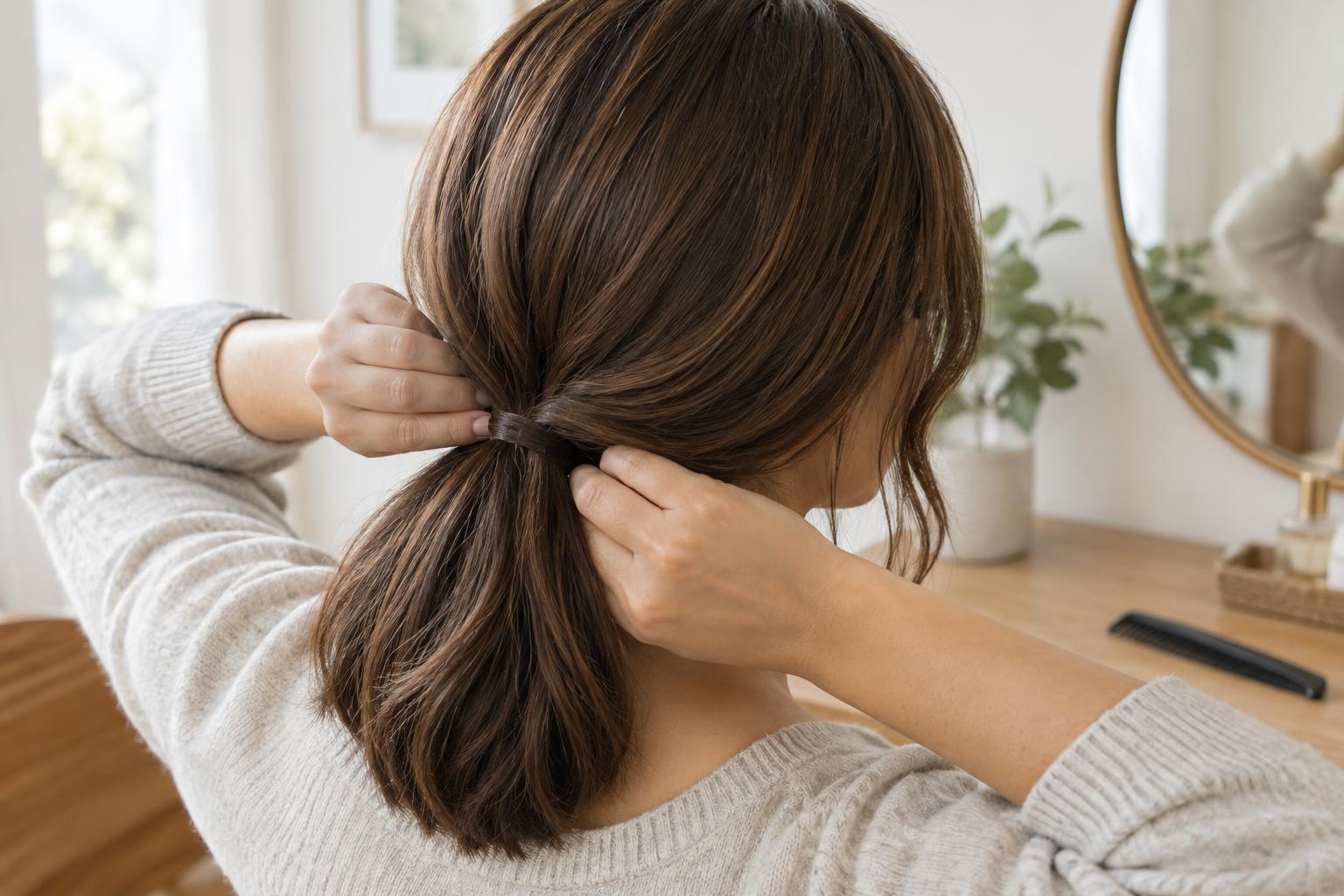
Use a soft, snag-free elastic or a lightweight clip to hold the upper section. Keep the fastening snug enough to hold the hair, but not so tight that it tugs on the cap or lifts the wig at the front. A clip can make small adjustments easier, while an elastic may suit a simple ponytail. Avoid placing a heavy accessory where its weight could pull the style backward.
For a little more fullness, gently loosen the hair above the fastening with your fingertips. Pull out only a few strands at a time, then check that the cap remains covered. You can wrap a small strand around an elastic if there is enough hair to do so without creating a gap. If you want waves or curls, check the wig’s fibre and care instructions before using heat; some synthetic fibres can be damaged by heated tools.
Check the style in motion
A style that looks covered from the front may reveal a weft when you turn your head. Check the back, both sides and the crown, then move naturally and look again. Pay particular attention to the space beneath the half-up section, where lifting hair can expose the rows below it. Letting the lower layers fall freely often provides better coverage than brushing them flat.
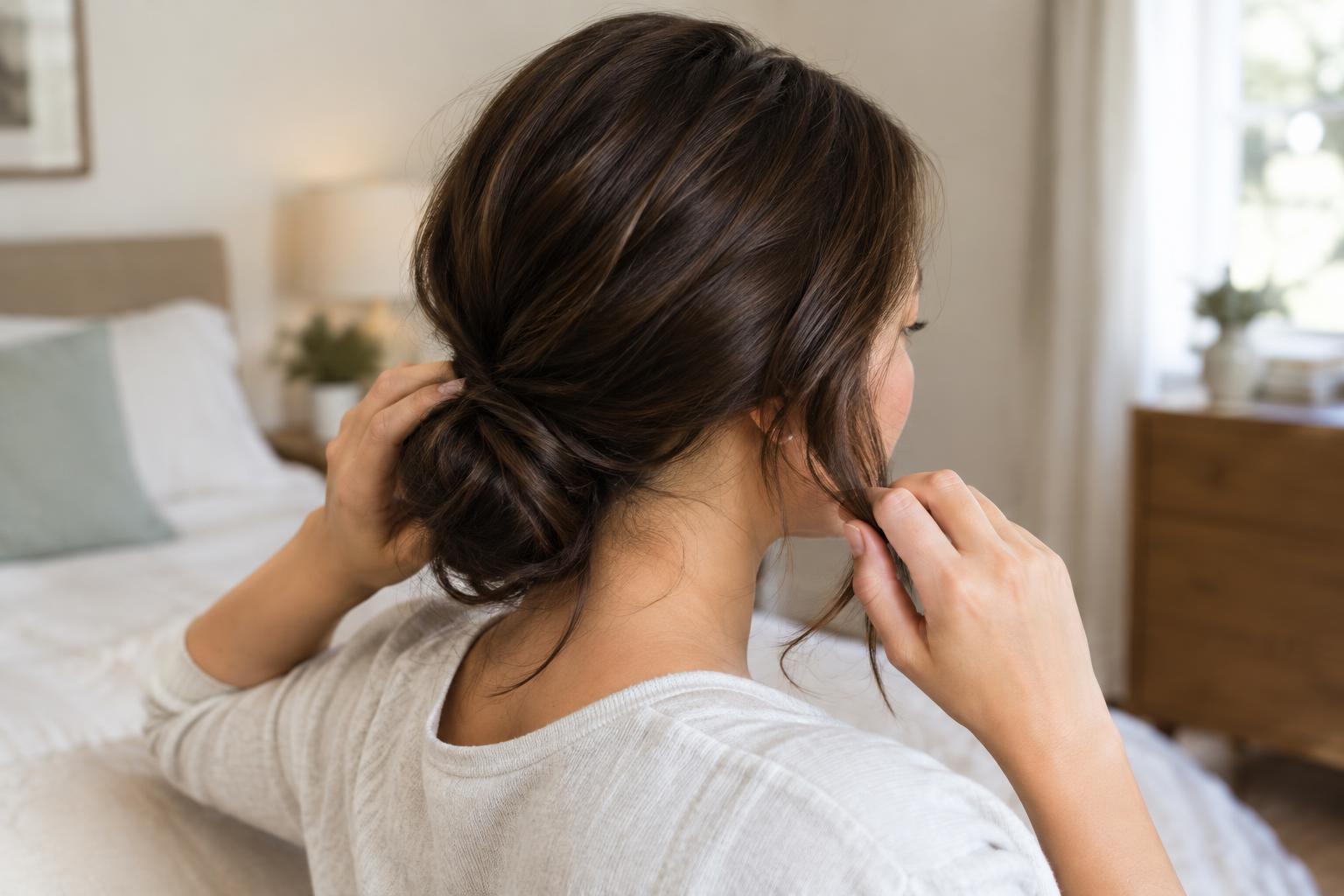
If a gap keeps appearing, simplify the style rather than repeatedly pulling it tighter. Try a lower fastening, a smaller gathered section or a loose twist held with a light clip. A half-up look does not need to be high or sleek to feel polished. The most reliable version is one that suits your wig’s construction, stays comfortable and keeps its coverage as you move.