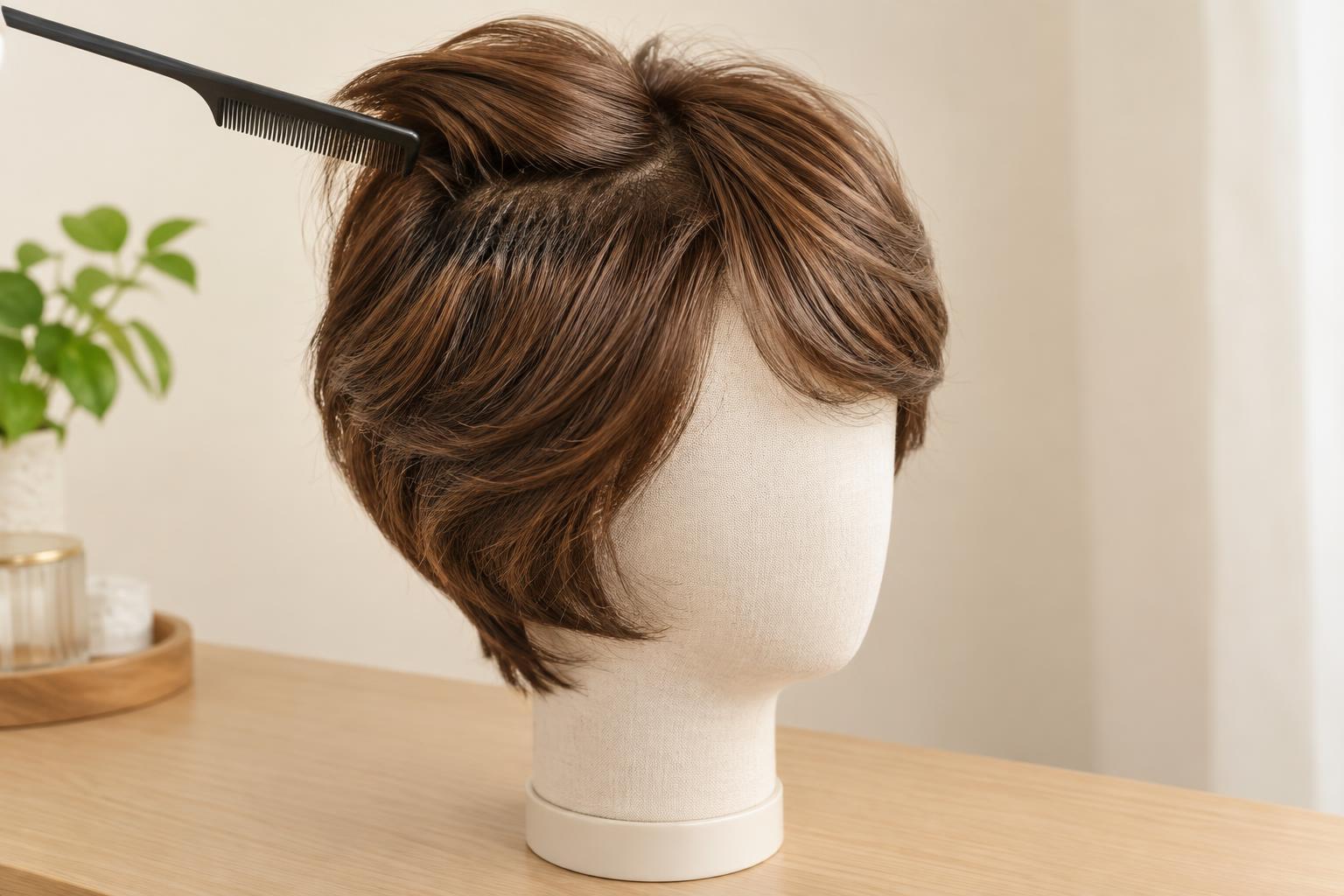
Start with the fit, not the hair
Tucking hair behind an ear pulls it away from a place where it usually conceals the edge of a wig. Before styling, put the wig on as you normally would and check it in a mirror from the front and both sides. The ear tabs should sit evenly beside your ears, rather than riding over them. If one side looks different, gently reposition the cap before moving any hair.
A tuck should not have to hold the wig in place. If the cap shifts when you lift the hair, check its fit and any built-in adjusters. Tightening it until it feels uncomfortable is not a good substitute for a suitable fit. You can also try the style while seated and moving your head: a tuck that looks neat only when you remain still may need a lighter touch.
Make a soft, partial tuck
For a discreet result, start with a small section of hair nearest your face rather than sweeping the entire side back. Guide it loosely over or behind the ear, then let a little hair fall forward of the ear tab. That forward piece can soften the transition between the wig and your skin. Use your fingers or a wide-tooth comb where appropriate for the fibre, and avoid dragging a brush firmly across a lace edge.
Look at the style from an angle as well as straight on. A smooth front view can hide an exposed tab at the side. If the cap is visible, bring some hair forward or loosen the tuck rather than pulling harder. Wigs with shorter side pieces or lighter coverage near the temples may suit a partly tucked look better than a fully cleared side.
Keep clips and tension to a minimum
If the hair slips out, a small, lightweight clip placed in the hair behind the ear may help. Position it where it holds a few strands together without catching lace, a weft or the cap edge. A decorative clip can also make a deliberately loose tuck look finished. Remove it carefully instead of tugging it through the fibres.
Avoid securing a large section so tightly that it pulls at the hairline or changes how the cap sits. The same principle applies to both human-hair and synthetic wigs: the styling aid should support the arrangement of the hair, not anchor the wig. If you wear glasses or hearing devices, check that the tuck and any clip leave room for them without pressure or rubbing.
Adjust the style to the wig you have
Different constructions allow different degrees of exposure around the ears. A lace-front wig may have a flexible-looking front hairline but less coverage at the sides; a style with fuller side hair may make a soft tuck easier. Rather than assuming a wig can be styled like the hair shown in a product photograph, test what its own hair length, density and cap placement allow. A one-sided tuck is another option if one side sits more naturally than the other.
At the end of the day, release clips, ease out any compressed strands and store the wig in a way that preserves its intended shape. If an accessory stops gripping well or a side piece needs attention, consider whether it can be maintained instead of replacing the whole look. For more ideas about keeping useful items in circulation, browse Repair and Reuse · Less and Better for repair-and-reuse inspiration. The most convincing ear tuck is often the simplest one: comfortable, slightly loose and easy to readjust.