Check the wig before you begin
Confirm that the wig is human hair and check any care instructions that came with it. A wig sold as human hair may still include synthetic fibres or have construction details that need special care. If you are unsure what it contains, avoid heat until you can confirm what is suitable. Choose a moderate dryer setting rather than assuming that human hair needs the highest heat.
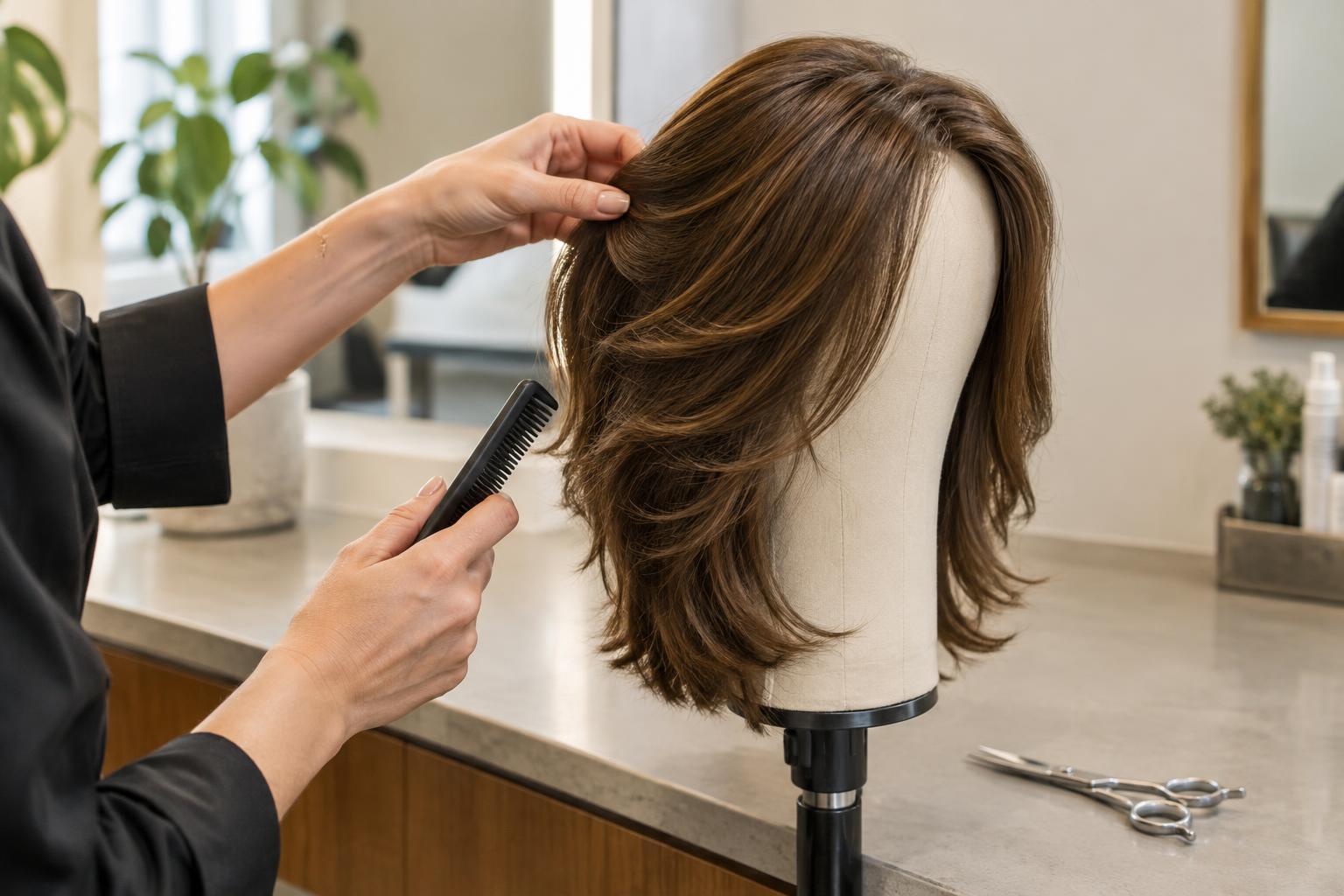
Start with a clean, damp wig. After washing, gently press out water with a towel; rubbing can tangle the hair. A wig that is dripping wet takes longer to dry, while one that has already dried unevenly can be harder to smooth. Detangle from the ends upward with a wide-tooth comb or a brush suitable for the wig, holding each section above the area you are working on so you do not pull at the cap.
If you use a heat protectant, choose one intended for human hair and apply it lightly through the lengths, following its directions. Keep heavy products away from the roots and cap, where buildup can be difficult to remove. Set the wig on a stable stand that supports its shape, and secure it gently if needed. Avoid pins through delicate lace unless the wig’s construction and your stand allow for them safely.
Set up for controlled drying
Fit a concentrator nozzle to the dryer if you have one. It narrows the airflow, making it easier to aim air along the hair rather than blowing strands in every direction. Use a medium or low heat setting and a manageable airflow speed. Keep the dryer moving and leave some distance between the nozzle and the hair; lingering in one spot can make the hair feel dry or put unnecessary heat on the cap.
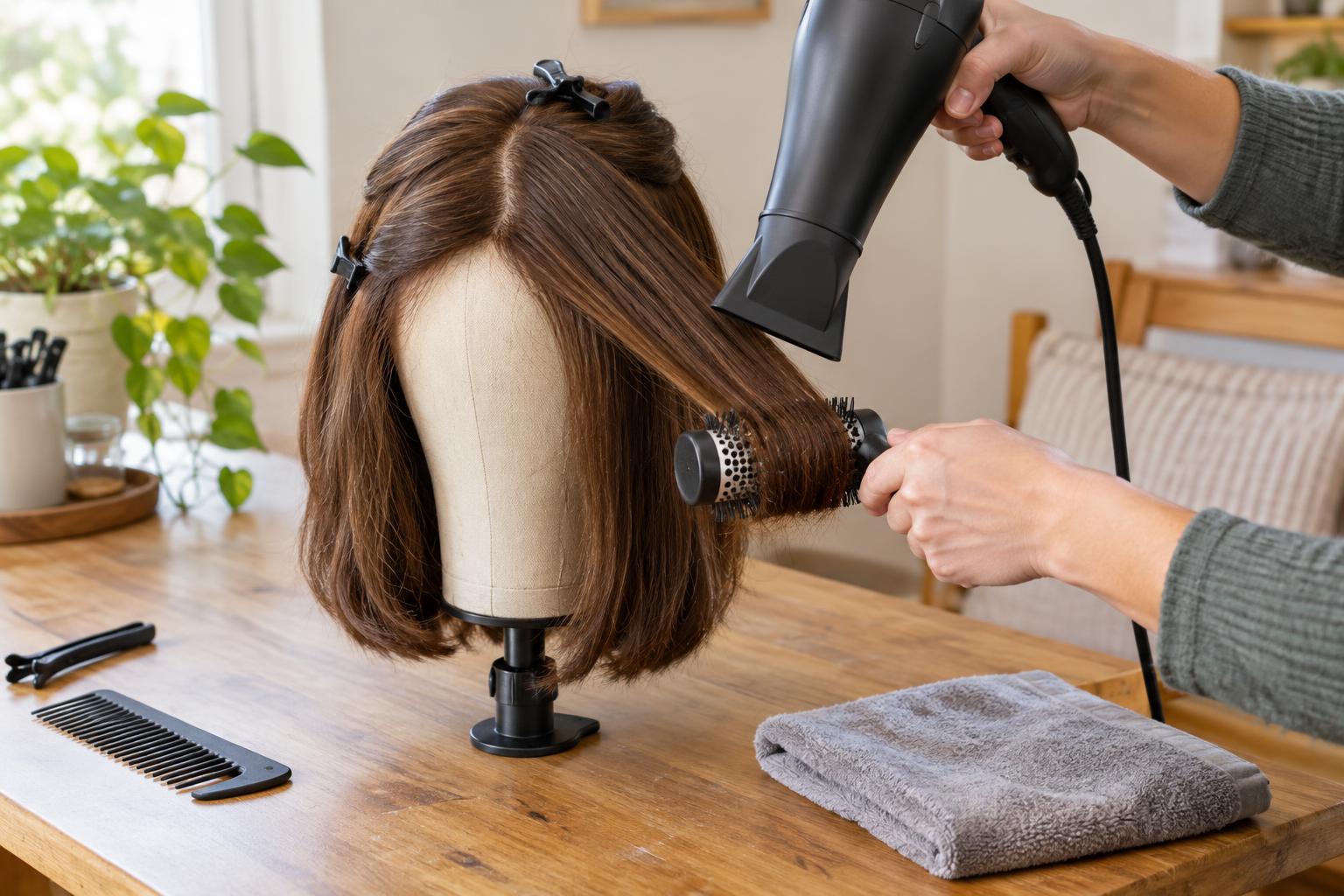
Divide the wig into workable sections, clipping the upper layers out of the way and beginning near the nape. Smaller sections are easier to dry evenly and require less tugging. For a smooth finish, pair the dryer with a vent or round brush that moves easily through the hair. A brush that catches or demands a hard pull is not helping: switch to smaller sections or detangle again.
Before using a brush for shaping, rough-dry each section gently until it is damp rather than very wet. Point the nozzle down the length of the hair, from roots toward ends. Around lace fronts, parting areas and other delicate spots, use lower heat and lighter tension. The aim is to guide the hair into place, not to stretch the mesh or repeatedly heat one attachment point.
Smooth each section from roots to ends
Place the brush under a small section and follow it with the dryer, keeping the nozzle aimed down the hair shaft. Move both together at a steady pace. You can lift the hair slightly at the roots for volume, then guide the mid-lengths and ends in the direction you want them to sit. Keep the brush’s pull gentle, particularly near hand-tied areas where individual hairs may be secured to a delicate base.
Work through the lower layers before releasing the next sections. Check that each section feels dry before moving on: hair left damp underneath may lose its shape after you finish. If the ends look fluffy, pass the brush and dryer over them once more with controlled airflow instead of increasing the heat. For a softly curved end, turn the brush slightly as you reach the tips, without winding the hair so tightly that it snags.
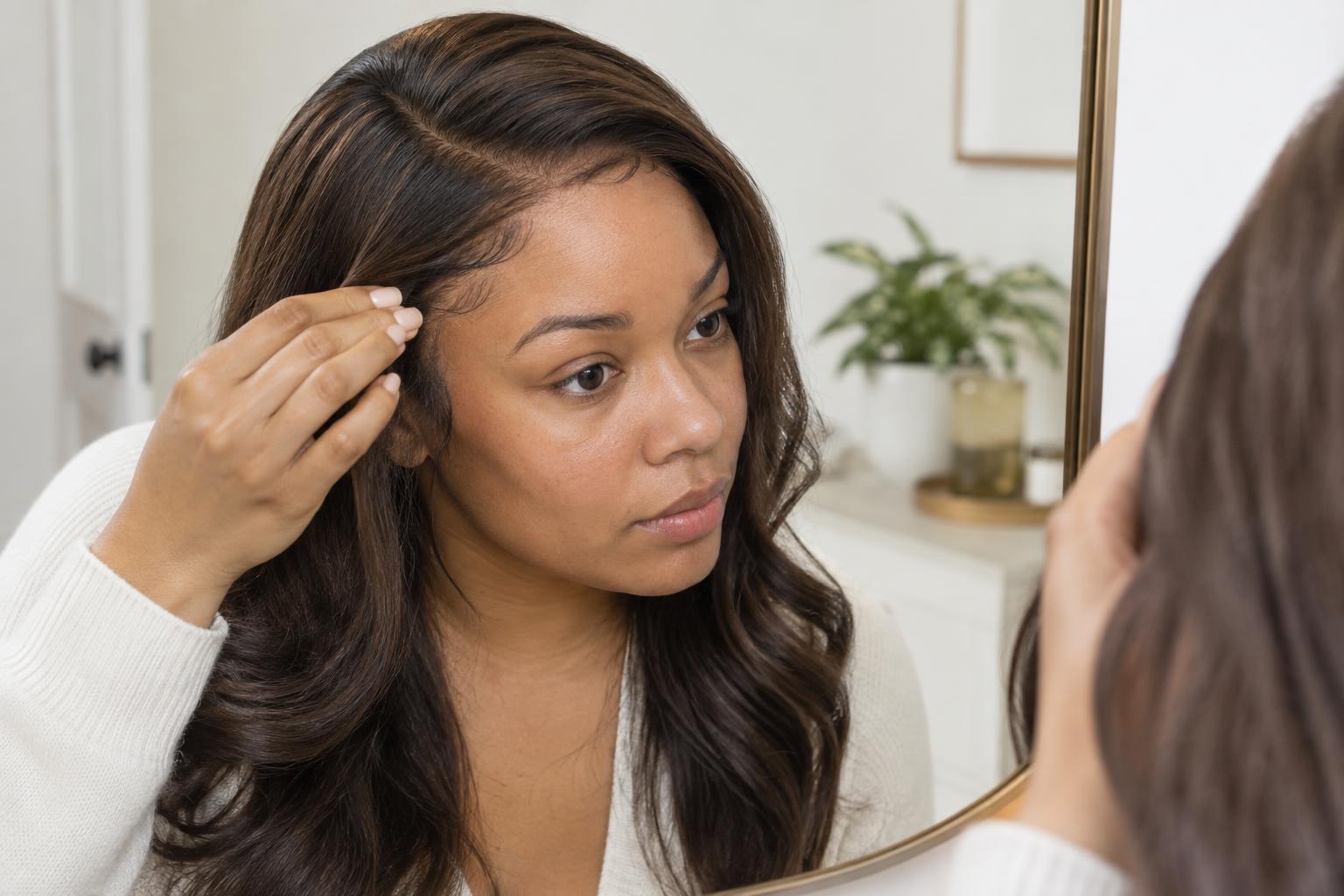
The hairline and parting often need the least force. Use your fingers or a small brush to guide these areas, with the dryer on a lower setting. Aim airflow in the direction the hair should fall, but avoid pressing a hot nozzle against lace, knots, adhesive residue or the stand. If you wear the wig with adhesive or tape, it is simpler to blow-dry it off your head and finish any minor adjustments once it is fitted.
Cool, check and store the finished wig
Once the wig is dry, use the dryer’s cool setting, if available, while the hair rests in its intended shape. Then remove the clips and check the nape, crown and inner layers for lingering dampness. Let the wig cool before brushing through the final style; this helps you see its natural movement without disturbing sections that are still warm.
Use only a small amount of finishing product if the lengths need it. Smooth flyaways with your hands or a light pass of the brush rather than repeatedly reheating the same area. If the wig feels rough, tangles easily or no longer holds its style as expected, more heat may not be the answer. Review the products you have used and consider whether the hair needs washing or conditioning instead.
Store the wig only when both the hair and cap are fully dry. Place it on a suitable stand or in the storage method recommended for its construction, away from sources of heat. A gentle, repeatable routine is more useful than a perfectly polished finish on one day: controlled sections and careful handling help keep the wig comfortable to style next time.