Know what a no-heat set can do
A no-heat set is a gentle way to refresh flattened curls, encourage waves back into shape or give a wig more controlled movement. It is especially useful when you do not know the wig’s heat tolerance. Standard synthetic fibre is not the same as heat-friendly synthetic fibre, and hot tools can damage it. For this method, leave straighteners, curling irons, hot rollers, steam and hot water aside.
Keep your expectations flexible. Synthetic wigs often hold the shape given to them during manufacture, so a water-and-roller set may tidy an existing curl pattern more reliably than it creates lasting curls in a very straight wig. Fibre type, length, density and previous wear can all affect the result. If you want to test a new shape, start with a small section underneath before setting the whole wig.
Prepare the wig and choose a curl size
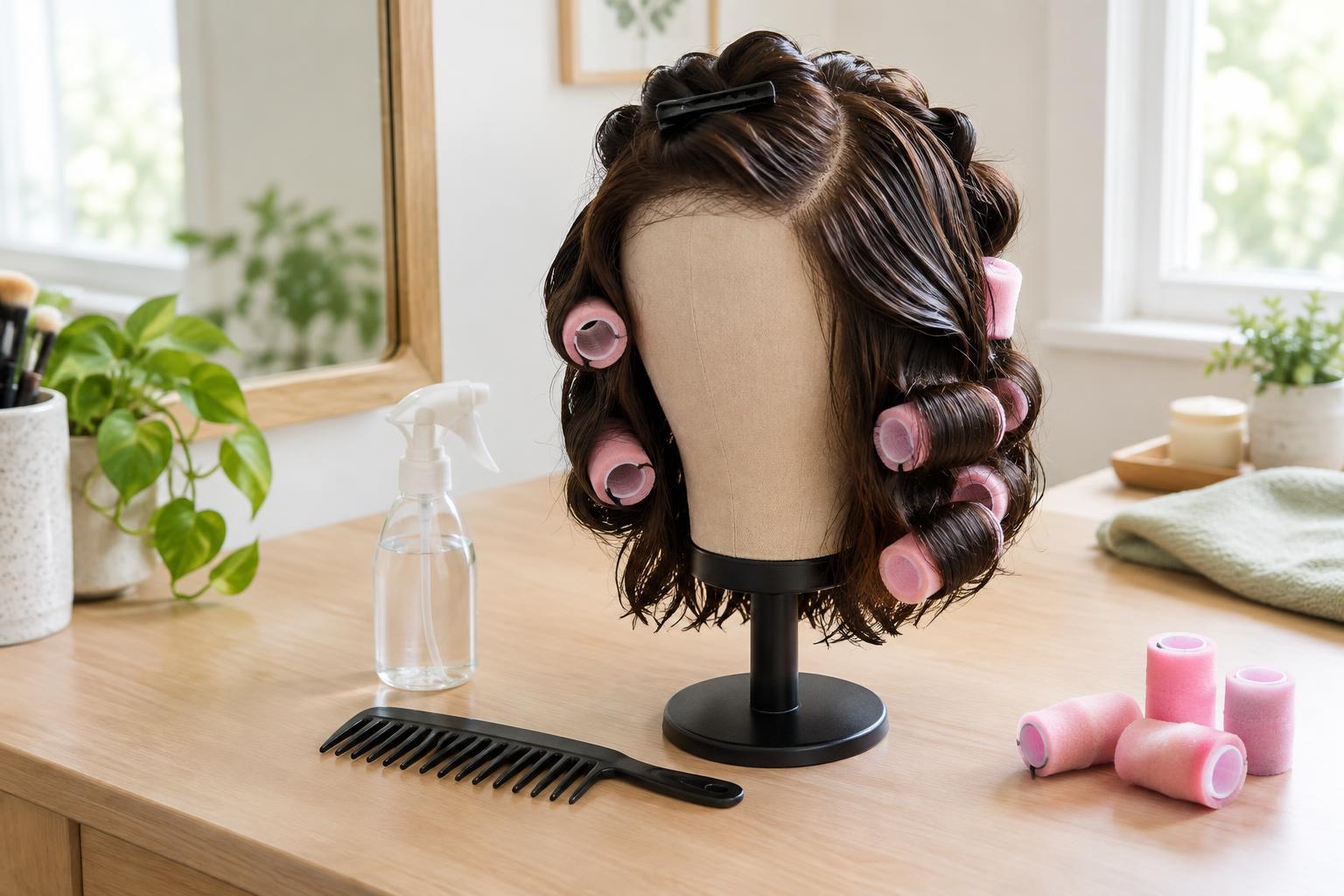
Set the wig on a stable stand or mannequin head so you can reach each section without pulling on the cap. Have a spray bottle of cool water, smooth rollers or flexible rods, section clips and a wide-tooth comb ready. Use pins only if the stand allows them to hold the cap securely without piercing delicate lace or a skin-like parting. If the wig needs washing, follow its care label first and let excess water drain before you begin.
Gently detangle from the ends upward, supporting the hair above the area you are combing. For a curly wig, finger-detangling may preserve the existing pattern better than combing every strand. Divide the hair into manageable sections. Smaller rollers generally produce tighter-looking curls; larger rollers encourage broader bends and volume. A roller that seems small on the stand may look more relaxed once the fibre is released, so testing one section is worthwhile.
Roll damp sections without stretching the cap
Lightly mist one section with cool water until the fibres are evenly damp but not dripping. You are trying to shape the hair, not soak the wig base. If you use a styling product, choose one labelled for synthetic wigs and apply it sparingly according to its directions. Heavy product can make fibres sticky or dull and may leave residue that is difficult to comb out.
Smooth the section with your fingers, place its ends neatly against the roller and roll towards the cap. Keeping the ends flat helps avoid bent or hooked tips. Secure the roller gently: it should stay in place without tugging at the cap or pulling the hairline out of shape. Repeat around the wig, working methodically so neighbouring sections do not become tangled. Around a fringe or parting, pay attention to the direction in which you want the hair to fall when the rollers come out.
Let the wig air-dry completely
Leave the wig on its stand in a well-ventilated place until every rolled section is fully dry. Damp fibre trapped inside a roller can make the shape fall quickly after release, while a damp cap is uncomfortable to wear. Drying time varies with the wig’s density, the amount of water used and the room conditions, so check a section near its base rather than relying on a fixed schedule. Avoid placing the wig by a radiator or using a hairdryer to speed things up.
Once dry, remove each roller carefully instead of pulling it down through the hair. Let the curls rest, then separate them with your fingers for a softer finish. For more volume, gently lift the hair near the roots without teasing the cap. Brushing through the finished set can turn defined curls into frizz, especially on longer synthetic styles. If the result is too tight, a little finger-combing may loosen it; if it is too loose, try smaller sections or rollers on the next attempt.
Keep the shape between wears
After wearing the wig, ease out any tangles at the ends and allow the cap to air before storing it. A wig stand can help preserve the style between wears; for longer storage, tuck the hair neatly into a breathable storage arrangement that will not crush the curls. Avoid sleeping in rollers while wearing a wig, as pressure and movement can pull at the fibres and cap.
If a curl drops, you do not need to reset the entire wig. Mist and reroll the affected section, then allow it to dry fully before styling. No-heat setting is best treated as a repeatable maintenance technique rather than a guaranteed permanent restyle. When a wig’s original curl pattern no longer responds well, a different style or fibre may be a better match for the look you want.