Start with the shape you want
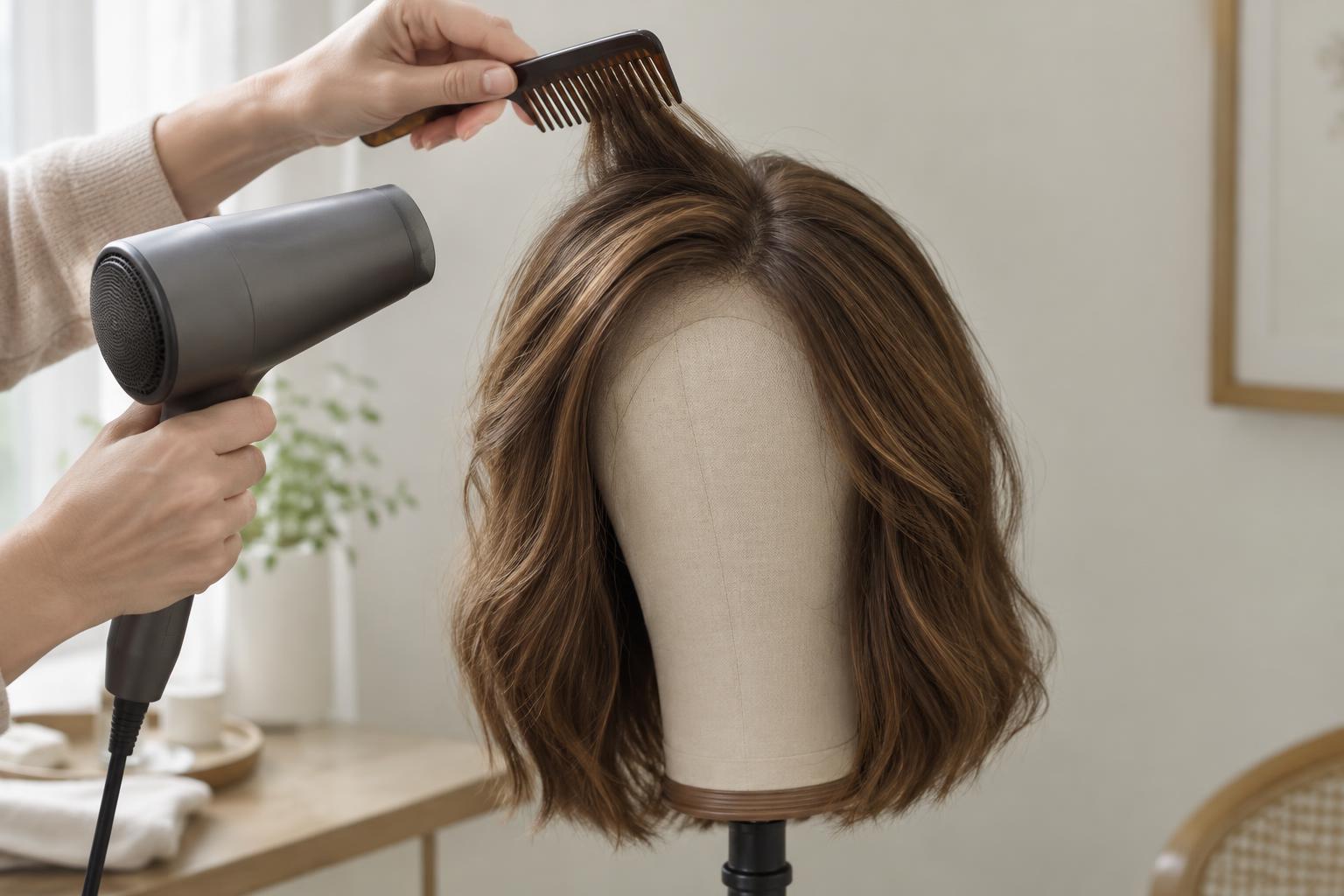
Crown volume can mean a small lift at the roots, a rounded silhouette or enough height to keep the hair from lying flat against the cap. Before styling, put the wig on a stand or wear it with the fit adjusted as you normally would. Look at it from the front and sides. A little height just behind the hairline may be more flattering than lifting the entire top, particularly if you want the result to look understated.
Check the cut and density, too. Short layers can support a rounded shape more readily than long, heavy lengths. If the top is already dense, adding product may make it look bulky rather than airy. Start with the least intervention and assess the shape after each step; it is easier to add lift than to undo a heavily set style.
Use the part and direction of the hair
Changing the part can create immediate lift without teasing. If your wig permits it, move the part slightly away from where the hair usually falls, then guide the top strands across with your fingers or a wide-tooth comb. Hair that has settled in one direction often stands a little higher when redirected. You can also make a loose, shallow zigzag part to break up a flat-looking line without creating an obvious new part.
How much freedom you have depends on the cap. A monofilament top or suitable lace area may allow parting in several directions; a fixed-part wig may not. Avoid pulling hair against a rigid construction or exposing a track or seam. If the wig has a lace front, keep the lift mostly behind the front edge so the hairline stays soft and believable.
Set gentle lift at the roots
For a wig that can be damp-styled, lightly mist the crown with water and lift small sections at their base using your fingers. Place a lightweight roller or a loose clip under each section so the roots dry raised rather than pressed against the cap. Keep clips away from delicate lace or monofilament where they might catch. Let the hair dry fully before removing them, then separate the sections gently with your fingers.
Warm tools are not a universal shortcut. Some synthetic fibres are not designed for heat, while heat-friendly synthetic and human-hair wigs still have their own care limits. Follow the wig maker’s instructions before using a dryer, heated brush or curling tool, and test cautiously in an inconspicuous area if the guidance allows it. When in doubt, an air-dried set is the simpler choice.
Choose light styling support
A small amount of wig-compatible styling spray can help hold the lift you have created. Apply it sparingly to the hair rather than soaking the cap, and allow it to dry before touching the style. Product labelled for human hair is not automatically suitable for synthetic fibres, so check that it matches your wig. Heavy creams, oils and repeated layers of spray can weigh down the crown and make fibres clump together.
If the wig is washable and its care instructions permit it, a suitable volumising product may be useful, but try a minimal amount first. You can also create fullness by directing neighbouring sections over the area that looks flat. This gives the impression of volume through placement, without trying to make every strand stand upright.
Finish and preserve the shape
Once the crown has lift, smooth only the outermost hairs with your hands or a suitable wig brush. Brushing firmly from root to tip can flatten the set you have just made. If one spot still needs support, lift a small section and gently nudge the hair at its base with a comb rather than backcombing the whole crown. Use as little tension as possible, especially around hand-tied areas.
At the end of the day, remove clips and accessories, and store the wig according to its care guidance so the crown is not crushed. If it repeatedly falls flat soon after styling, the issue may be the weight of the cut, product buildup or the direction in which the wig was set. Washing or resetting it as directed may help. A naturally sleek wig may never hold a high crown without changing its cut or set, but modest lift can still make a noticeable difference.