Check what your wig can do before styling
A low ponytail works best when the wig fits securely and has enough hair at the back to cover the lower edge of its cap. Put the wig on as you normally would, then use a hand mirror or a second mirror to inspect the nape from behind. Note where the cap ends and which strands naturally fall over it. Coverage while the hair is loose does not always mean coverage once the hair is gathered.
The wig’s construction matters too. Some wigs have a nape designed to sit discreetly under loose hair, not to be displayed when the hair is pulled tight. An updo-friendly design may offer more flexibility, but it still needs checking on your head. If the hair is short, heavily layered or sparse at the nape, aim for a partly gathered style rather than forcing every strand into the ponytail.
Prepare the wig and set a gentle starting point
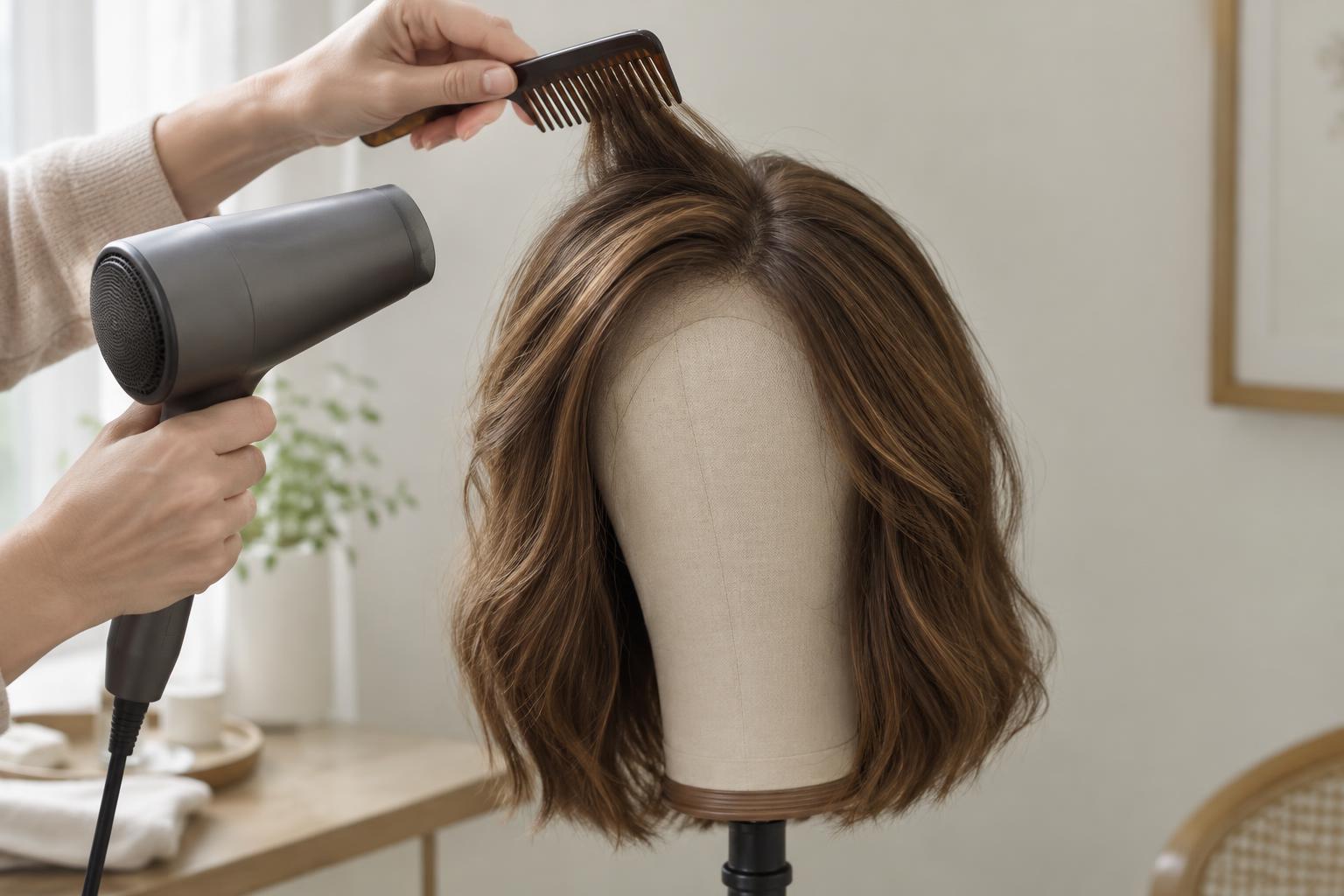
Detangle the hair first, starting at the ends and working upward with a tool suitable for the fibre. Support the hair near the cap while brushing so you are not tugging on its attachments. For synthetic hair, check the wig’s care guidance before using heat or styling products; not all fibres tolerate them. For either synthetic or human-hair wigs, a light touch is usually easier to manage than a large amount of product.
Settle the wig into its usual position before you begin. A ponytail should not be used to pull a loose or poorly fitting wig into place. If your wig has adjustable features, use them as intended, and check that the cap feels comfortable around the ears and nape. Choose a soft, snag-free hair tie and keep it within reach so you can hold the gathered hair without repeatedly pulling it back.
Gather the hair low, leaving a covering layer
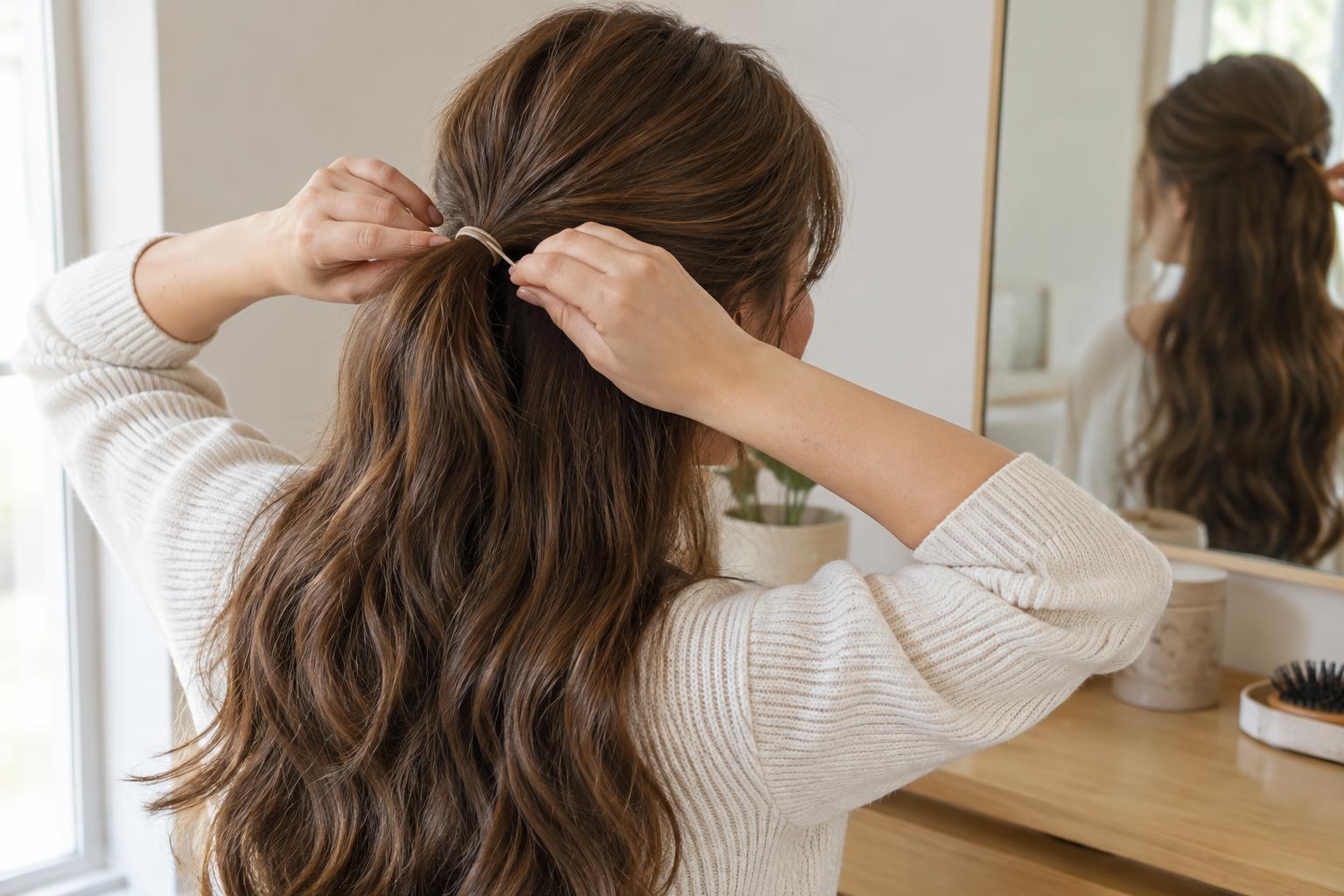
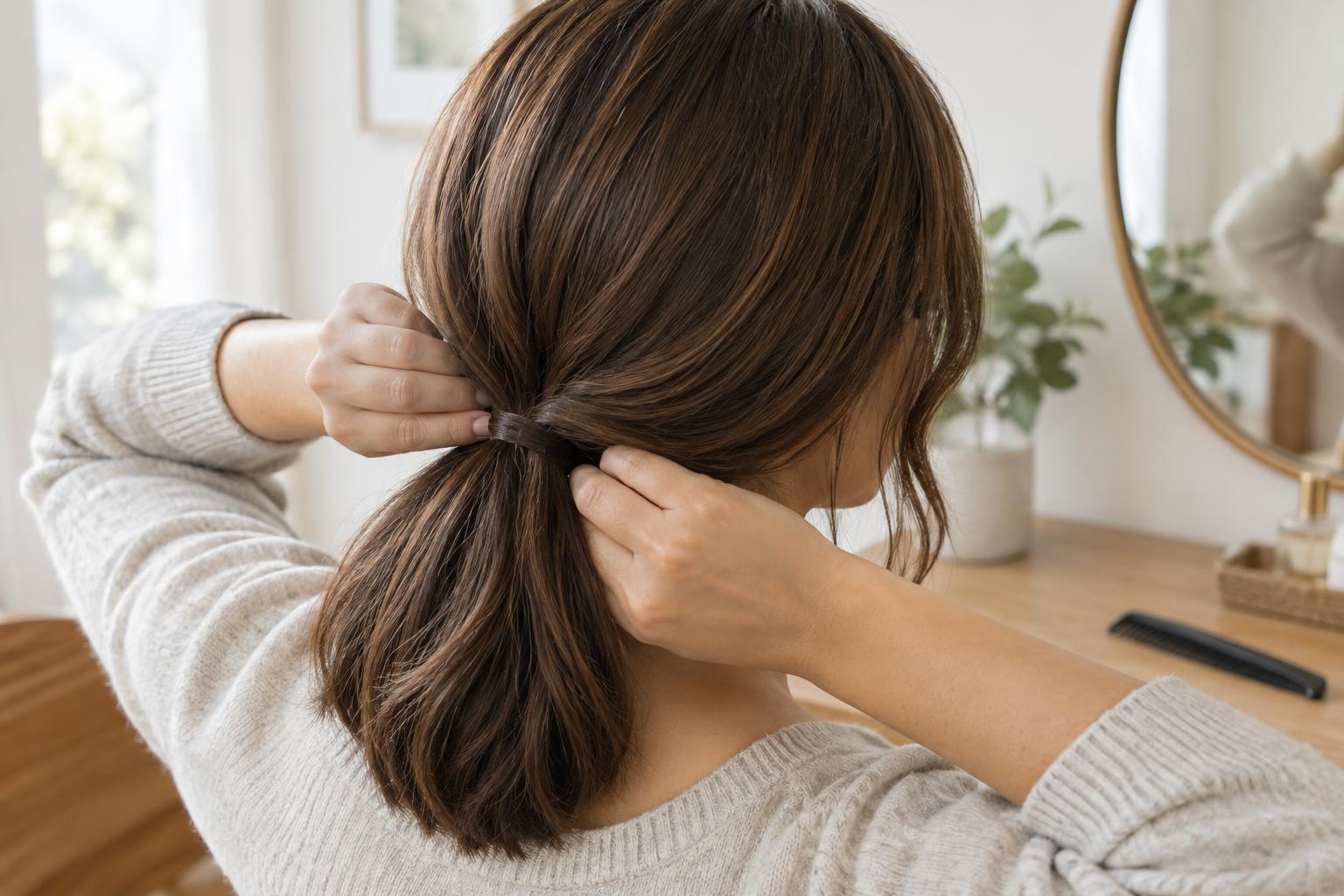
Begin by separating a small, loose layer of hair across the nape. Let it hang naturally while you gather the rest at the base of the head, close to where the wig’s hair already falls. Keeping the ponytail low reduces the upward pull that can lift hair away from the cap edge. Use your fingers to smooth the sides towards the back rather than brushing them tightly against the wig.
Hold the gathered hair in one hand and check the back before adding the tie. If you can see the cap, release a little more hair around the nape or move the gathering point lower. Secure the ponytail loosely enough that it does not strain the wig or feel uncomfortable. Then arrange the free nape layer over the cap edge. It does not need to be perfectly flat: a little softness can make the style look more natural.
Adjust the finish without adding tension
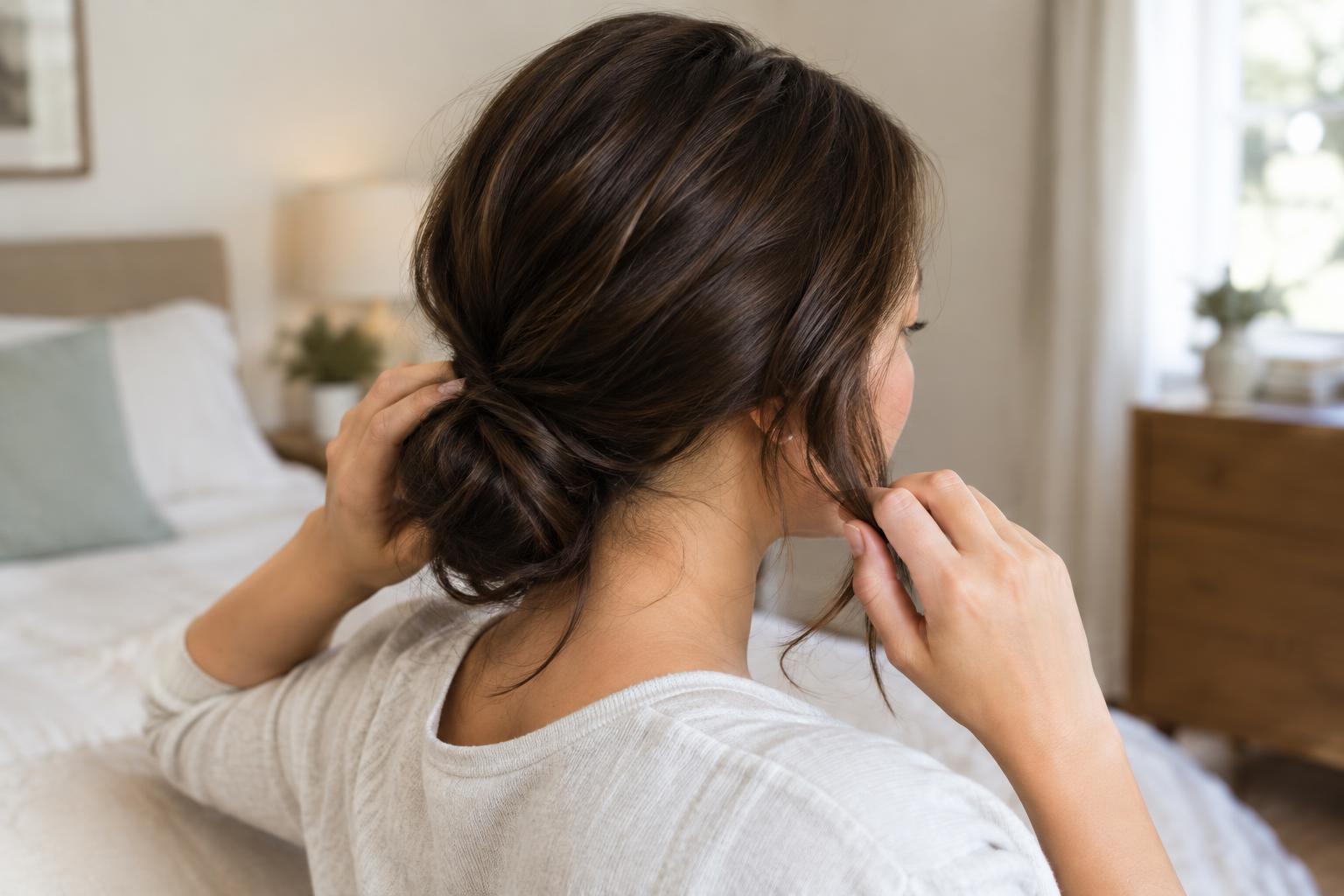
Look at the nape from several angles, especially with your head turned or tilted slightly forward. Those movements can reveal gaps that are easy to miss when standing still. If needed, ease a few strands out near the ears and along the lower hairline. A small section of hair can be wrapped loosely around the tie for a softer finish, provided it does not pull the ponytail higher.
If the covering strands slip, try a lightweight clip placed in the wig hair above the cap edge, taking care not to catch or pierce delicate lace. Avoid relying on tight pins or a very firm tie to hold the look together. If the wig shifts, the cap becomes visible, or the style feels strained, undo it and try a looser version. Comfort and reliable coverage matter more than a sleek outline.
Know when to choose a different style
Not every wig will make a covered low ponytail practical. A short nape, a strong contrast between hair and cap colour, or hair that springs away from the neck may leave the edge visible despite careful styling. A half-up style, a loose side gathering or a low ponytail with more hair left free at the back may give you the effect you want without asking the wig to do something it cannot comfortably do.
Once you find a version that works, take a quick photo of the back for reference before wearing it out. Remove the tie gently afterward and detangle any compressed sections before storing the wig. With a low gathering point, a loose covering layer and a final mirror check, you can judge whether the style suits your particular wig rather than relying on how it looks from the front alone.