Start with a secure, comfortable fit
A low bun pulls hair towards the nape, so begin by checking that the wig fits comfortably before styling it. Put it on as you normally would and make sure the front edge sits where you want it. If the wig has adjustment straps, use them to achieve a secure fit without making the cap feel tight. A wig grip or another attachment you already find comfortable may help limit movement, but styling should not have to compensate for a poorly fitting cap.
Check how the wig is constructed, too. A lace-front wig may have a delicate front edge that can distort if hair is pulled sharply backwards. On any wig, avoid treating the hairline as an anchor for the bun. If the wig shifts easily when you gather the hair, stop and address the fit rather than making the ponytail tighter.
Prepare the hair before gathering it
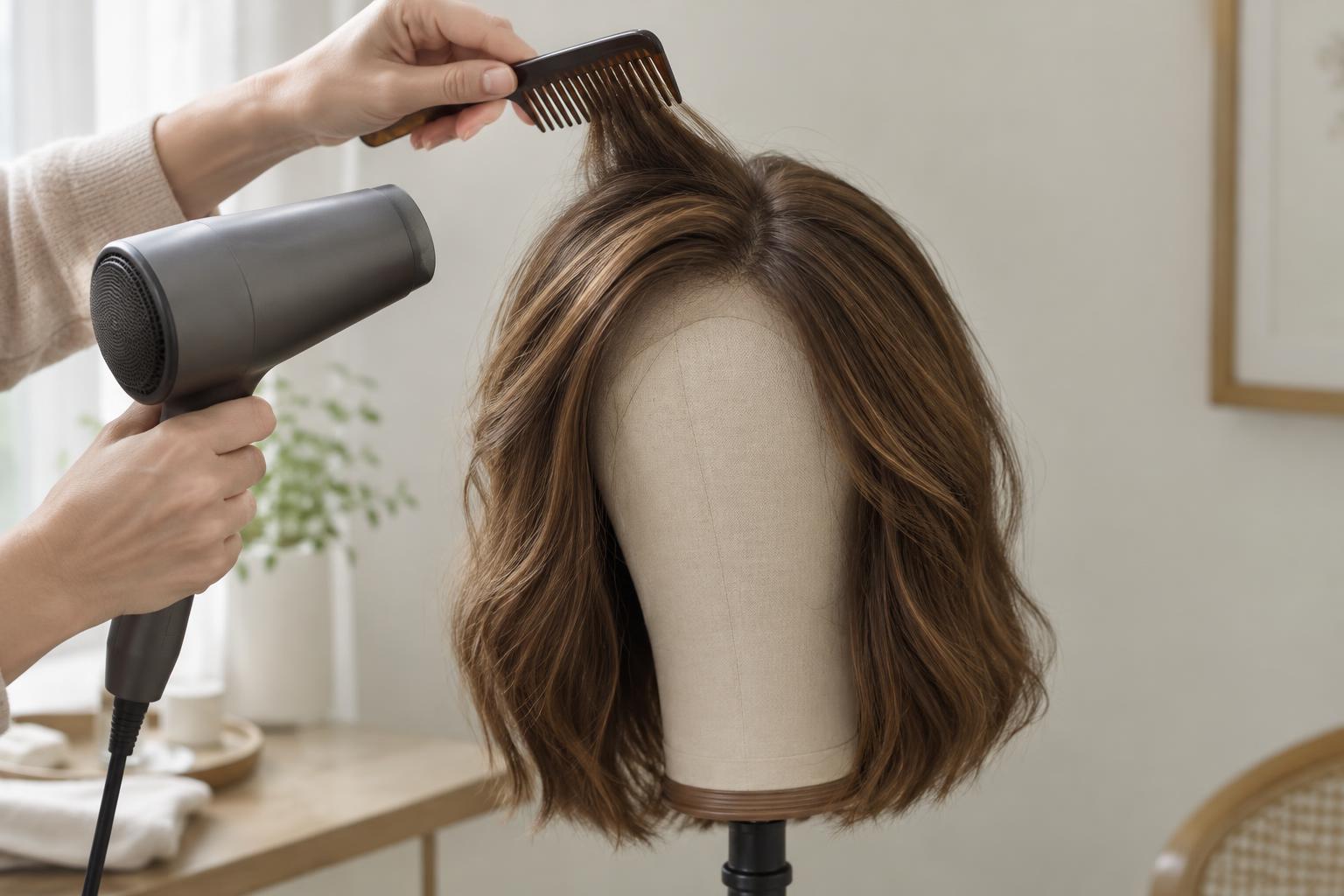
Work on a securely placed wig, or use a wig stand for initial detangling if that is easier. Gently separate tangles with your fingers or a suitable wide-tooth comb, starting at the ends and moving upwards. Follow the care guidance for your wig’s fibre: human hair and synthetic hair do not always respond to the same products or tools. Avoid adding heat simply to make the bun smoother unless the wig is specifically suitable for your chosen heat tool and setting.
Decide whether you want a neat finish or a softer one. For a softer style, leave a little hair around the face and at the temples before gathering the rest. This can reduce the urge to pull every short strand into the bun. If you prefer a smooth look, use light hand pressure to guide the hair back rather than repeatedly brushing hard across the front edge.
Build the bun at the nape
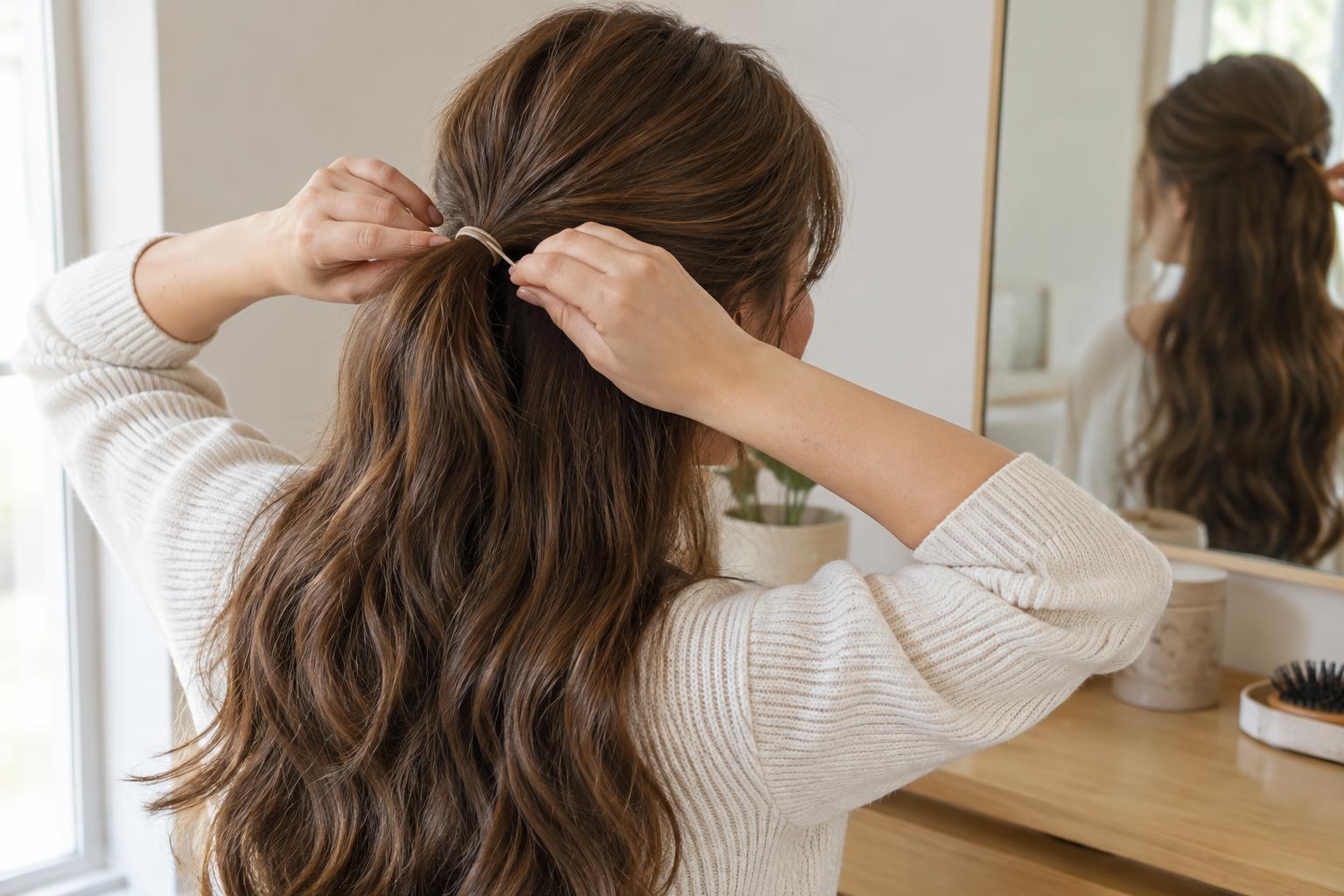
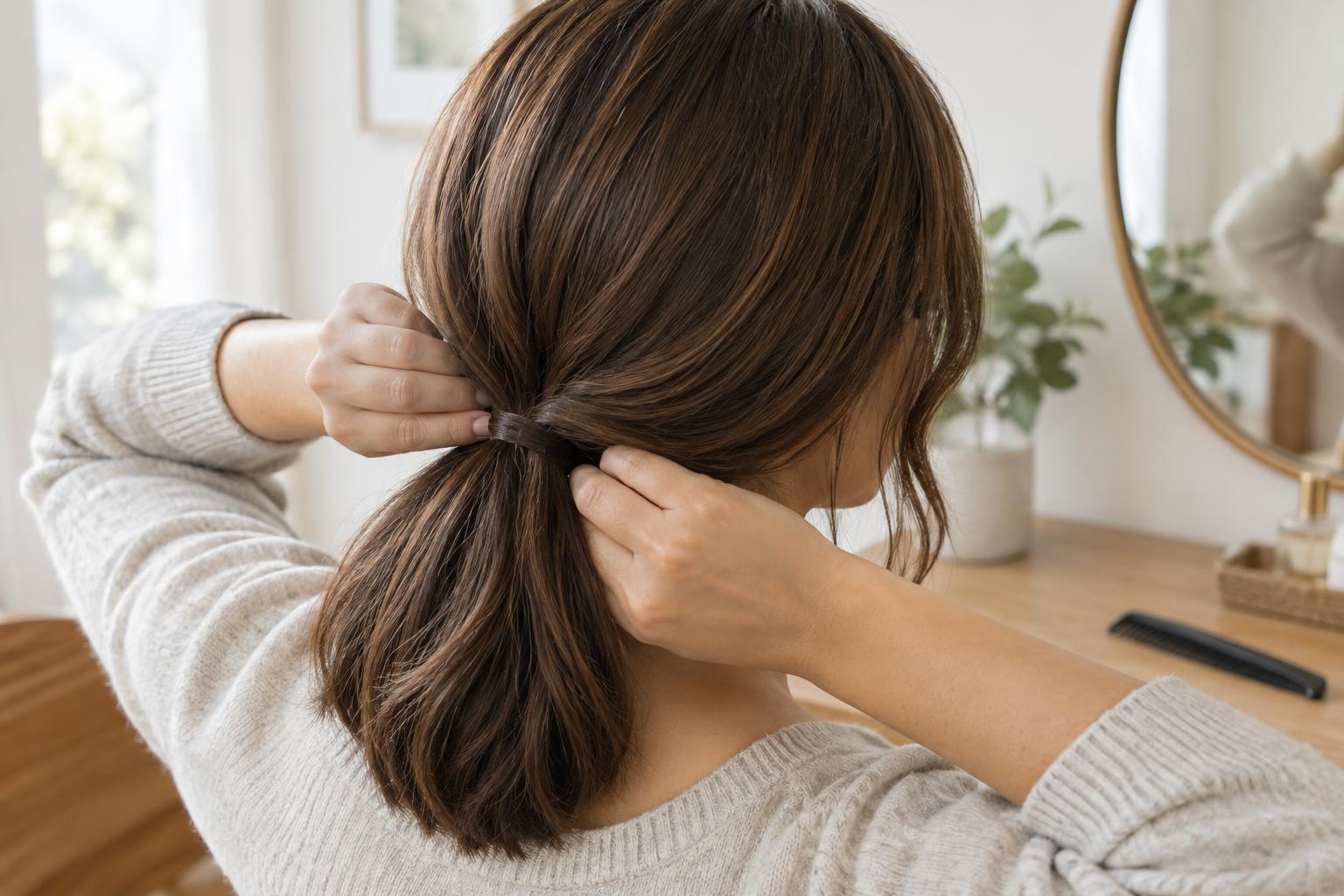
With the wig on your head, gather the hair into a low ponytail near the nape. Keep your hands close to the back of the head as you collect the hair, instead of dragging it tightly from the forehead. Hold the ponytail in place for a moment and notice whether the front edge lifts, the cap shifts or you feel pressure around the temples. If any of those happen, release some tension and gather the hair again more loosely.
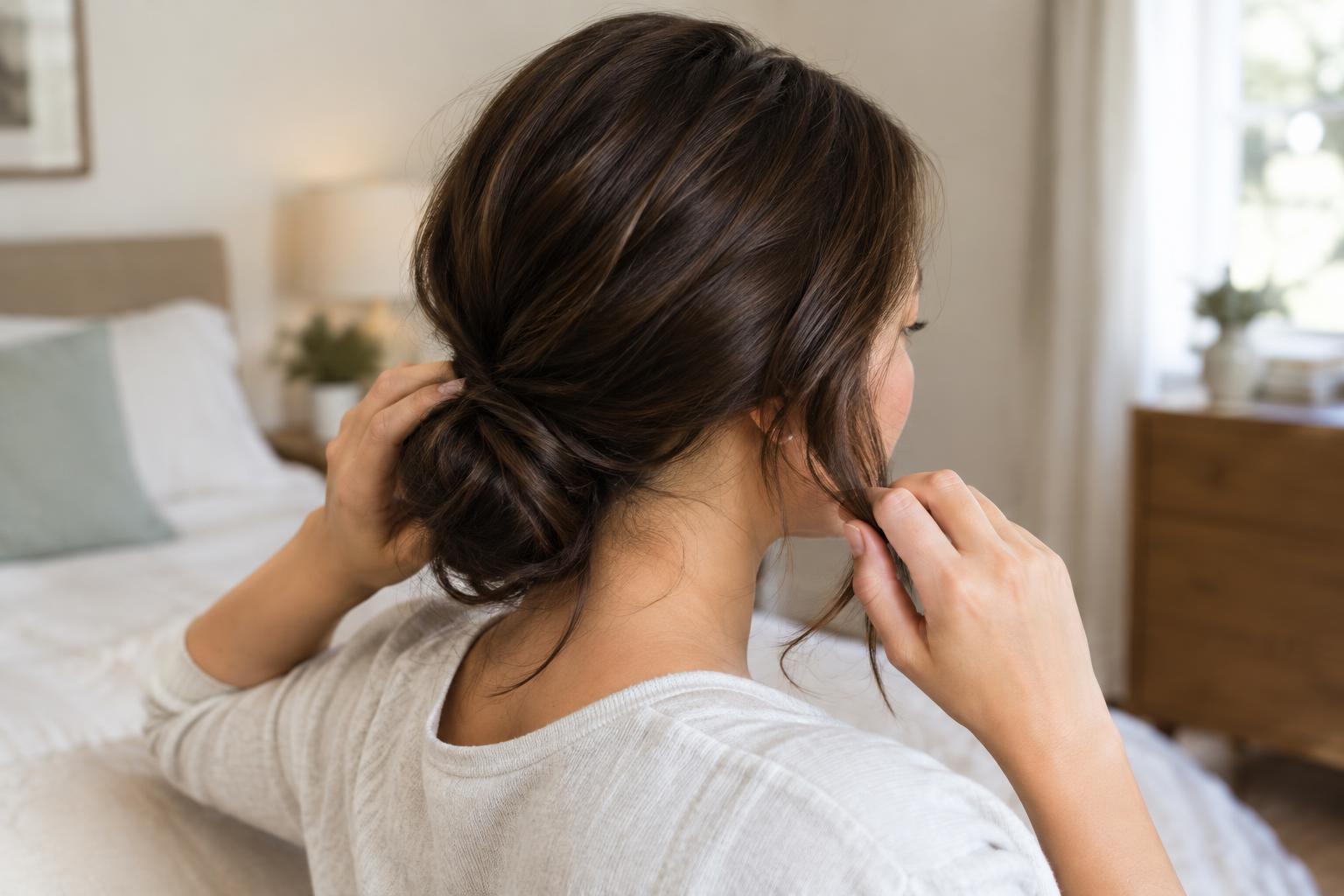
Secure the ponytail with a soft, snag-free band. Twist the length gently, then coil it around the base of the ponytail to form a bun. You can also fold the ponytail under itself for a flatter shape. Use a second soft band, a bun net or a few pins to hold the shape. Place pins into the hair at the bun rather than pushing them through lace or forcing them against your scalp. A lighter, flatter bun may feel steadier than a large coil if the wig has long or dense hair.
Check the hairline and adjust the finish
Once the bun is in place, look at the front and sides in a mirror. The hairline should still sit naturally, without visible stretching or lifting caused by the style. Turn your head and look down as you might during the day. If the bun tugs, loosen its band or move it slightly higher or lower until the weight feels better balanced. Comfort is a useful guide: a style that looks smooth but feels strained is worth redoing.
Tuck loose ends around the bun with minimal pinning. If wisps escape near the face, let some remain rather than pulling them back under tension. For a polished appearance, smooth the surface lightly with your hands or a product appropriate for the wig’s fibre, using only as much as needed. Heavy product can make later cleaning more difficult, while excessive brushing can wear on delicate areas.
Take it down gently
At the end of wear, remove pins one at a time and unwind the bun before taking out the band. Do not pull the band through a knot of hair. Separate any tangles gently, paying particular attention to the nape, where friction against clothing can cause matting. Store the wig in a way that supports its shape and follows the maker’s care instructions.
A low bun does not need to be tight to stay attractive. A comfortable fit, a softly gathered ponytail and a bun secured at its own base help keep styling pressure away from the hairline. If a particular wig repeatedly slips or feels strained in this style, a looser low ponytail or another updo may suit its construction better.