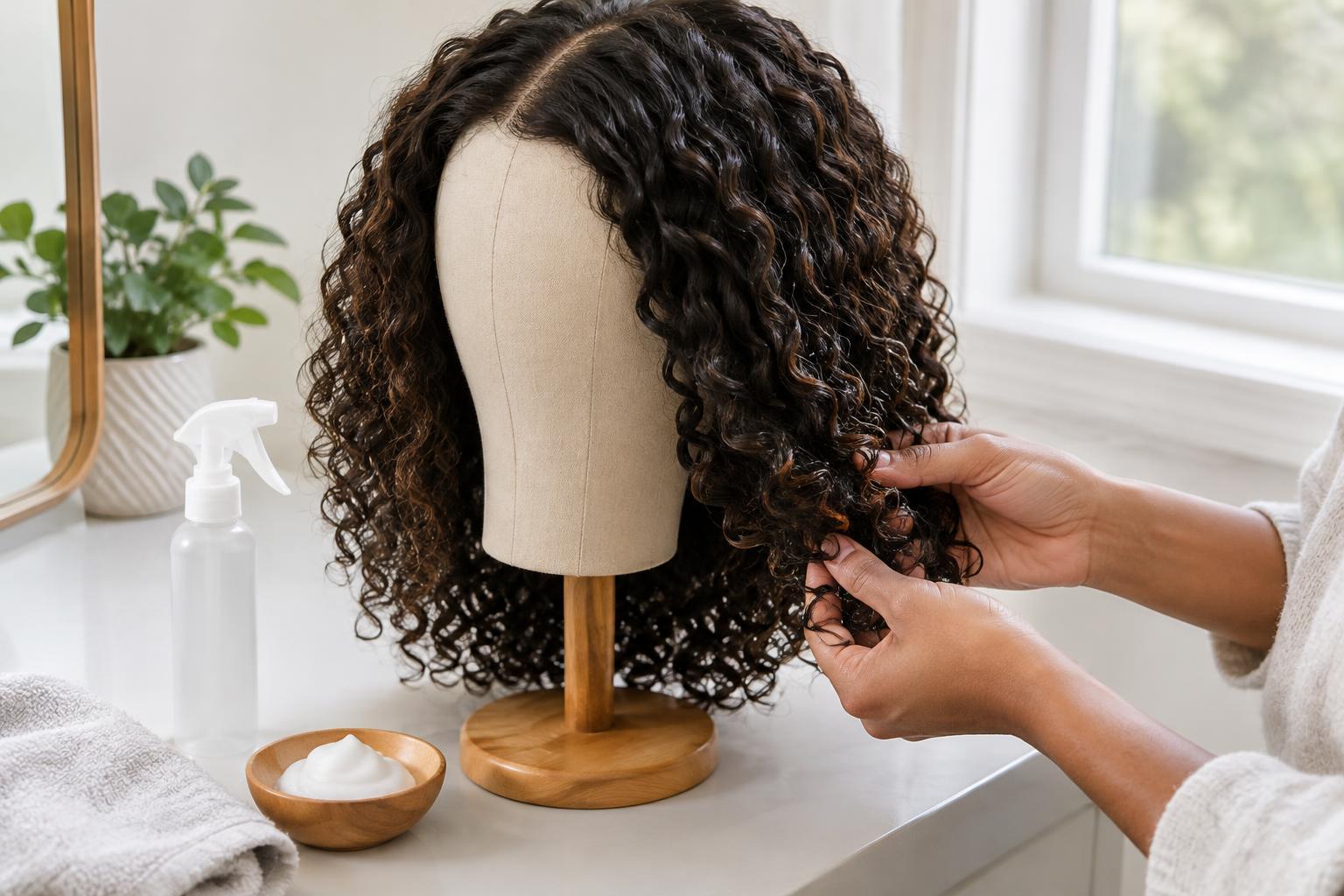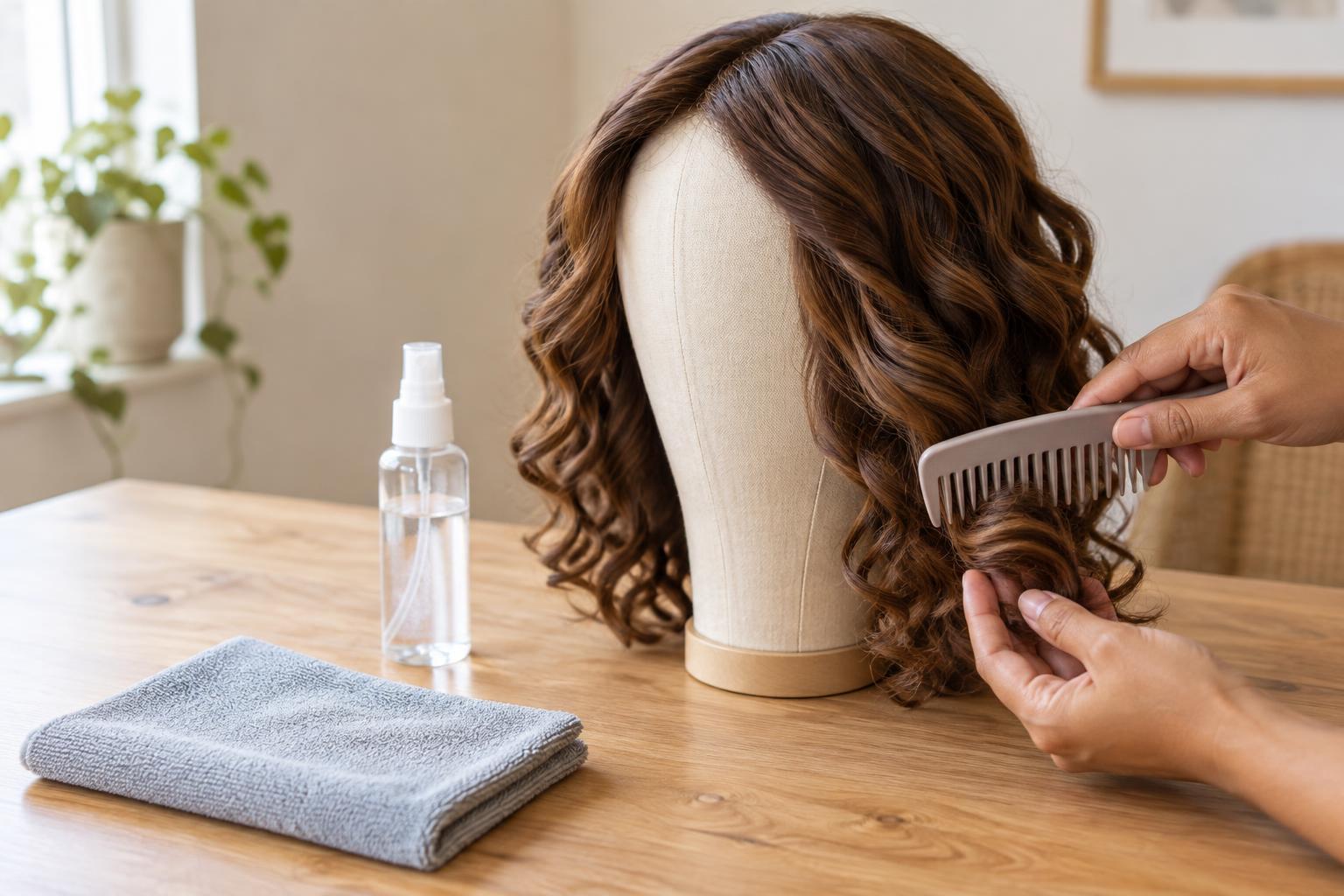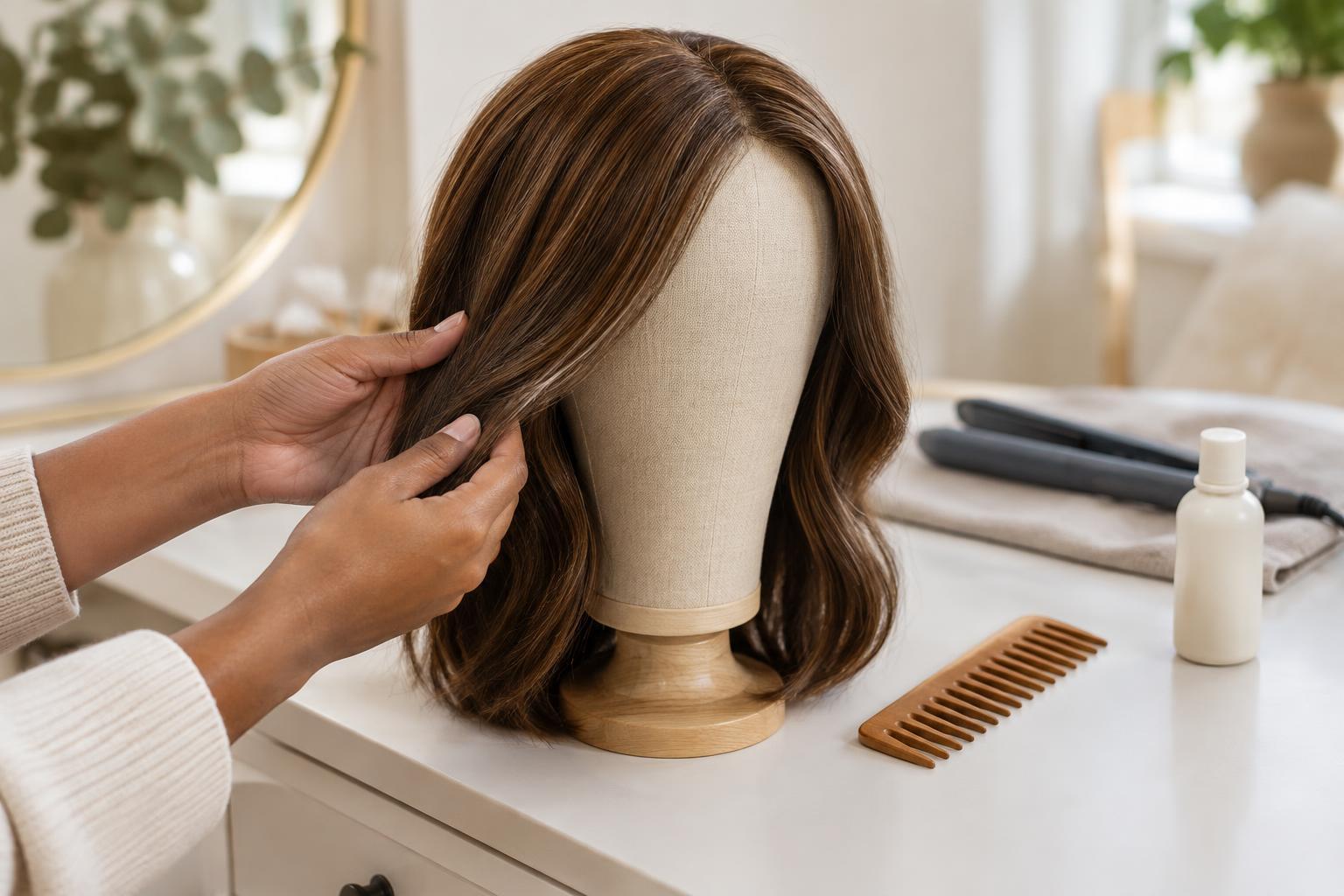
Start with the wig you have
A styling method that works on one wig may shorten the life of another. Fibre, cap construction and attachment method all matter. Standard synthetic fibre is usually designed to hold its shape without hot tools, while a wig labelled heat-friendly may tolerate some heat within the maker’s stated limits. Human-hair wigs can often be restyled with heat, but the hair can still become dry or damaged. Check the care instructions before treating any wig as you would the hair growing from your scalp.
The aim is not to avoid styling altogether. It is to use the least force, heat and product needed for the result you want. A small adjustment to the parting, a light mist of suitable product or a few minutes of careful detangling may do more than an intensive styling session.
Mistake one: reaching for heat without checking the fibre
A hot tool can melt or permanently distort standard synthetic fibre. Even on heat-friendly synthetic or human hair, repeated high heat may leave ends looking rough and make the style harder to manage. Do not guess a safe temperature from a tool’s dial: follow the wig maker’s guidance, use a lower setting where appropriate and test an inconspicuous strand first. Let a styled section cool before combing it out so you can assess the result without immediately applying more heat.
Heat is not the only way to change a style. On a synthetic wig, gentle finger-shaping, a wig-safe brush or a change in how the wig is placed may be enough. For human hair, air-drying and low-tension setting methods can reduce reliance on hot tools. If you wash a wig, follow its drying instructions before styling; avoid using a hot tool on damp fibre unless the maker specifically says that method is suitable.
Mistake two: pulling for a sleeker look
Tight ponytails, forceful brushing and repeated tugging at the same section can strain a wig. Lace fronts and hand-tied areas deserve particular care because individual hairs are attached to delicate material. Pulling at a knot or dragging a brush through a tangle can loosen hairs as well as disturb the style.
Detangle in small sections, beginning at the ends and working upwards while supporting the hair above the area you are brushing. Use a tool suited to the fibre and avoid yanking when you meet resistance. If you want an updo, try a looser arrangement and check that the cap remains comfortable. Clips, combs, bands and adhesives can also create unwanted tension if they are too tight or repeatedly placed in the same spot. A secure wig should not need to feel painfully tight.
Mistake three: using more product to fix every problem
Product can help with flyaways, shine or hold, but layering it on can leave hair stiff, dull or sticky. Build-up may also make strands clump together, which sometimes prompts even more brushing and product. Start with a small amount and apply it where it is needed rather than coating the whole wig. Check that the product is suitable for the fibre: a formula intended for human hair is not automatically a good choice for synthetic hair.
Keep product away from lace, knots and the cap unless its instructions say it is suitable there. Heavy creams or sprays near a parting or hairline may make those areas more conspicuous and harder to clean. If a style stops responding as it normally does, consider whether the wig needs care according to its washing instructions instead of another layer of spray.
Build a gentler styling routine
Before styling, identify the fibre, look over the care label and check for tangles or worn areas. Work in sections, handle the cap gently and pause if you find yourself pulling harder or applying product repeatedly. For a new look, make one small change at a time so you can see what helps.
After wear, remove clips or other accessories carefully and put the wig on a suitable stand or store it as directed by the maker. Regular, gentle care makes the next styling session easier. If a style consistently takes considerable heat, tension or product to achieve, consider choosing a wig with a cut, texture or construction closer to the look you want.