Work out what is causing the flyaways
A few short hairs or fibres standing up do not always mean a wig needs product. Movement, brushing, dry air and friction from clothing can disturb the surface of a style. Shorter fibres near a part or hairline may also be part of the wig’s construction. Before trying to flatten them, put the wig on or place it on a stand and look at it in ordinary lighting. Decide whether you want to smooth the whole surface or just a few conspicuous strands.
Check the fibre type and the maker’s care instructions first. Synthetic and human-hair wigs do not necessarily respond to the same tools or products, and a heat-friendly label does not mean unlimited heat is safe. If the wig is tangled, address the tangles gently before smoothing the top layer. Pulling a brush through a snag can create more frizz, particularly at the ends.
Start with tools, not styling product
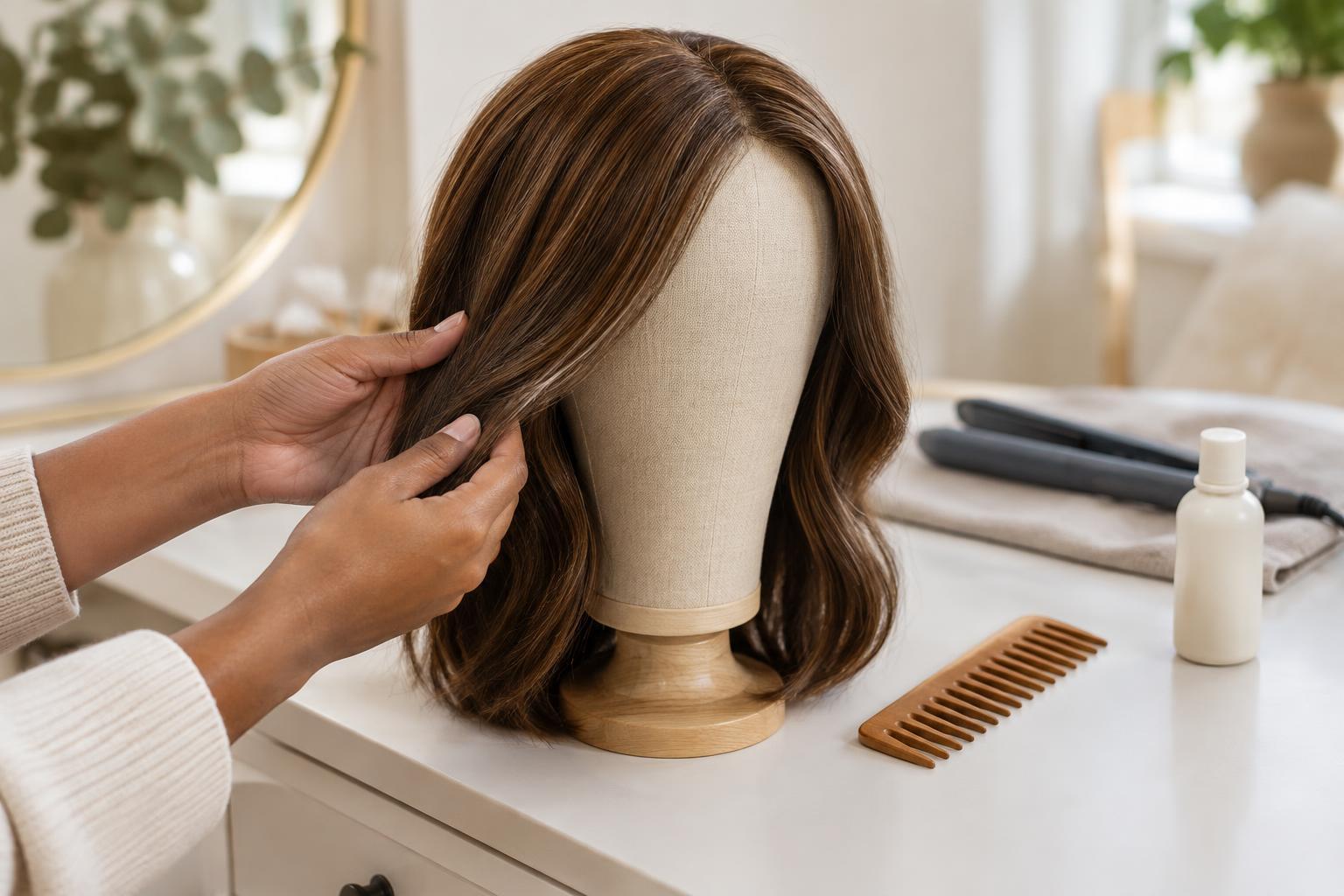
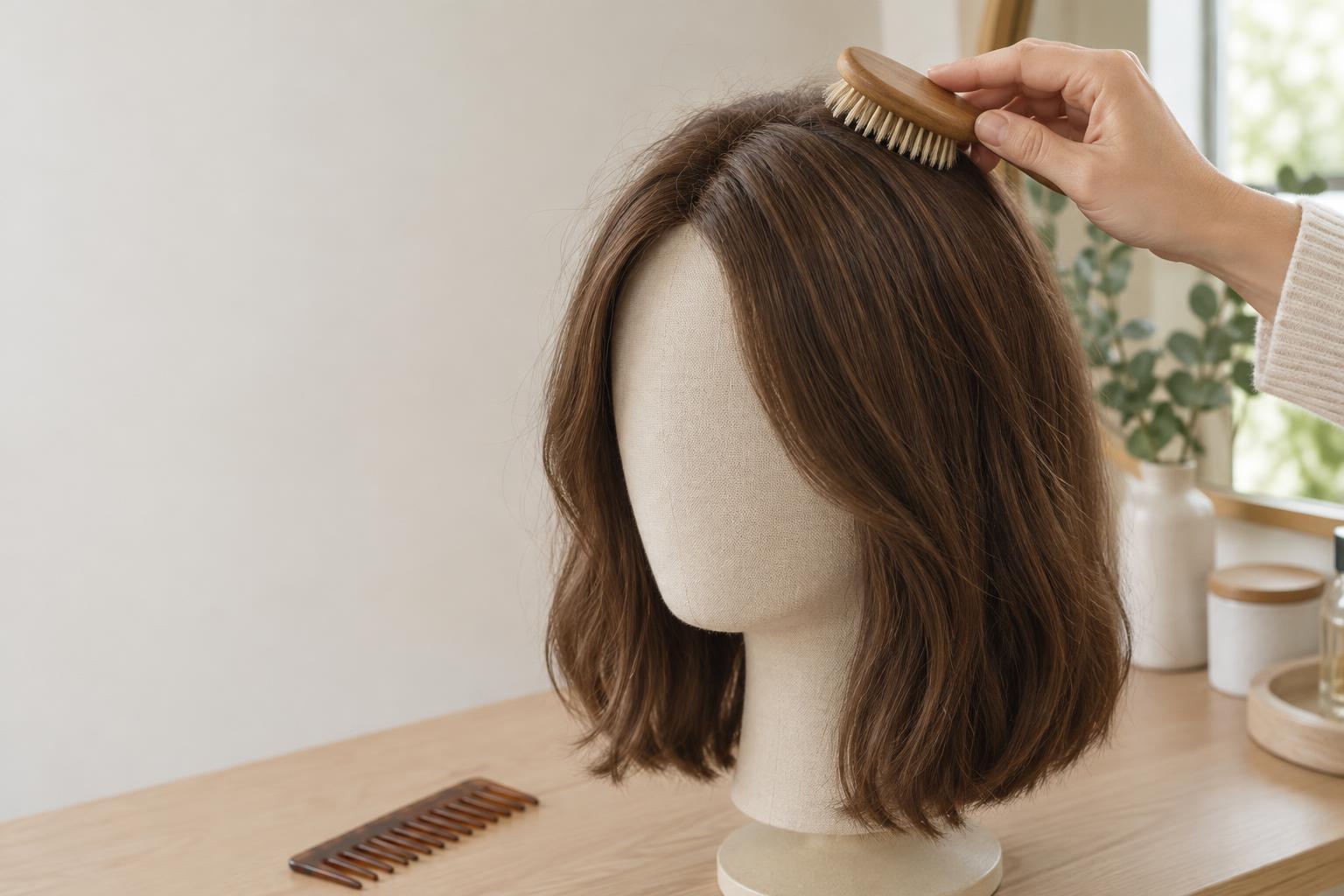
For light flyaways, try clean hands first. Smooth the surface in the direction the hair falls, using little pressure. A wide-tooth comb or wig-appropriate brush can then help align strands. Work in small sections and avoid dragging a tool against lace, knots or the edge of a hairpiece. If the wig is long, support each section with your other hand so that brushing does not tug at the cap.
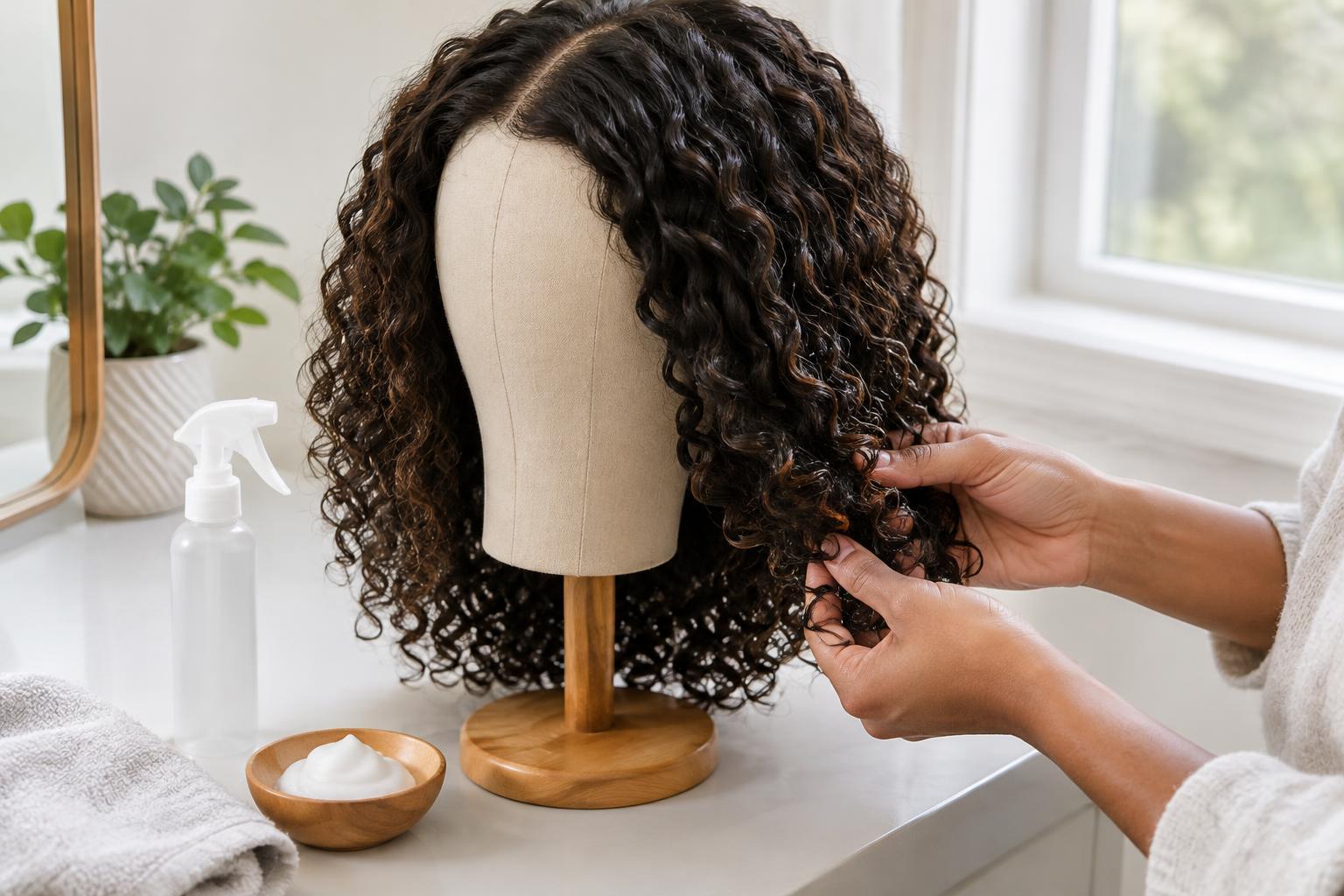
A very light mist of water may help some wigs settle, but dampen sparingly rather than soaking the roots. Use a clean spray bottle, test an inconspicuous area and let the fibres dry before deciding whether another step is needed. Water alone will not repair worn or frayed fibres, and repeatedly wetting a styled synthetic wig may alter its shape. If a strand consistently sticks out from a part, try repositioning it with your fingers before adding hold.
Use the smallest useful amount of product
When product is necessary, choose one suitable for the wig’s fibre and follow its label. A lightweight wig styling spray or a small amount of compatible smoothing product is usually easier to control than a thick gel or wax. Apply it to a clean brush, comb or fingertips rather than spraying directly onto the wig. Then touch only the flyaways, moving with the style. This helps prevent droplets from collecting on the cap or creating a shiny patch at the part.
Keep product away from lace, visible parting areas and any adhesive you use at the hairline. These spots can show residue quickly and may be harder to clean without disturbing the wig. Try the product on a hidden section first, and allow it to dry before checking the result in daylight or another bright, even light. If you can see or feel a coating, stop adding more. Brush out or clean the area according to the wig’s care instructions instead of layering a second product over it.
Be cautious with heat and persistent frizz
Heat can make a surface look smoother, but it is not a universal fix. Do not use a hot tool on a synthetic wig unless its instructions specifically allow heat styling. For any heat-compatible wig, start with the maker’s guidance, test a hidden section and avoid holding a tool in one place. Keep heated tools away from lace, cap materials and attachments. A comb and patient sectioning may give you enough control without heat.
If flyaways are concentrated at the ends, they may be a sign of wear rather than a styling problem. Heavy product can temporarily press them down while making the ends look clumped. Gentle detangling and appropriate washing may help; trimming is harder to undo, so consider it only if you are comfortable altering the style. For a stubborn strand near the hairline, aim for a natural direction rather than forcing every short hair completely flat.
Prevent buildup between wears
Residue often becomes more visible after several small applications. Note where you have used product and clean the wig when it begins to feel coated or look dull, following its fibre-specific washing and drying directions. Adding more spray to an already coated area can make individual strands stick together. Let the wig dry fully before brushing or storing it as directed.
Storage and handling can reduce the need for touch-ups. Keep the wig away from rough fabrics that rub against its ends, and place it on a suitable stand or store it in a way that preserves its shape. Before each wear, check for a few stray strands and smooth those first. The goal is not to make every fibre immobile: a little natural movement often looks better than a perfectly flat surface with visible product.