Start with the wig’s fibre, not its appearance
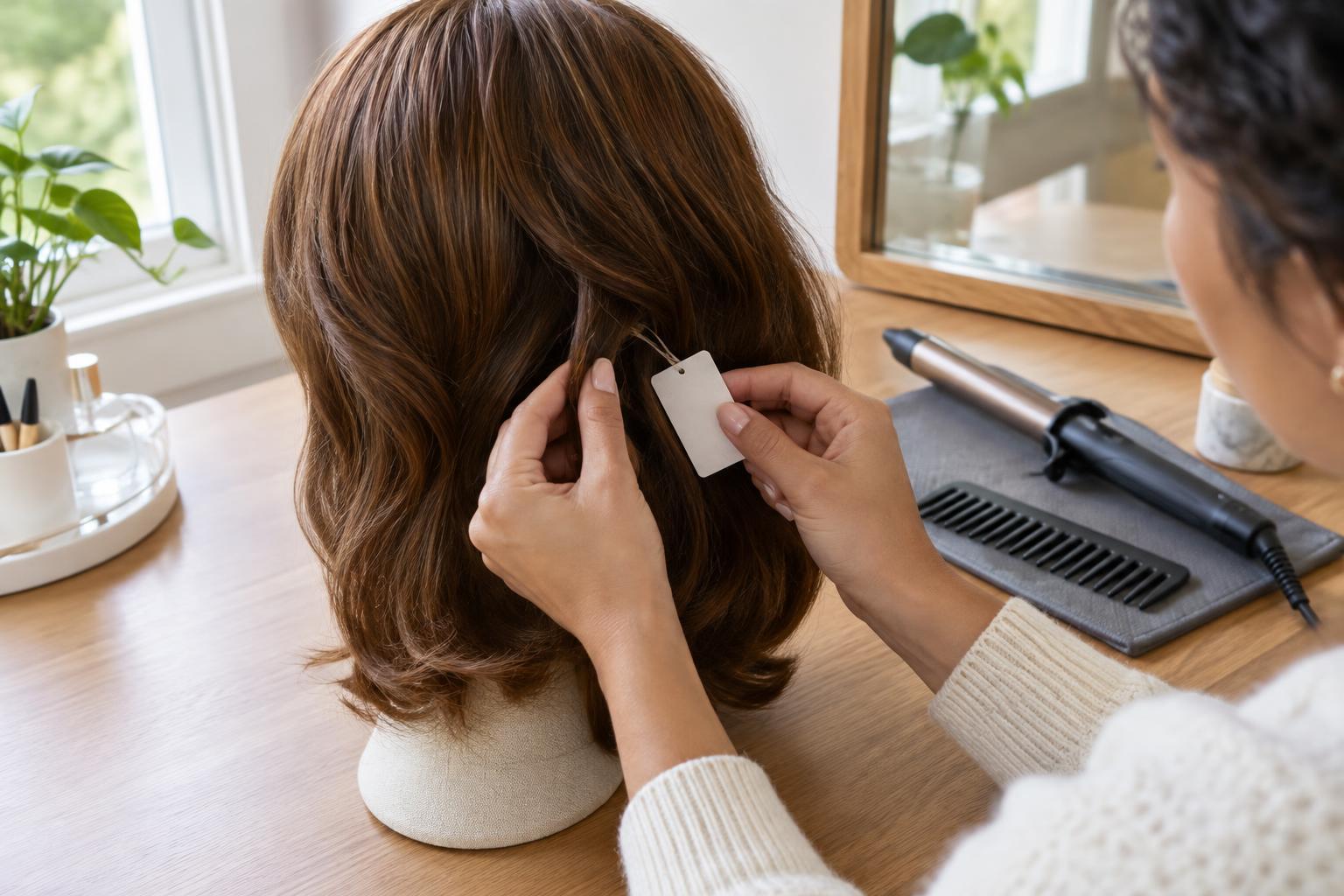
A smooth, natural-looking wig is not necessarily made from human hair. Synthetic fibres can closely resemble it, while human-hair wigs may have been coloured or otherwise processed. Before reaching for a hot tool, look for the original label, product listing or care card and identify the fibre. Keep that information with the wig if you remove its tags.
Standard synthetic wigs generally should not be exposed to heated straighteners or curling tools unless their maker explicitly says they can. Heat-friendly or heat-resistant synthetic wigs are designed for some heat styling, but the permitted temperature and method vary by product. A human-hair wig can often be heat-styled, yet it can still become dry or damaged. For a blend, do not assume the human-hair portion makes the whole wig safe for heat: follow the guidance for that specific blend.
Read the care instructions closely
Look for wording that names both the permitted tool and its temperature limit. “Heat-friendly” alone is less useful than instructions that say whether you may use a hairdryer, straightener or curling wand. If a temperature range is supplied, stay within it and begin at the low end. Check that your tool’s temperature can be controlled; a tool with no adjustable setting may be a poor match for a wig with a stated limit.
Pay attention to instructions about how to form a style. Some heat-friendly synthetic fibres need to cool while held in the desired shape, so a curl may not set in the same way as it does on your own hair. Also check whether the maker recommends styling the wig dry, and whether any heat-protection product is suitable for its fibre. A product marketed for natural hair is not automatically suitable for synthetic hair.
If the fibre or instructions are unknown, the safest choice is to avoid hot tools. A seller may be able to confirm the specifications if you have a product name or order details. Without confirmation, try a no-heat styling method instead of relying on how the fibres feel.
Make a cautious hidden-strand test
Even when the instructions allow heat, test a small strand in an inconspicuous area near the back or underneath the wig. Detangle it gently first. Set an adjustable tool to the lowest permitted setting, make brief contact, and let the strand cool before judging the result. Do not keep increasing the heat simply because a curl or smooth finish does not appear immediately.
Stop if you notice a change in texture, stiffness, frizzing, unusual shine, a burnt smell or fibres sticking together. These signs can indicate damage, and continuing may make it more visible. A successful test reduces uncertainty but does not guarantee that repeated passes or a hotter setting will be safe. Work in small sections and use as little heat as needed.
Protect the cap, hairline and surrounding surfaces
Heat tolerance describes the hair or fibre, not necessarily every part of the wig. Lace, cap fabric, elastic, stitching and attachment areas can respond differently to heat. Keep hot plates and barrels away from the cap and hairline, and avoid pressing them against a parting to flatten it. Be especially careful around added pieces or accessories whose materials you cannot identify.
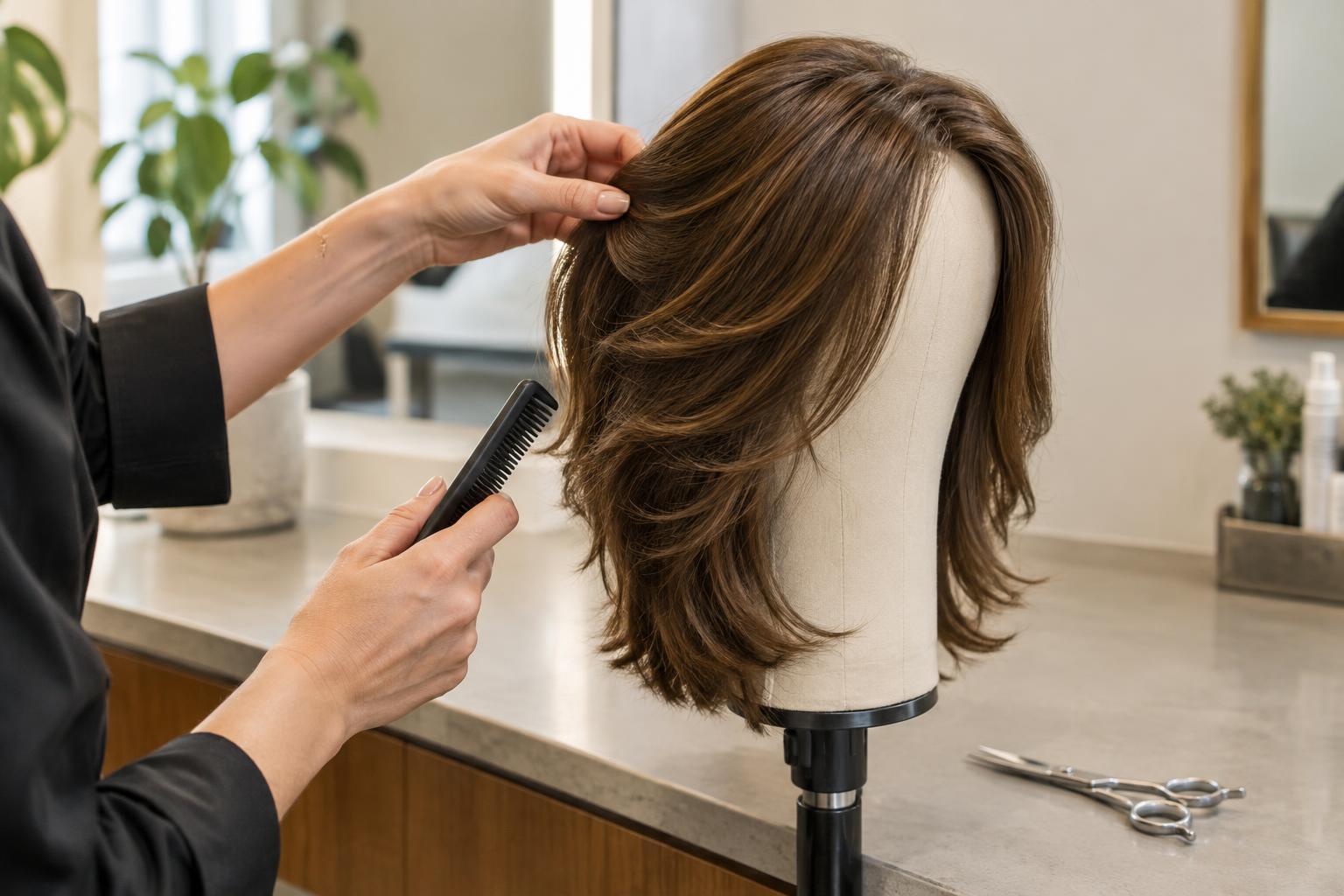
A wig stand can make styling easier, but it should be stable and suitable for the task. Keep hot tools clear of the stand material, your hands and any nearby surface that heat could mark. If you style a wig while wearing it, be mindful of how close the tool is to your skin. Let the wig and tools cool before handling or storing them.
Choose a lower-risk option when the answer is unclear
Heat is only one route to a new look. Depending on the wig and its care instructions, you may be able to change the part, adjust the placement, use gentle finger-styling or add a suitable accessory. Some wigs are designed to return to their original style after washing; others hold a restyled shape, so check the product guidance before attempting a major change.
The simplest decision rule is to look for explicit permission, a compatible tool and a clear temperature limit before applying heat. If any of those is missing, pause rather than guess. That small check can help preserve the wig’s texture and give you more confidence when you do decide to style it.