Check where the part can go
Before moving the hair, look inside the wig. A lace top has an area of lace where individual hairs are attached, but that area does not necessarily cover the entire crown. It may meet a wefted or otherwise constructed section at the sides or back. A lace-front wig is different: it can have lace at the hairline without enough lace behind it for a new, deep part.
Find the edges of the lace from the inside, then put the wig on and note where those edges sit on your head. The most convincing part usually stays comfortably within the lace rather than running along its boundary. If the proposed line would cross visible wefts, seams or a solid cap panel, choose a shorter or less dramatic part instead. The wig’s original density and hair direction also matter: some wigs allow a gentle shift more easily than a complete change from one side to the other.
Set up the wig before separating the hair
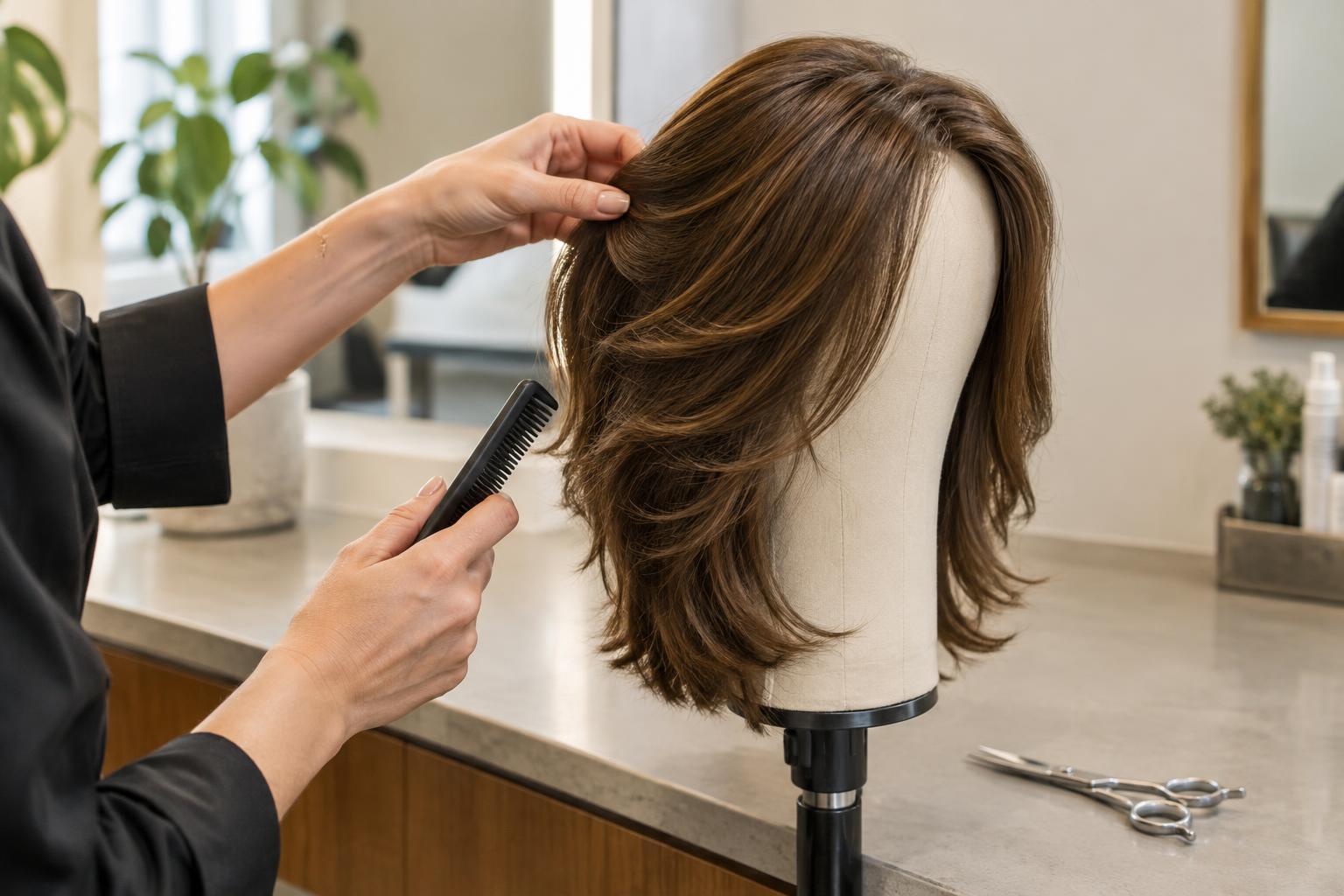
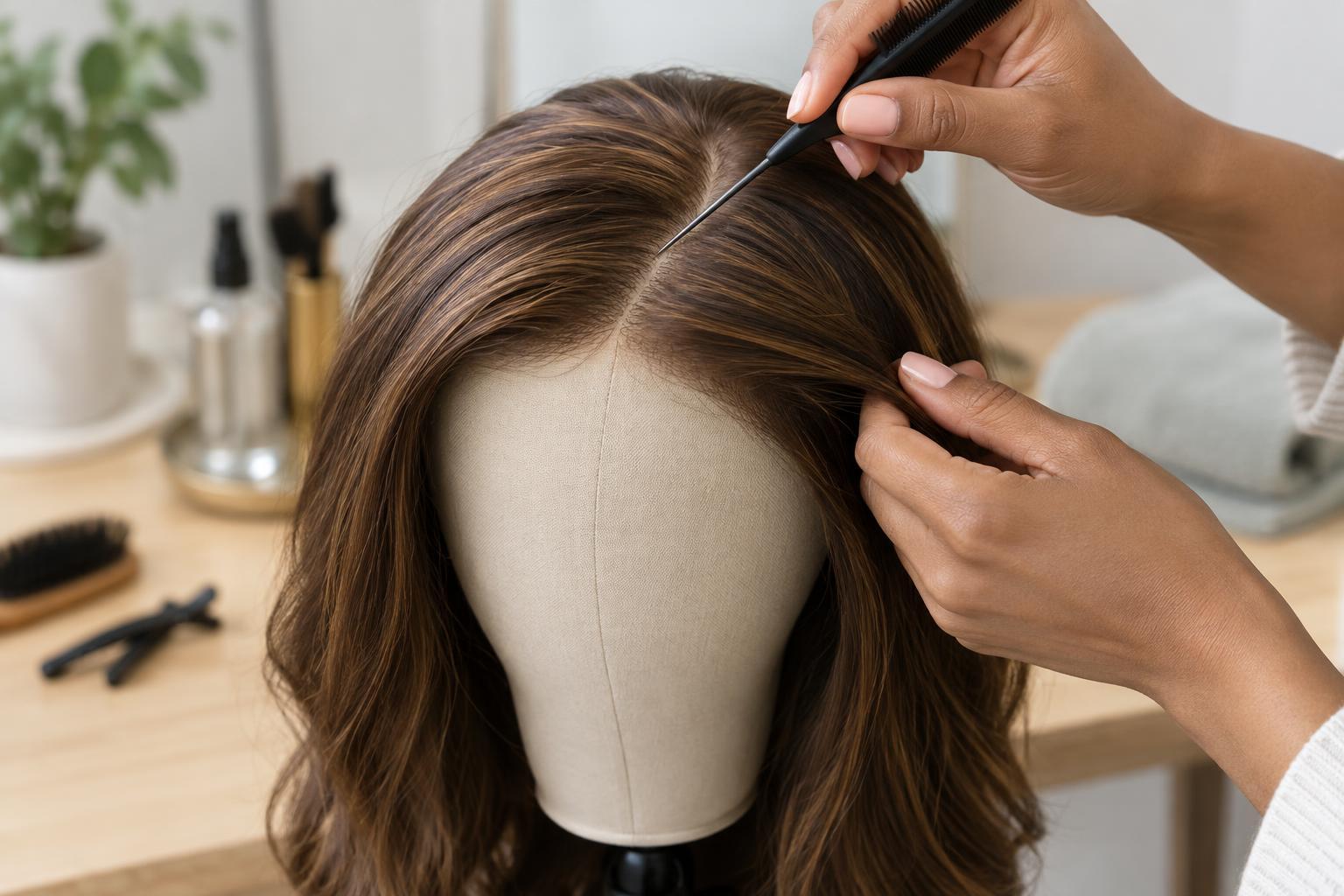
Start with hair that is free of tangles and product build-up. Place the wig on a stand or put it on securely, whichever lets you see the hairline and crown most clearly. If you use a stand, avoid pushing pins through the lace or into an area where they could catch the hair. Work in good light with a tail comb, a few clips and, if needed, a light mist of water or a product suitable for your wig’s fibre.
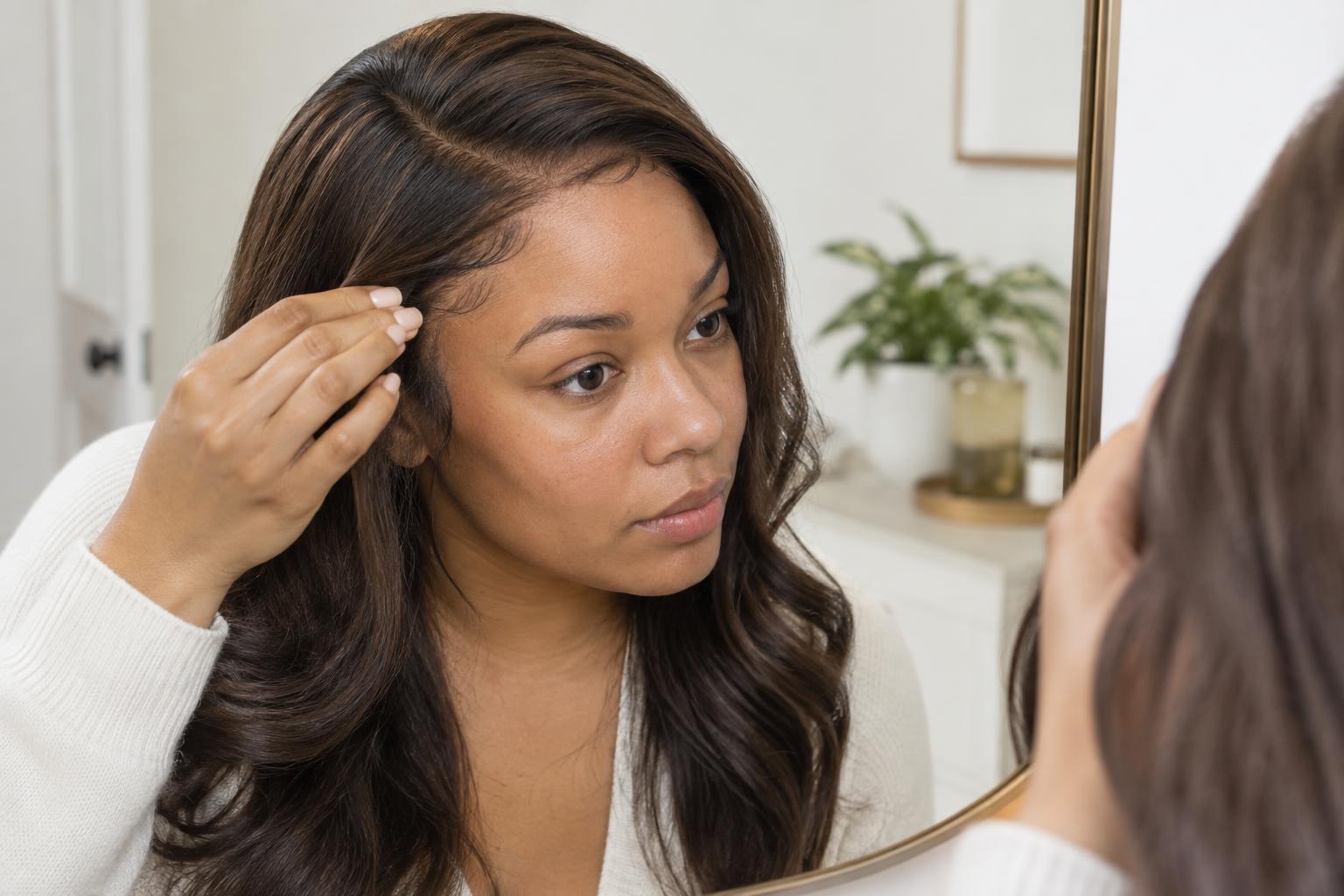
Before making a new line, check how the wig sits at the front and temples. A cap that has slipped can make the part look too wide or reveal construction that would normally be covered. Settle the wig into its intended position and adjust any built-in straps without pulling it uncomfortably tight. This gives you a more reliable view of what the new part will look like when worn.
Move the part in small steps
Use the tip of the comb to trace the new line within the lace area, separating a narrow section of hair at a time. Clip the hair on either side out of the way so you can inspect the line before styling it. If you see a seam or weft, stop and move the line back toward the centre of the lace. A slightly off-centre or softly angled part may give you the change you want while leaving more hair to cover the cap.
Redirect the hair at the roots gently with your fingers or a brush. A small amount of water can help human hair settle; use only wig-compatible products on synthetic hair. Avoid tugging on individual knots or repeatedly scraping the lace with the comb. If the hair keeps falling back into its old position, work gradually rather than forcing it into place in one pass.
Heat can help set some wigs, but it is not a universal fix. Check the wig’s care information before using a dryer or heated tool, especially on synthetic fibres, which may be damaged by heat unless specifically made to tolerate it. Keep any permitted heat gentle and moving, and avoid pressing a hot tool against the lace, knots or cap.
Check the part from several angles
Once the hair is directed, put the wig on if it is not already there. Look at the part in a mirror from the front, both sides and slightly above. Check it in ordinary room light as well as brighter light if possible. You are looking for an uninterrupted line over the lace, with enough hair on each side to hide the transition to the rest of the cap.
If the line appears unusually broad, first check whether the hair has been pulled too flat or split into sections that are too large. Loosening the hair beside the part may provide coverage. If a seam or weft is actually visible, concealing it with product is unlikely to be as dependable as moving the part. Scalp-coloured products can change the appearance of lace, but test any product sparingly on an inconspicuous area and follow the wig’s care guidance.
Know when a smaller change works better
A new part should not require constant rearranging to keep the cap hidden. If the lace area is narrow, the hair is heavily trained in one direction or the density is uneven, try a shallow side part, a subtle zigzag or a little volume near the roots instead of a deep, straight line. These approaches can change the look without asking the wig to do something its construction does not support.
When you finish wearing the wig, ease out clips and heavy styling products according to its care instructions. Store it so the hair is not sharply folded across the new part. Moving a part is easiest when you treat the lace boundaries as the guide: stay within them, handle the roots lightly and judge the result while the wig is in its normal wearing position.