Check the wig before you heat it
Confirm that the hair you plan to curl is human hair. Some wigs combine human hair with synthetic fibres, even when they look and feel similar. A curling iron may damage those fibres, so check the label or seller’s care instructions before using heat. Follow any temperature limit supplied for the wig rather than a general styling recommendation.
Look at the hair’s condition, too. Hair that feels brittle, has many split ends or has been heavily coloured may be less tolerant of heat. If the wig is new to you, start with an inconspicuous strand near the back. A test curl lets you see whether the hair takes a shape at a low setting before you style the whole wig.
Prepare dry, detangled hair and a stable work area
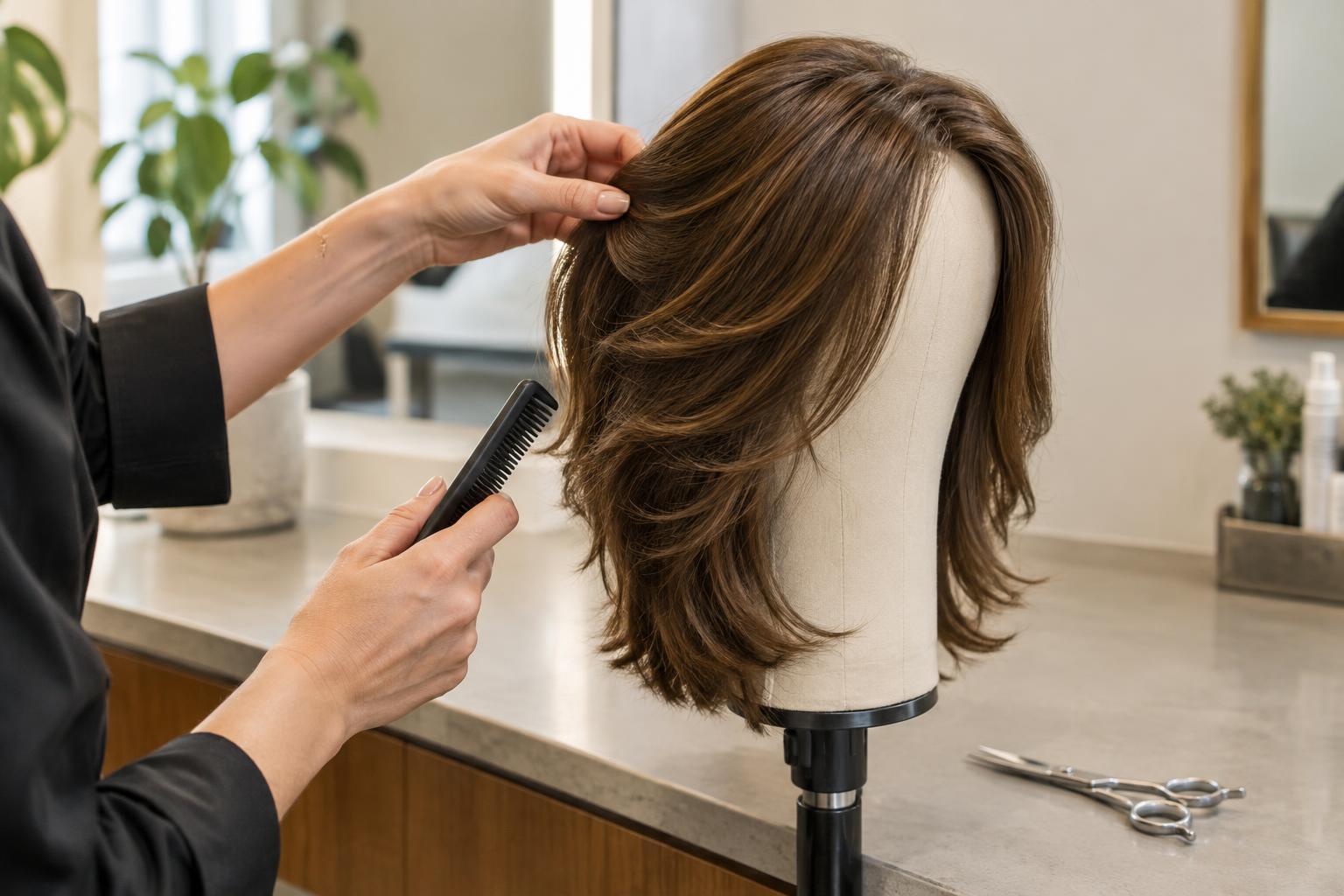
Curl only when the wig is fully dry, including the hair close to the cap. Brush or comb gently from the ends upwards, holding the hair above any tangles so you do not pull on the attachment points. If you use a heat protectant labelled for human hair, apply it according to its directions and allow the hair to dry completely before bringing in the iron. Product buildup can make strands feel stiff and harder to style.
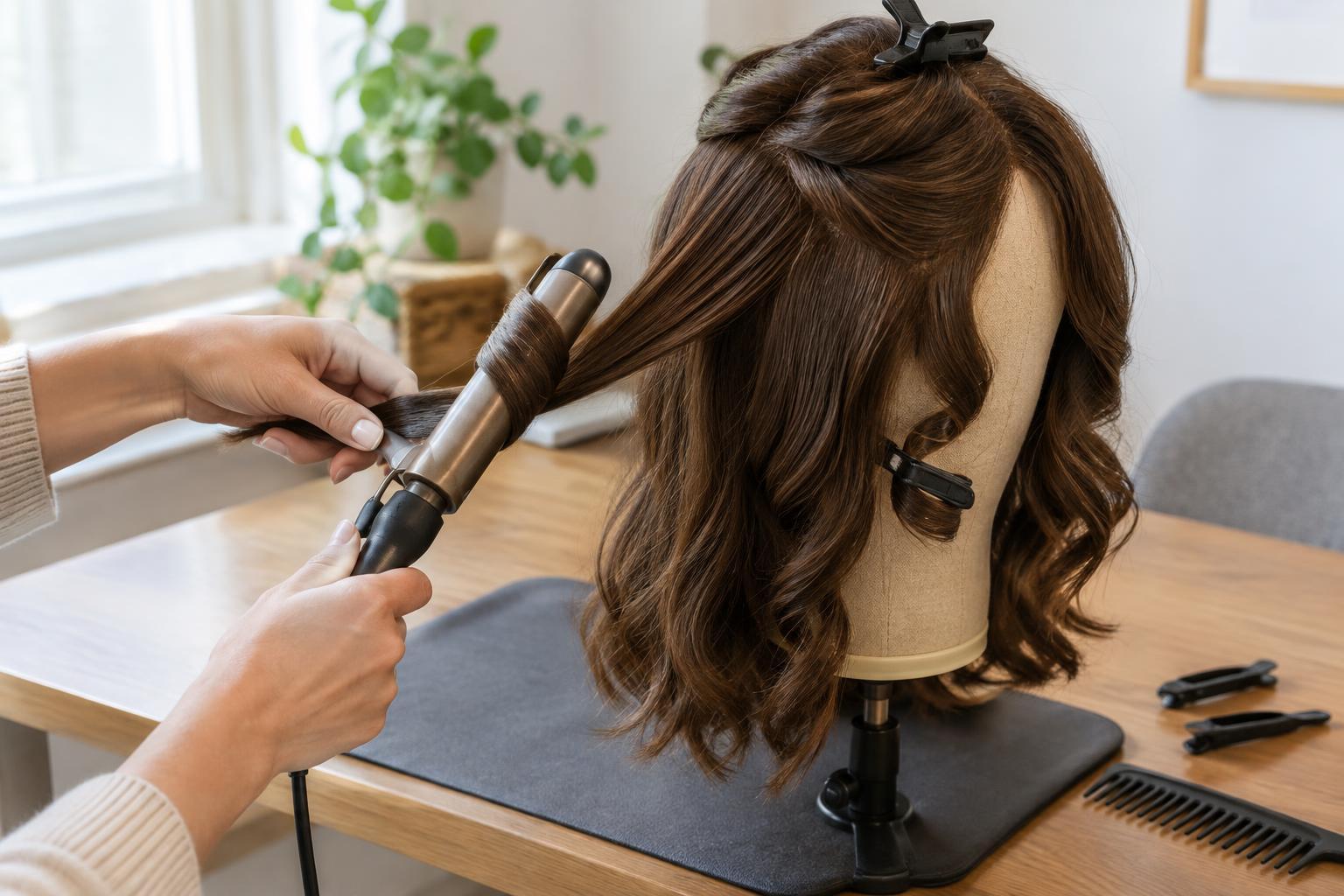
A wig stand can make sectioning easier, provided it is stable and suitable for styling. Secure the wig without stretching the cap or pinning through delicate lace. Keep the iron on a heat-safe rest when it is not in your hand, and arrange its cord so it cannot catch the stand. Whether you style on a stand or while wearing the wig, keep the hot barrel away from the cap, lace, skin and nearby accessories.
Start low and use brief contact
Set the curling iron to a low heat and try it on your test strand. If the curl does not form, increase the setting gradually, staying within the wig maker’s guidance. Temperature controls and hair condition vary, so no single setting guarantees a good result. Avoid turning the iron up simply to make the job faster. If you notice a burnt smell, roughness or a change in texture, stop and let the hair cool.
Work with small, manageable sections. Place the barrel below the roots, leaving space between the iron and the cap, then wrap or clamp the hair without tugging. Keep contact brief and release the strand carefully rather than pulling the iron through it. If you need to repeat a section, let it cool first; repeatedly heating the same warm hair can add stress without improving the curl.
Pay particular attention around a lace front or other delicate edge. The hair near the hairline may be shorter or more sparsely placed, making it easy to bring the iron too close to the construction. You can leave these strands uncurled or shape them with a lower-heat method.
Let cooling do some of the work
A curl may look loose immediately after it leaves the iron. Support it briefly in your palm, or clip it loosely while it cools, taking care not to pull at the roots. Allowing each section to cool in shape can help it hold without another pass of the iron. Continue around the wig, matching your section sizes where you want an even finish and varying them where you want a softer look.
Once every section has cooled, separate the curls with your fingers or a suitable wide-tooth comb. Start gently: you can loosen a curl further, but restoring one after brushing may require more heat. If you want to use a finishing product, choose one that suits human-hair wigs and apply it sparingly so the hair stays movable and the cap does not collect unnecessary residue.
Make heat styling an occasional choice
Even careful curling adds wear over time. To reduce how often you reach for the iron, try changing the parting, setting dry hair in rollers, or using another no-heat technique suited to the wig. Results will depend on the hair and how well it holds a set, but these methods give you options when the strands already feel dry.
After styling, switch off and unplug the iron and let it cool in a safe place. Let the wig cool completely before storing it, and keep it supported or arranged so the curls are not crushed. The simplest rule is to use only as much heat as the hair needs: test first, work patiently and stop when the result is good enough.