Start with the fit, not the styling
A lace front has a sheer panel at the front where hairs are attached individually or in small groups. This allows the front edge to sit close to the skin and makes it possible to style hair away from the face. The effect depends as much on placement and fit as it does on the lace itself. A beautifully styled wig can still look awkward if it sits too low, too high or unevenly across the forehead.
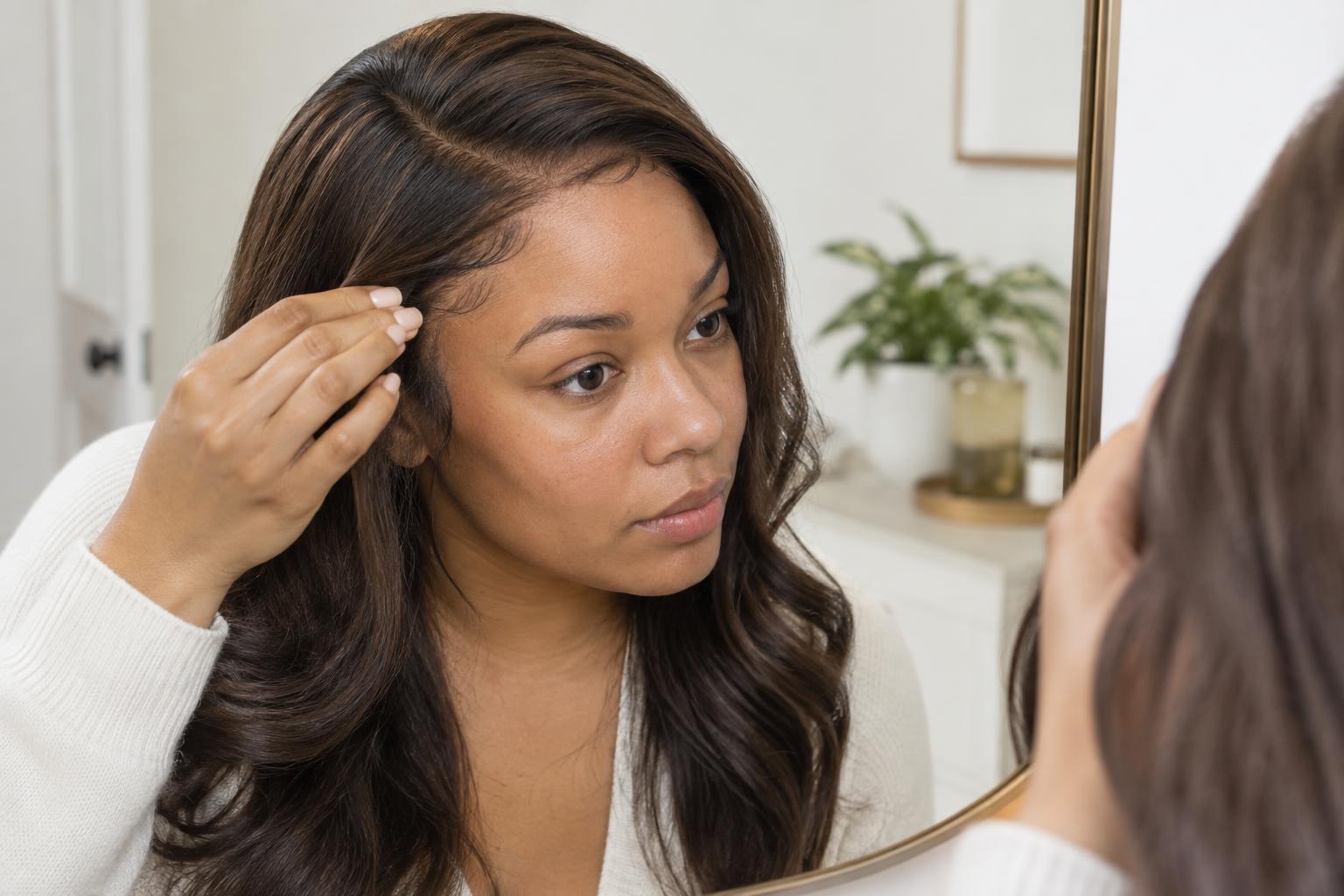
Put the wig on before cutting or applying any product. Adjust its straps, if present, so it feels secure without pressing uncomfortably. Position the front where your hairline would look natural on your face, rather than trying to cover as much forehead as possible. Check both temples and look at the wig from the side as well as the front. If you have hair underneath, keeping it as flat as is comfortable can help the cap sit evenly.
Trim and position the lace carefully
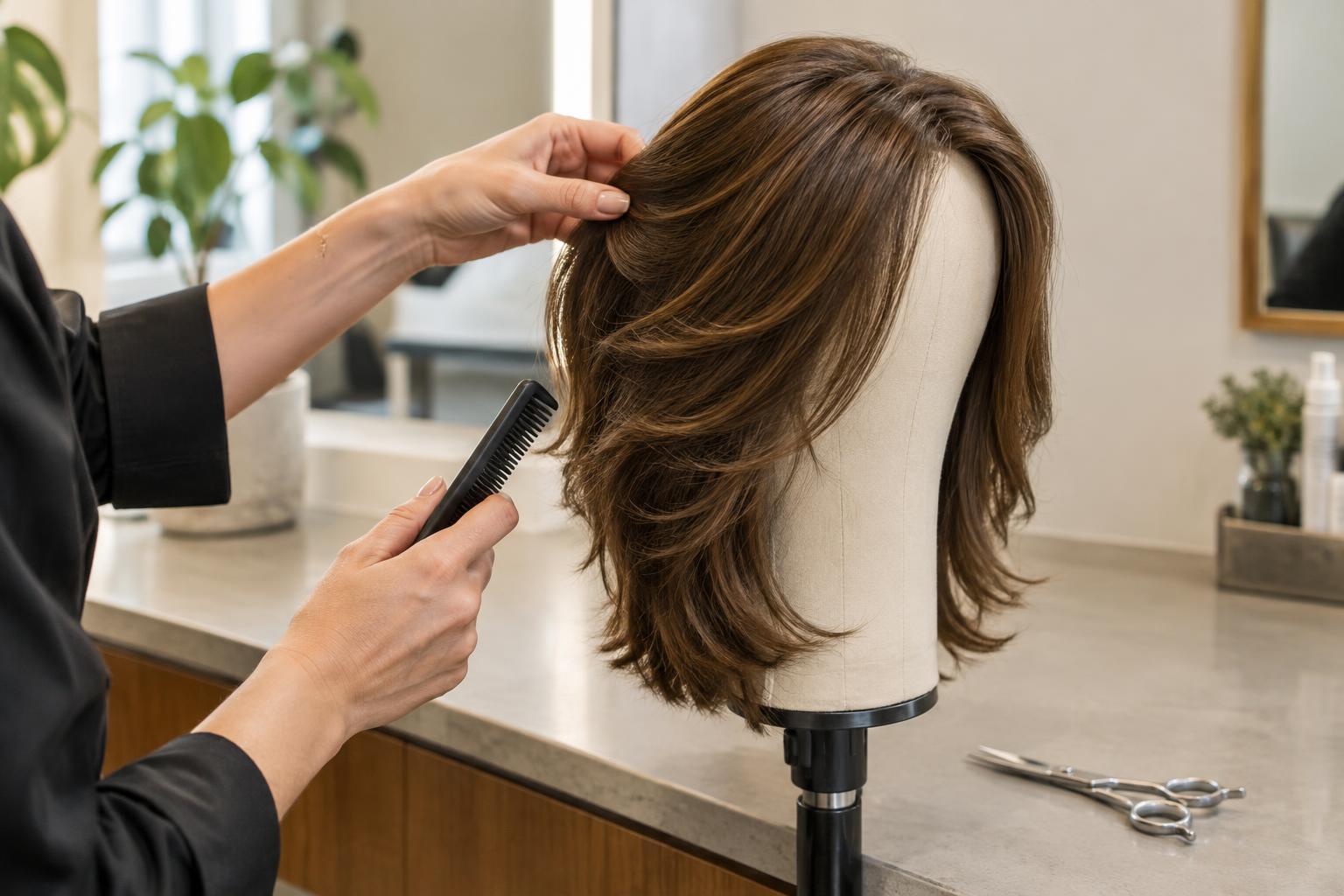
If the lace extends beyond the hairline, it may need trimming. Work slowly in good light, with the wig on a stand or on your head if you can handle scissors safely. Cut a little at a time, leaving a narrow margin in front of the hairs rather than cutting through the knots. Following the gentle changes in the hairline, instead of making one perfectly straight cut, can help the edge look less noticeable. You can always remove more lace later; you cannot put it back.
Once trimmed, lay the lace flat without stretching it tightly. Some wigs stay in place with an adjustable cap, a wig grip or clips; others are designed to be secured with products made for lace fronts. Adhesive is not essential for every wearer or every style. If you choose to use it, follow the product instructions, check that it is suitable for your skin and remove it gently with the recommended remover. Avoid pulling at the lace to take the wig off.
Work with the hairline’s density
An even, thick row of hair across the front can draw attention to the wig. Many lace fronts already have a graduated hairline, with finer density at the edge. Before changing it, brush the hair back and see how it looks in ordinary lighting. A side part, a loose sweep or a few strands falling forward may provide enough softness without altering the wig.
If the front seems too dense, resist removing a large amount of hair at once. Plucking knots is difficult to reverse and can leave gaps or damage the lace. If you decide to thin the hairline, work in tiny stages behind the very front edge, then step back and reassess. It is equally reasonable to leave the construction untouched and choose a style that does not expose the entire hairline.
Use parting and face-framing hair for a softer effect
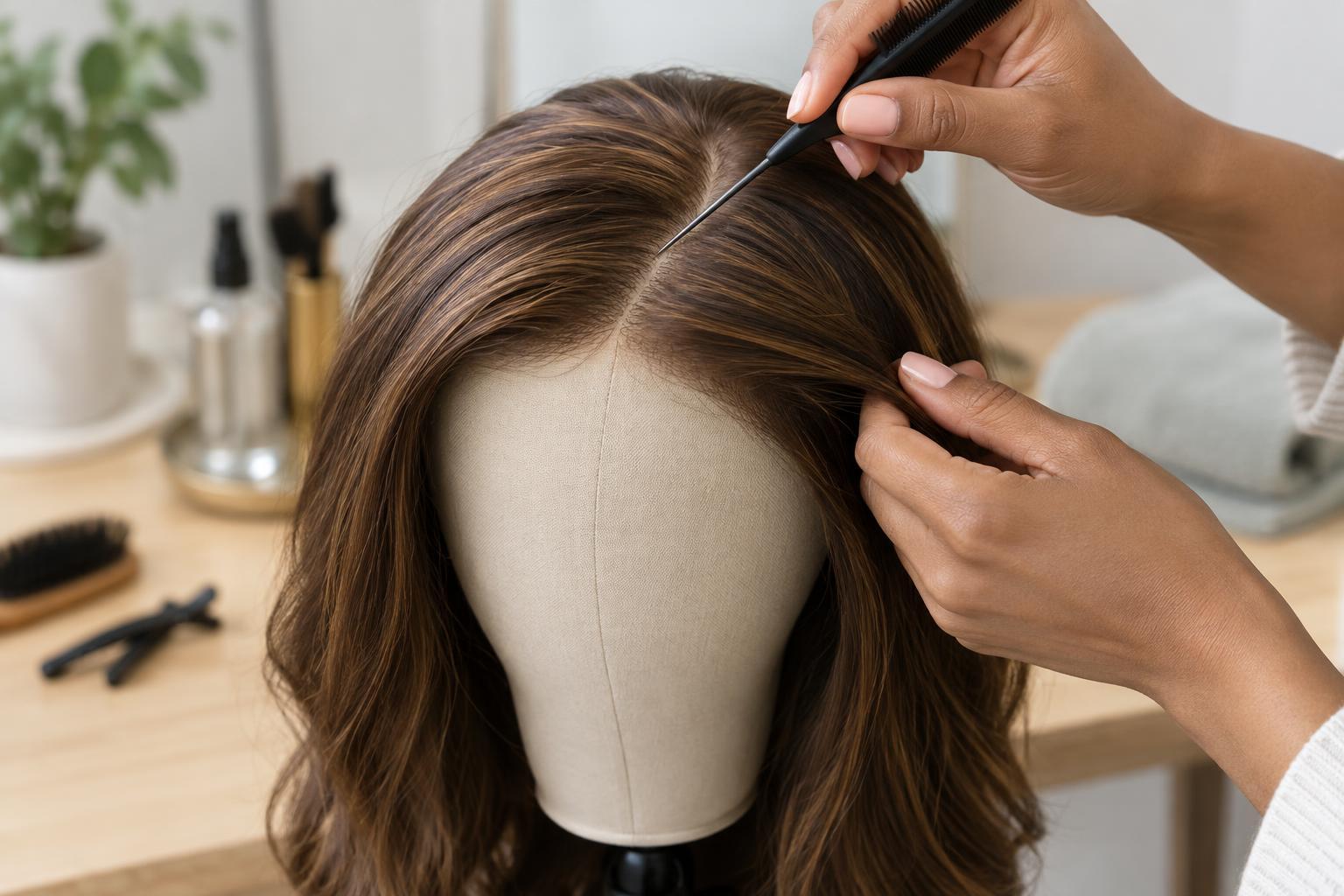
A believable finish is rarely about making every strand perfectly neat. Try moving the part slightly off centre, loosening a few hairs around the temples or directing the front hair back at a gentle angle. If the wig has a fixed or limited parting area, stay within the space where the lace or construction supports a visible scalp effect. Forcing a new part outside that area may expose the cap or tracks.
Keep styling products light near the lace. A small amount of suitable mousse or spray can tame flyaways, but heavy product may make the knots and front edge more visible. Check the wig’s fibre and care guidance before using heat: human hair and heat-resistant synthetic fibres have different limits, while some synthetic wigs should not be heat styled at all. When in doubt, use a cool setting or a no-heat method.
Check the finish in everyday conditions
Makeup can sometimes help the lace blend, but it is optional. If you use it, apply a small amount that suits your skin tone and avoid coating the hair or building up product along the edge. A close match and a flat fit usually do more than a thick layer of concealer. Clean residue from the lace according to the wig’s care instructions so it does not accumulate over repeated wears.
Before going out, look at the hairline in daylight if possible and check it while turning your head. A mirror held at an angle can reveal a lifted temple or an exposed cap that is hard to see straight on. The aim is not an invisible hairline at every distance and angle, but a comfortable style that looks convincing in normal wear. Small adjustments to placement, parting and front strands often make the biggest difference.