Check the wig before you apply heat
Human-hair wigs can usually be heat styled, but the hair is only part of what you need to protect. A wig may also contain lace, mesh, elastic, adhesives, clips and individual hairs tied into the cap. Heat or pulling near those components can shorten the wig’s useful life. Start by checking any care instructions supplied with your wig, especially if it has been coloured, chemically treated or sold with specific temperature limits.
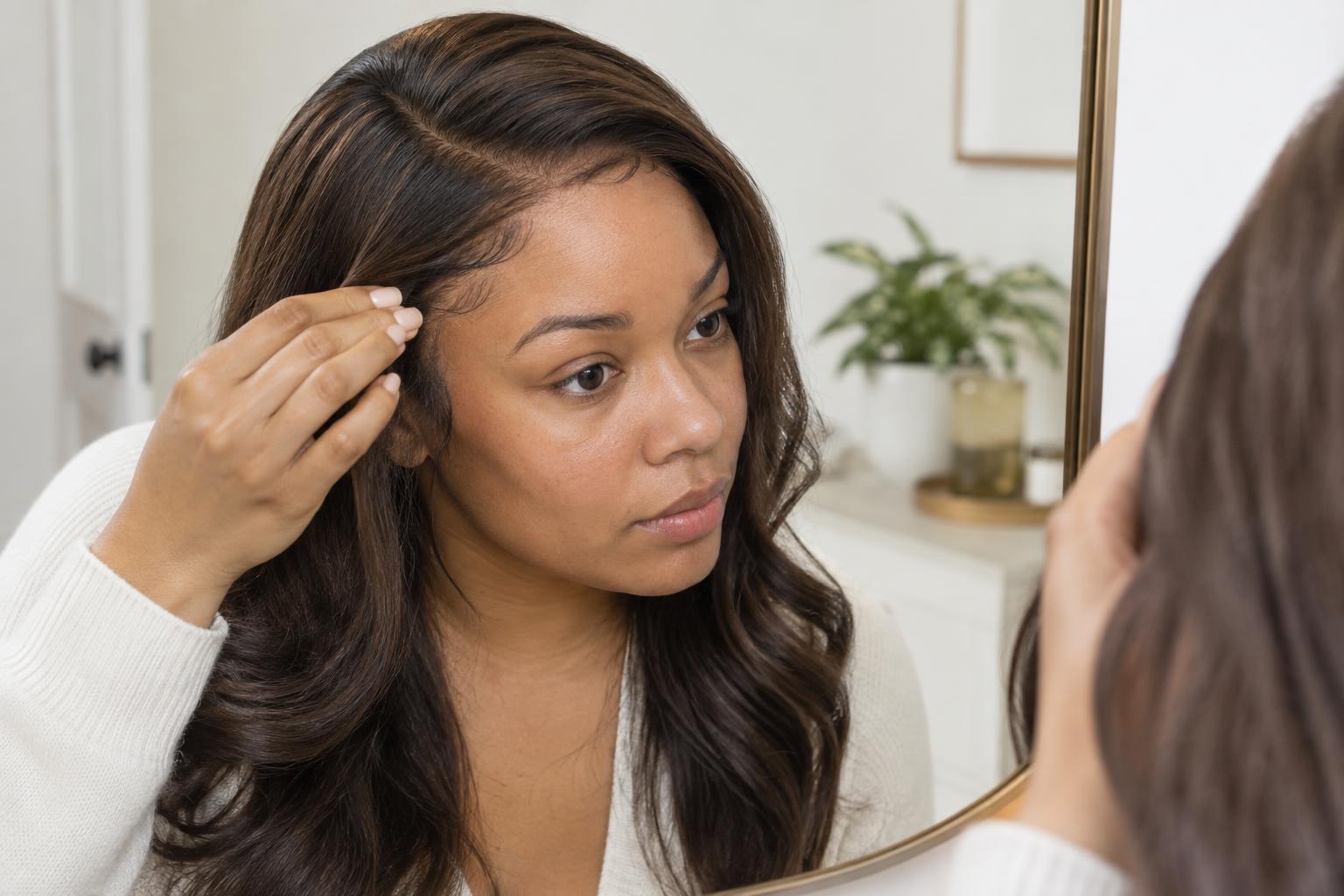
Look at the hairline, parting and nape for loose hairs, torn lace or lifting attachments. If you find damage, avoid styling that area until it has been repaired. Check that the hair is fully dry: a flat iron should not be used on damp strands unless both the tool and the wig’s care instructions specifically allow it. If you are unsure how the hair will respond, test a small, less visible section first.
Prepare the hair and support the cap
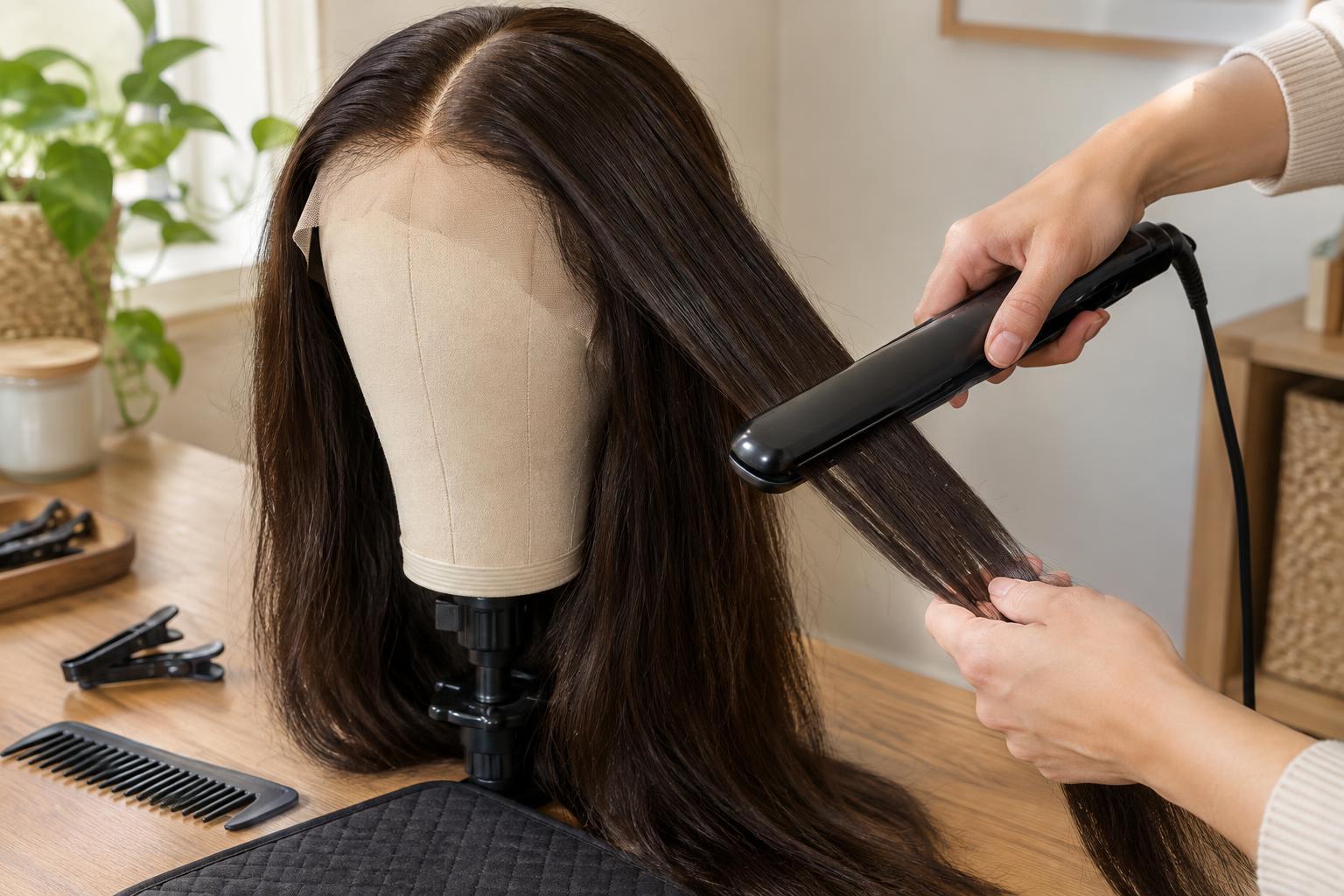
Place the wig on a stable stand or mannequin head that suits its size. Secure it gently so it cannot slide, without stretching the cap or putting pins through delicate lace. If you prefer to style while wearing the wig, take extra care to keep the hot tool away from your scalp, ears and face. A stand generally makes it easier to see the roots and control the iron.
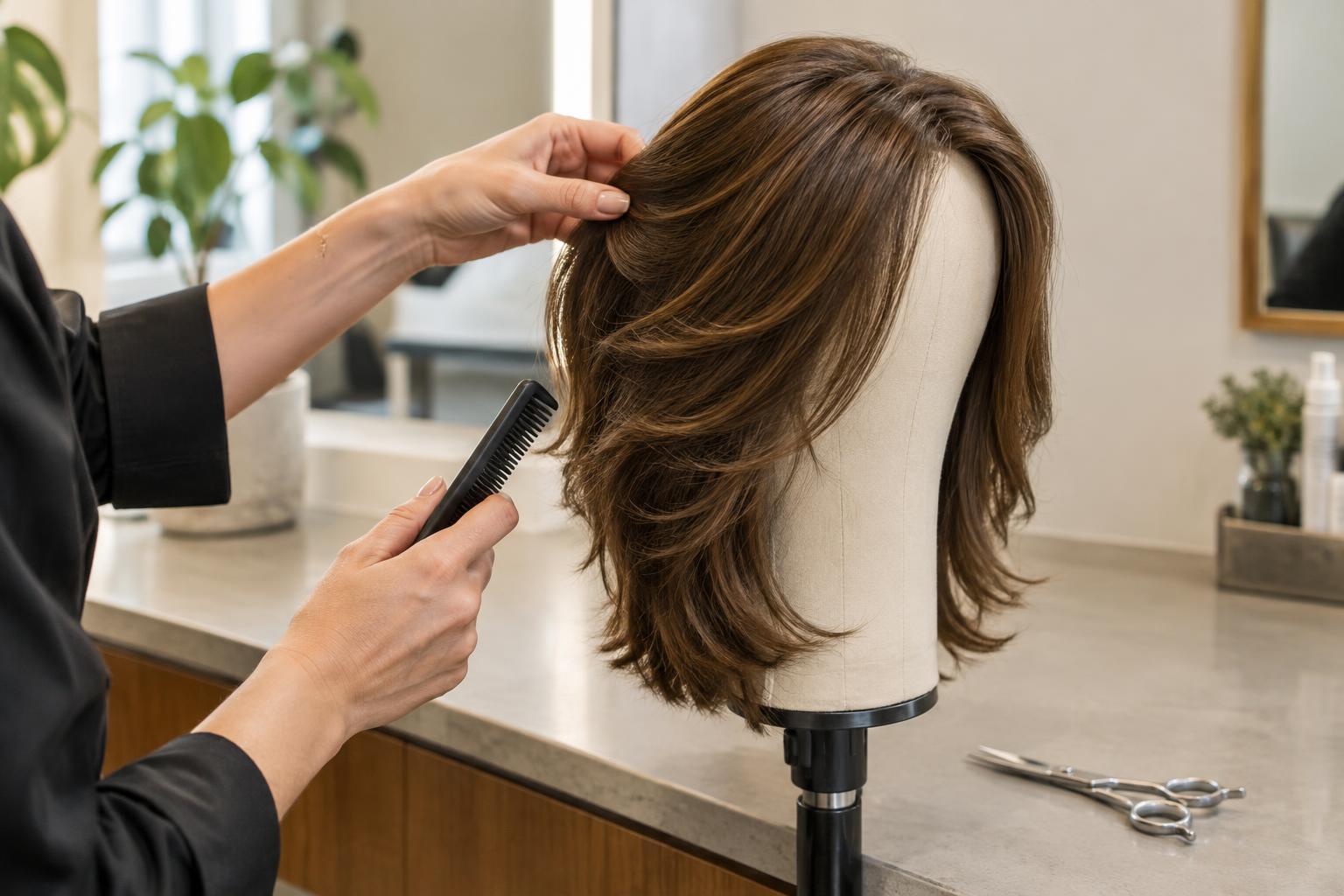
Comb out tangles before straightening. Hold each section above the area you are detangling, begin at the ends and work upward with a wide-tooth comb or suitable wig brush. This reduces the pull transferred to the knots. Use a heat protectant intended for human hair if it is compatible with your wig’s care instructions, applying it lightly through the lengths rather than saturating the cap. Let the product dry as directed before using heat.
Straighten in small sections with light tension
Divide the hair into manageable sections and clip the upper layers out of the way. Attach clips to the hair rather than tugging at the cap. Set a temperature-controlled flat iron to a low setting to begin with, then increase it only if needed and permitted by the wig’s care instructions. A higher setting is not a substitute for slow, controlled work; repeated passes can also dry out the hair.
Take a narrow section and hold it gently below the roots. Start the iron a short distance away from the cap, close the plates lightly and glide toward the ends in one steady motion. Do not clamp the iron on the lace, press it against the parting or pull hard to make the hair straight. If a section needs another pass, let it cool briefly and reassess your setting and section size first. Work through the wig systematically so you can see which areas are finished.
Treat the hairline and parting as delicate areas
The most visible areas often contain the finest lace and the most carefully placed hairs. Trying to iron right up to the knots can weaken attachments or leave a flattened, unnatural-looking root. For short hairs around the face, consider leaving a little texture rather than forcing them perfectly straight. A comb can help guide the hair’s direction while you work farther down the strand.
If the wig has a lace front or a hand-tied parting, support the hair near its base when handling it and avoid brushing aggressively across the knots. Keep hot plates clear of lace, stitching and any adhesive used to attach the wig. Straightening a removable wig before putting it on also helps keep styling products and heat away from attachment areas.
Let the style cool, then store it gently
Once you have finished, allow the hair to cool before combing through it or changing the part. Hair can take on bends while it is still warm, so let the lengths hang freely on the stand. Check the result in natural movement rather than chasing every small wave with more heat; a slight bend may soften the style.
After wearing, detangle the lengths gently and store the wig where the cap will not be crushed or stretched. Product buildup can make later styling harder, so wash the wig according to its care instructions when needed and let it dry thoroughly before the next heat-styling session. Careful handling between styles matters as much as the temperature you choose: the goal is smooth hair without making the cap and knots do the work.