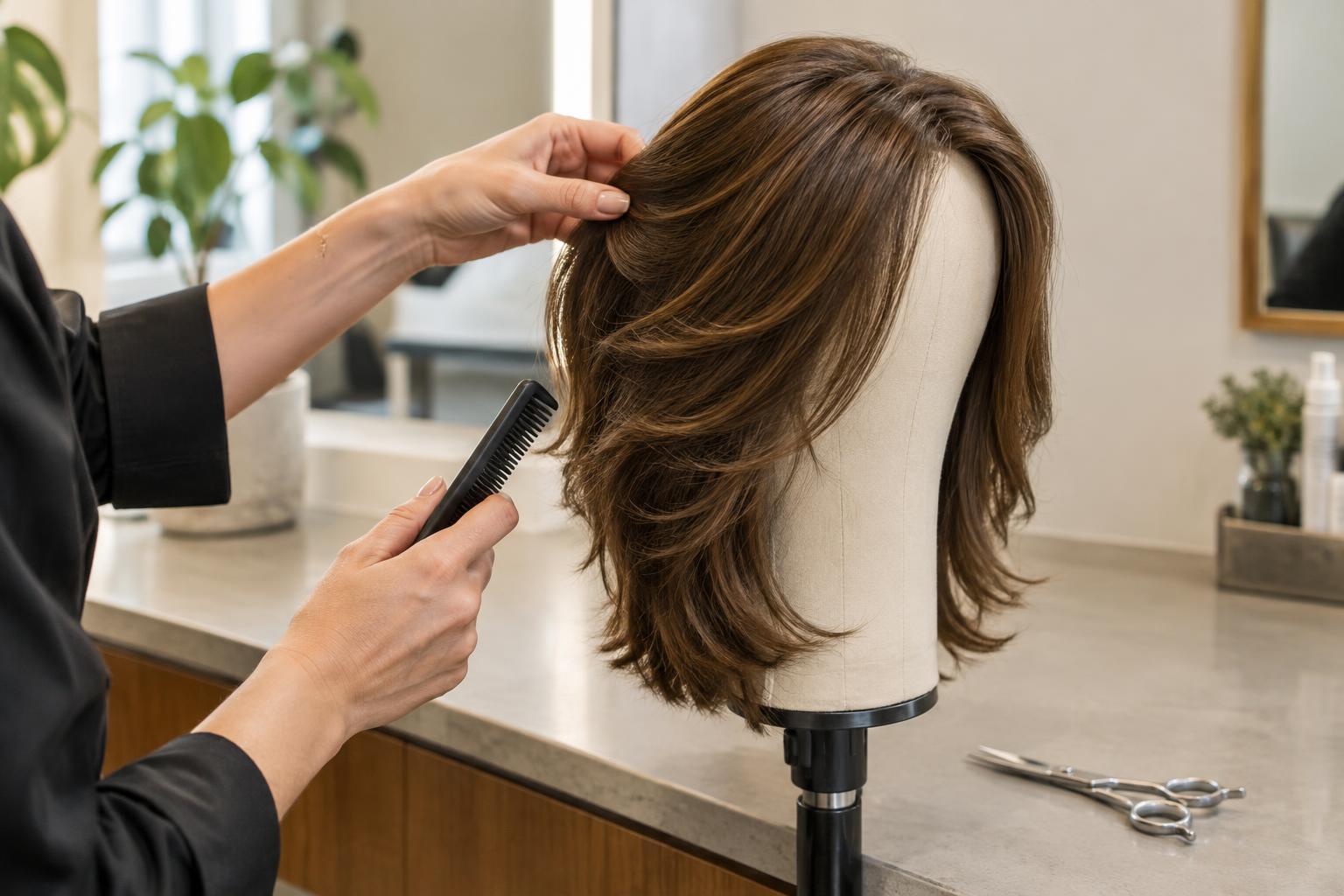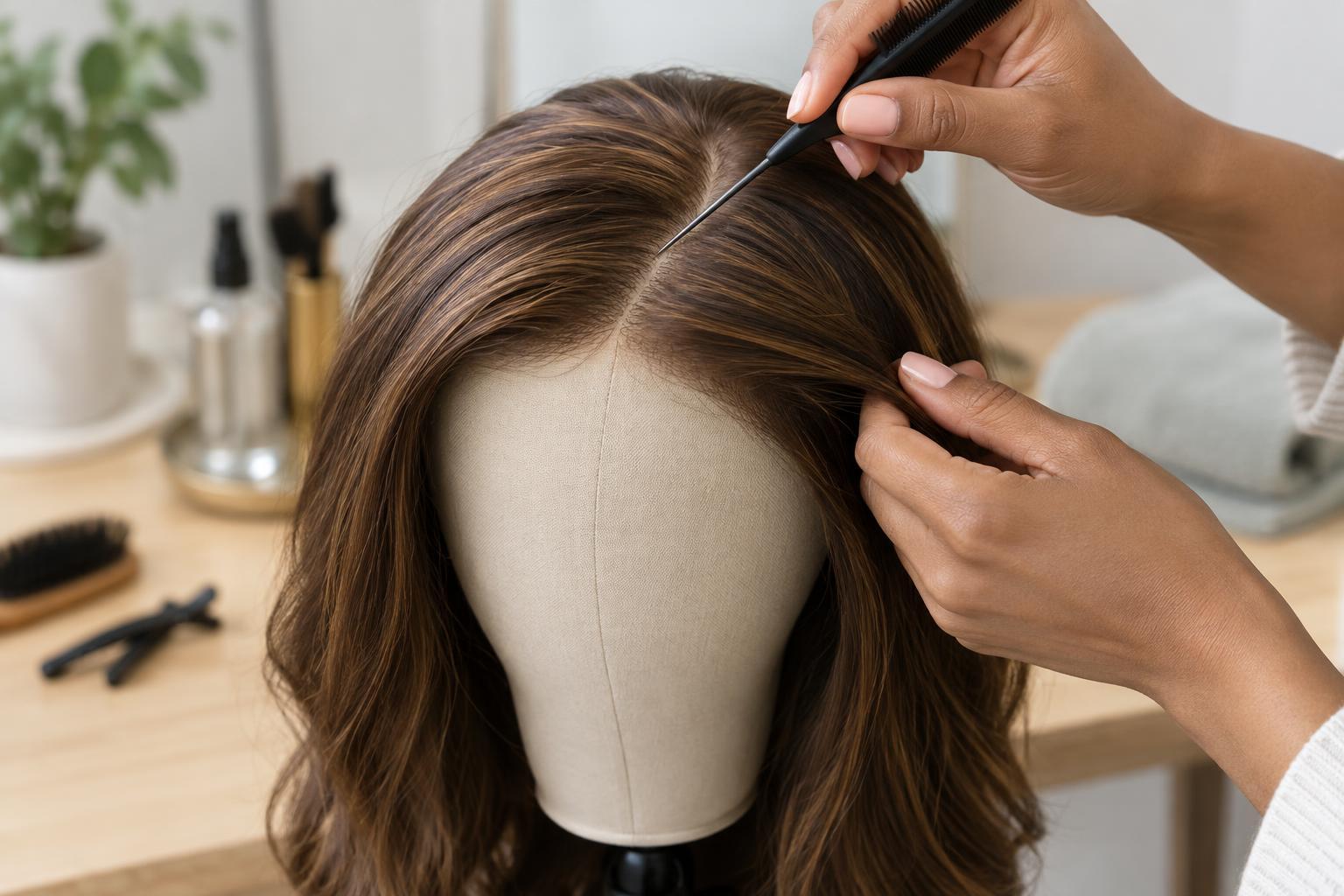
Start with the wig in its wearing position
Before picking up scissors, put the wig on and adjust it as you normally wear it. Check that the cap sits comfortably, the front edge is where you want it and any parting is in place. A fringe cut while the wig is too far forward may look unexpectedly short once you reposition it. If you use clips, a wig grip or another securing method, wear it during the test fit.
Comb the fringe gently into its usual shape and look at it straight on, then from both sides. Decide where you would like it to fall when dry and styled. For a first trim, choose a point below that target rather than cutting directly to the finished length. You can always take off more; you cannot put the fibres back. If the fringe is very long, plan to reduce it in several rounds.
A stand can help hold the wig steady, but it does not reproduce the shape of your forehead or the way the cap sits on your head. Use it for support between checks, not as the only guide to length.
Prepare the fringe and your tools
Use sharp hair-cutting scissors if you have them. Blunt household scissors can push fibres aside and make a neat line harder to achieve. Keep a comb, sectioning clips and a mirror close by. Work in good light over a surface where you can collect the cut fibres, and take your time: trimming is easier to control when you can see each small change.
Identify what you are cutting before you begin. On a lace-front wig, avoid catching the lace, knots or short hairs around the front edge. Keep longer side pieces separate if they are meant to frame the face rather than join the fringe. If the wig has a styled sweep or curl, arrange it as you intend to wear it; pulling it straight and cutting to eyebrow level could leave it much shorter when released.
For a synthetic wig, cutting it dry in its usual style makes the resulting length easier to judge. Human-hair wigs can also be checked dry, even if you prefer to make a cut after lightly dampening the hair. Either way, make the final length decision only after the fringe is dry and sitting naturally.
Cut below the target, then check on your head
Comb a narrow section forward without stretching it tight. Hold it lightly between your fingers, leaving room below your planned finished length. Make the first cut longer than you think you need, removing only a small amount. If you are reducing a lot of length, this first pass is just to make the fringe manageable; it is not the finishing cut.
Release the section, let it settle and try the wig on again. Look straight ahead with your head level rather than tilting your chin toward the mirror. Check whether the fringe separates, curves or lifts at the ends. Those changes affect where it appears to fall. Repeat with small cuts only where more length needs to come off, alternating between trimming and wearing checks.
Avoid pulling the fringe down firmly while you cut. Tension can make it appear longer in your fingers than it will be when released. Be particularly cautious around a centre part or a swept fringe, where one side may sit differently from the other. If you are unsure, stop while it is slightly long and wear it for a while before deciding whether to trim again.
Soften the edge without losing length
A blunt horizontal cut can be the intended look, but an accidental heavy line may make a fringe seem shorter and denser. For a softer edge, hold the scissors nearly vertical and make tiny snips into the very ends, often called point cutting. Work sparingly across the fringe rather than cutting deep into one spot. Comb it back into place after a few snips to see what has changed.
Treat thinning as a separate decision from shortening. Cutting into the body of the fringe, or taking large sections away, can leave gaps that are difficult to disguise. If the fringe feels too full, first try changing the parting or brushing a small portion toward the sides. For curly or strongly shaped wigs, trim individual pieces according to where they rest rather than trying to force every strand into one straight line.
Know when to stop
When the fringe is close to your target, pause. Move your head, check it in ordinary light if possible and see how it falls without holding it in place. Minor unevenness may come from the wig’s shape or styling rather than the cut. Give yourself time to distinguish a stray long piece from a section that simply needs arranging.
If the fringe has become shorter than intended, further cutting will rarely fix the length. A different parting, a side-swept style or a small accessory may help while you decide what to do next. If the wig is valuable, has intricate lace work or needs a major reshape, consider asking an experienced wig stylist to handle the cut. For a home trim, the most reliable habit is simple: remove less than you think, release the fringe and check it on your head before making the next cut.