Check the wig before choosing a braid
Start by looking inside the cap. Many wigs have rows of hair attached to wefts, with spaces between them. Others have a lace front, a lace top, or hand-tied areas where individual hairs are attached to a finer base. These details affect where you can make a convincing part. A deep part through a wefted area may show tracks, even if the hair looks full when worn loose.
Gently comb the hair in the direction you want it to lie and notice where the cap becomes visible. For a first attempt, try one or two loose braids that gather hair without making long, exposed part lines. A side braid or a low braid can be easier to manage than several small, close-to-the-cap braids. If the wig is sparse in one area, choose a style that leaves some hair loose over it.
Secure the wig without stretching it
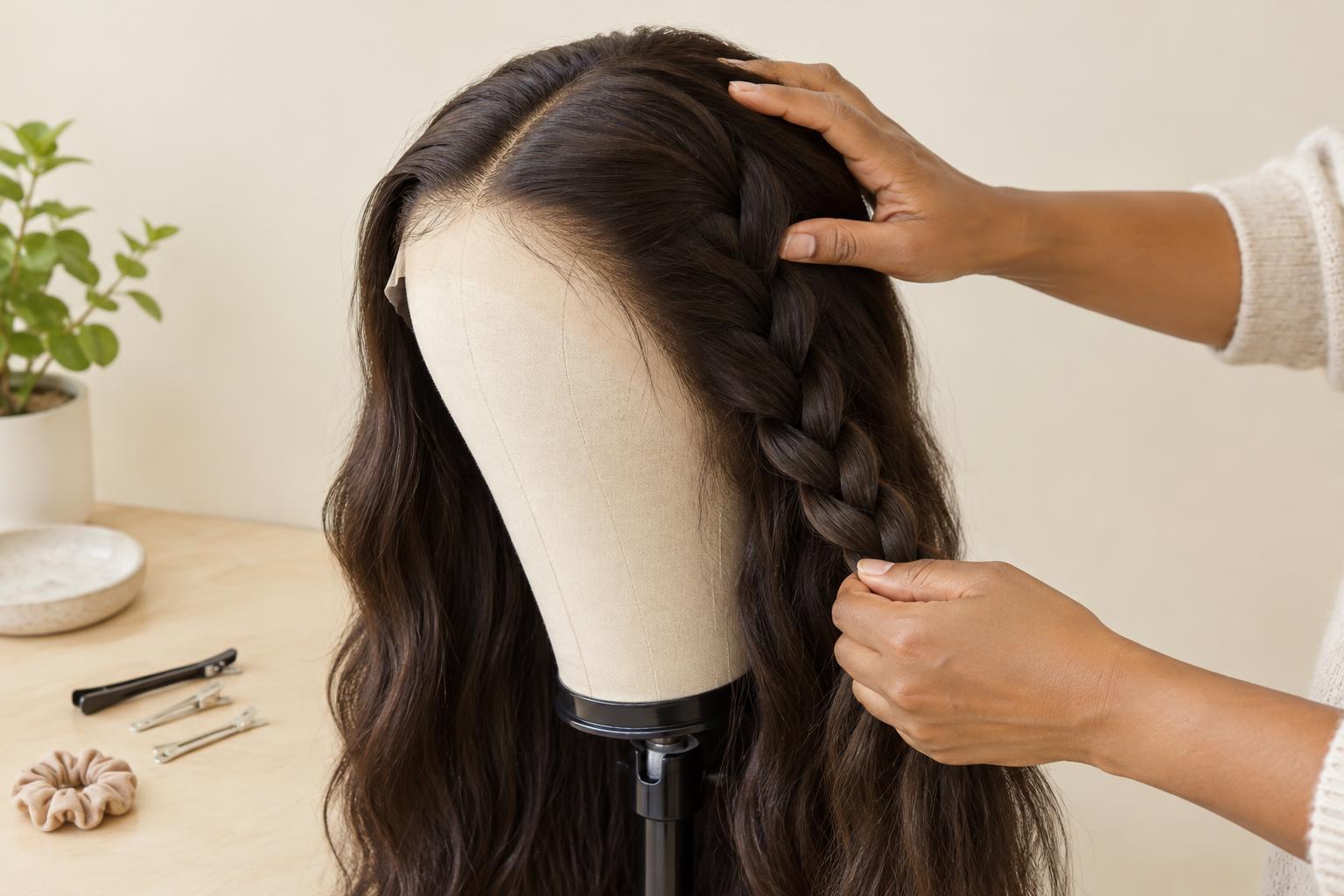
Braiding a wig on a stable stand can make it easier to control the hair. Use a stand that supports the cap rather than stretching it over a form that is too large. If you use pins, place them through sturdy cap edges or designated attachment points, not through delicate lace or weft stitching. Check that the wig stays in place with light handling; it should not need to be pulled taut.
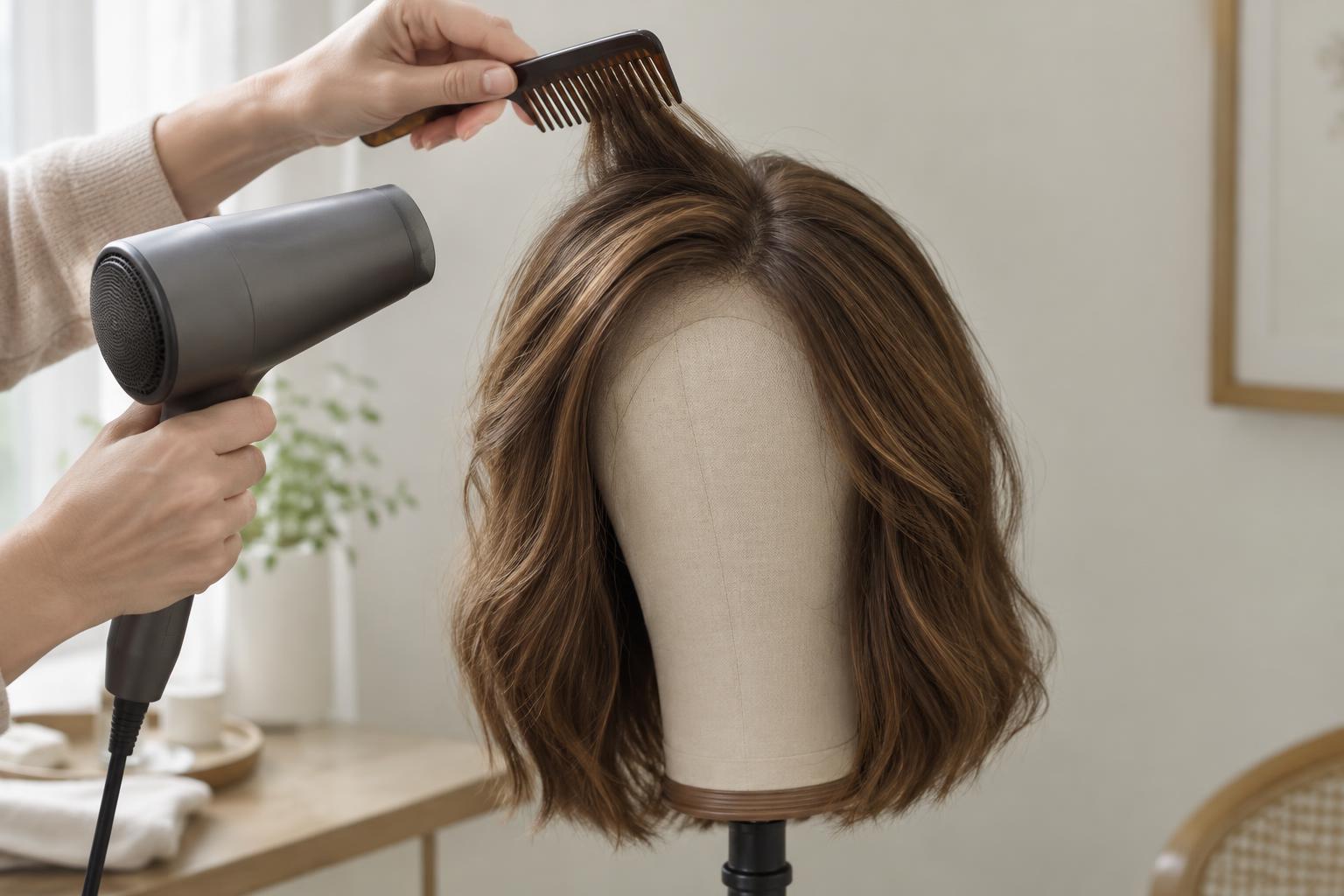
Detangle from the ends upward while holding the hair above the area you are combing. This keeps each stroke from tugging directly on the cap. A wide-tooth comb or a brush suited to the fibre is usually enough. Be especially gentle with wet hair, lace and older wigs. If you are braiding while wearing the wig, hold the cap steady near the section you are working on and stop if the style shifts or feels uncomfortable.
Plan parts that keep the base covered
Before braiding, make a trial part with your fingers or the tail of a comb, using only light pressure. Look at it in a mirror or from several angles on the stand. If a weft shows, move the part, gather a little more hair over it, or switch to a braid that does not require that part. A zigzag or softly irregular part may make gaps less noticeable, but it cannot add coverage where there is too little hair.
Keep sections large enough to leave hair over the tracks. Avoid repeatedly combing every strand flat against the cap: a little natural volume helps conceal the base. On a lace-front wig, you may be able to begin a braid near the front, but avoid tightening it against the lace edge. On a wig with only a small lace area, check where that area ends before extending a visible part towards the crown.
Braid with light, even tension
Divide the chosen section into three and begin crossing the strands without pulling them sharply away from the cap. After each crossing, snug the strands together just enough to hold their shape. Support the base of the braid with one hand as the other hand moves the hair. If the cap lifts, a weft tilts, or the lace edge begins to move, ease your grip and restart more loosely.
For a braid that picks up hair along the head, add small amounts gradually rather than yanking new sections into place. Do not use the braid to force hair across a part where the cap is visible. You can leave a narrow layer of hair unbraided to drape over a nearby weft, or braid only the lengths below the ear or nape. Secure the end with a soft elastic that fits without repeated tight wrapping.
Finish, inspect and take the braid down gently
Put the wig on, if you braided it on a stand, and check the style in ordinary lighting. Look at the crown, sides and back as well as the front. A braid can shift when the cap settles on your head. If you spot a track, first try loosening the braid slightly and guiding surrounding hair over the gap. If that does not work, change the placement rather than tightening the braid.
To remove the style, take off the elastic carefully and unravel the braid from the end upwards. Hold the hair near the cap while detangling so you do not pull on its attachments. Avoid leaving a tight braid in for long periods, particularly if it bends lace or strains the same wefts each time. A successful wig braid should stay in place through gentle movement while leaving both the cap and the wearer comfortable.