Check the fibre before reaching for a tool
“Heat-resistant” does not mean that a synthetic wig can tolerate any hot tool. Fibre blends and constructions vary, so start with the care label or the maker’s instructions. Look for a permitted temperature range and any directions about whether the fibres should be dry or damp. If you cannot confirm that the piece is heat-resistant, do not use a heated tool on it.
Use a tool with adjustable temperature control rather than one that offers only a single high setting. Begin at the lowest setting the maker permits, and increase it only if a test shows that more heat is needed and the stated limit allows it. A tool’s displayed temperature may not tell the whole story, so brief contact and close observation matter. Keep hot plates and barrels away from the cap, knots, lace, clips and any attached accessories.
Prepare a small section and run a strand test
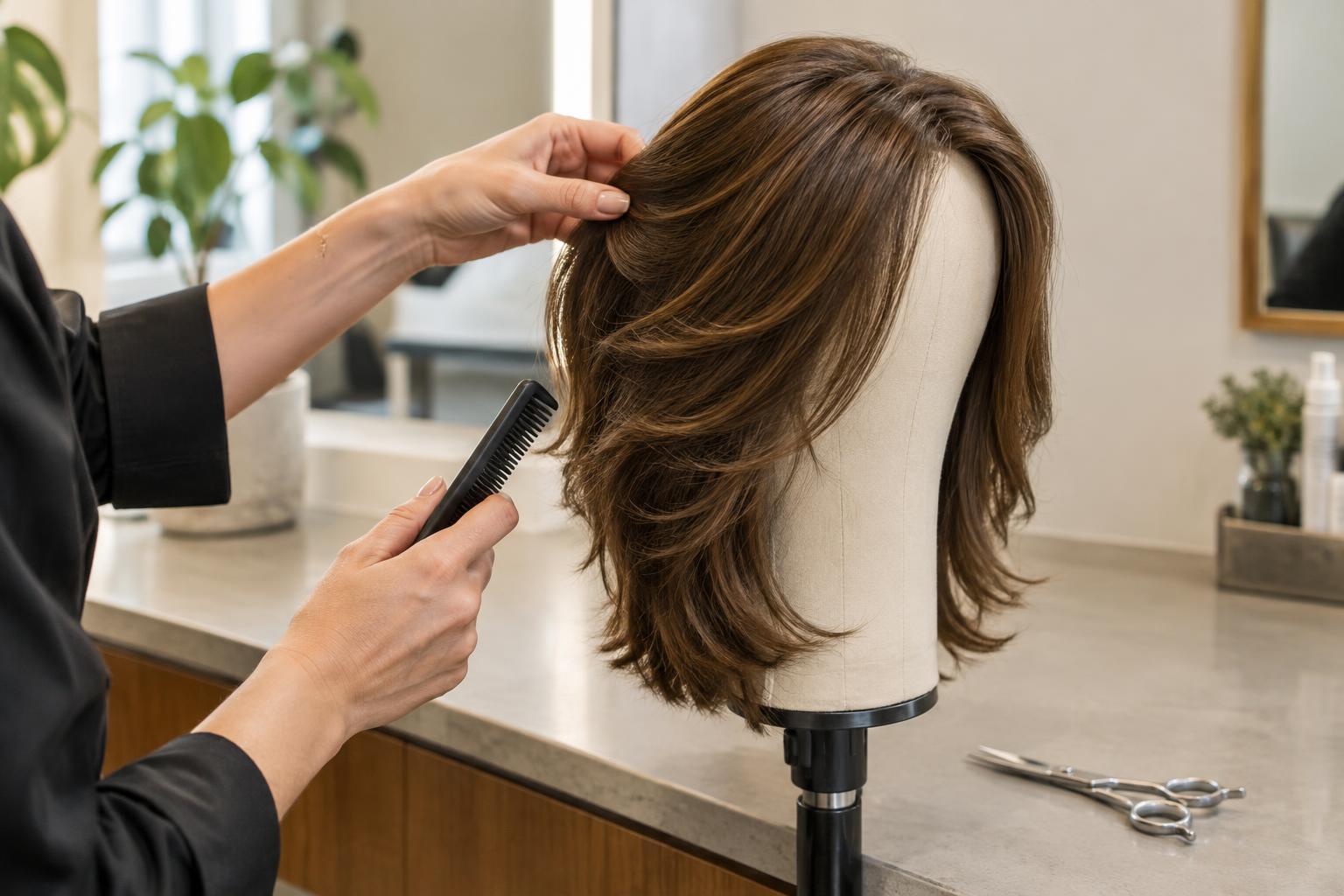
Place the wig on a stable stand and secure it gently so that it will not shift as you work. Detangle from the ends upward with a suitable brush or wide-tooth comb, supporting the hair as you go. Work on a clean, fully dry piece unless its care instructions specify another method. Product build-up can make fibres harder to handle and may leave a sticky finish when heated.
Choose a small section underneath the back of the wig where any change will be less noticeable. Pass the tool over it briefly without clamping hard, pulling sharply or holding it in one spot. Let the section cool completely before deciding whether the result worked. Stop if the fibres become rough, unusually shiny, flattened or tangled, or if you notice an unpleasant smell. A successful strand test is a reason to continue cautiously, not a guarantee that every part of the wig will behave identically.
Build curls and waves with heat, then cooling time
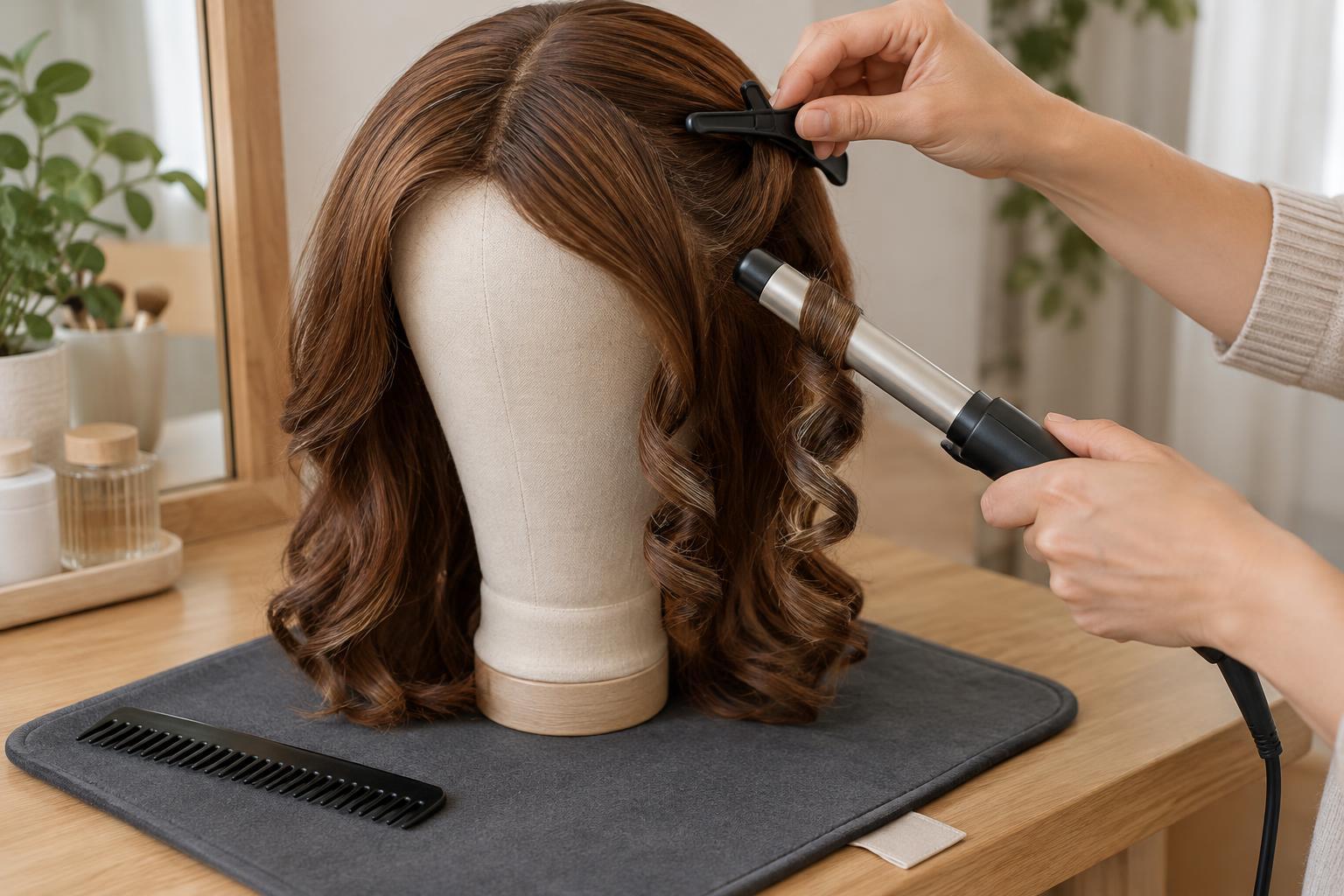
For a curl or wave, take a narrow, evenly detangled section. If the wig’s instructions allow a curling tool, wrap or guide the section without stretching it tightly. Apply heat for a short interval, then release the curl carefully into your hand or a loose clip. Allow it to cool in the shape you want before touching or combing it. Cooling is an important part of setting many heat-resistant synthetic fibres; repeatedly reheating a curl because it looks loose while still warm can do more harm than good.
Work in small sections so the tool does not have to stay in contact for long. For a softer wave, use larger sections or gently separate the curls only after they have cooled. For a more defined result, support each curl while it cools. Try shaping one section to completion before styling the whole wig, as a fibre that holds a bend well may need less heat than you expect.
Smooth or redirect hair without overworking it
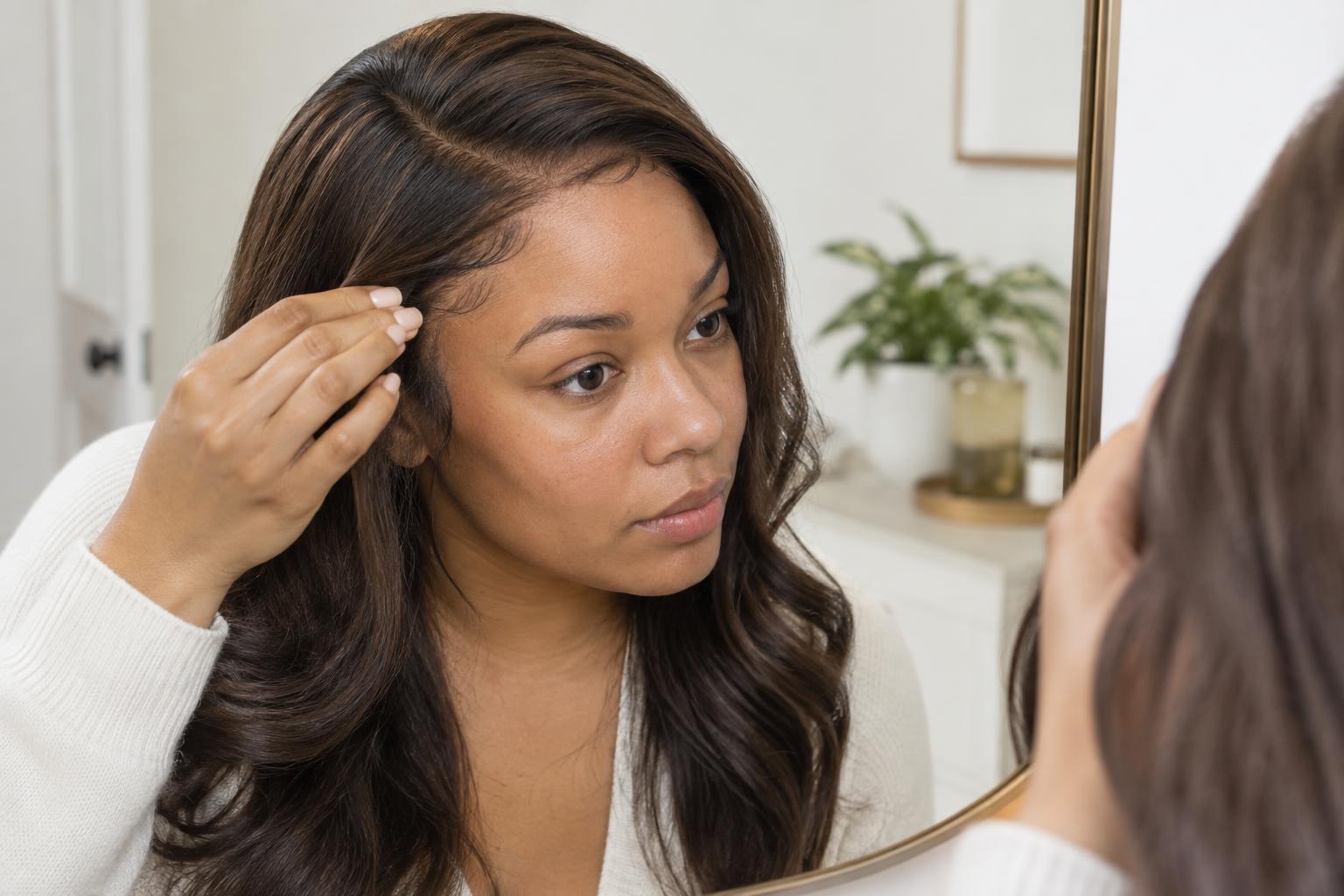
To reduce a bend or change the direction of the ends, guide a small section through a low-temperature straightener or other tool approved for the wig. Keep the tool moving rather than pressing repeatedly at the same point. Avoid pulling the fibres taut against the cap, particularly around the hairline and parting, where the construction may be delicate.
Aim for a modest change on the first pass. If a section does not respond, let it cool before reassessing the setting and technique. More passes are not always the answer: they can leave synthetic fibres looking stiff or uneven. Once the style has cooled, use your fingers or a suitable comb to arrange it, starting at the ends. Heavy brushing immediately after shaping can undo the result or create frizz.
Keep the finished style wearable
Give the wig time to cool fully on its stand before wearing, packing or covering it. Check the overall shape in a mirror and make small adjustments rather than reheating the entire piece. If you use a styling product, choose one described as suitable for synthetic hair and apply it sparingly; product cannot repair fibres that have been heat-damaged.
Between wears, detangle gently and store the wig so the styled lengths are not crushed. A restyle may relax with wear, washing or storage, depending on the fibre and the shape you created. Keeping note of the tool setting and method that worked on your test section can help you repeat the look without starting from scratch—or reaching for more heat than you need.