Start with the curl pattern you have
Lightweight products can help curls clump together and hold their shape, but they cannot permanently change the wig’s curl pattern. A naturally curly human-hair wig may need little more than moisture and gentle shaping. A straight wig needs a styling method, such as heatless setting or carefully controlled heat, to create curls. Before adding product, check how the hair behaves when damp so you can work with its existing texture.
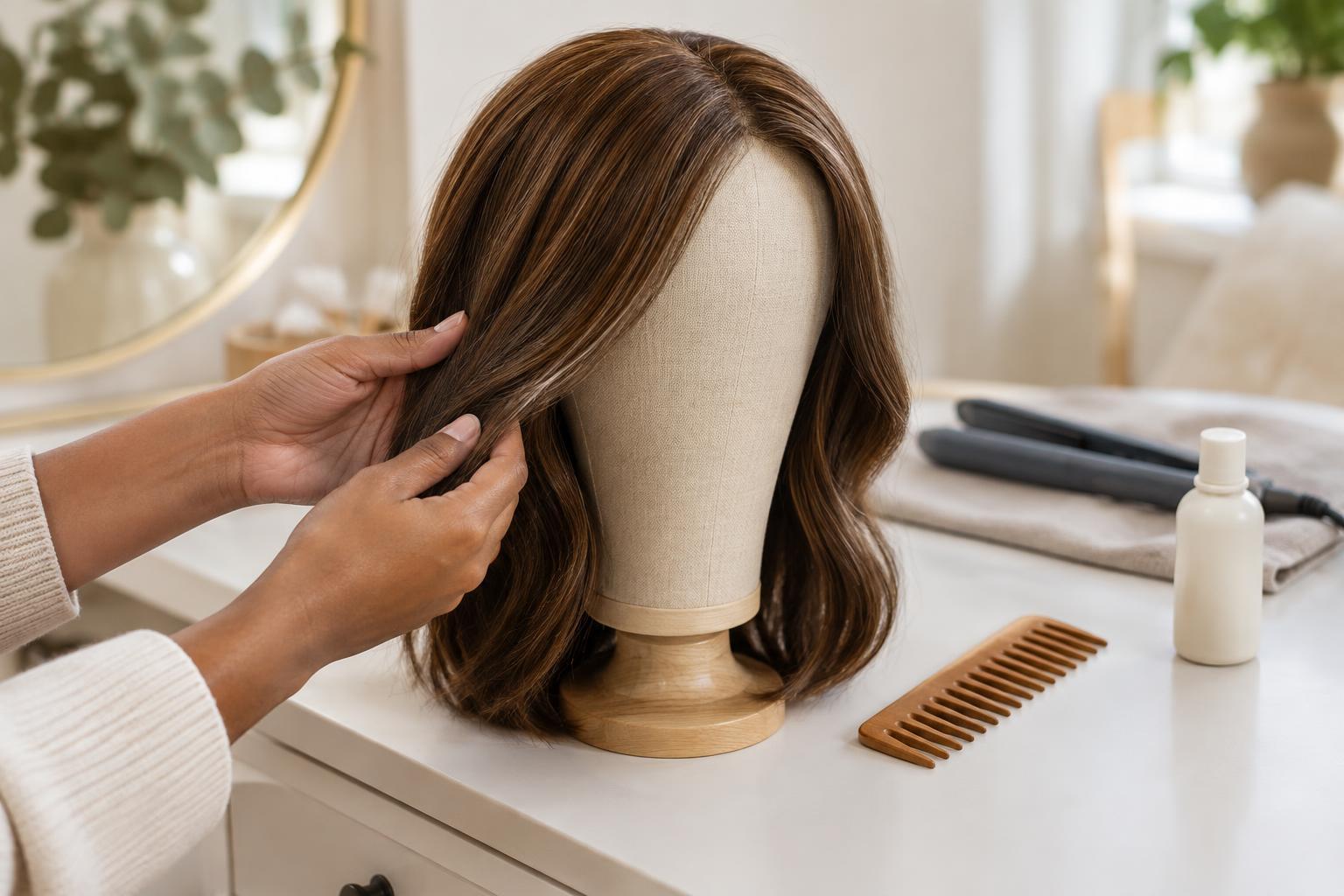
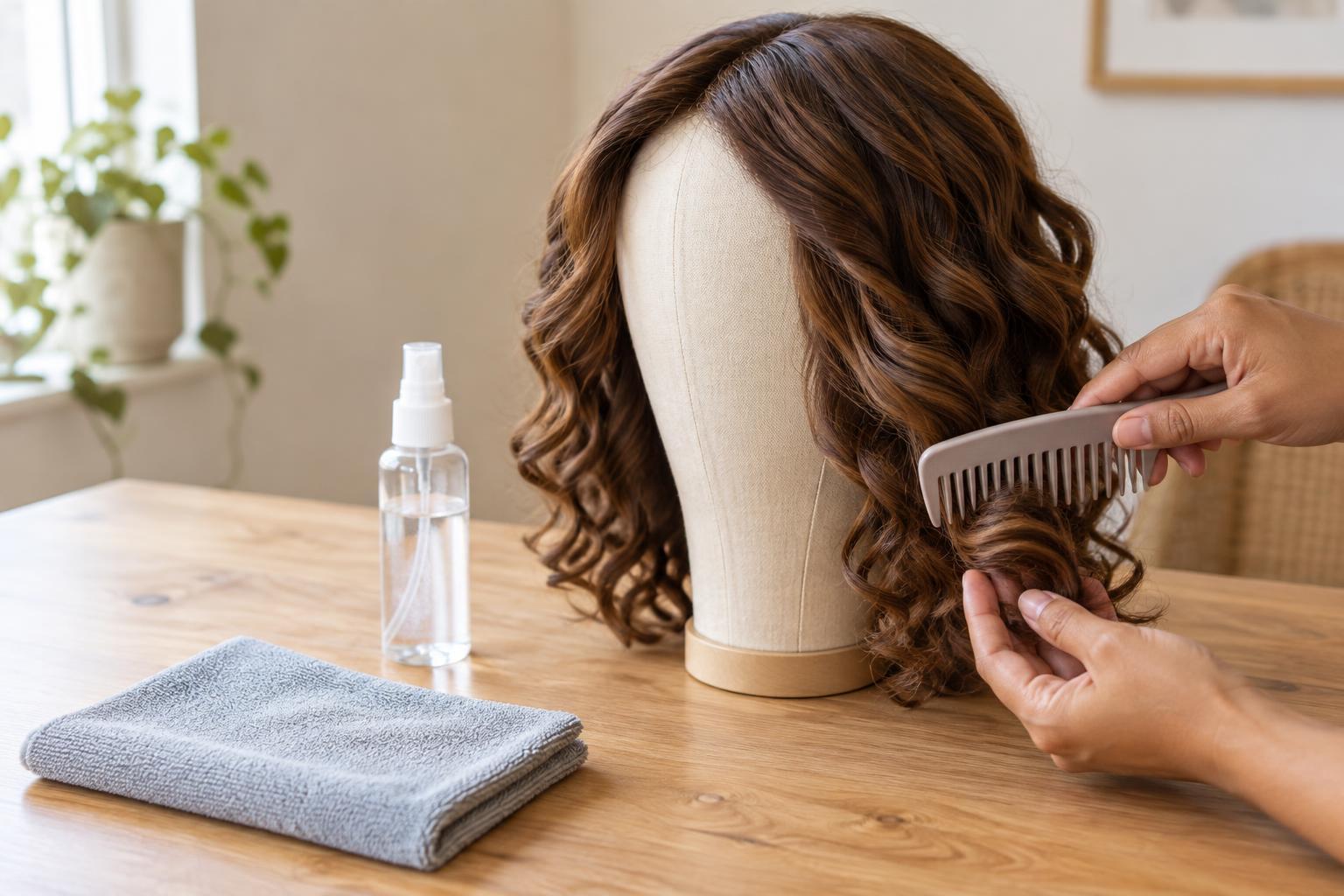
Place the wig on a suitable stand and secure it without pulling on the lace or stretching the cap. Detangle in small sections, starting at the ends and moving upwards. For a curly wig, fingers or a wide-tooth comb are often easier to control than a dense brush, which may separate curl clumps and create a fluffy finish. Support the hair near the cap as you work to avoid tugging at knots or attachments.
Choose a small, simple product routine
A light leave-in conditioner can add slip, while a curl foam or mousse can provide definition with less of the coated feel that some creams and oils leave behind. A light-hold gel is another option if you want more structure. These are starting points rather than rules: the right amount depends on the hair’s length, density and how readily it absorbs product. Begin with less than you think you need; you can add more to areas that still look undefined.
Apply product mainly through the mid-lengths and ends, where curls need shaping. Keep it away from lace, knots, clips and adhesive areas, where buildup can be awkward to remove. Rub a small amount between your palms before smoothing it over a section, then distribute it with your fingers or a wide-tooth comb. If the hair starts to feel sticky or looks flat while damp, stop adding product. More is not always better.
Shape curls while the hair is damp
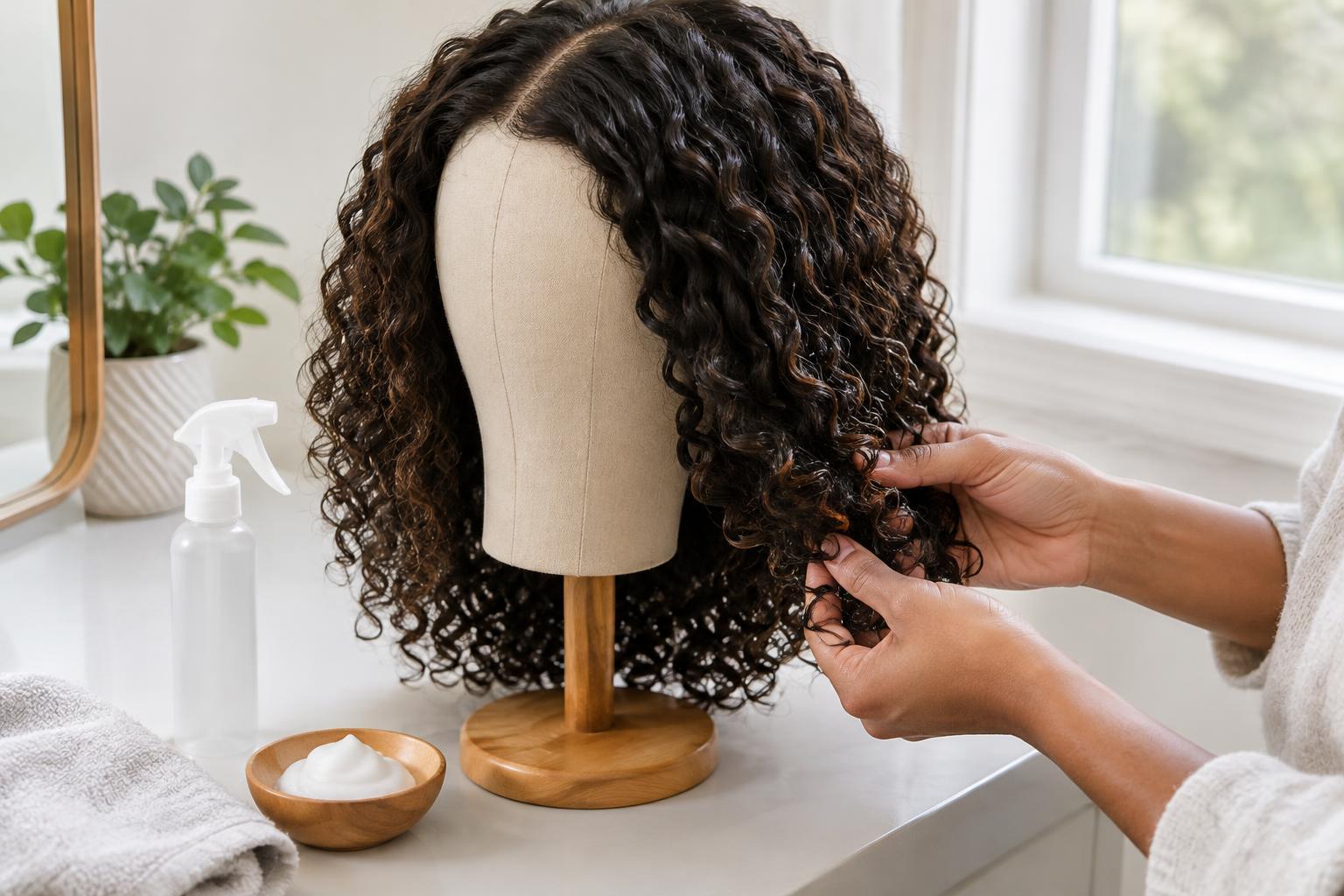
For an existing curl pattern, mist the hair with water until it is evenly damp rather than dripping. Work section by section so you can see where the curls need attention. Smooth on your chosen styler, then scrunch the ends upwards towards the cap. You can gently coil a few uneven pieces around a finger, following their natural direction. Avoid repeatedly raking through sections once the curls have formed; doing so can pull the clumps apart.
If the wig has lost definition between washes, try refreshing only the affected sections instead of wetting and restyling the whole piece. A little water may reactivate product already in the hair. Add a small amount of fresh styler only if the section needs it. This approach can help limit buildup and reduce how often you handle the wig, especially around a delicate hairline.
Dry without disturbing the shape
Letting the wig air-dry on a stand is a straightforward way to preserve freshly shaped curls. Arrange the parting and hairline first, then leave the lengths alone until they are fully dry. Make sure air can circulate through the cap, particularly if it became wet during washing. Avoid putting a damp wig into a closed box or bag.
If you use a diffuser, choose a low airflow and a low heat setting, and keep the dryer moving rather than holding it close to the lace or cap. Heat tolerance varies with construction and any previous colour or chemical processing, so check the wig maker’s care guidance where available. Once the curls are dry, gently scrunch away any firm feel left by mousse or gel. Touching them before they dry can encourage frizz and shorten the life of the style.
Keep definition between styling sessions
To protect the result, lift the wig off by its cap rather than pulling on the styled hair. Store it on a stand or in a way that does not crush the curls, and keep it away from friction where practical. For loose curls, a light finger-comb may be enough before the next wear. Tighter curls usually hold their shape better if you separate only the pieces that need attention.
Wash when the hair feels coated, tangled or harder to refresh, following the care instructions for your wig. Thorough rinsing matters: leftover conditioner or styler can make even a lightweight routine feel heavy. After washing, return to a small amount of product and adjust gradually. The goal is not perfectly identical curls, but a finish that moves naturally and is manageable for the way you wear your wig.