Start by checking what has changed
A pre-curled synthetic wig or hairpiece often needs only a small tidy-up between wears. Curls may look less defined because the fibres have been pressed against a collar, brushed too much or stored while still damp. Before reaching for a product, look at the piece in good light. Are a few ends tangled, has the fringe shifted, or has one section lost its curl? Working on those areas is gentler than restyling the whole piece.
Check the maker’s care guidance if you have it, particularly before adding water or using tools. Synthetic fibres vary, and a piece described as heat-friendly may have different limits from one that is not. If you cannot confirm that heat is permitted, leave heated tools aside. A between-wears refresh is mainly about separating fibres and guiding existing curls back into place, not creating a new curl pattern.
Remove tangles without pulling out the curl
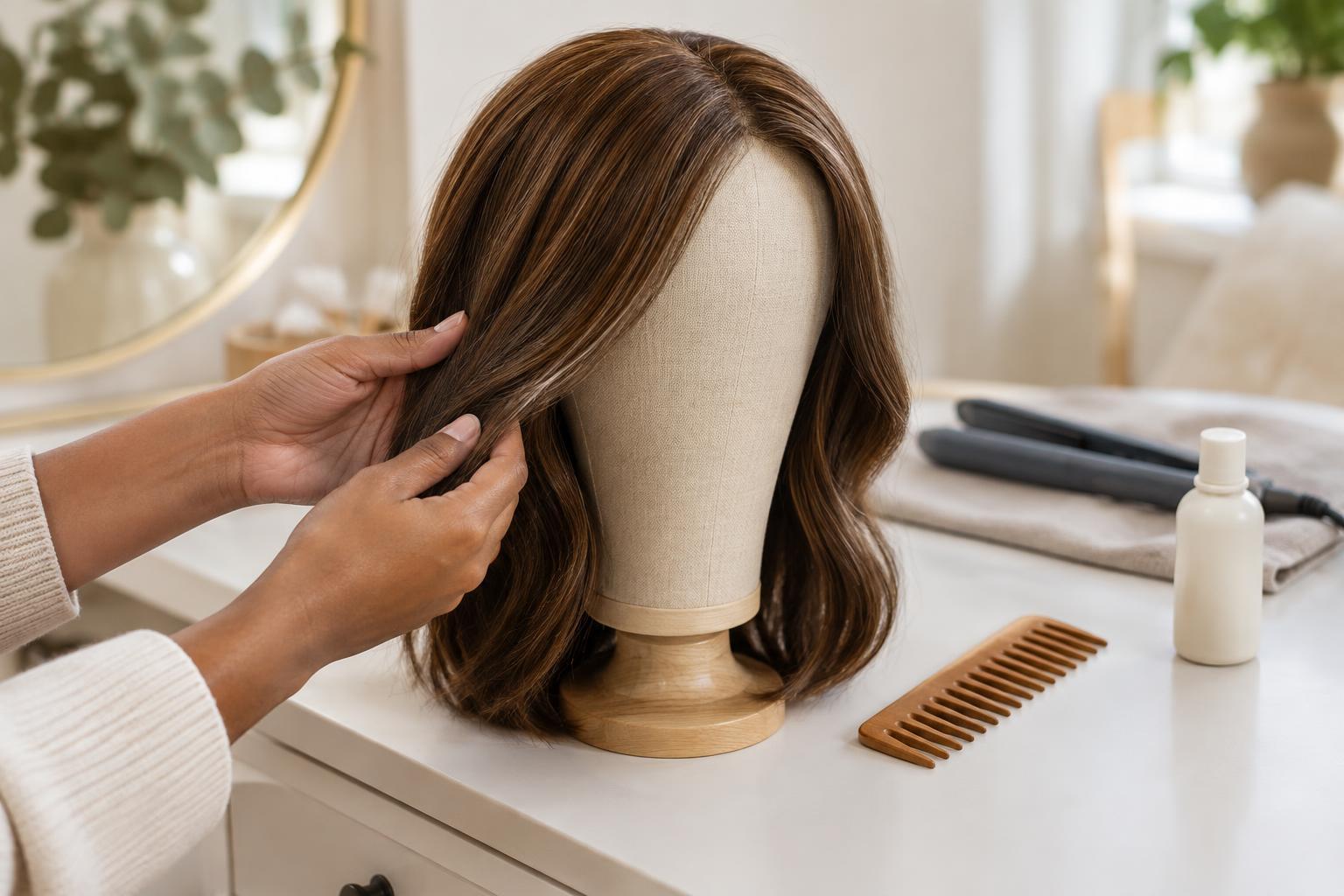
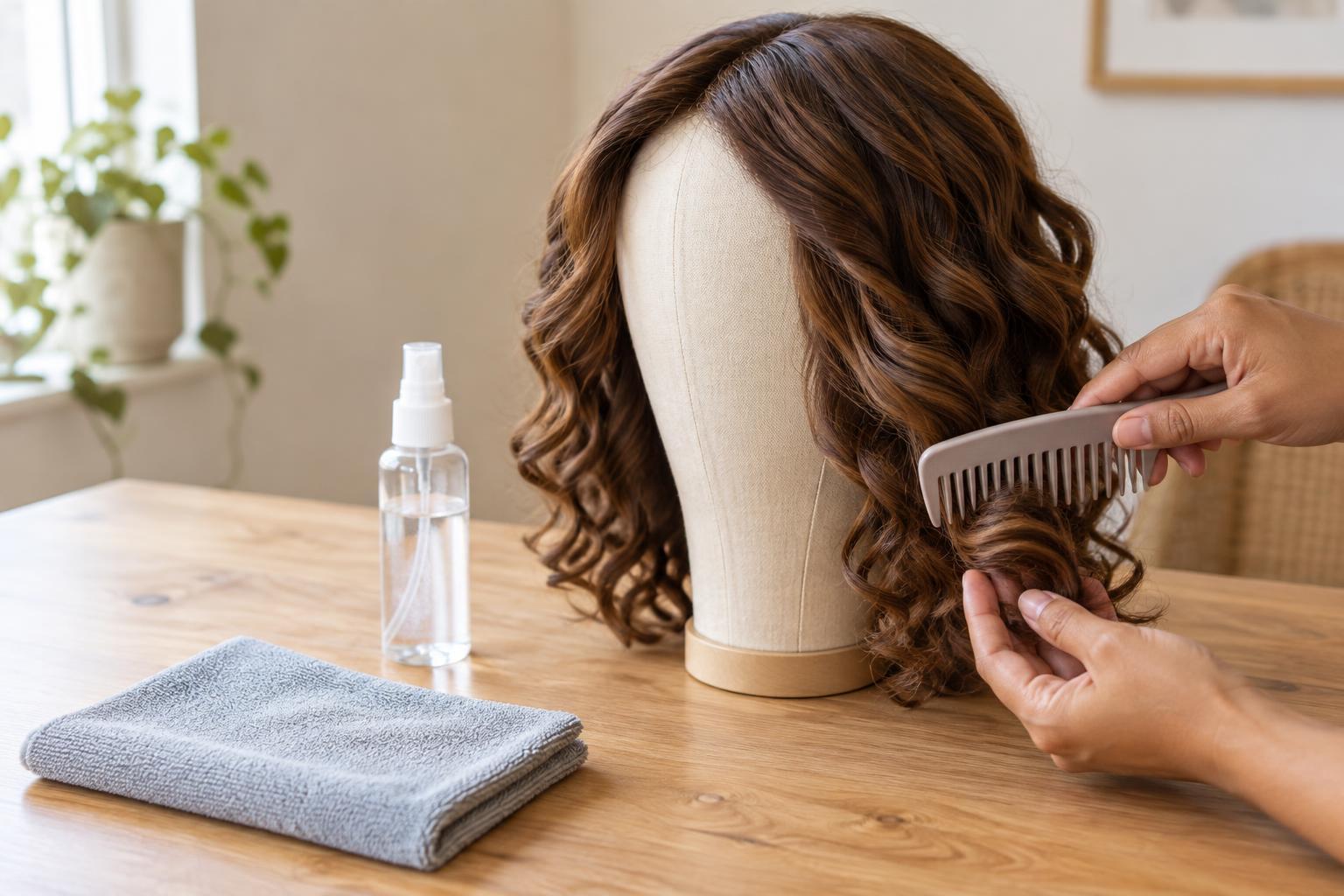
Set the piece on a suitable wig stand or hold the base securely while you work. Start at the ends of a small section and ease apart loose tangles with your fingers. For a tighter knot, hold the hair above it so you do not tug on the cap, weft or attachment point. A wide-tooth comb may help on looser waves, but it can separate defined curls into a fluffy shape. Avoid dragging a brush from roots to ends.
Work in the direction each curl already wants to turn. Once a section is free of tangles, gather it lightly in your hand and let the strands sit together again. For a long piece, move around it section by section rather than repeatedly handling the same area. Stop if fibres seem to snag or stretch; forcing a knot can make a small problem more noticeable.
Use a little moisture to guide the shape
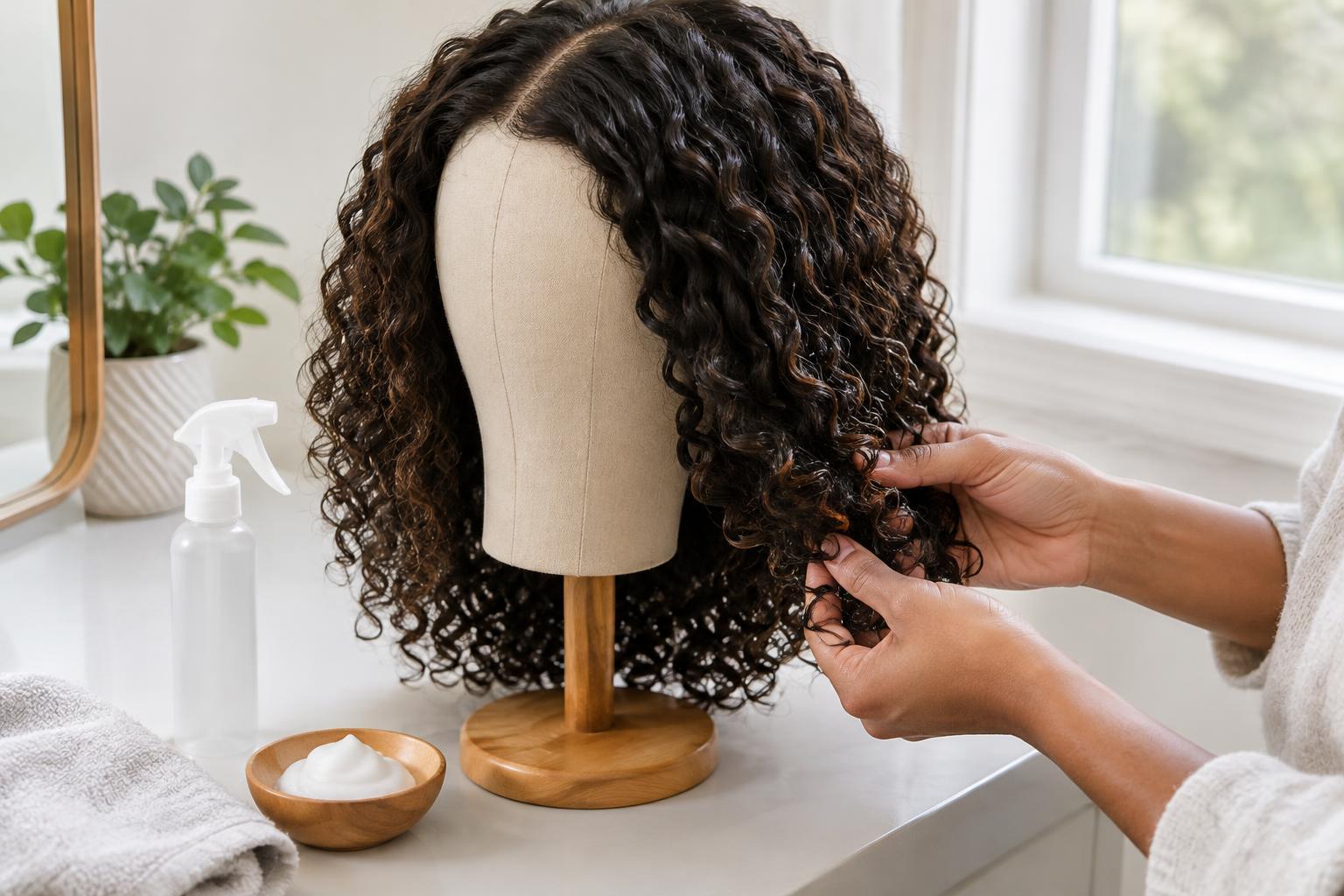
If the care guidance allows light dampening, mist a small area with cool water rather than soaking the piece. The fibres should feel lightly damp, not dripping. Use your fingers to smooth the section and wind it loosely around a finger in the curl’s existing direction. Slip your finger out and let the curl fall naturally. For waves, gently cup and release the hair instead of winding it into a tighter ringlet.
Treat this as a way to neaten the existing shape, not a guaranteed way to reset a flattened curl. Synthetic styles differ in how well they respond to water. Test a less visible section first if you are unsure, and avoid adding several products at once. Heavy sprays or creams can leave a coating, weigh down the style and make the next refresh harder.
Let the style settle before wearing it
Give any damp sections time to air-dry fully before putting the piece on or storing it. Keep it away from direct heat, such as a radiator or hot hairdryer, unless the maker specifically permits a method and you understand its limits. While it dries, leave the curls loose rather than pinning them tightly against the cap. Tight clips or bands can create marks or press the curl into an unintended shape.
Once dry, use your hands to place the curls where you want them. A gentle shake may restore movement, but repeated shaking or combing can undo the definition you have just arranged. Check the shape from the sides and back as well as the front; a curl that looks tidy on a stand may sit differently when worn.
Know when a refresh is not enough
If the piece feels coated, has widespread tangling or no longer holds its usual shape, a spot refresh may not solve it. Follow its care instructions for washing, using products suitable for synthetic hair where recommended, and allow it to dry completely. Washing can remove build-up, but it will not necessarily restore fibres that have been damaged by friction or heat.
Between wears, store the piece clean and dry with the curls supported rather than crushed under other items. A stand, a roomy storage box or the packaging supplied with the piece may work, depending on its length and construction. When dressing, consider whether a rough collar, bag strap or frequent handling is disturbing the same section each time. Reducing that friction can make the next refresh simpler.