Why wig layers deserve a different approach
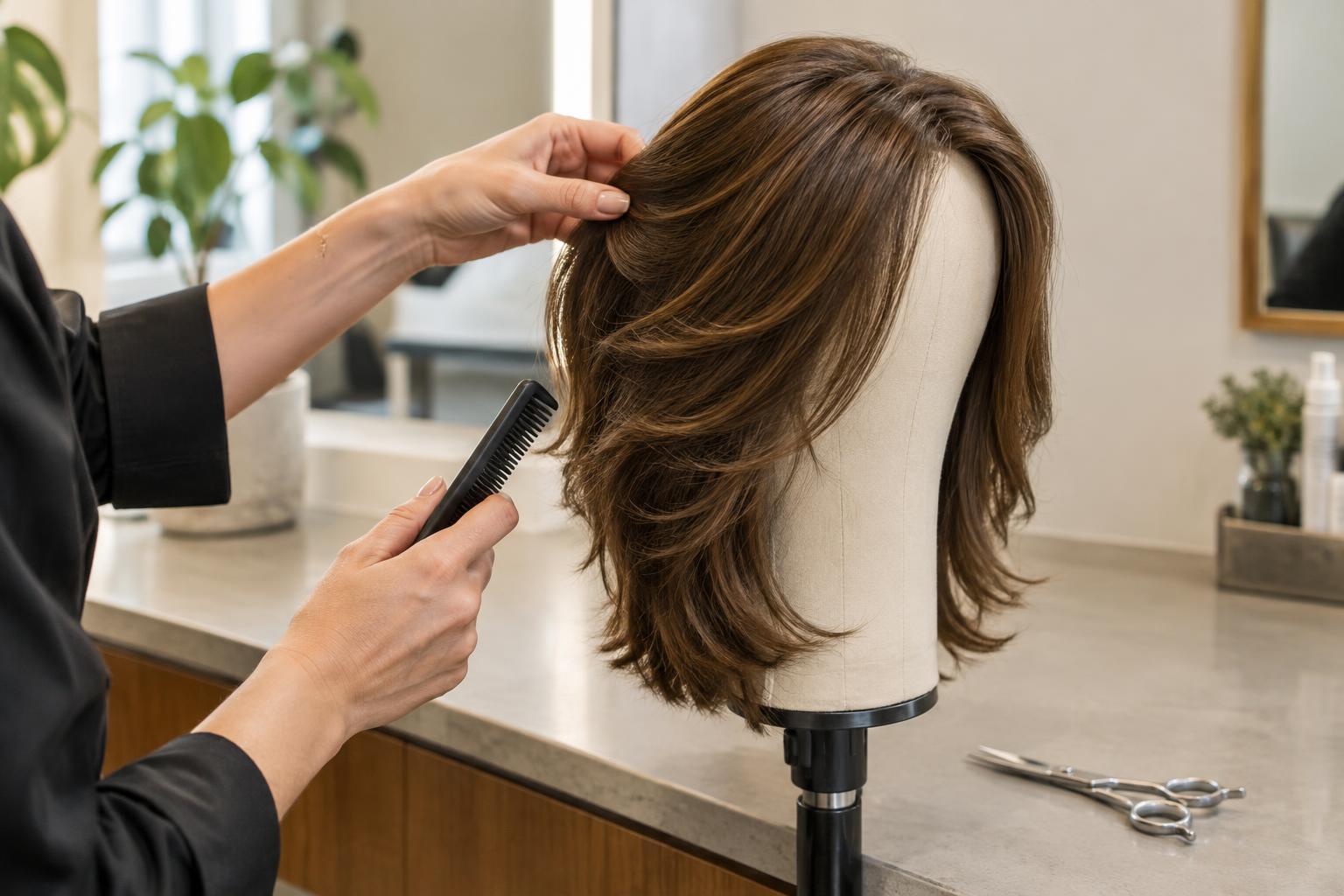
Layers can remove bulk, frame the face and give a wig more movement. Unlike a haircut on growing hair, though, a wig cut has no easy reset. Removing length or density may expose the cap, change how the hair falls, or leave gaps that become noticeable when you move the parting. That does not mean every trim requires an appointment. It means the size and position of the change matter.
Before picking up scissors, wear the wig with the cap adjusted as you normally wear it. Check the hair from the front, sides and back, and move it through its usual parting and styles. A section that looks heavy on a stand may sit differently on your head. If you cannot see clearly where a proposed layer will fall while the wig is being worn, that is a good reason to pause.
Leave major changes and delicate areas to a stylist
A professional is the safer choice if you want to turn a one-length wig into a layered cut, remove substantial volume, or create a fringe. Those changes affect the overall shape and often require checking the balance from several angles. The same applies if you want layers to blend into an existing face-framing cut or need a shorter style that leaves little room for correction.
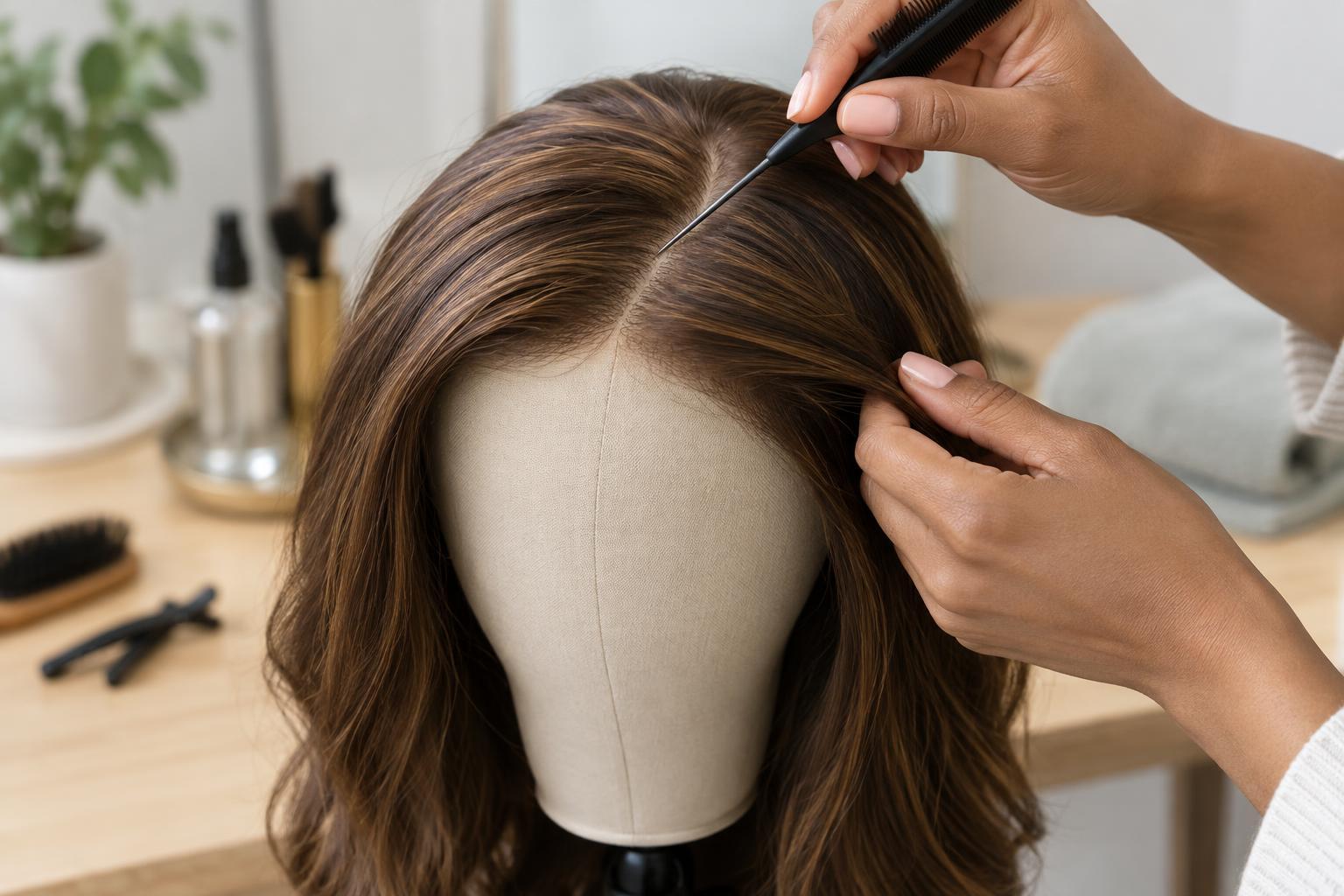
Take particular care around a lace front, monofilament parting or other area designed to resemble a natural scalp. Cutting close to these areas can reveal knots, edges or the underlying construction. A wig with sparse coverage may also depend on its existing length to conceal the cap. An experienced wig stylist can assess how much hair can be removed without compromising coverage.
Curly and wavy wigs bring another complication: the finished length may look different once a curl settles back into shape. If you want distinct layers in a curl pattern, or the wig combines several textures, seek someone comfortable working with that material. Ask how they plan to judge the final shape rather than assuming a straight-hair cutting approach will give the result you want.
Consider the fibre and the wig’s value to you
Human-hair and synthetic wigs do not necessarily respond to styling in the same way. Some synthetic fibres hold their manufactured shape, so a new cut may not fall as expected without further styling. Heat-resistant synthetic fibre has its own care limits; the label or maker’s instructions are a better guide than assumptions based on its appearance. If the cut will need reshaping as well as trimming, look for a stylist who works with your wig’s fibre.
Price is not the only measure of whether a wig is worth protecting. You might rely on one piece for daily wear, have spent time finding a comfortable fit, or simply love a colour that would be hard to replace. If an unsuccessful cut would leave you without a usable option, paying for help or postponing the change may be more sensible than treating the wig as practice material.
What is reasonable to try at home?
A small adjustment to a clearly identified section is less risky than a full layering project, especially if you are comfortable leaving most of the shape untouched. Work only on a wig you can afford to alter, secure it firmly, and cut less than you think you need. Check the result while wearing it before removing any more hair. Avoid cutting deep into the interior to thin it out: that can create short pieces that stick up or expose the cap.
If your aim is simply to make the wig look less flat, try reversible changes first. Adjust the parting if the construction allows it, loosen a style, or use products and tools suitable for the fibre. If these steps do not give you the shape you want, you will still have an uncut wig to take to a stylist.
Prepare for a useful appointment
Look for someone who is willing to discuss wig construction and your specific fibre, not just the haircut you want. Explain how you usually position the wig, whether you change the parting, and which areas feel too heavy. Pictures can help communicate a shape, but ask what is achievable with the hair and density already in the piece. Bring any care information you have.
Wear the wig as you normally would if the appointment allows for cutting on your head, and ask to check the length and balance before more hair is removed. It is reasonable to request a gradual change. The best result is not necessarily the most dramatic one: it is a shape that works with the wig’s construction and still feels comfortable to wear.