What the two texture names mean
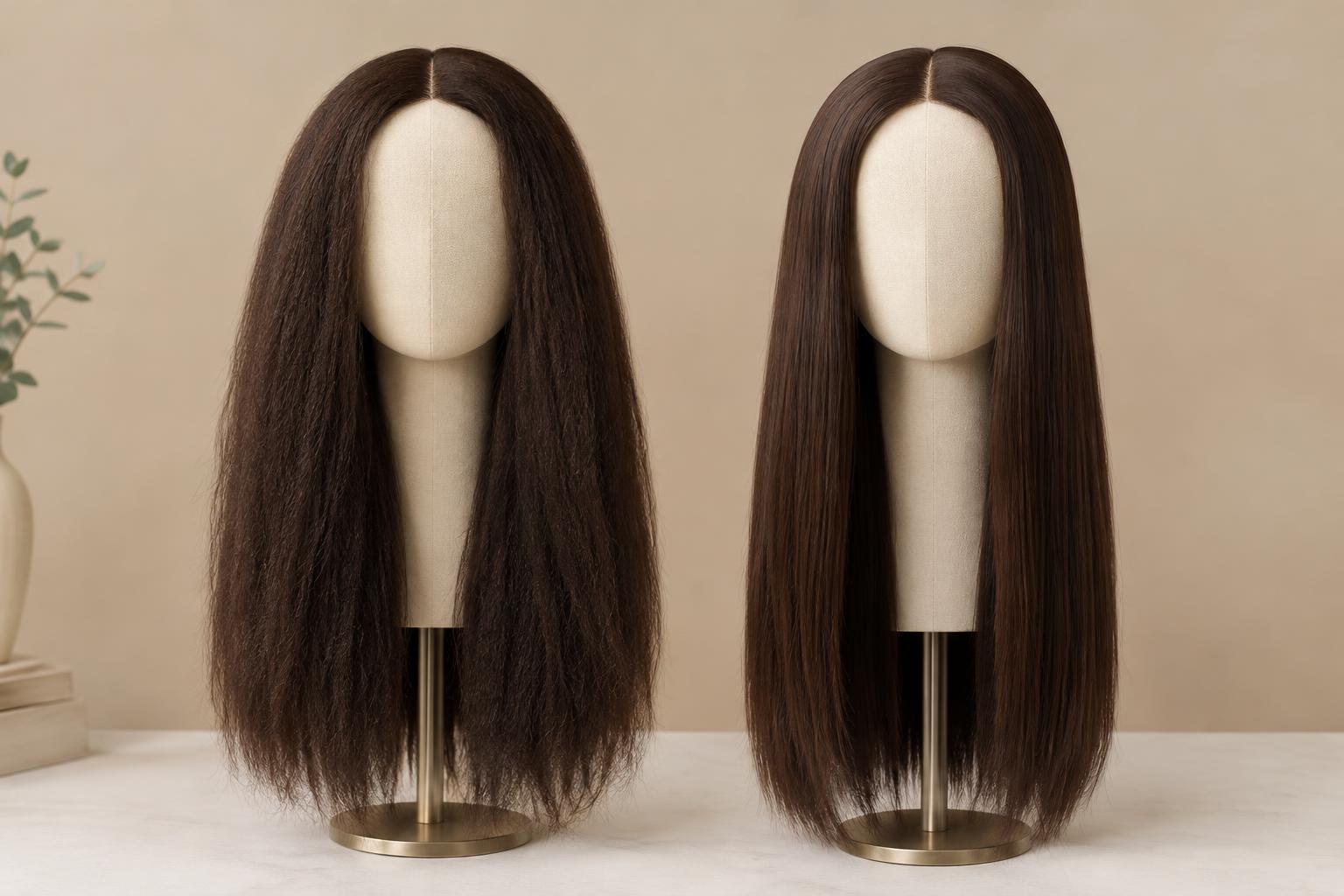
Yaki and silky straight describe the appearance and feel of wig hair, not the way the wig cap is built. A yaki wig has a subtle textured finish intended to resemble hair that has been straightened or relaxed while retaining some of its natural surface texture. Its strands may look slightly coarse or less uniform than those of a silky-straight wig. Yaki can still fall straight; the name does not mean the wig is curly.
Silky-straight hair has a smoother, more uniform surface and often a sleeker appearance. The strands tend to lie close together, which can create a glossy, flowing finish. Neither label tells you whether the wig is made from human hair or synthetic fibre. It also does not establish quality: either texture can be found in wigs at different price points and with different cap constructions.
How to spot the difference
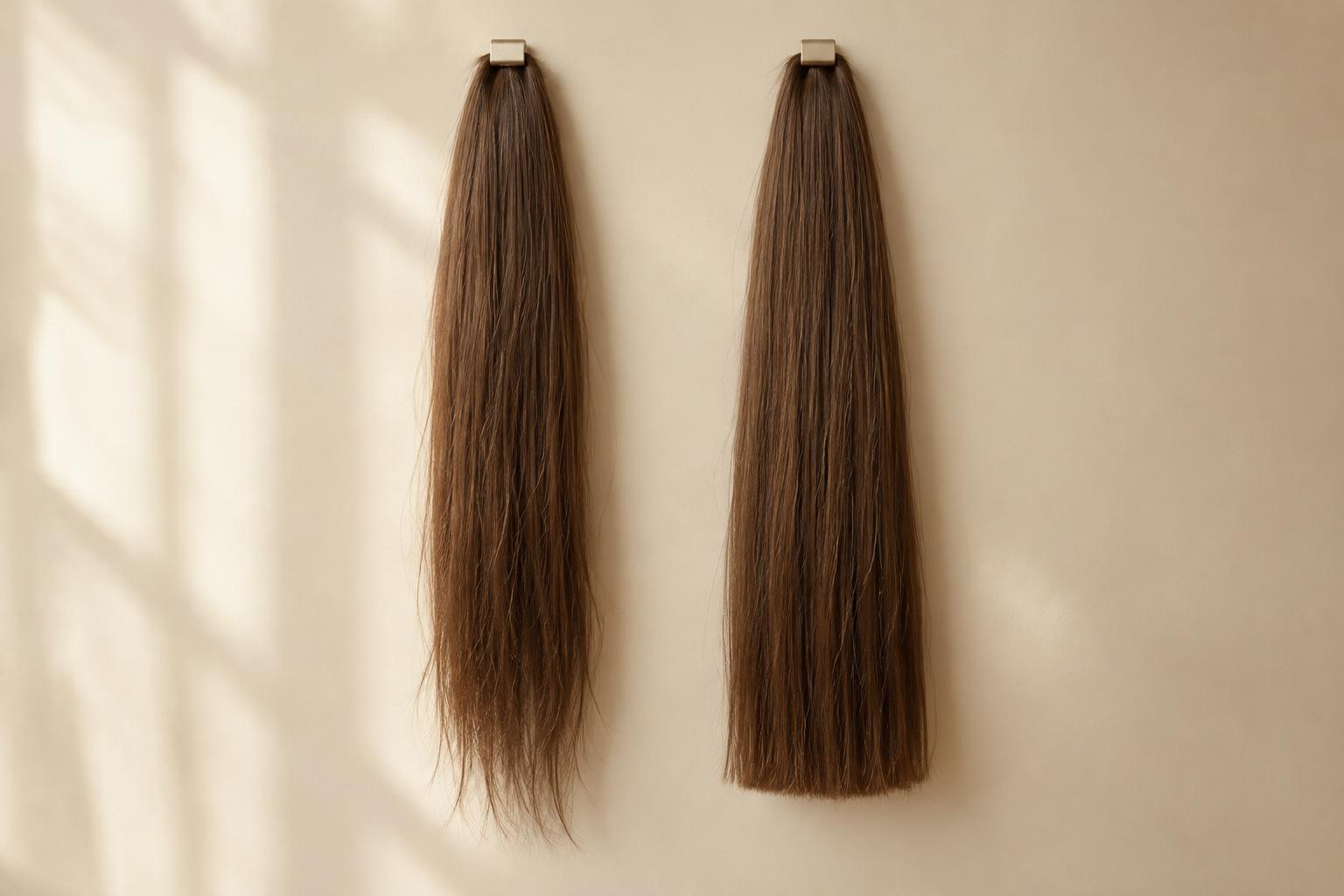
Start by looking at the lengths rather than the styled ends. Yaki hair often has fine-looking irregularities along the strands that make the overall surface appear softly textured, especially where light catches it. Silky-straight hair usually looks smoother from root to tip. A yaki wig may appear fuller at the same stated length and density because the strands do not lie quite as flat. This is a visual tendency, not a reliable way to measure how much hair a wig contains.
Movement offers another clue. When lifted and released, silky-straight hair may separate into smooth, flowing sections, while yaki hair may hold a little more body. Shine can help, but lighting, product and fibre type can change it dramatically. A bright product photograph alone is therefore a poor texture test. If you can examine a wig in person, gently feel a small section as well as looking at it: yaki generally has more surface grip, whereas silky straight feels more slippery.
Why wig labels can be confusing
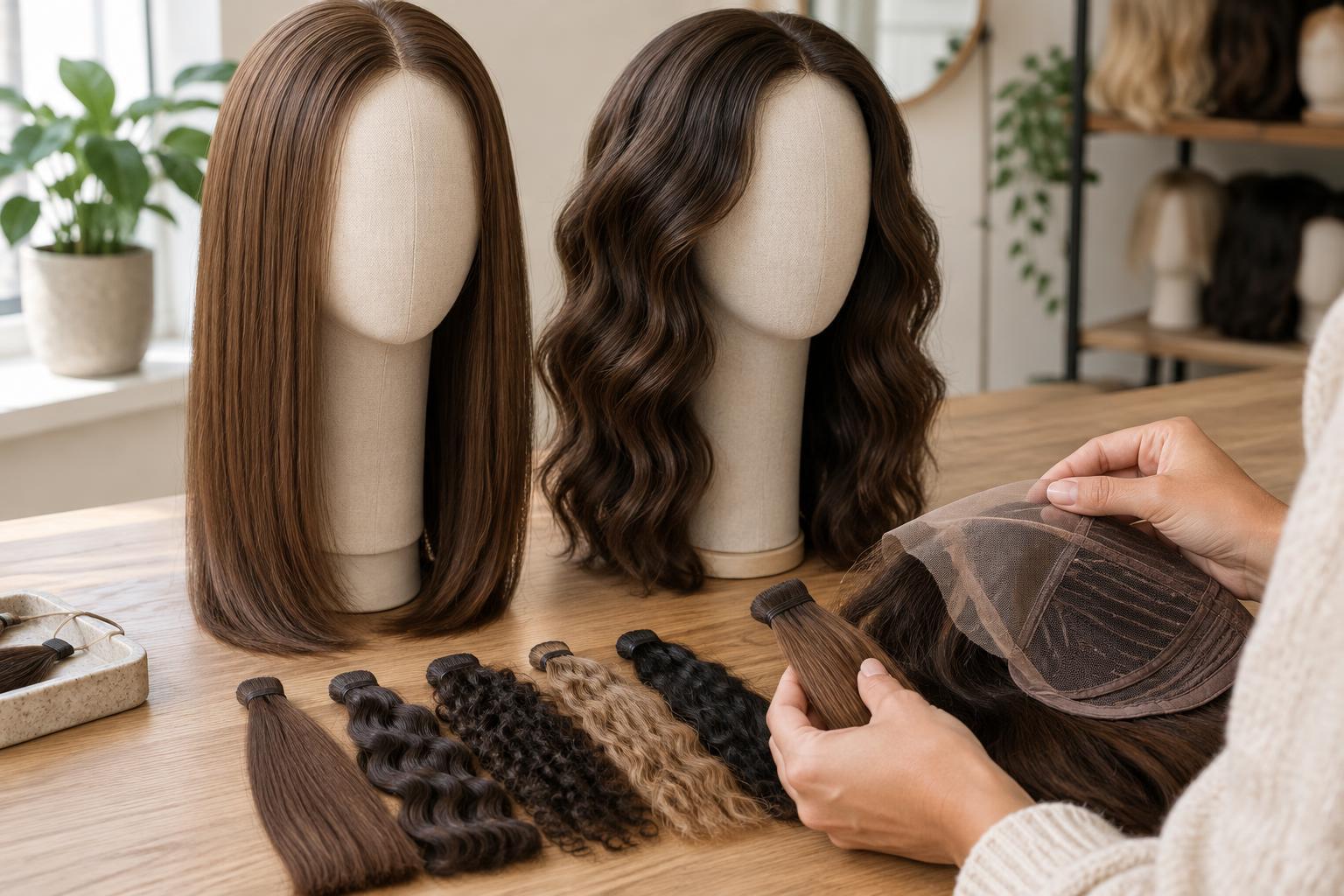
Texture names are not standardised across sellers. One shop’s light yaki may look nearly silky straight, while another’s yaki may have a pronounced, crimp-like texture. You may also see names such as kinky yaki, which usually indicates a more noticeable texture. Treat these descriptions as starting points and use close-up images or samples, where available, to understand the particular product.
Check the listing for separate details about fibre, density and cap construction. A lace-front yaki wig and a full-lace yaki wig can share the same hair texture but differ in how they can be parted or secured. Likewise, a silky-straight synthetic wig and a human-hair version may need different approaches to heat styling. If the images seem inconsistent, ask the seller for an unfiltered close-up in ordinary lighting or clarification of the exact texture name before ordering.
Choosing a texture for your look
Consider how you want the wig to sit alongside any hair you leave out. A yaki texture can be useful when you want the wig and straightened, textured hair to look more alike. Silky straight may suit a deliberately sleek style or a look with very smooth lengths. There is no rule connecting a texture to a particular person or occasion: choose the finish you enjoy and can comfortably maintain.
Think about the whole style rather than texture in isolation. Colour, length, density, parting and the fit of the cap all affect the result. If you want a flatter silhouette, compare photos that show the wig from the side and at the crown. If you want volume, look at how it falls without being brushed out or heavily styled. For an online purchase, confirm the return terms before trying products or altering the wig.
Keeping the finish you chose
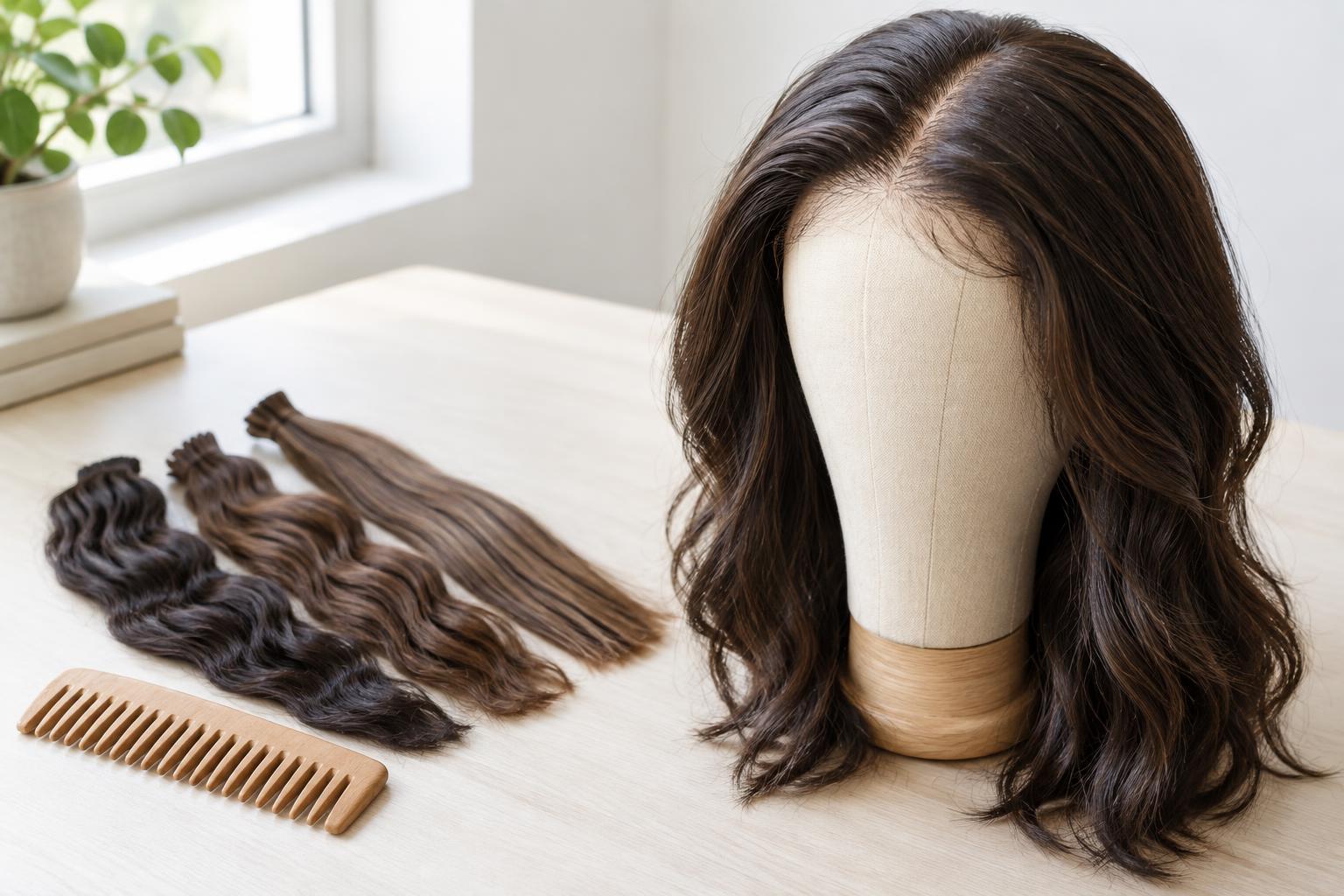
Both textures benefit from gentle detangling, starting at the ends and working upwards, and from storage that keeps the hair from rubbing against other items. Follow the wig’s care instructions for washing and drying. Products that add heavy shine may make a yaki finish look smoother than intended, while rough handling can disturb the neat fall of silky-straight hair.
Before using heat, check the fibre type and the maker’s temperature guidance. Some synthetic wigs cannot tolerate heat styling, and human-hair wigs can also be damaged by excessive heat. If the texture changes after washing, let the wig dry as directed before judging the result. Comparing a clean, dry section in natural-looking light is often the simplest way to see whether it still has the finish you wanted.