Start with how soon you will wear it again
The best storage choice depends less on the wig’s price than on its condition and your routine. A wig worn regularly may be easiest to manage on a stand, where you can see its shape and reach it without unpacking it. A wig you wear occasionally may be better protected in a box or breathable storage bag, especially if its usual spot is dusty or sunny.
Neither option replaces proper preparation. A wig put away damp, tangled or coated with heavy styling product can be harder to manage when you next need it. Before deciding where it goes, check that the hair and cap are clean enough for storage, gently remove obvious tangles, and allow any washed or damp areas to dry fully.
When a wig stand is the useful choice
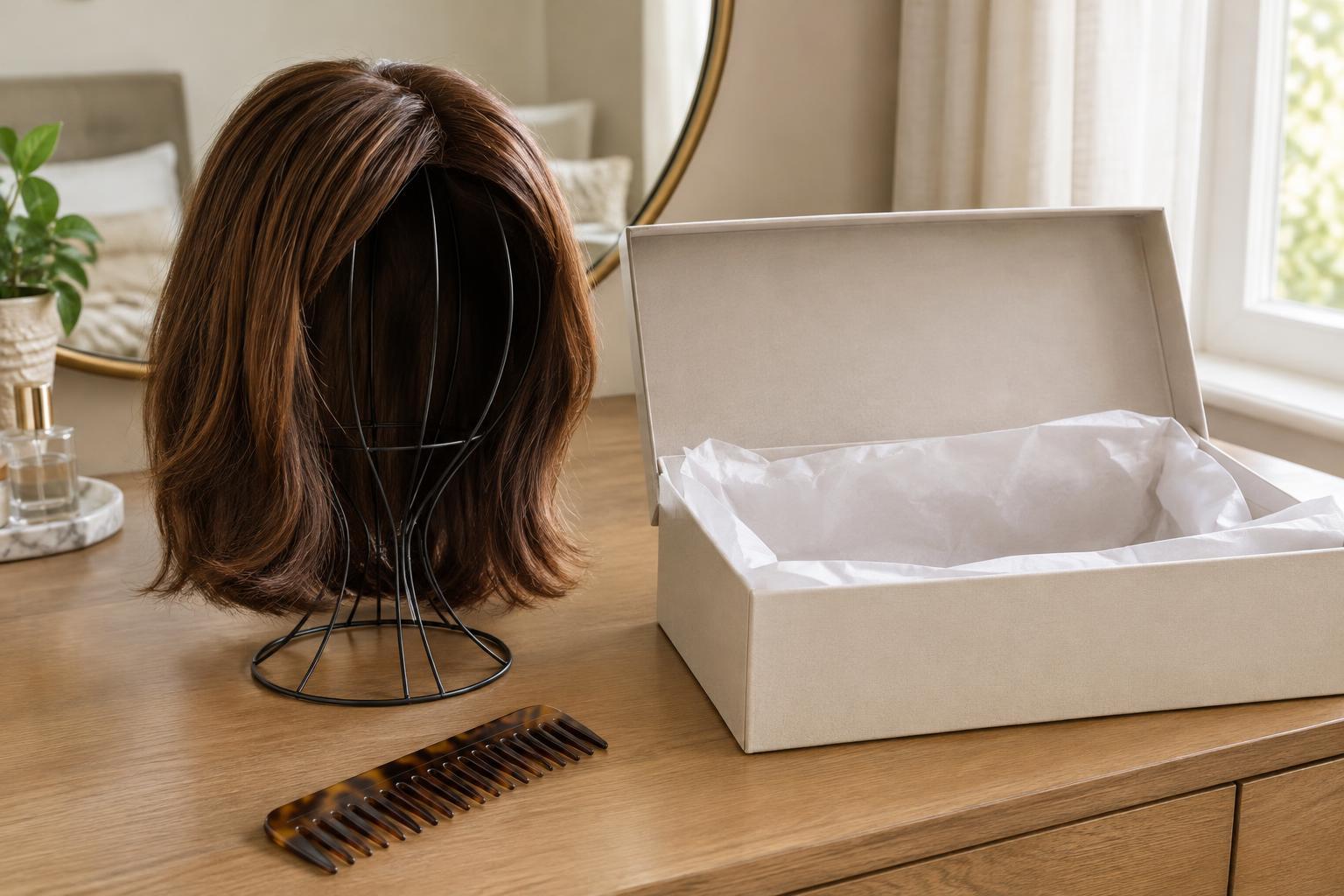
A stand is convenient for a wig you expect to wear again soon. It keeps the cap open to the air and can help the hair fall naturally rather than being compressed. A simple open-frame stand is particularly useful after washing because air can circulate through the cap. Keep the wig away from direct heat while it dries, and follow its care instructions before brushing or styling wet fibres.
A stand also has drawbacks. An uncovered wig can collect dust, catch on nearby objects or be disturbed by pets. Prolonged exposure to strong sunlight may affect the appearance of some fibres or colour. Choose a clean, dry place away from windows, radiators and busy walkways. If the stand has a narrow or rough top, check that it is not pressing into a lace front, parting area or other delicate section.
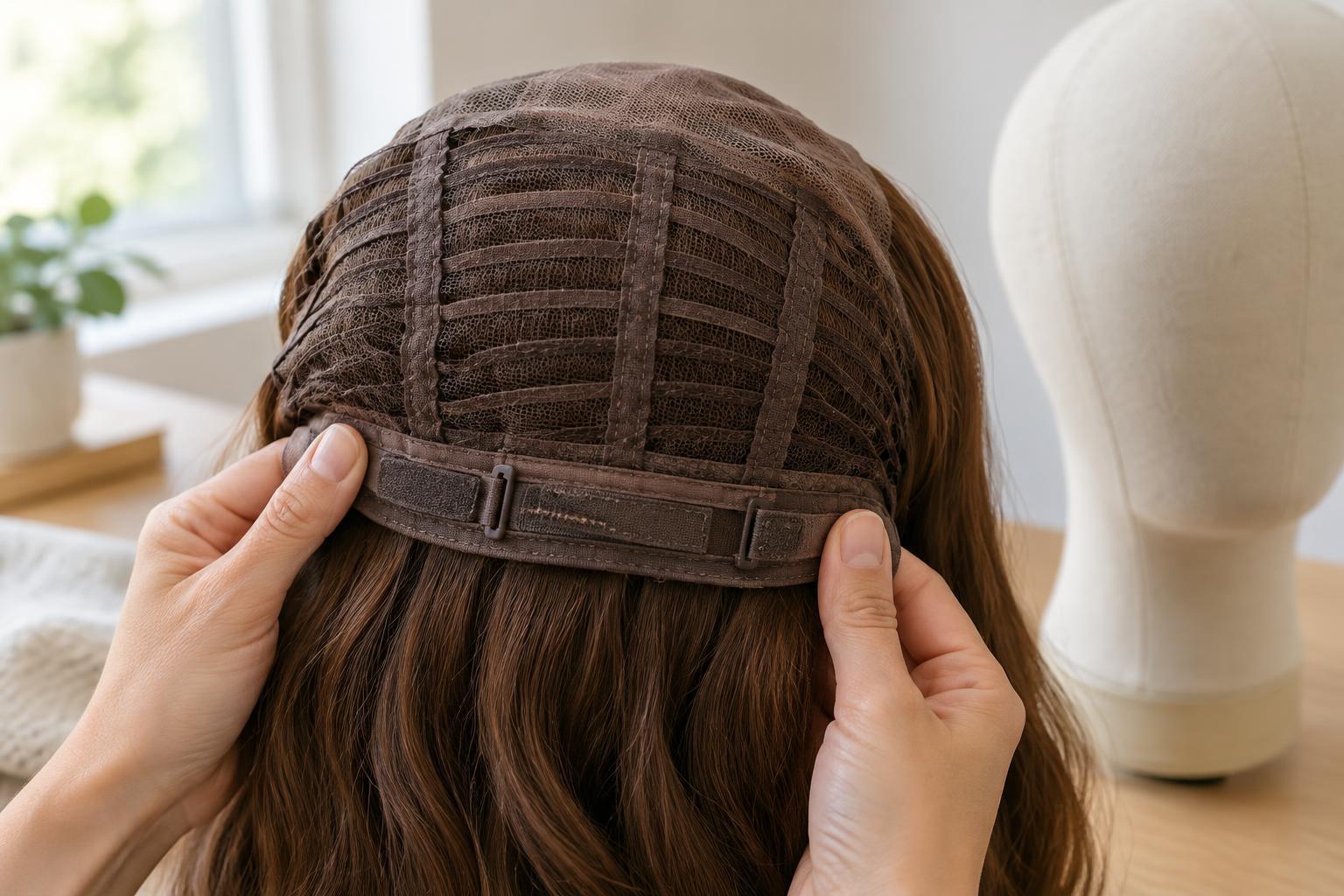
A stand should support the wig without pulling its cap tight. You do not need to force a small wig over a large display head simply to keep its shape. If you use a solid mannequin head, make sure the wig is dry before leaving it there for an extended period, since a less open shape may limit airflow through the cap.
When a box offers better protection
A box is often the tidier choice for longer gaps between wears. It shields the wig from dust and accidental handling and is easier to place on a shelf. Use a box large enough that the wig is not tightly folded or crushed by its lid. A clean wig box can work well, but a sturdy alternative is fine if its interior will not snag the hair or lace.
Arrange the wig loosely so the cap is not twisted. For longer hair, gently gather the lengths to reduce tangling rather than winding them tightly around the cap. A hairnet can help contain the style, provided it does not tug at curls, an elaborate set or a fragile front. If the wig came with a soft insert that supports its shape without stretching it, you may find that useful too.
Boxing up a damp wig is not a shortcut for keeping it neat. Let both the fibres and the inside of the cap dry first. Store the closed box somewhere dry and reasonably temperate, rather than in a humid bathroom or next to a heat source. Label the outside if you own several wigs; that saves repeated unpacking and handling.
Match the method to the wig and its style
Hair length and styling matter. A short, smooth wig may sit comfortably in a spacious box with little preparation. A long wig is more likely to tangle if its lengths are left loose against the sides, while a carefully arranged curl pattern may be flattened by a tight net or small container. For either, aim for gentle support and enough room to avoid sharp bends.
Human-hair and synthetic wigs both benefit from clean, dry storage, though their styling needs differ. Do not assume that a product, brush or heat tool suitable for one fibre is suitable for the other. Check the wig’s care guidance before refreshing its style after storage. Pay particular attention to lace fronts, hand-tied areas and attached clips: these parts can snag if you pull the wig quickly off a stand or out of a net.
If you travel with a wig, protection from crushing may matter more than keeping it on display. A roomy, secure container can help, but pack the wig only when dry. Once you arrive, unpack it gently and give the style time to settle before deciding whether it needs adjustment.
A simple routine for either option
After each wear, remove the wig carefully and check the cap, hairline and lengths. Deal with minor tangles using a method appropriate for the fibre, working gently rather than pulling through resistance. If the wig needs washing, allow enough drying time before it goes into a box. If it is staying on a stand, place it where it can remain undisturbed.
Choose the stand for airflow and everyday access; choose the box for protection and less frequent use. You can also use both: let a washed wig dry on an open stand, then move it to a box once fully dry. The goal is not a perfect storage system, but one that leaves the wig dry, supported and easy to wear next time.