Start with the area you want to cover
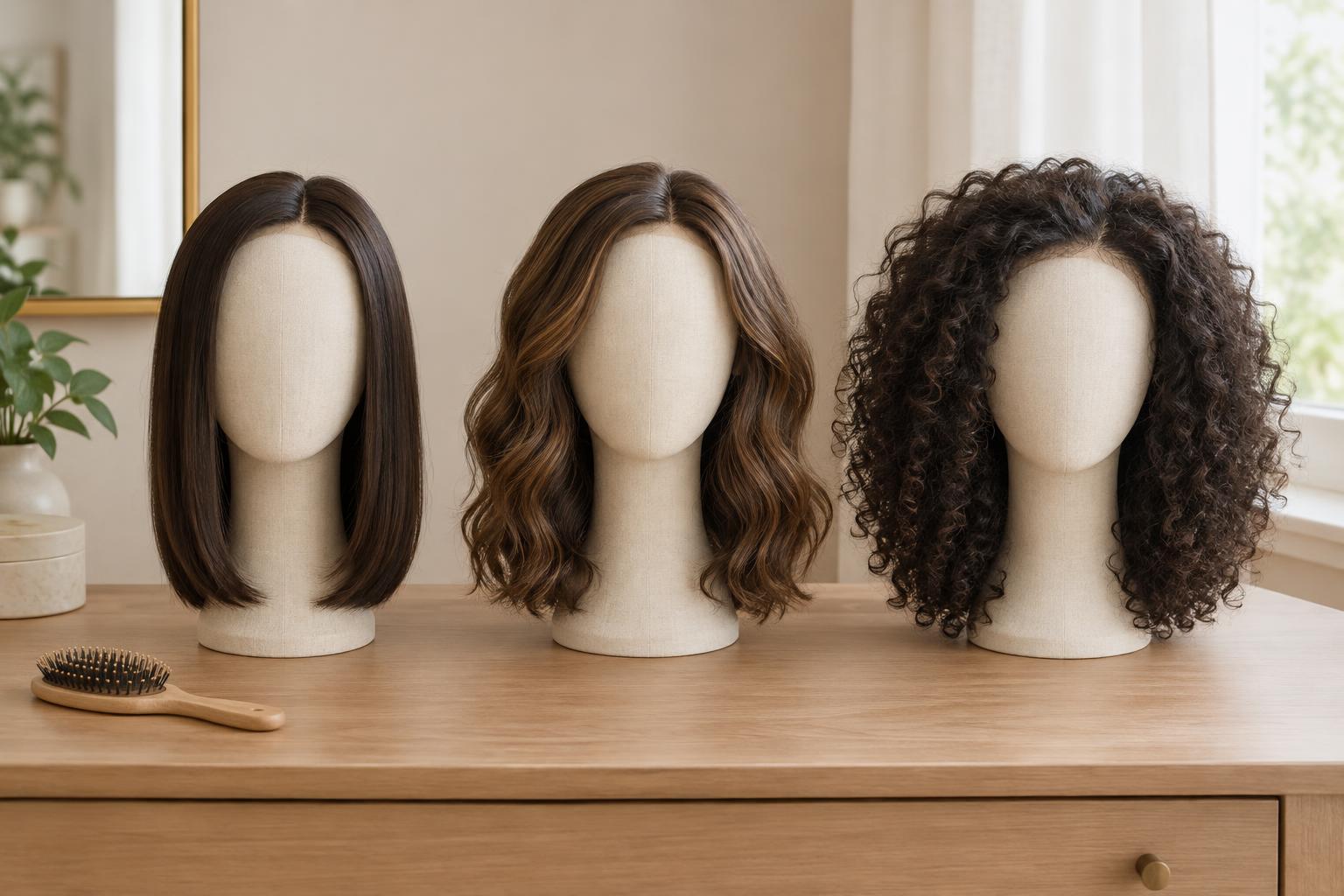
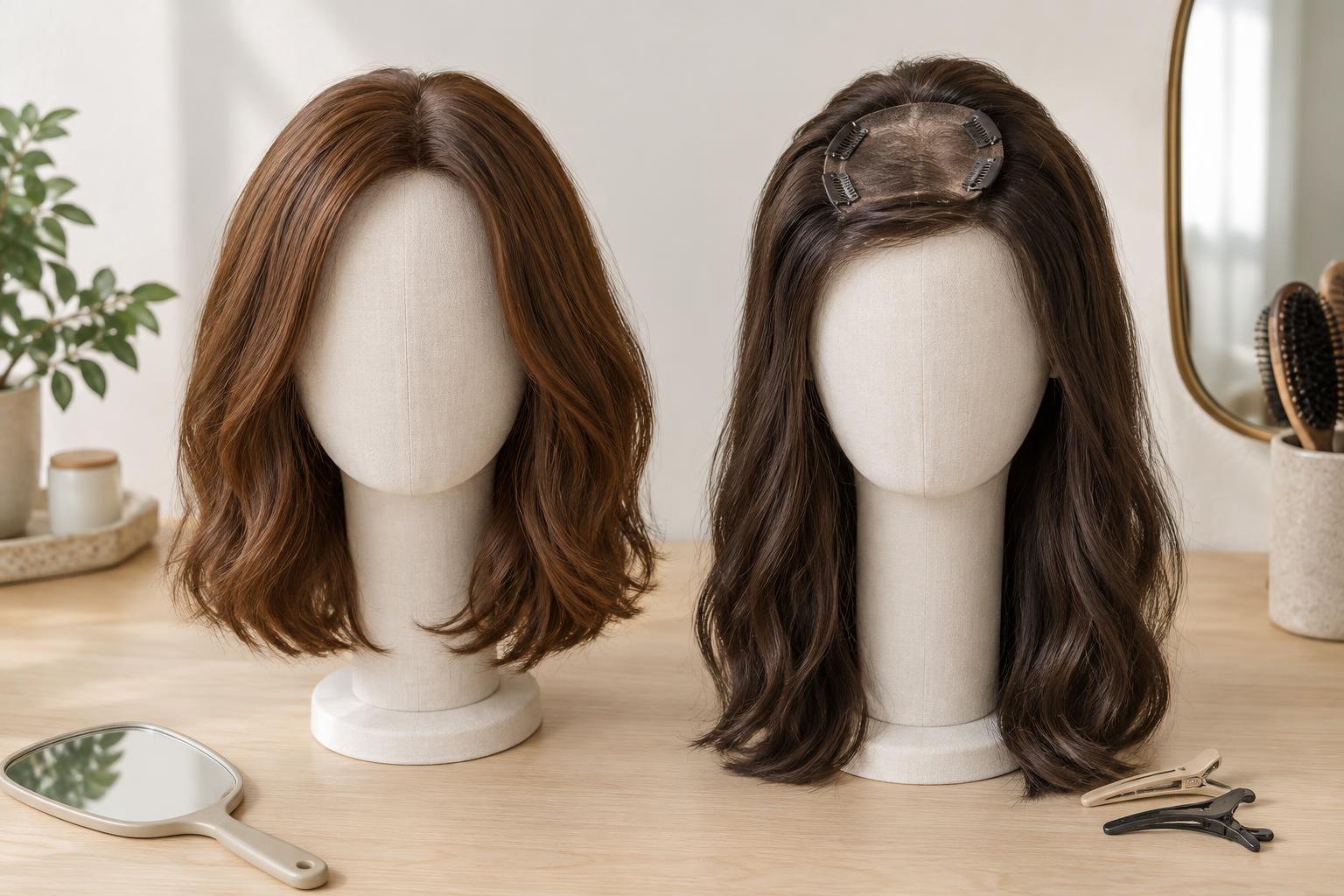
The clearest difference between a wig and a topper is coverage. A wig covers the whole head and gives you a complete hairstyle, including the sides and back. A topper covers a smaller area, usually on the crown or along the parting, and relies on your own hair to complete the look. Neither is automatically the more natural-looking choice: the result depends on fit, placement, colour, texture and how comfortably you wear it.
Before shopping, look at the area where you want added hair. Is it limited to a parting or crown, or would you also like coverage at the hairline, temples, sides or nape? Think about the hairstyle you want, too. If you want to change your overall length, colour or texture without blending a piece into your own hair, a wig may be simpler. If you like your existing length and want extra fullness in one area, a topper may be enough.
When a topper makes sense
Toppers come in different base sizes. A small base may add fullness around a parting, while a larger one can cover more of the top of the head. The base needs to extend beyond the area you want to conceal so that its edges sit securely and can be disguised. Product descriptions may give base dimensions as well as hair length; check both, because long hair on a small base does not provide wider scalp coverage.
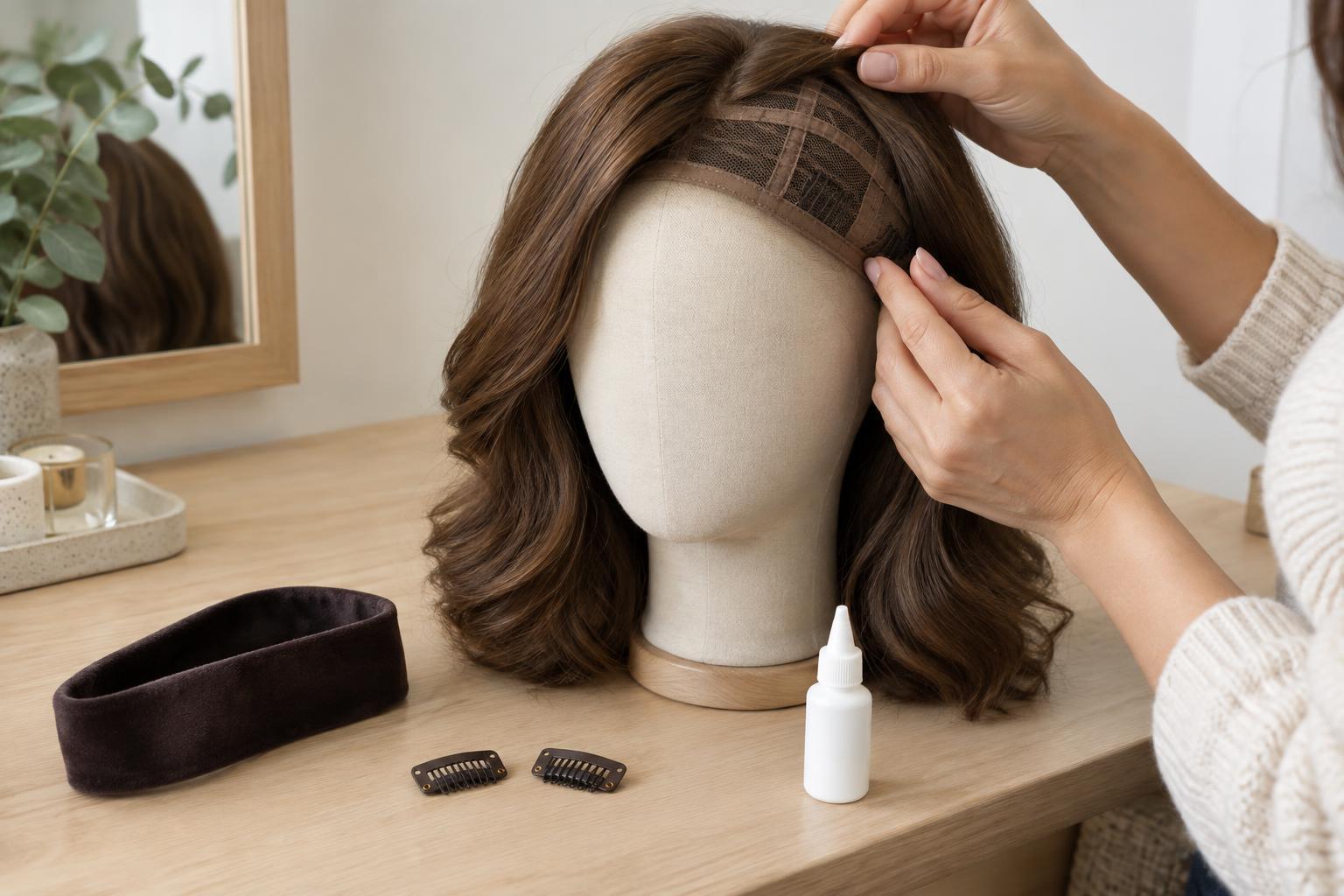
Blending is the main consideration. A topper’s hair meets your own at the sides and back, so compare colour in more than one light and consider texture, density and length. A close colour match need not be perfectly uniform, but a strong difference may be harder to hide if you wear your hair loose. You will also need enough suitable hair for the attachment method. Many toppers use pressure-sensitive clips, which may feel uncomfortable if placed on fragile or sensitive areas. Other attachment options exist, but they should be chosen with care for your hair and scalp.
When a wig may be easier
A wig can be useful when you want consistent coverage across the head or prefer not to match a hairpiece to your own hair. Because it creates the whole hairstyle, you can choose a different cut or colour without planning where your hair will show. It may also suit someone who wants to put on one piece rather than style and blend a topper each morning.
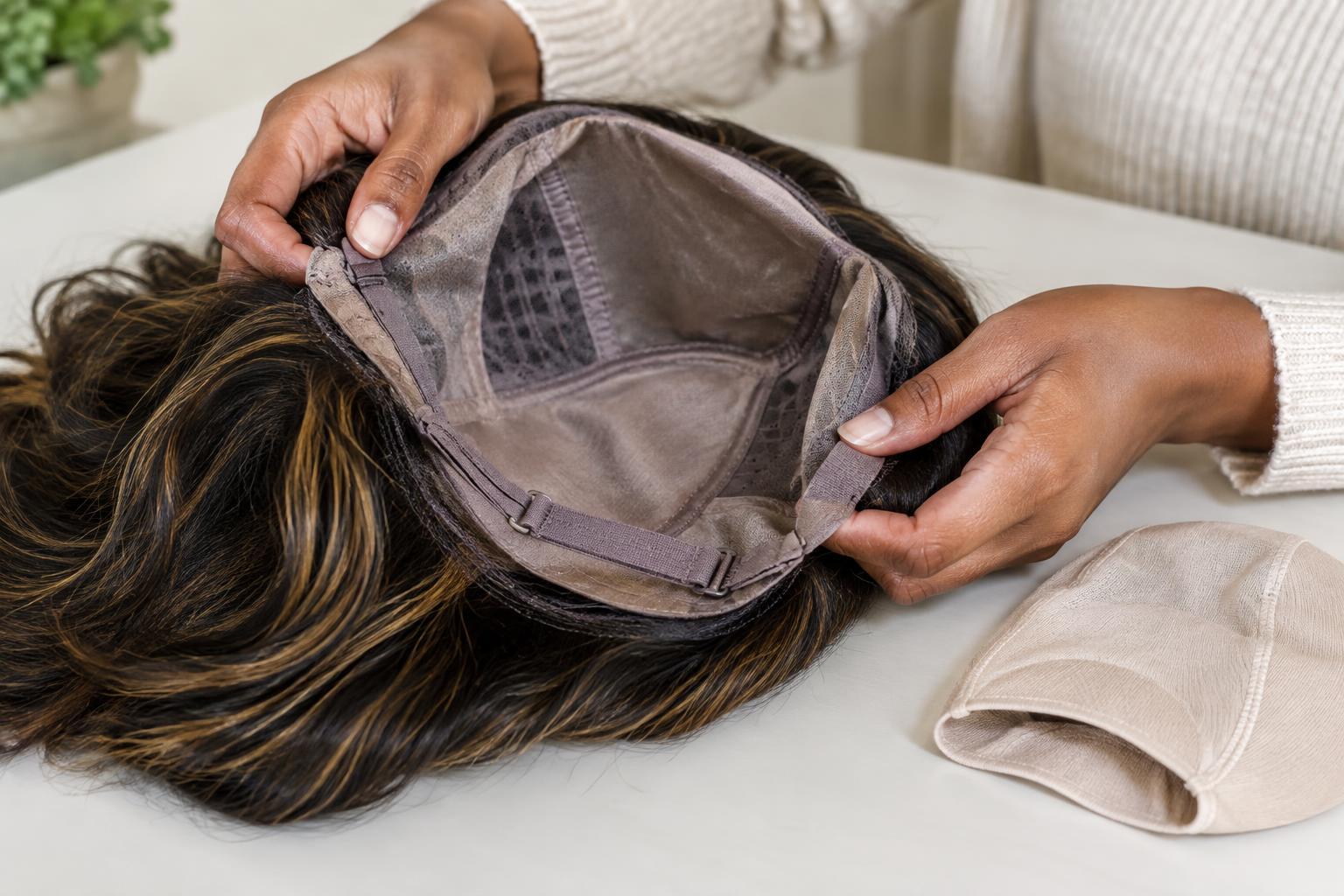
Full coverage brings its own decisions. The cap has to feel secure without being painfully tight, and the hairline, parting and overall volume should suit how you plan to style it. Caps vary in construction, so one wig may feel quite different from another in weight, ventilation and where it can be parted. If you intend to tuck hair behind your ears or wear it up, check how the edges look in those positions. A wig is not necessarily less work than a topper; it changes which tasks you do.
Check fit as carefully as appearance
For a topper, measure the area you want covered and compare it with the stated base dimensions. Allow some space beyond that area for the edge and attachments, rather than choosing a base that only just reaches it. Notice where the clips would sit and whether you can place the piece flat without pulling on your hair. A topper that lifts at the edge or needs constant repositioning may not be the right size or shape.
For a wig, follow the seller’s measuring guide, which commonly asks for head circumference and may include front-to-back and ear-to-ear measurements. Do not assume that an adjustable strap will make any cap size suitable. When trying a piece, move your head, look down and sit as you normally would. It should stay in place and feel manageable, not merely look good while you stand still. If your scalp is sensitive or you have little hair beneath a cap, pay particular attention to seams, clips and other points of contact.
Choose for the routine you actually have
Picture an ordinary day rather than a special occasion. How much time do you want to spend positioning a part, blending the sides or styling the ends? Will you usually wear the same colour and texture as your own hair? A topper can offer a lighter-feeling, targeted option, but blending may take practice. A wig offers a complete look, though you will need somewhere to store it and a care routine suited to its fibres and construction.
If possible, compare pieces while wearing the clothes and hairstyle you use most often, and view them from the side and back as well as the front. Read return terms before buying, especially if you are unsure about base size, cap fit or colour. The most useful choice is the one that covers the area you want, feels comfortable for your intended wear time and fits the amount of styling you are happy to do.