What ear tabs do—and what they do not do
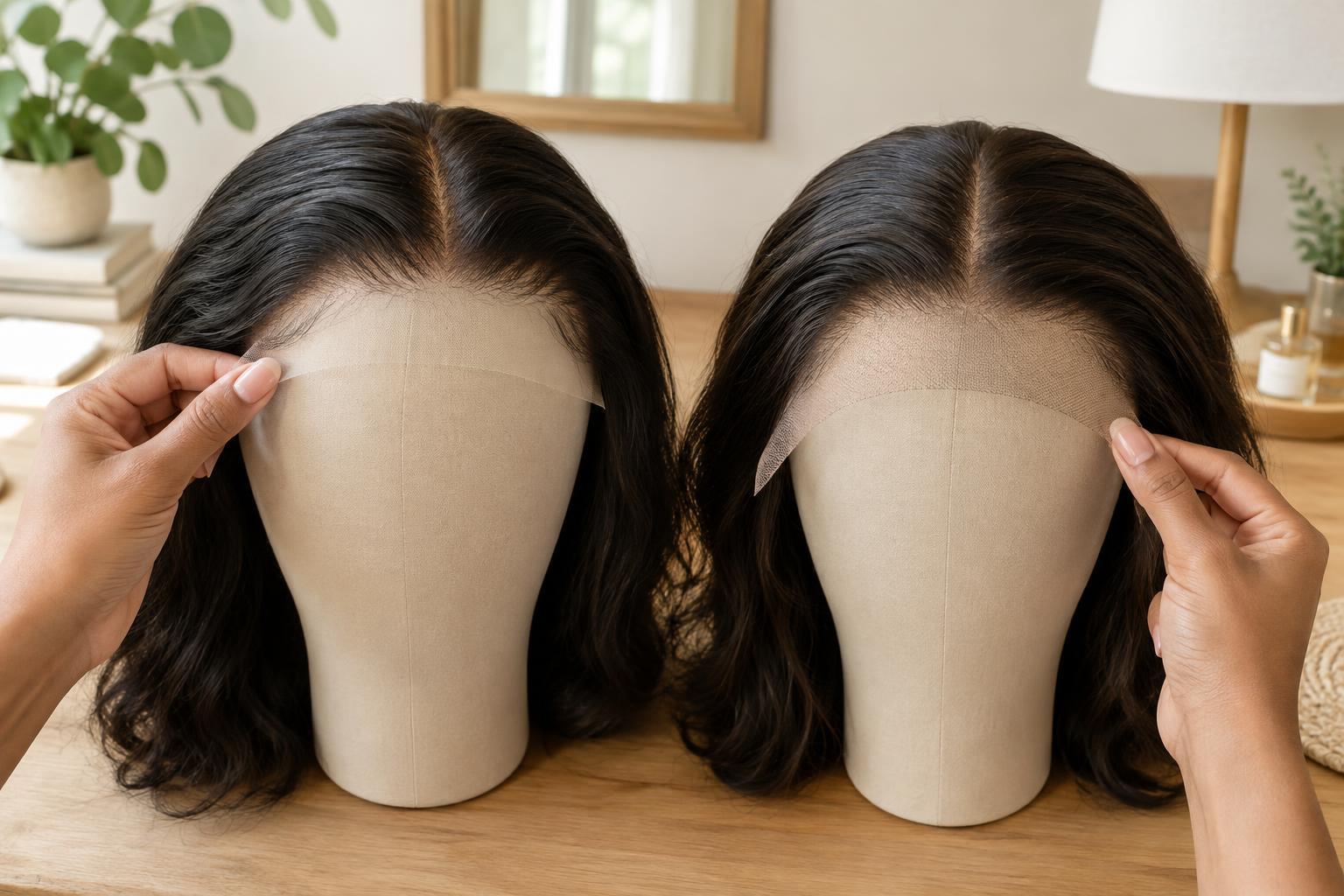
Ear tabs are the parts of a wig cap that sit near the temples, just in front of the ears. They help you position the wig evenly: when both tabs sit at a similar height, the cap is less likely to be twisted. Depending on the construction, a tab may feel flexible or contain a firmer piece that can be gently shaped to lie closer to the head.
A well-placed ear tab is not the same as full side coverage. The tab may sit correctly while the wig’s hair falls above an area you hoped to conceal. Conversely, hair at the sides may cover more than expected even when the cap itself ends higher. When choosing a wig, consider both where the cap sits and where the styled hair falls.
Decide what you want covered at the sides
Before comparing styles, identify the area that matters to you. You may want to cover the temples, blend a wig with your own hair near the ears, or keep the ears visible. None of these preferences is more correct than another. They simply call for different side shapes, hairlines and styling choices.
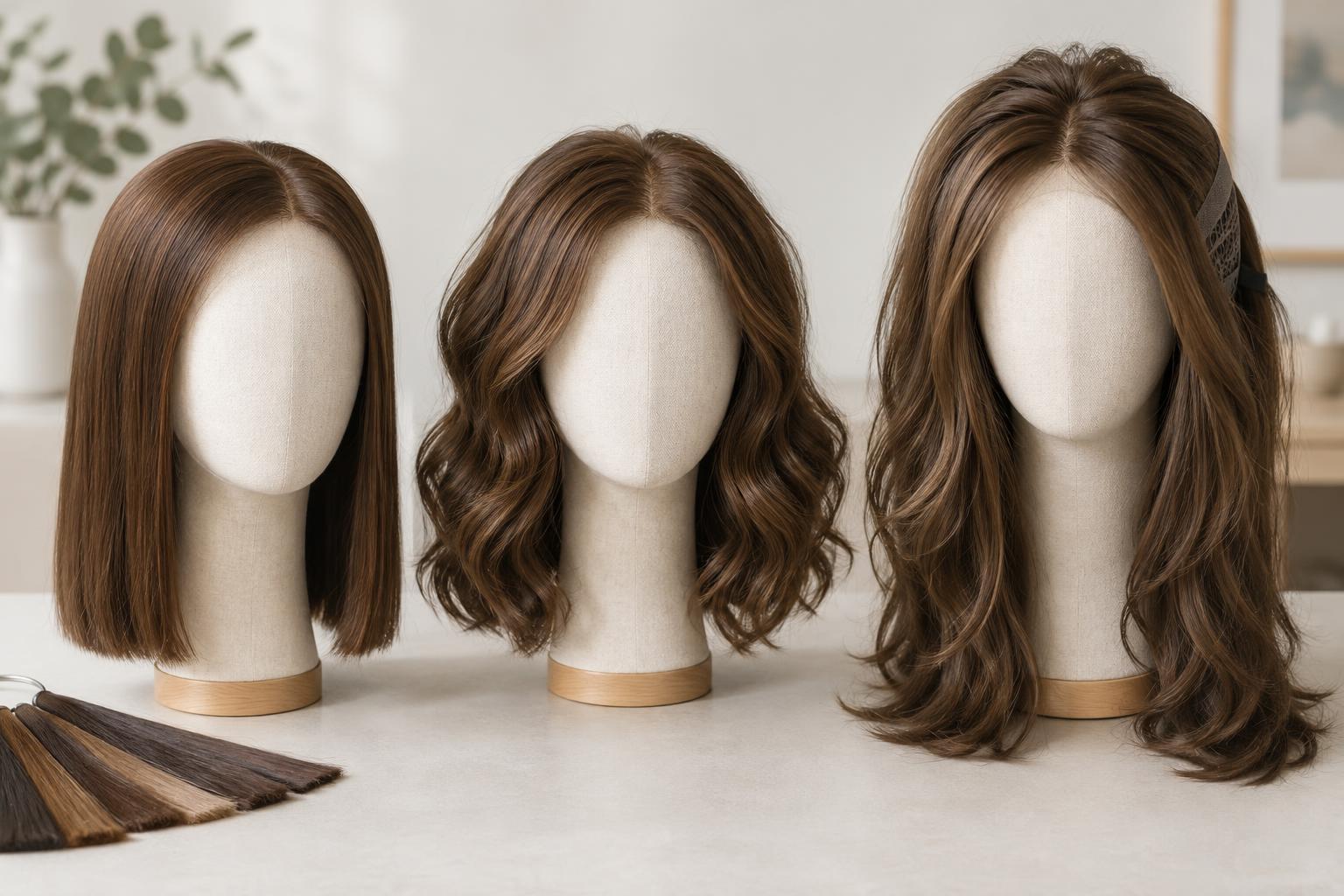
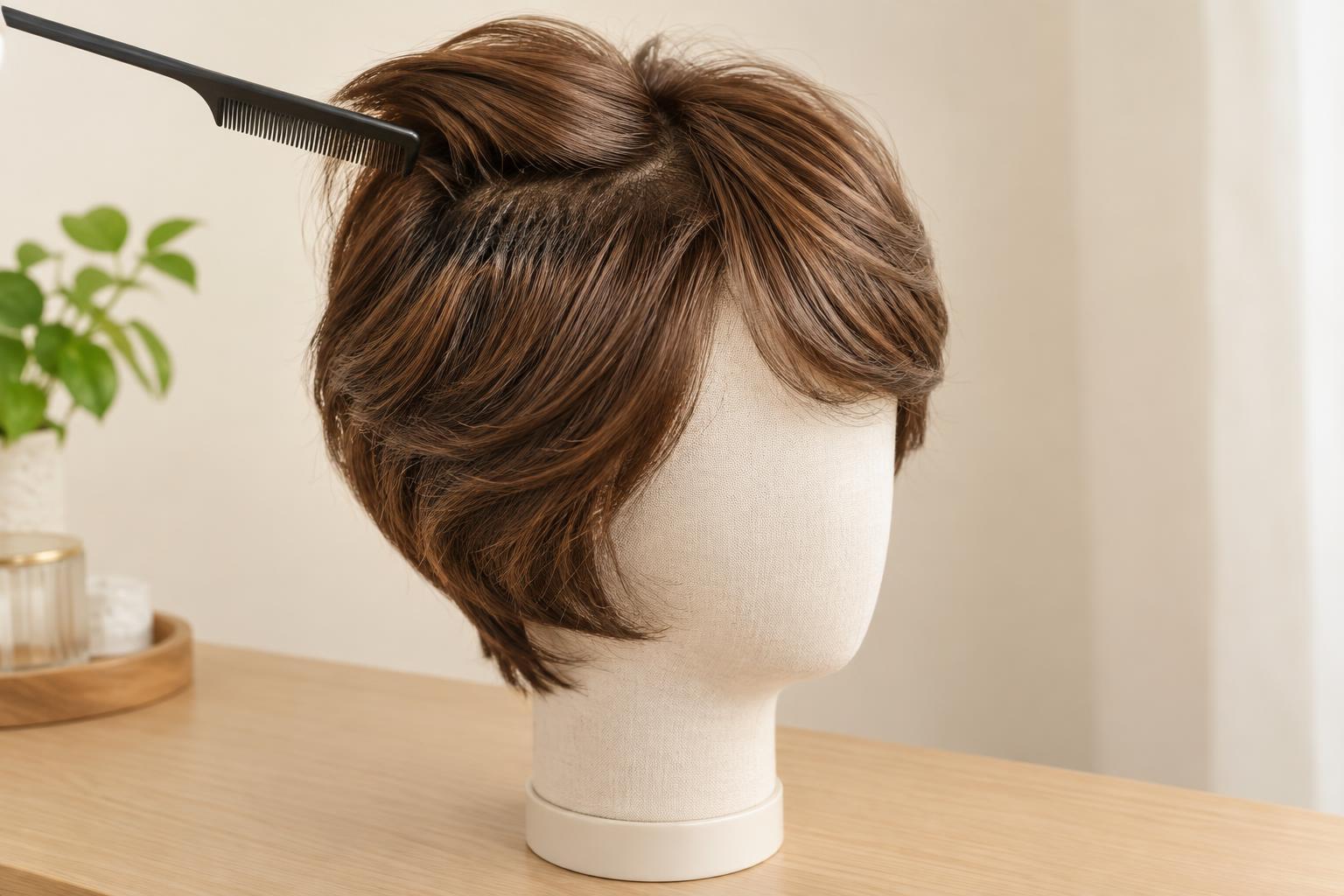
Pay particular attention to short cuts, tucked-behind-the-ear styles and wigs with a swept-back front. These can reveal more of the temple and the edge of the cap than a style with loose hair at the sides. If you plan to wear a wig with one side tucked back, assess that side while it is tucked—not only in the product’s main photograph.
Side coverage can also change with movement. Hair that conceals the tab when brushed forward may shift when you turn your head or put on a coat. Look for a style that gives you the coverage you want without relying on every strand staying in precisely the same place.
How to assess a listing or a try-on
Online, look for photographs from both sides as well as the front. Images of the inside of the cap can help you see the shape and position of the ear tabs, although they cannot show exactly where those tabs will land on your head. If the listing does not show the sides clearly, ask the seller for additional images or a description before buying. Check the return terms if you expect to assess the fit at home.
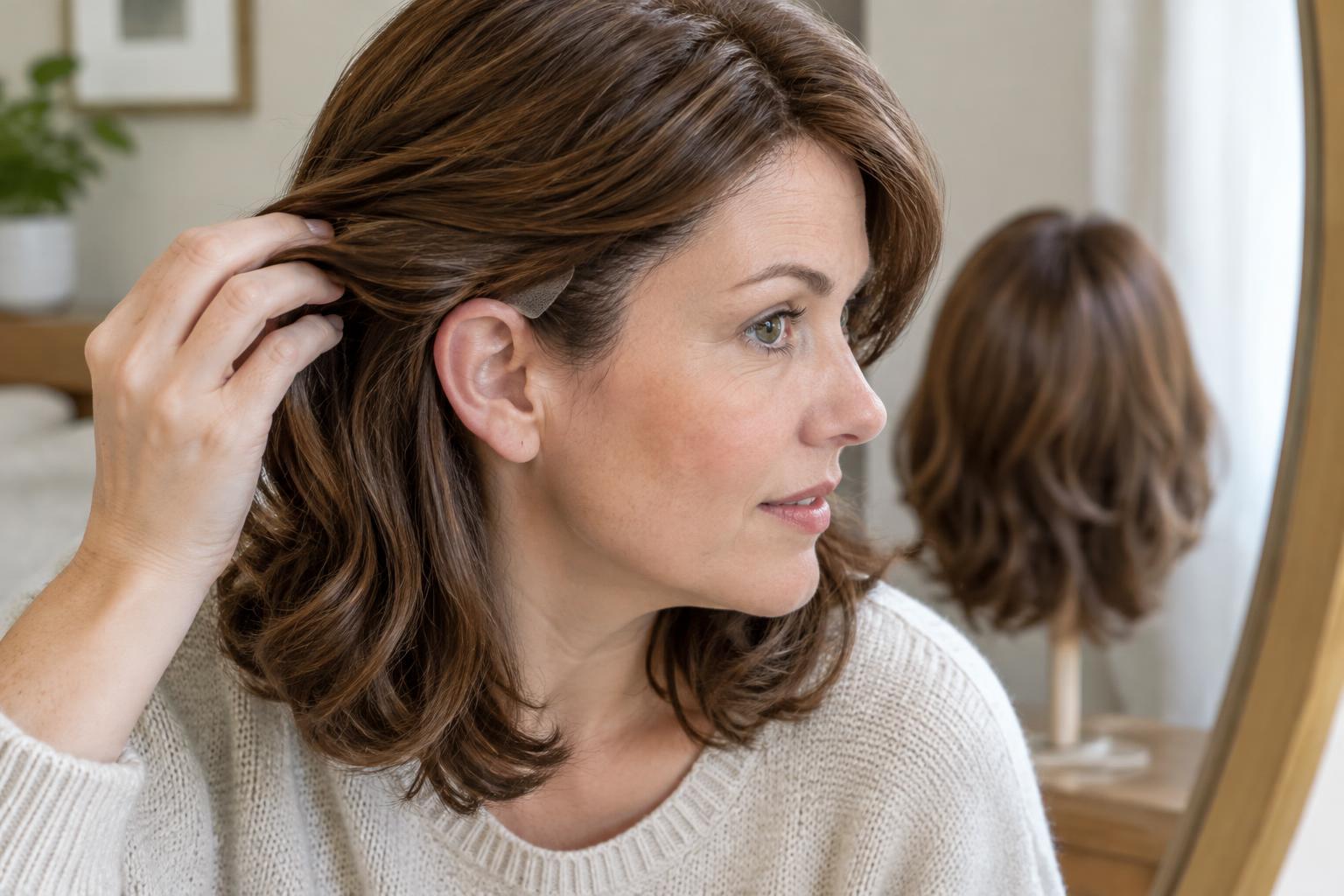
During a try-on, centre the wig and settle it into its intended position before judging the tabs. Check whether each tab rests near the temple without pressing uncomfortably or sitting over the ear. Then examine both sides in a mirror, first with the hair falling naturally and then in the way you expect to wear it. Turning your head and looking from an angle can reveal gaps that a straight-on view misses.
Avoid pulling the tabs down to make up for a cap that sits too high elsewhere. If doing so shifts the front hairline, creates tension or makes one side uneven, the overall cap shape or size may not suit you. Adjustable straps can change snugness, but they may not resolve a mismatch in the cap’s side shape.
Choose a comfortable solution, not just more coverage
If the side area looks too exposed, you may prefer a style with softer face-framing hair, a different side shape or a cap designed with more coverage near the temples. If the tabs feel bulky, a different construction may be more comfortable. Compare how the wig looks when worn in your usual way rather than treating any one feature as a guarantee of fit.
Check comfort alongside appearance, especially if you will wear the wig for long stretches. Move your head, speak and sit as you normally would. The sides should feel secure without needing constant adjustment. Taking a few minutes to assess ear tabs and side coverage can help you choose a wig that works from more than just the front view.