Why a prompt rinse matters
Swimming with a wig can be enjoyable, but pool and sea water should not be left in the fibres longer than necessary. Chlorine-treated water may leave hair feeling rough or alter its appearance, while saltwater can dry into a stiff residue that makes tangles harder to release. Sunscreen, sand and other products can add to the buildup. A swim cap may reduce exposure, but it does not always keep a wig completely dry.
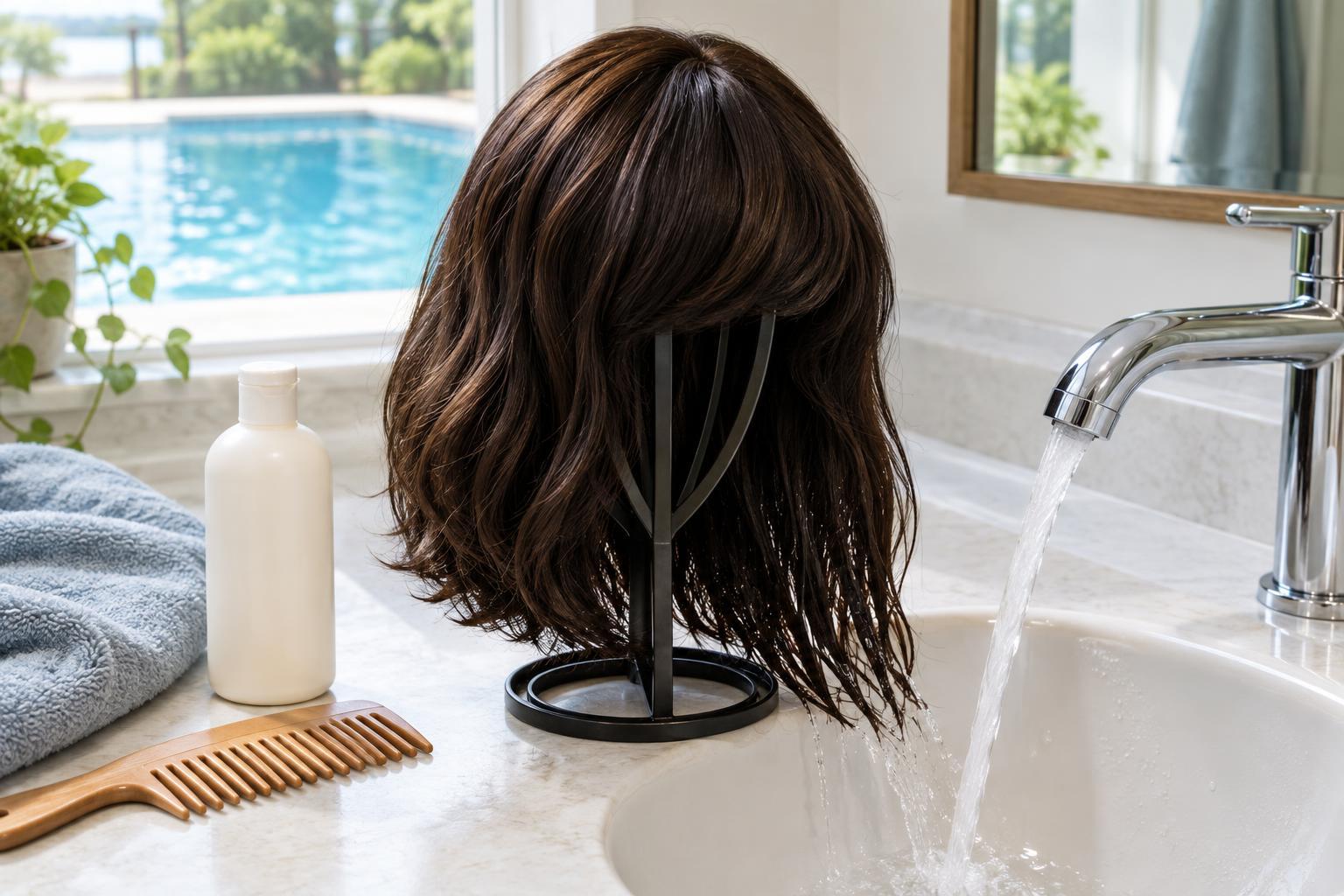
The most useful first step is simple: rinse the wig with cool or lukewarm fresh water as soon as practical after swimming. Let the water flow from the roots towards the ends rather than rubbing the hair together. If you cannot wash it straight away, a thorough fresh-water rinse is still better than allowing pool or sea water to dry in the wig.
Prepare the wig before washing
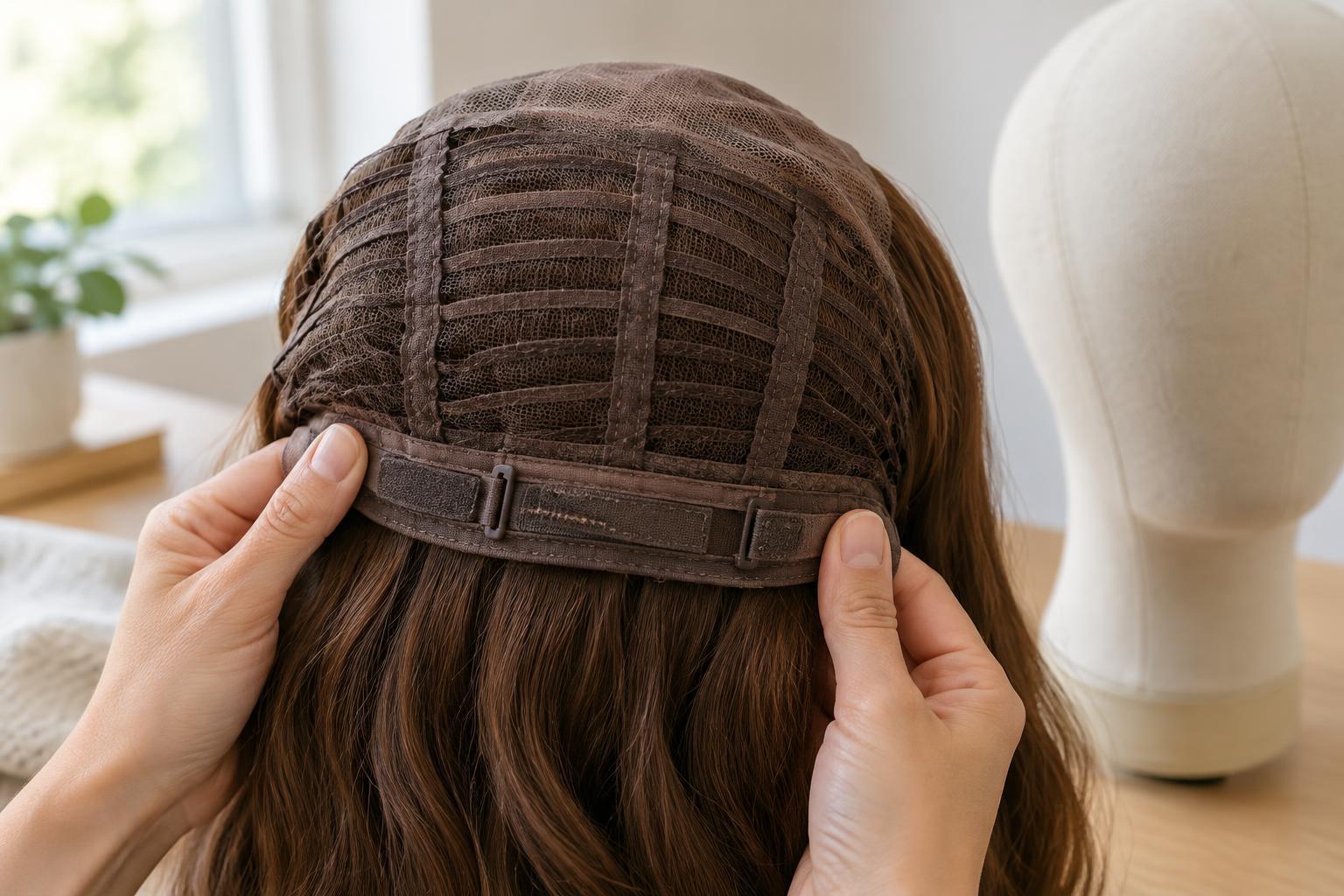
If the wig is attached with tape, glue or another adhesive, follow the removal directions for that product instead of pulling at the lace or hairline. Take care around clips and other attachment points, too. Once the wig is off, gently squeeze out excess water with a towel; do not twist or wring it.
Check the maker’s care instructions before choosing products, particularly if the wig has been coloured, heat-styled or treated. Separate obvious tangles with your fingers, starting at the ends and working upwards. A wide-tooth comb or wig brush may help where the construction and fibre allow it, but wet lace and knots can be delicate. Support the hair near its base and stop if combing starts to pull on the cap.
Wash according to the fibre
For a human-hair wig, use a gentle shampoo suitable for wigs or colour-treated hair, following the product directions. Work it through the hair in the direction it falls, giving extra attention to areas where salt, chlorine or sunscreen may have collected. Avoid vigorous scrubbing, which can tangle the lengths or stress a lace front. Rinse until the water runs clear and the hair no longer feels slippery with shampoo.
For a synthetic wig, choose a cleanser intended for synthetic fibres and follow the wig maker’s guidance on soaking or washing. Synthetic hair does not respond to ordinary conditioning in the same way as human hair, and products intended for natural hair can leave a coating. Keep the water cool or lukewarm unless the care label says otherwise; hot water can affect some synthetic styles.
If residue remains after one wash, repeat a gentle wash rather than reaching for bleach, strong clarifying products or household cleaners. Chlorine-related colour changes or persistent roughness may not be fully reversible by washing. Rinse the cap as well as the hair, without scraping at lace, knots or hand-tied areas.
Dry without stretching or overheating
Blot the clean wig in a towel to remove excess water, then place it on a suitable wig stand where air can circulate. Avoid hanging it by the hair or leaving it in direct, strong sunlight. Make sure the cap is fully dry before storing or wearing it for a long period; a damp cap can develop an unpleasant smell.
Let a synthetic wig air-dry unless its care instructions explicitly permit heat. For human hair, air-drying is a gentle option. If you use a dryer, follow the wig’s heat guidance and keep the setting moderate. Once the hair is dry or nearly dry, detangle carefully from the ends upwards and return it to its usual style.
Make the next swim easier on your wig
Before swimming again, consider whether a dedicated swim wig or a secure alternative would suit you better than a delicate everyday piece. A close-fitting swim cap may help contain the hair and limit exposure, though fit and comfort matter and water can still get underneath. Avoid relying on an adhesive without checking whether its instructions cover water use.
After every swim, build in time for rinsing and complete drying rather than packing the wig away damp. Store it clean and dry, with enough space to protect its shape. Regular, gentle care is usually more useful than trying to remove heavy buildup after several swims.