Start with the cap: the wig’s foundation
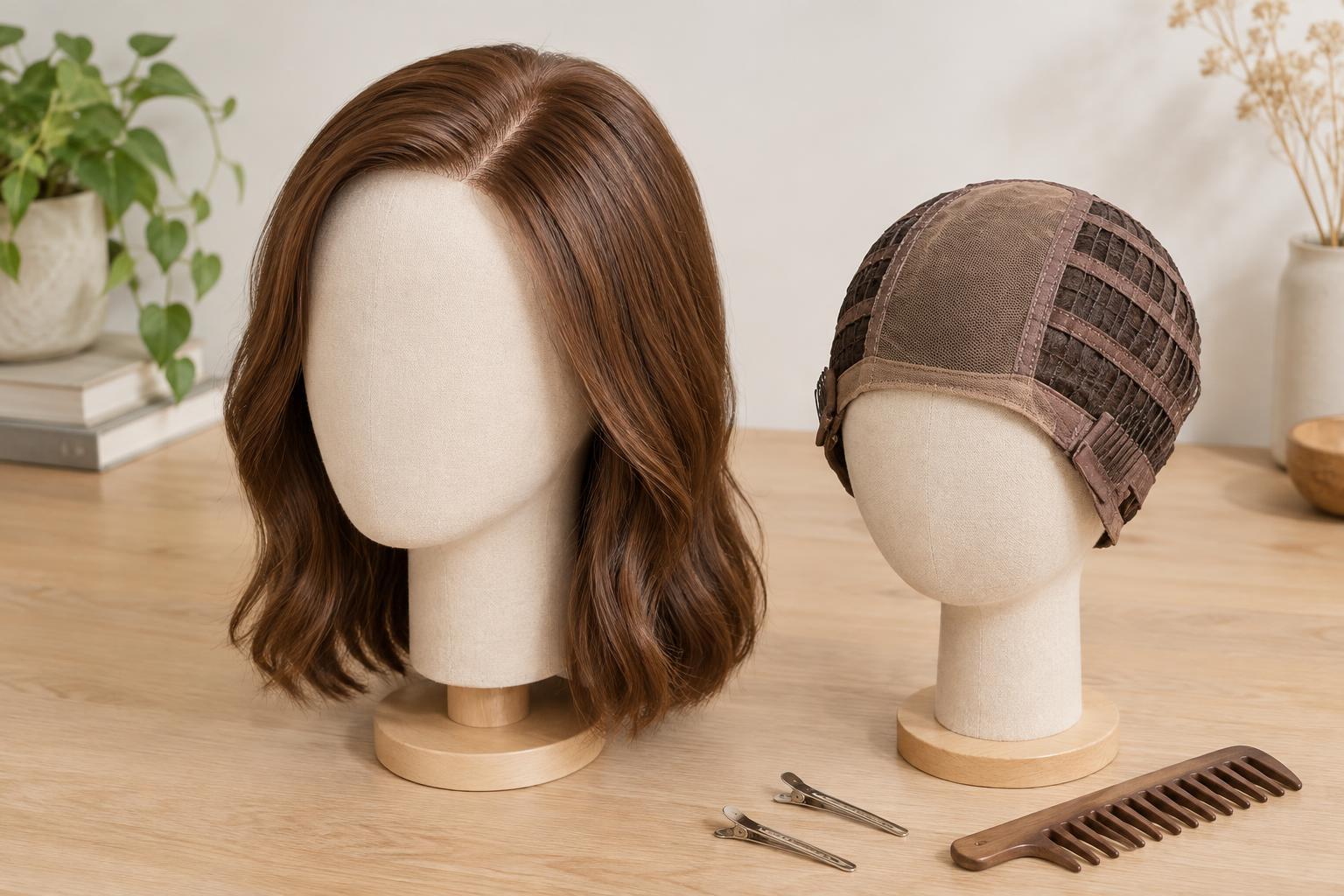
A wig cap is the structure that holds the hair or fibre in place. It gives the wig its shape and affects how it sits on your head. Cap descriptions can sound technical, but you can begin with three questions: where is the hair attached, where can the scalp or a scalp-like surface be seen, and how much of the cap stretches?
Many caps combine different construction methods. A wig might have a lace front, a monofilament area at the top and wefts at the back. These are not competing labels: each describes a particular part of the same wig. Look at the inside of a product, if you can, rather than relying only on its name. Also check for adjustable tabs, ear tabs and any clips or combs. These details can affect how the wig feels and stays in place.
Crowns and wefts: where shape and volume begin
The crown is the upper area toward the back of the head, around the point where hair may naturally change direction. Its construction matters because people can often see it from above. Some wigs use a monofilament or other fine material at the crown to give the impression that hair is emerging from that area. Others use a small, fixed swirl. Neither approach is automatically better; consider whether the direction and amount of volume suit the hairstyle you want.
Wefts are rows of hair or fibre attached to narrow strips, which are then sewn into the cap. In an open-wefted cap, the rows have gaps between them. This can make the cap feel airy, though comfort also depends on fit and materials. Wefts are often used at the sides and back, where they provide coverage and help create a style’s shape. When examining a wig, gently separate the hair to see whether the wefts remain covered during your usual movements.
Partings: fixed, flexible and scalp-like
A parting is the line where hair falls in different directions. On some wigs, that line is set by the style and is difficult to move convincingly. A monofilament part places individual hairs or fibres through a fine mesh along a narrow strip, allowing the surface beneath to show through. A monofilament top extends that effect over a larger area and may offer more freedom to change the parting. The exact area varies by wig, so check its description or inspect the cap.
You may also see terms such as lace top or silk top. These refer to different ways of constructing the top area; their appearance and feel can vary. If you prefer a particular parting, check it in ordinary lighting and from more than one angle. A flexible top is useful only if it gives you the styling options you actually plan to use. Remember that a convincing parting depends on the wig’s colour, density and fit as well as its cap material.
Hairlines: the edge that frames your face
The hairline is the visible boundary at the forehead and temples. A lace-front wig has a fine lace area at the front with hair attached to it. When positioned carefully, this can soften the transition between skin and wig. Lace fronts differ in depth and shape: some give you room to brush hair away from the face, while others work best with a style that falls forward. Check where the lace begins and ends, especially around the temples.
Hairline density matters too. A very full edge can look different from an edge with a gradual change in density. The most useful choice is the one that looks right to you and works with how you intend to wear your hair. If a wig has loose lace that needs trimming, cut cautiously and follow the maker’s care guidance; removing too much is difficult to undo. You do not have to use adhesive simply because a wig has a lace front.
Put the pieces together before you choose
Begin with your everyday priorities. If you often wear hair away from your face, examine the front and temple areas. If you like changing your part, look closely at the usable top area. If you want a lightweight feel, compare cap materials and coverage rather than assuming one construction will suit everyone. A wig that looks appealing in a photograph may sit differently on your head, so fit deserves as much attention as fibre and style.
When trying on a wig, position it as intended and check the front, crown, sides and back. Move your head, look down, and notice any pressure or slipping. Ask which features are part of the cap and which are simply styling choices: a fringe, for example, can hide a fixed hairline without changing its construction. Understanding these parts will help you read product descriptions, compare options and choose a wig that fits the way you want to wear it.