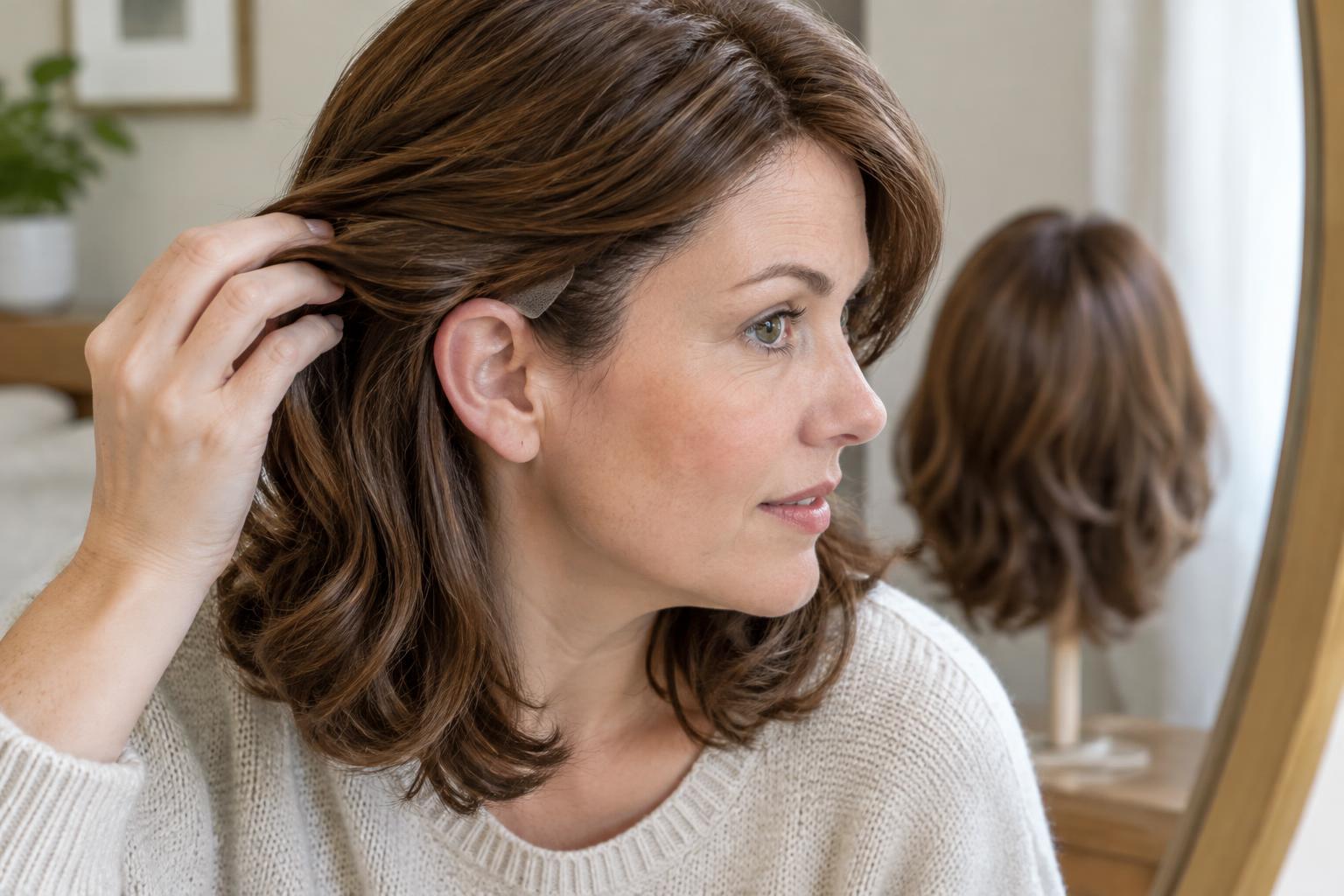
Take it off gently and assess how wet it is
A few raindrops on the outer fibres call for a different response from a thoroughly soaked cap. Once you are indoors, remove the wig carefully if you can. Release any clips, combs or adhesive according to the method you normally use rather than pulling at wet lace or mesh. If the wig is only lightly damp, you may be able to let it dry without washing it. If water has reached the cap, prioritise drying the inside as well as the hair.
Check for grit, product residue or anything else the rain may have carried onto the wig. If it feels dirty or has picked up an odour, follow the washing directions for its fibre and construction. Rain alone does not mean you must shampoo it. Washing unnecessarily can add handling and drying time, especially when a wig has delicate lace, knots or attachments.
Remove excess water without rubbing
If the wig is very wet, hold it over a sink and let water drain before handling the hair. Use a clean, absorbent towel to blot the length in sections, pressing lightly rather than twisting or scrubbing. Be especially gentle around a lace front and any areas where hair is attached to the cap. Rubbing wet fibres together can create tangles that are harder to work through later.
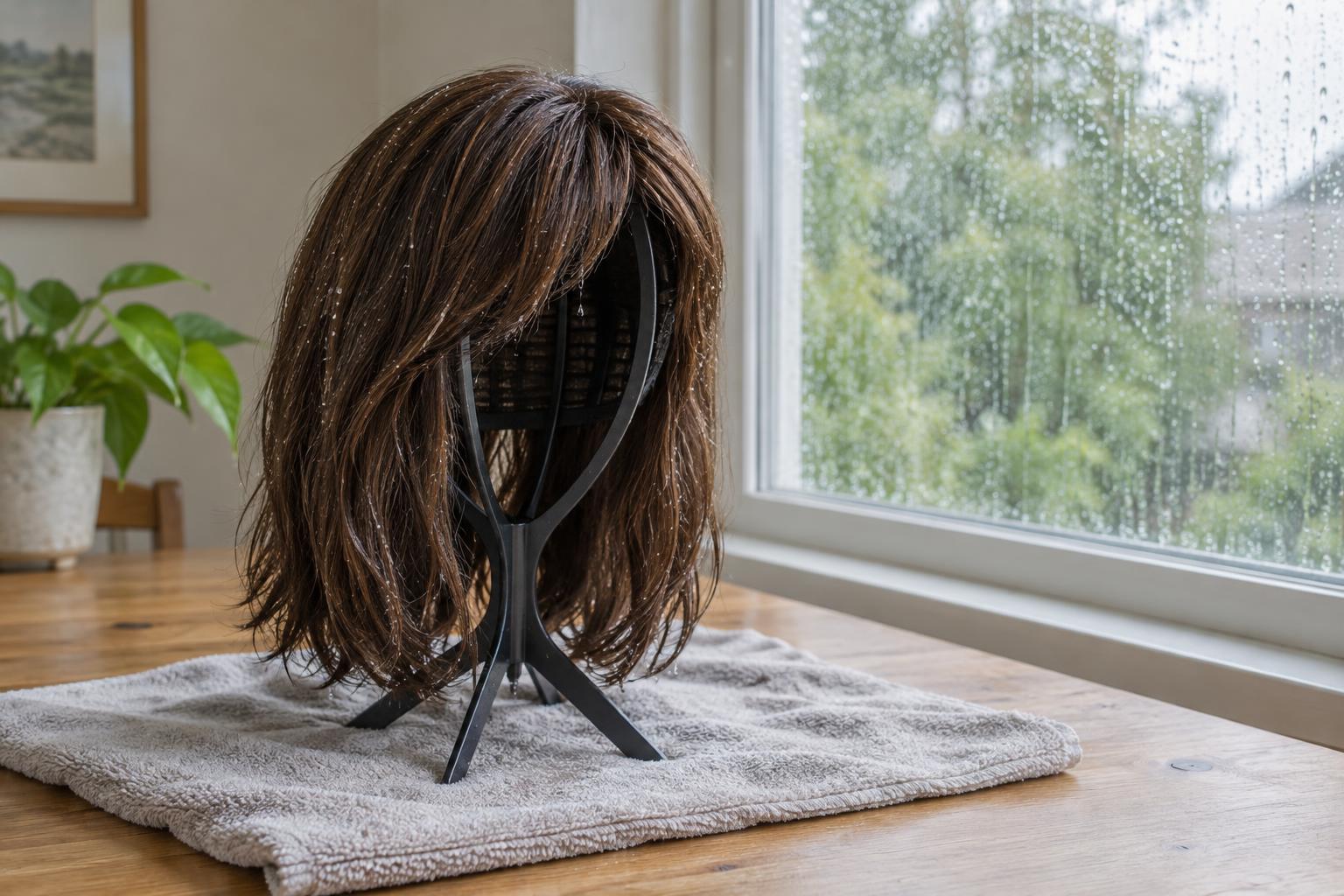
Set the wig on a suitable stand or another support that allows air to reach the cap without stretching it. Make sure the stand is stable and that the wig is not bunched up at the back. Leave it in a well-ventilated place, away from direct heat. A radiator or hot hairdryer may seem like a quick fix, but heat can affect synthetic fibres and may also disturb the wig’s shape or construction. Follow the maker’s heat guidance if you are considering a dryer.
Handle the style according to the fibre
Rain may flatten a style or make the ends look uneven. Resist the urge to brush vigorously while the wig is wet. First, separate any obvious tangles with your fingers, supporting the hair above the area you are working on so you do not tug at the cap. If the wig’s care instructions allow wet detangling, use an appropriate wide-tooth comb or wig brush and work in small sections from the ends upwards.
Synthetic and human-hair wigs can respond differently after getting wet. Some synthetic styles return close to their original shape once dry, while others need gentle rearranging. Human hair may need restyling, but its cap and attachments still deserve careful handling. Check any product or tool against the wig’s care instructions before using it; a tool that suits one wig may be too hot or rough for another. Let the wig dry fully before deciding how much styling it needs.
Check the cap before you put the wig away
The surface fibres can feel dry while the cap remains damp, particularly at the nape, under a parting or around thicker seams. Before storing the wig, feel those areas gently. Also check any clips and combs, which can hold droplets against the cap. Give the wig more drying time if you find moisture; packing it into a box or bag too soon can leave it smelling stale.
Once it is completely dry, tidy the style with minimal handling and store it in the way that best protects its shape. Before the next wear, check that the cap feels comfortable and that any fastening or adhesive area is clean and ready to use. The simplest rain-care routine is often to drain, blot, air-dry and inspect. Save a full wash or restyle for when the wig’s condition calls for one.