What permatease means
Permatease is a layer of short, crimped or teased fibres built into some wigs near the roots. It props up the longer fibres above it, giving the style lift without daily backcombing. Despite the name, it is not a perm you apply to the wig. It is part of the wig’s construction and is generally intended to stay in place.
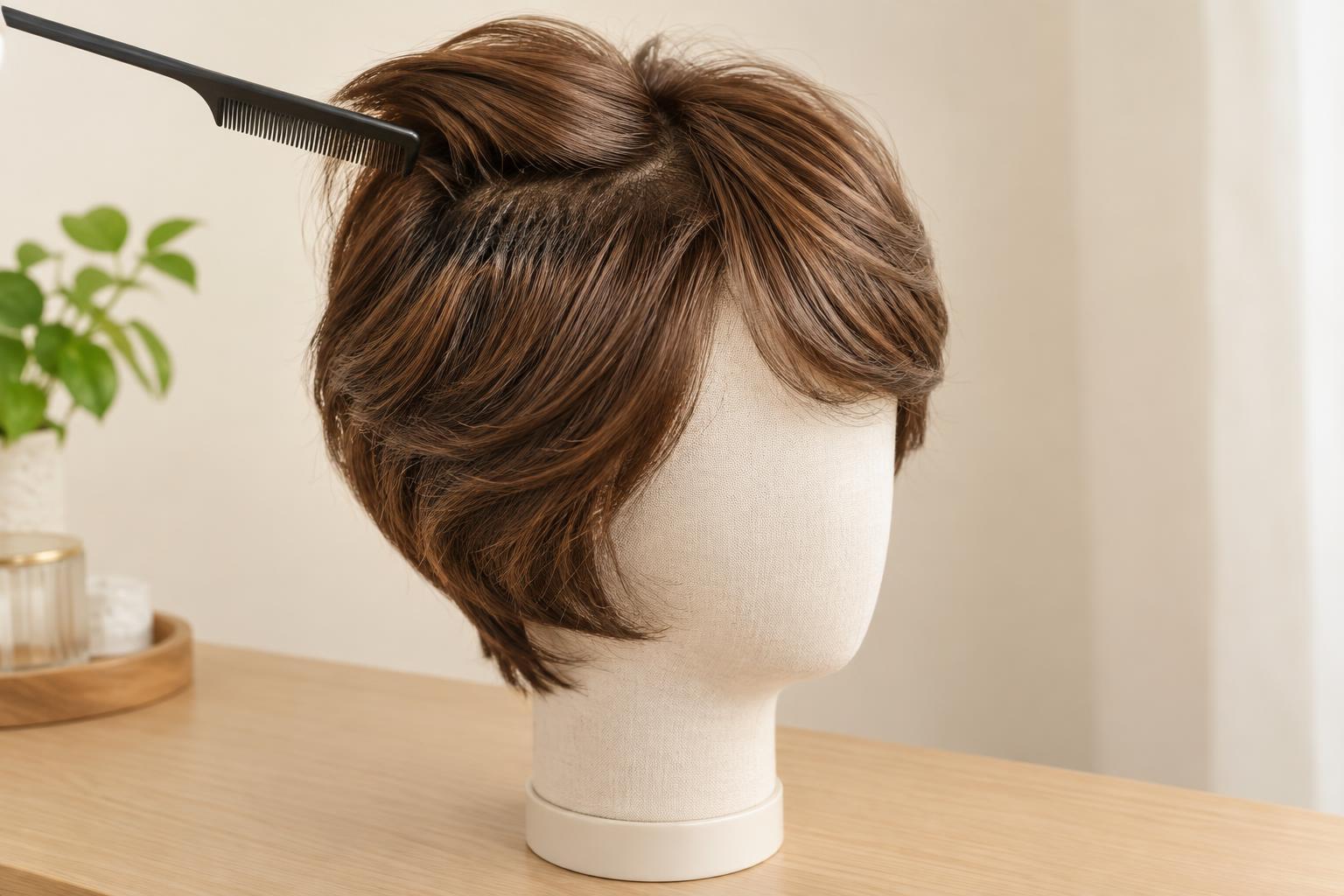
You may notice permatease as a slightly fuzzy or textured area when you part the hair with your fingers. From the outside, its effect can range from a little fullness at the crown to a noticeably rounded silhouette. The amount and placement vary by style, so two wigs described as having permatease may look quite different.
Why wig makers use it
Permatease helps a style hold its shape. It can lift fibres at the crown, add height around a fringe or keep short layers from lying flat. It may also help obscure the cap or the base of wefts beneath the hair. On a layered, tousled wig, that built-in support can make the intended shape easier to wear straight out of the box.
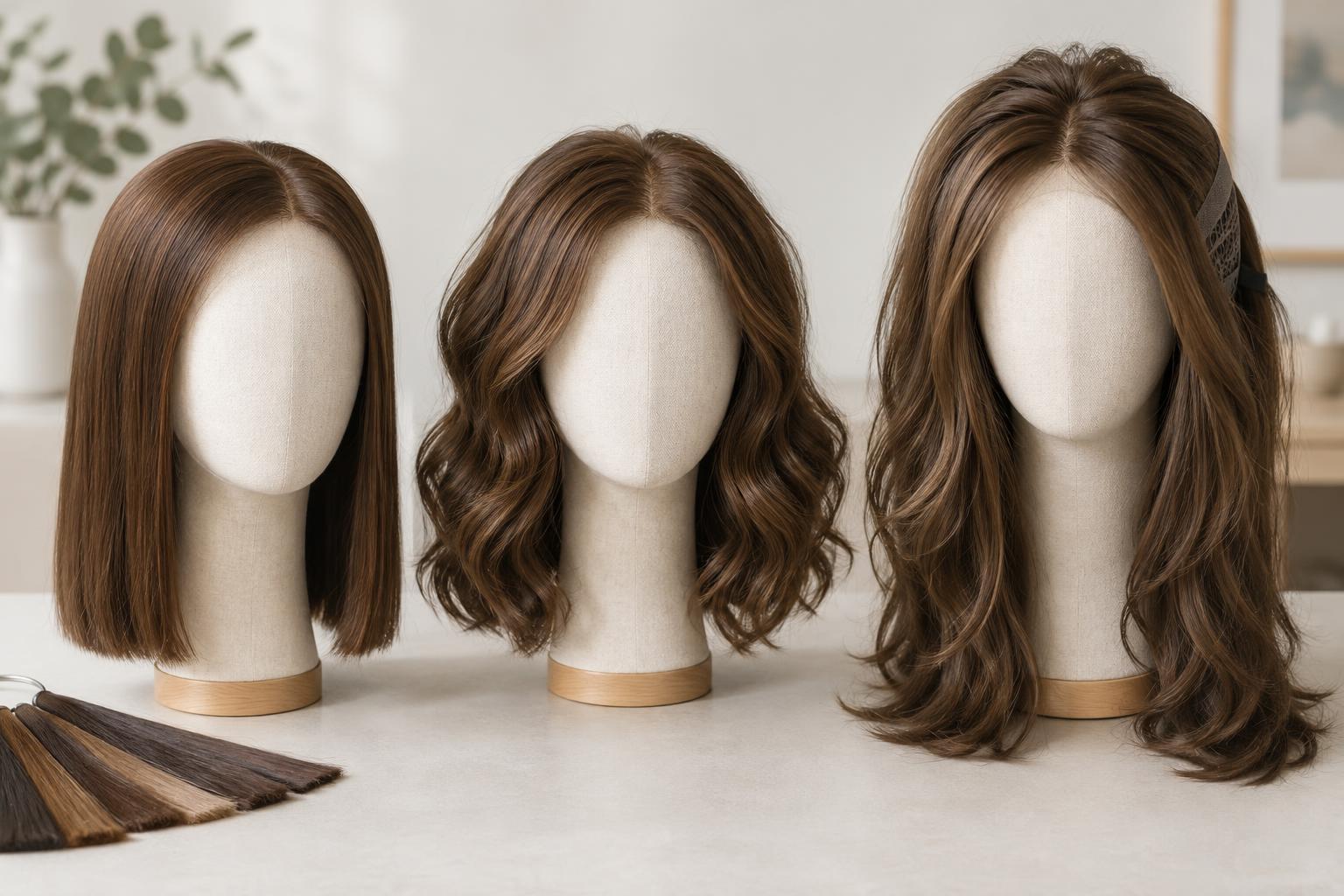
That same lift can be a drawback if you prefer a smooth, close-to-the-head finish. Permatease does not necessarily make a wig look unnatural, but prominent volume in an unexpected place may not match the look you want. It is worth judging the whole shape rather than treating permatease as automatically good or bad.
Where you might find it
Permatease is often associated with wefted areas of a wig, where rows of fibres are attached to strips of material. You might find it at the crown, along the sides or near the back, depending on where the design needs support. A wig can also combine different construction methods: a smoother-looking part or front, for example, may sit alongside wefted areas with permatease elsewhere.
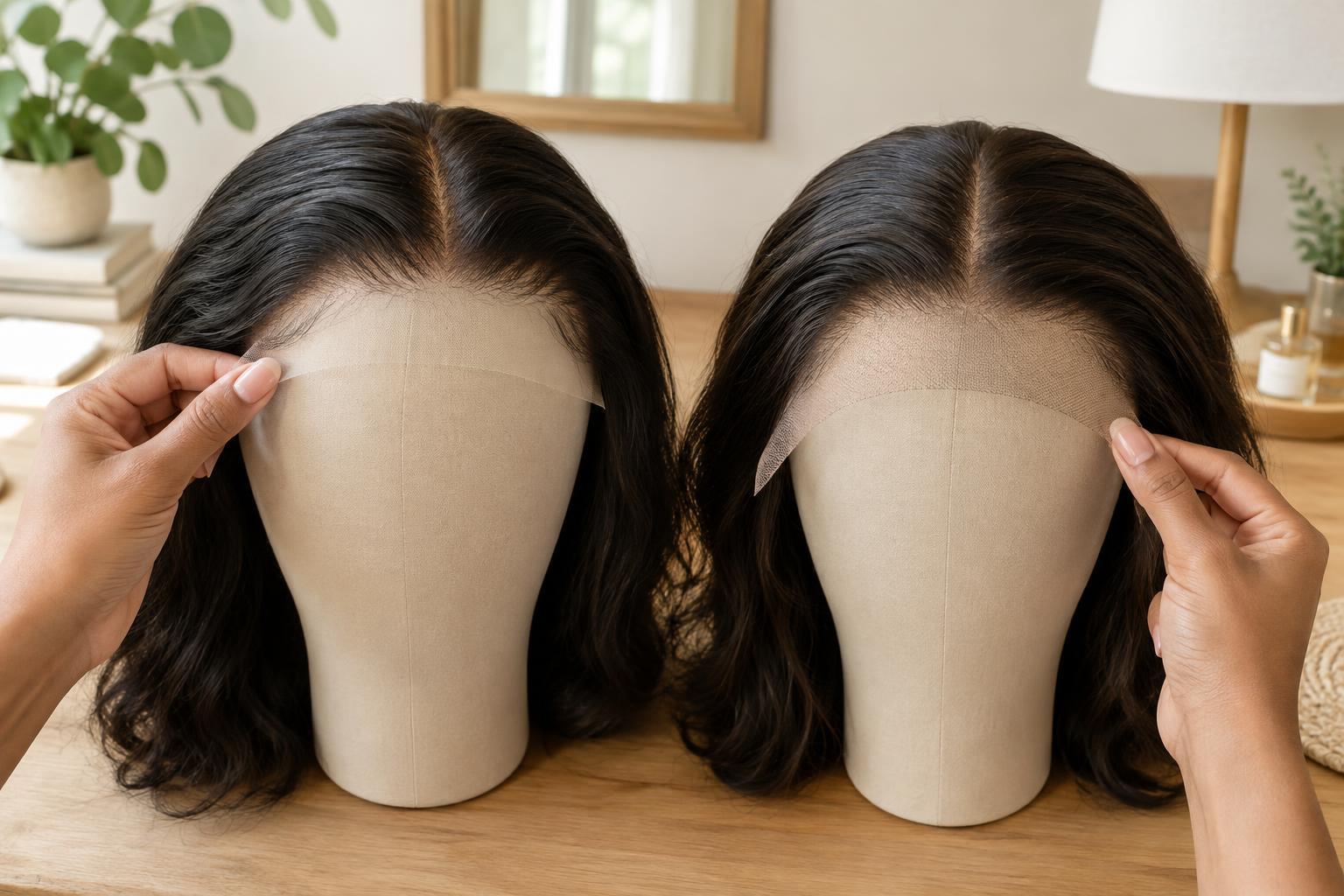
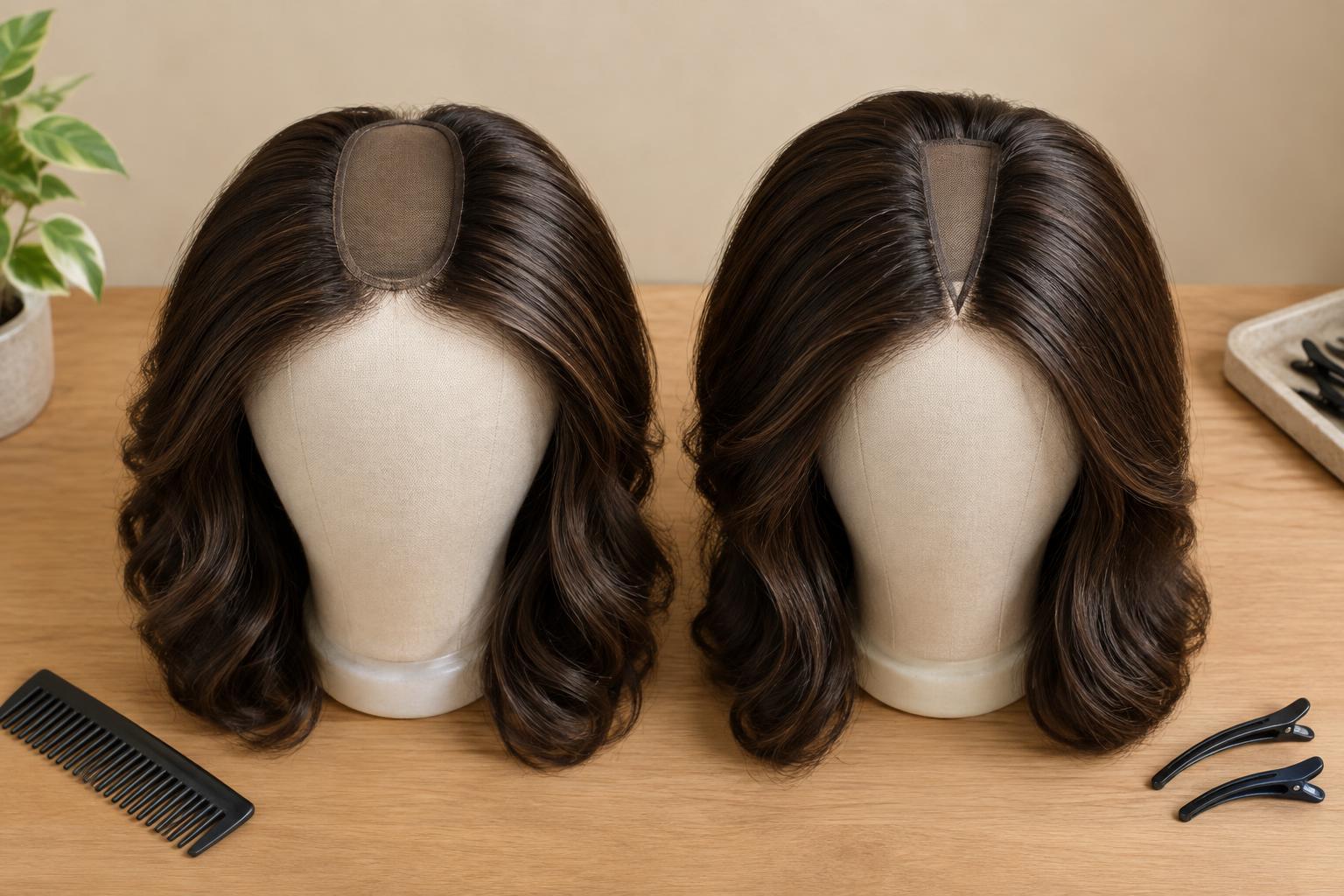
Construction labels alone do not tell you exactly how much lift a finished wig will have. A monofilament part or lace front describes a particular area of the cap; it does not guarantee that the rest of the wig has no permatease. If a flat crown or flexible parting matters to you, check the description for the specific style and look at views from several angles.
How to assess it before buying
Start with the silhouette. Does the hair rise at the crown, flare at the sides or keep a rounded shape even when it falls forward? These can be clues to built-in support, although the cut and styling also affect volume. Photos taken from the side and back can be more revealing than a single front view. If you can examine the wig in person, gently separate the fibres near the roots and feel for short, textured strands.
Think about how you plan to wear the style. Permatease can suit someone who wants lasting fullness with little effort. If you prefer a low-profile look, want to change the part often or like to tuck the hair closely behind your ears, consider where the lift sits. Also check the wig’s measurements: permatease affects the appearance of volume, while cap size and adjusters determine how the wig fits your head.
Styling and caring for a wig with permatease
To soften the appearance of lift, try arranging the longer fibres over the textured area with your fingers or a suitable wig brush. A light mist of water may help reposition some styles, but follow the care directions for the wig’s fibre. Avoid aggressive brushing at the roots, which can disturb the style or stress the fibres. Cutting out permatease is difficult to reverse and may expose the cap, so it is better to choose a different style if you strongly dislike the built-in shape.
After wearing, gently smooth the outer layers and store the wig so its shape is not crushed. Wash it according to its care instructions rather than trying to scrub the textured roots flat. Heat should only be used if the wig is labelled heat-friendly, and even then within its stated limits. Permatease is designed to provide continuing lift; treating it gently helps you keep the volume you chose without adding unwanted tangles.