The basic construction
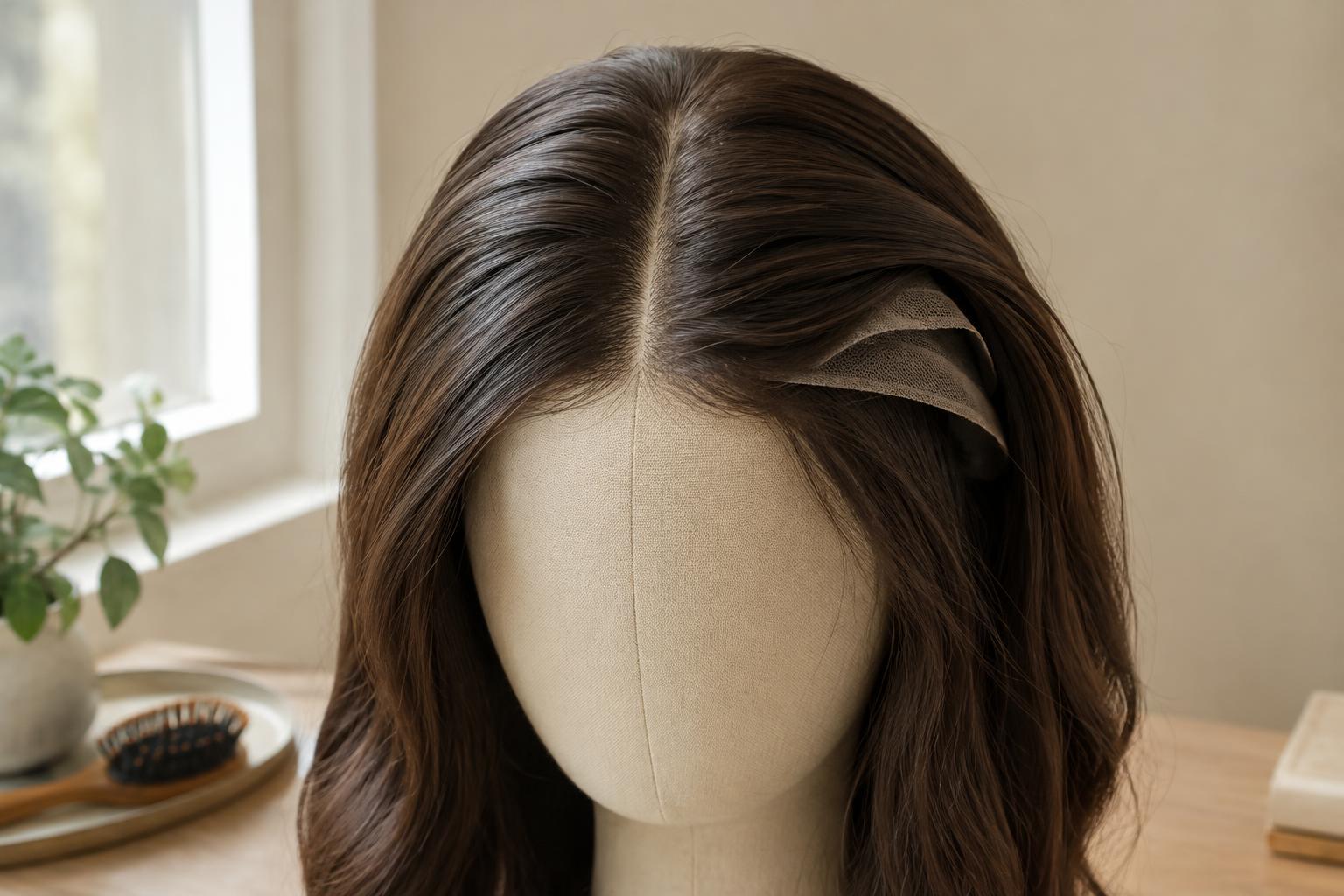
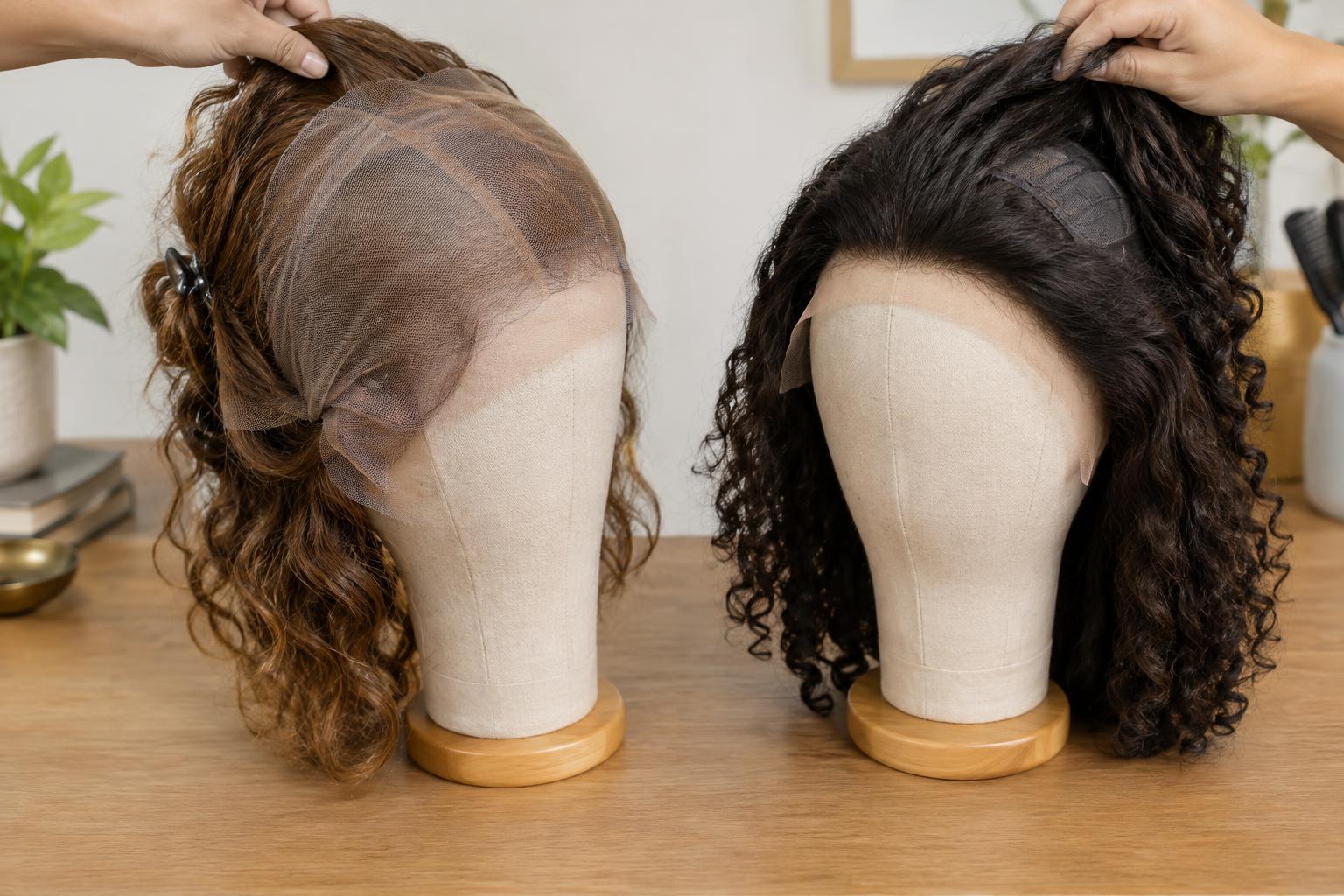
A 360-lace wig has a band of lace running around the perimeter of the cap: across the front hairline, around the sides and across the nape. Hair is attached to this lace so the wig’s edge can look more like hair growing from the scalp when it is fitted and styled carefully. The “360” refers to that all-around lace edge, not to an entire cap made of lace.
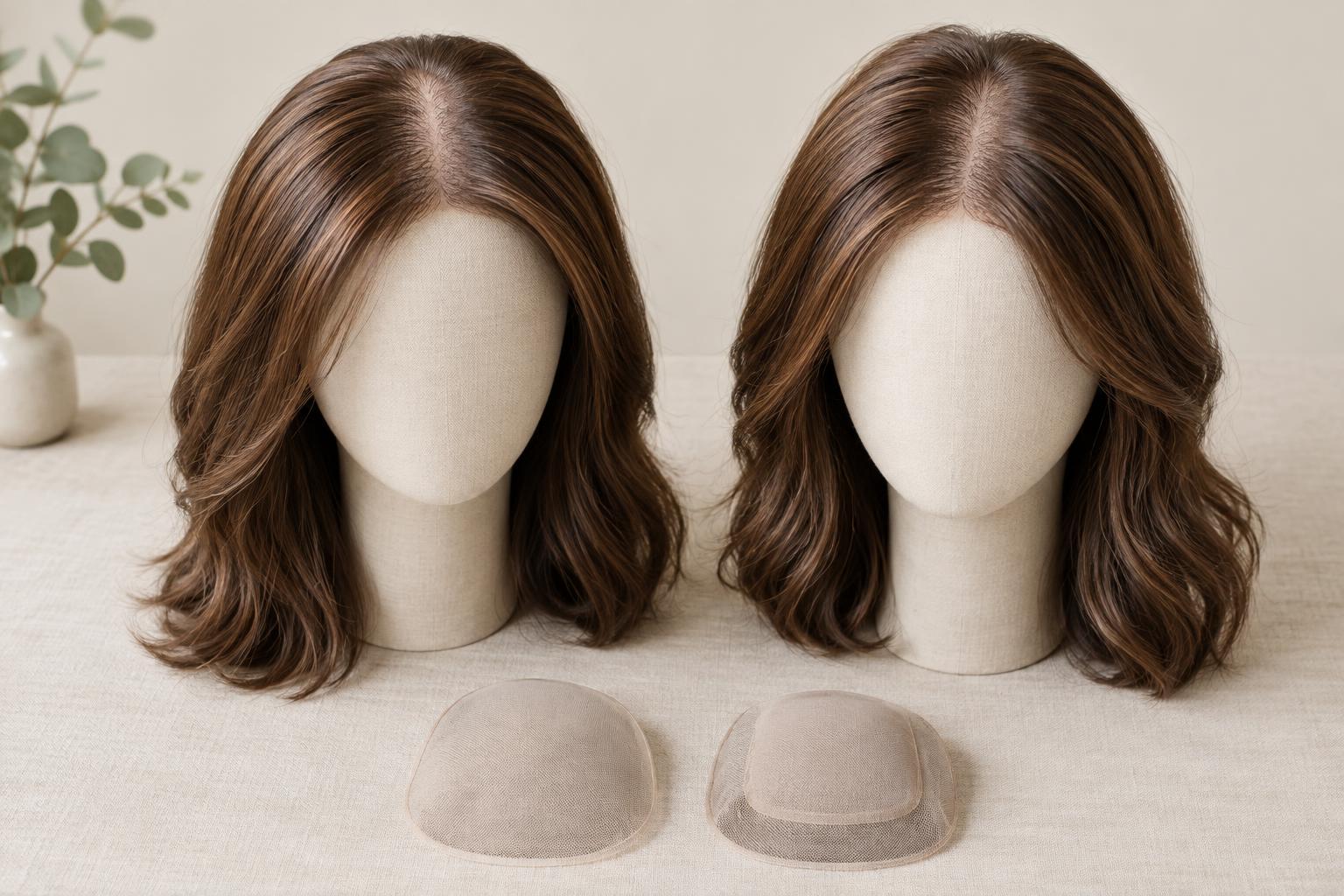
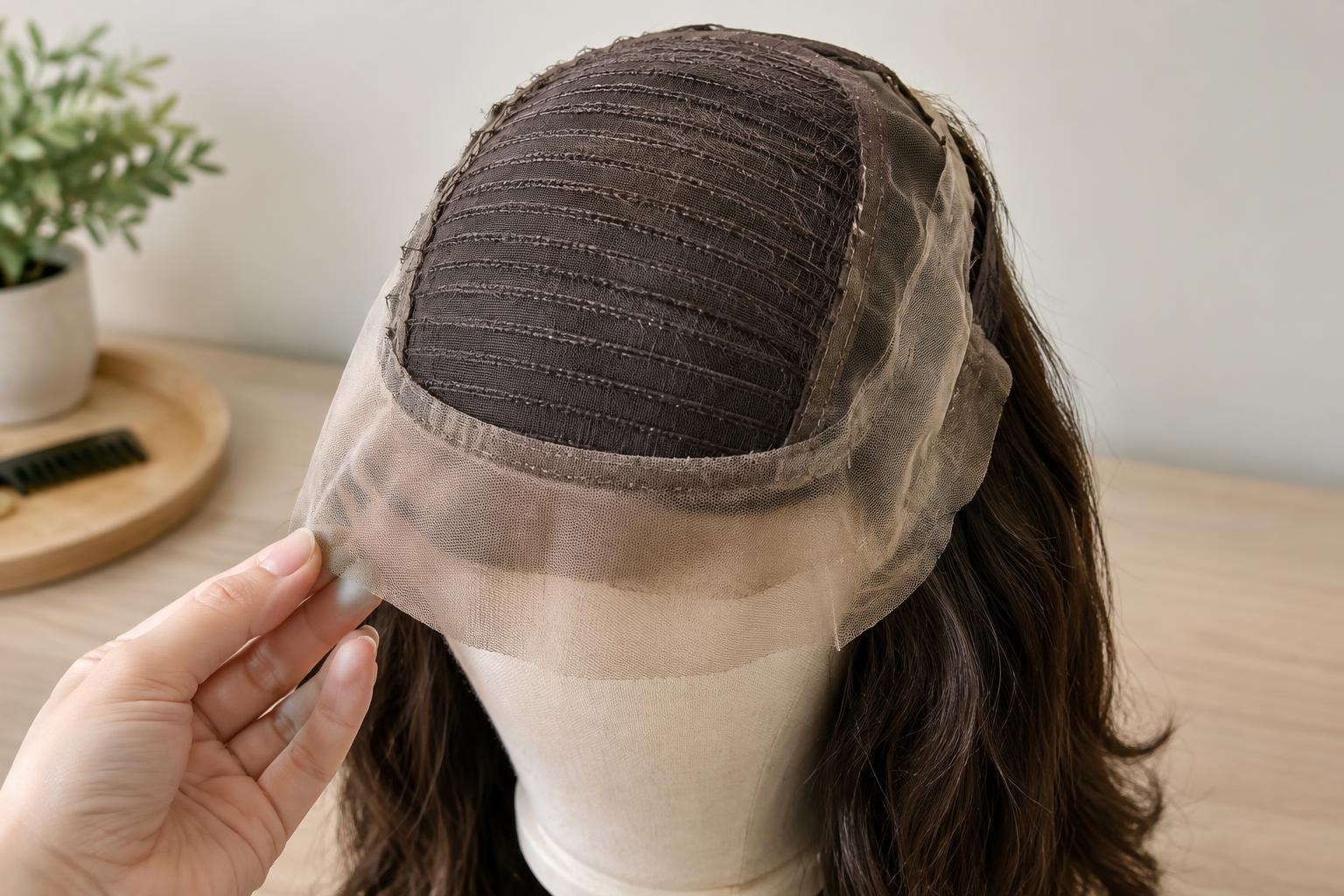
The centre of the cap is typically a more substantial material with hair sewn onto it in tracks, also called wefts. This construction can give the wig body and coverage without using lace across the whole head. Designs vary, though: the width of the lace band, the material under the centre and the way the hair is attached may differ between products. A product description or clear cap photograph is more useful than the label alone.
What the lace perimeter lets you do
Lace at the front can help create a visible hairline, while lace at the sides and nape gives you more options for pulling hair away from your face or lifting it at the back. A low ponytail or a loose updo may be easier to arrange than with a wig that has lace only at the front. The result still depends on fit, how the edge is secured and whether the style reveals tracks or the cap beneath the hair.
The central construction sets an important limit: you generally cannot create a convincing exposed part anywhere across the top simply because the wig is called 360-lace. Check whether it has a separate lace parting area or closure at the crown, and note its size and position. If you want to change your part frequently across a wide area, a different construction may suit that goal better.
How it differs from other lace wigs
A lace-front wig places lace primarily along the front, though its depth and coverage at the temples can vary. A 360-lace wig extends the lace edge around the sides and nape as well. A full-lace wig is generally built on a lace base across the cap, allowing more freedom to part and arrange the hair across the top. These names describe broad construction types, not a guarantee that every wig in a category will look or behave the same.
It also helps to separate cap construction from hair fibre. A 360-lace wig may be made with human hair or synthetic fibre, each with its own styling and care requirements. Lace colour, hair density and the design of the hairline affect the finished appearance too. None of those qualities follows automatically from the words “360-lace.”
Fit and comfort matter as much as the lace
For the perimeter to sit where intended, the cap needs to match your head measurements reasonably well. An edge that is too loose may lift or shift; one that is too tight may feel uncomfortable. Check the seller’s measuring guide and look for details such as adjustable straps, combs or an elastic band. These features can help with placement, but they do not replace a suitable cap size.
Consider how you plan to wear the wig. If you prefer not to use adhesive, look closely at how the cap stays in place and whether the edge looks the way you want without it. If you do use an attachment product, follow its instructions and avoid applying it to irritated skin. Lace at the nape may need particular attention when you wear hair up, because movement can expose an edge that looked discreet while the hair was down.
What to check before buying and caring for one
Before choosing a wig, look for photographs of the cap turned inside out. Ask how wide the lace band is, whether there is a lace parting area in the centre, and where any wefts begin. Check the stated cap size, fibre type, density and return conditions. If updos are your main reason for considering 360-lace, pictures of the sides and nape are especially helpful.
For routine care, handle the lace edge gently when putting the wig on, taking it off and cleaning it. Avoid pulling on individual hairs or scrubbing the lace. Detangle and wash according to the fibre and manufacturer’s guidance, then let the cap dry fully before storing it. A 360-lace wig can be a useful middle ground between a front-only lace edge and a full-lace cap, provided its actual construction supports the styles you want to wear.