What the straps actually adjust
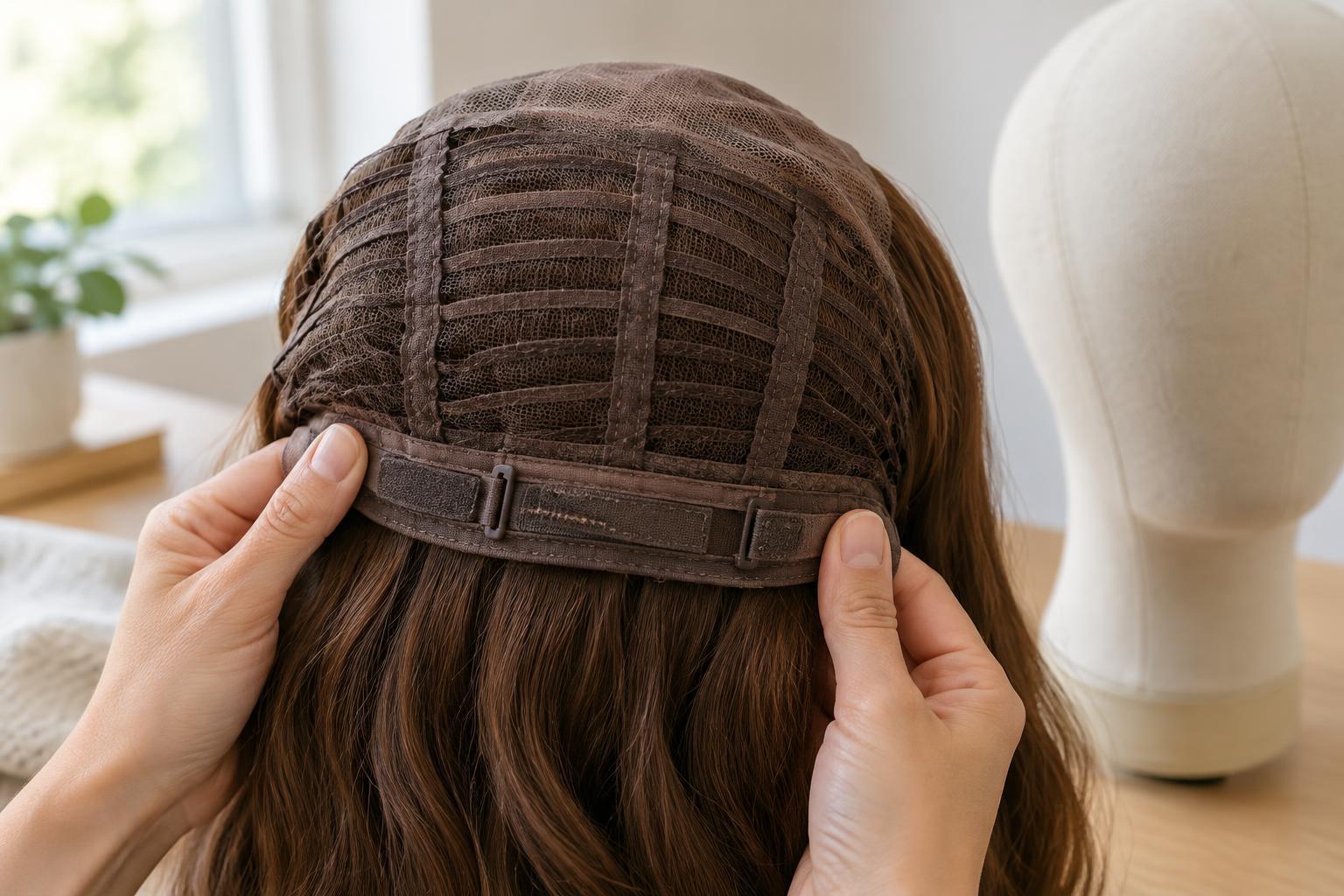
Many wigs have a pair of adjustable straps inside the cap near the nape. Depending on the design, they may fasten with hooks, clips or hook-and-loop tabs. Moving them changes how snugly the lower part of the cap sits around your head. This gives you some flexibility when your hair is arranged differently underneath, or when a cap feels slightly loose straight out of the box.
Think of the straps as a fine adjustment, not a way to change the wig’s overall size. Tightening them draws part of the cap inward; it does not shorten every section equally or reshape the crown. Designs vary, so check where the straps sit and how they fasten before assuming they will solve a particular fit problem.
Problems a small adjustment may solve
If a wig is generally comfortable but shifts a little at the nape, taking in the straps by one setting may help it sit more securely. A small change can also be useful if the cap feels less snug after you flatten your natural hair or change the way you wear a wig cap. Adjust both sides evenly as a starting point, then put the wig on and check it again.
Aim for a fit that stays in place during ordinary movement without feeling squeezed. Turn your head, look down and gently move the hair away from your face. The hairline, ear tabs and nape should remain reasonably stable. If tightening helps at the back but causes the front to lift or the cap to pull elsewhere, the wig may need more than a strap adjustment.
What straps cannot fix
Straps cannot reliably turn a cap that is much too large into one that fits. Excess room at the crown or sides may remain even when the nape is tight, leaving folds, bunching or a cap that moves when you touch it. Similarly, loosening the straps cannot add space across a cap that is too small. If the wig rides upward or feels tight before the straps are fastened, a larger size or a different design may be more comfortable.
They also cannot correct a mismatch in shape. Two wigs with the same labelled size can feel different because their crowns, side panels and ear-tab positions are constructed differently. If the tabs sit unevenly when the wig is centred, the hairline lands in the wrong place, or the cap presses on one area, pulling the nape tighter is unlikely to address the cause. Straps do not change a hairpiece’s coverage or make a lace front align with your natural hairline.
How to check fit before tightening
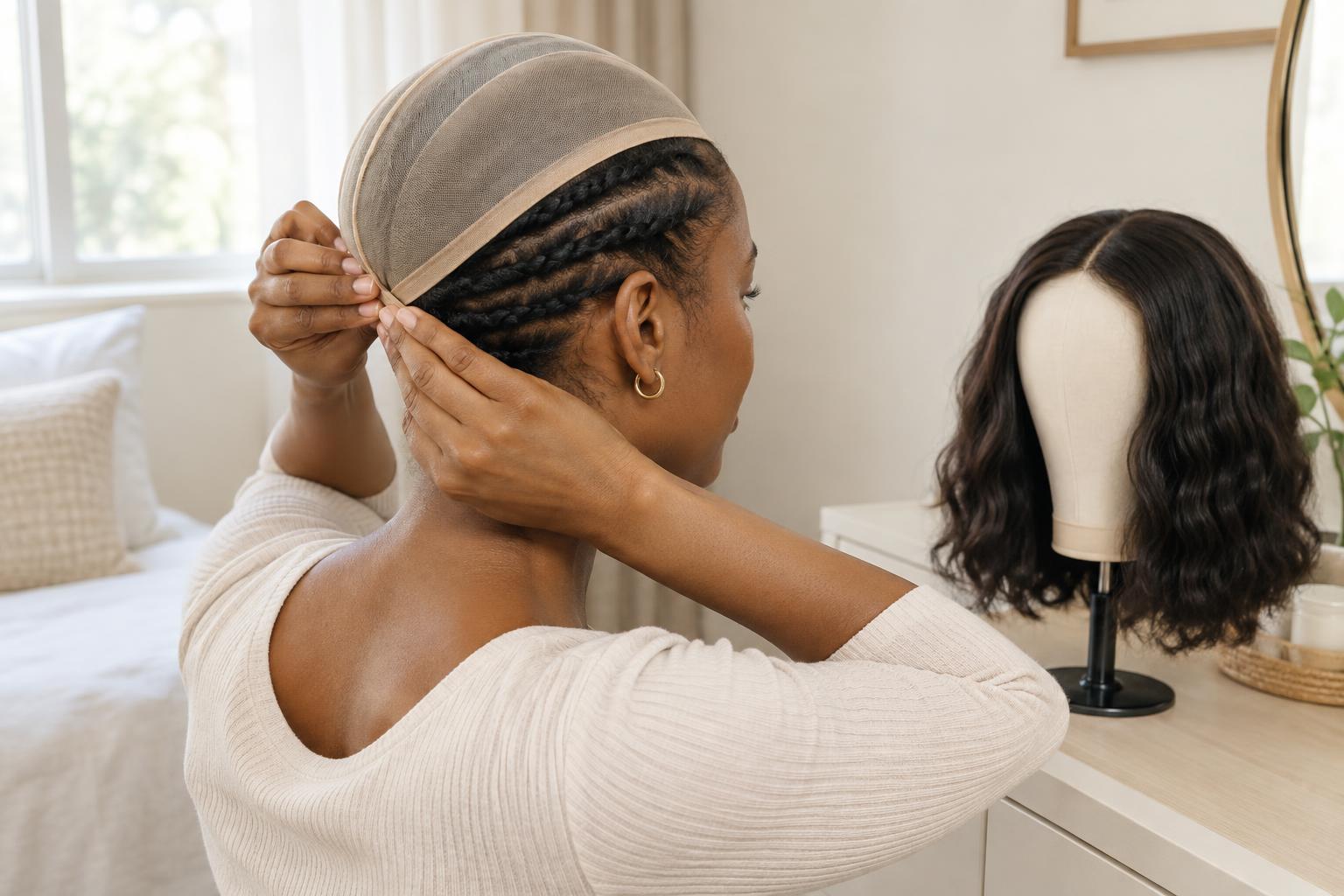
Start with the straps at a relaxed setting. Arrange any natural hair as you intend to wear it, and use the same wig cap or liner you plan to use regularly. Place the wig according to its construction, centre the front and check that the ear tabs sit at similar heights. Smooth the cap gently rather than pulling it down hard at the back.
Notice where the wig feels loose or tight. Space at the nape may respond to the straps; pressure across the forehead or a bulge at the crown probably will not. Adjust one setting at a time and reassess while the wig is on. If a strap fastener sits against your skin, make sure it lies flat and does not rub. A wig should not need to be uncomfortably tight to stay on.
When to consider another fit option
If you are choosing a new wig, measure your head using the seller’s size guide and check any listed measurements beyond circumference. Size labels are useful starting points, but trying a wig on is the clearest way to assess its shape and comfort. Where returns are available, read the conditions before altering or wearing the wig beyond a fitting.
A different cap size or construction may work better than further tightening. Some wearers also use a grip band, liner, clips or adhesive for particular styles, but these are separate choices with their own comfort and material considerations. You do not need every securing method at once. The best fit is one that places the wig where you want it, feels comfortable and stays reasonably stable without relying on strained straps.