What makes these wigs different?
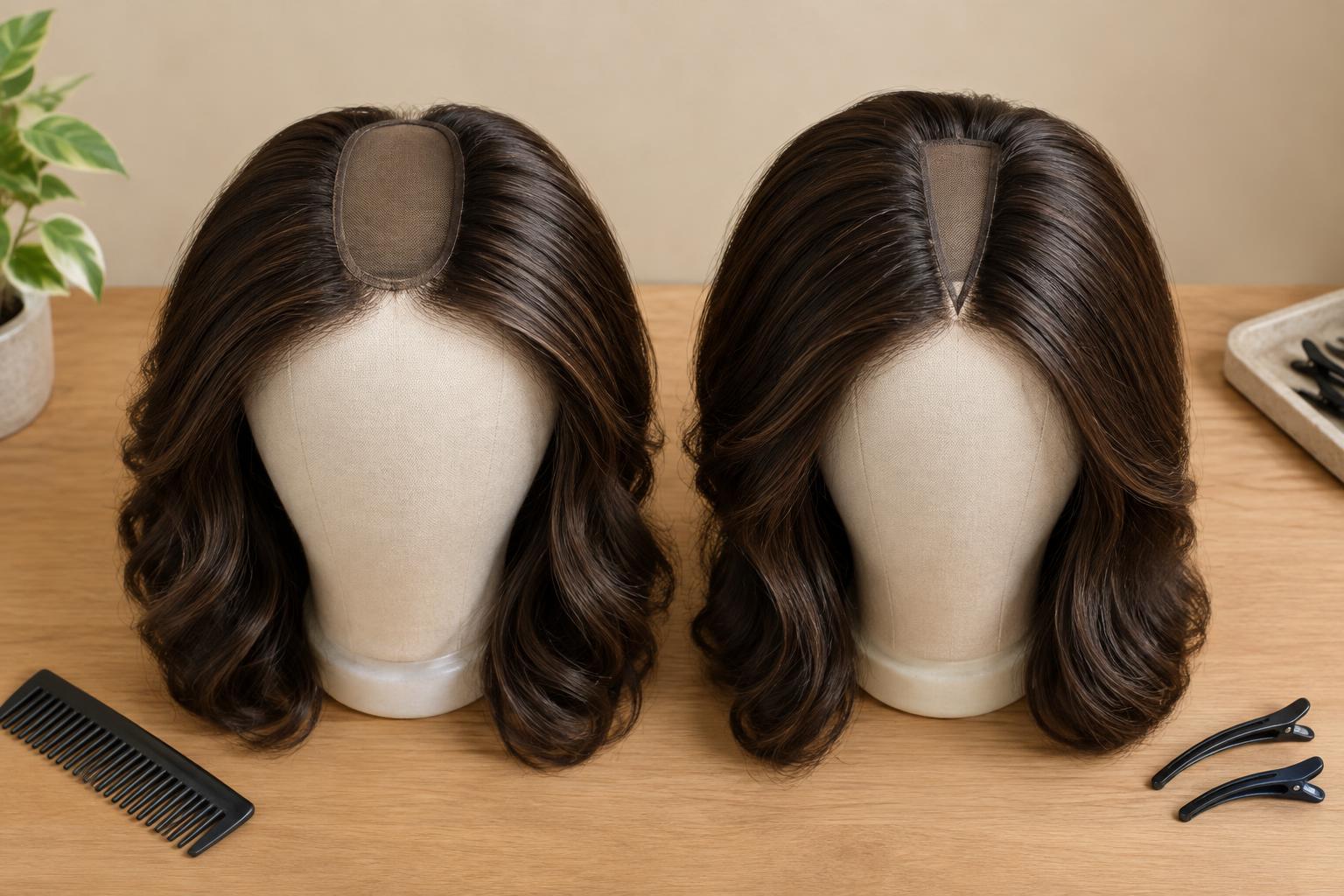
U-part and V-part wigs are named for the shape of the opening near the top of the cap. Unlike a fully covered wig cap, this opening leaves space where some of your own hair can show. The wig hair sits around that space, helping it blend with your hair at the part and, depending on the style, around the front.
A U-part opening is usually wider and more rounded. A V-part opening generally narrows towards a point, leaving a smaller gap. Those descriptions are useful starting points, not fixed specifications: opening widths, positions and attachment methods vary between products. Look at a photo of the cap itself rather than relying on the name alone.
How much hair do you need to leave out?
A U-part wig typically calls for a section of your own hair wide enough to fill the U-shaped space. That section forms a visible part and covers the edges of the opening. It can offer flexibility if you enjoy styling your own hair alongside the wig, but it also means your leave-out may need washing, detangling or styling to blend.
A V-part wig often needs less leave-out because its opening is narrower. Some are advertised as wearable with little or no leave-out. Whether that works for you depends on the particular cap, the placement of its tracks and how convincing the part looks from above and at the front. If you would rather keep your hair fully covered, check the construction carefully; a wig with a closed top or a different parting design may be a better match.
Neither shape guarantees an invisible transition. Colour, texture, density and the direction the wig hair falls all affect the result. Before choosing a style, think about whether you want to straighten, curl or otherwise adjust your own hair to match it. You may prefer a wig texture that already resembles your hair, reducing the amount of daily blending.
Fit, placement and comfort
Both styles are commonly secured with a combination of clips or combs near the opening and adjustable features elsewhere on the cap. The exact arrangement varies. Clips need hair they can grip, while combs can feel uncomfortable if they pull on the same area for long periods. The label U-part or V-part does not tell you whether a wig will feel secure on your head.
Check the cap measurements as well as the opening. A cap that is too loose can shift; one that is too tight can create pressure, even if the part looks right. Consider where the opening will sit in relation to your preferred part, hairline and natural hair growth. If you have areas you do not want to expose or place clips on, inspect product images for the opening and attachment points before buying.
When trying a wig on, position it without tugging your hair into place. It should feel stable without tightness or persistent pulling. If securing the wig repeatedly strains the same strands or feels painful, try a different placement or construction rather than forcing the fit.
Choosing between U-part and V-part
Choose based on the amount of hair you want visible, not just the letter in the product name. A U-part may appeal if you have enough hair in the desired parting area and want to use it as part of the finished style. A V-part may appeal if you want a narrower opening and a smaller section of leave-out. Neither is automatically easier: the best option depends on your hair, the wig’s construction and the look you want.
When comparing listings, check the opening’s width and position, whether it can be worn with your preferred part, and how the cap attaches. Look for clear views of the inside and top of the wig. Product descriptions may also use terms such as “no leave-out” or “glueless”; ask what those terms mean for that specific wig. “Glueless,” for example, does not necessarily mean it will stay in place without clips or other built-in fastenings.
Finally, plan for the routine after purchase. Your own hair and the wig hair may need different care, especially if their fibres differ. Keeping both detangled and avoiding unnecessary tension at the opening can make either style more comfortable to wear. The most useful comparison is the one you make against your own parting preference, blending effort and fit needs.