Start with the fastening, not the decoration
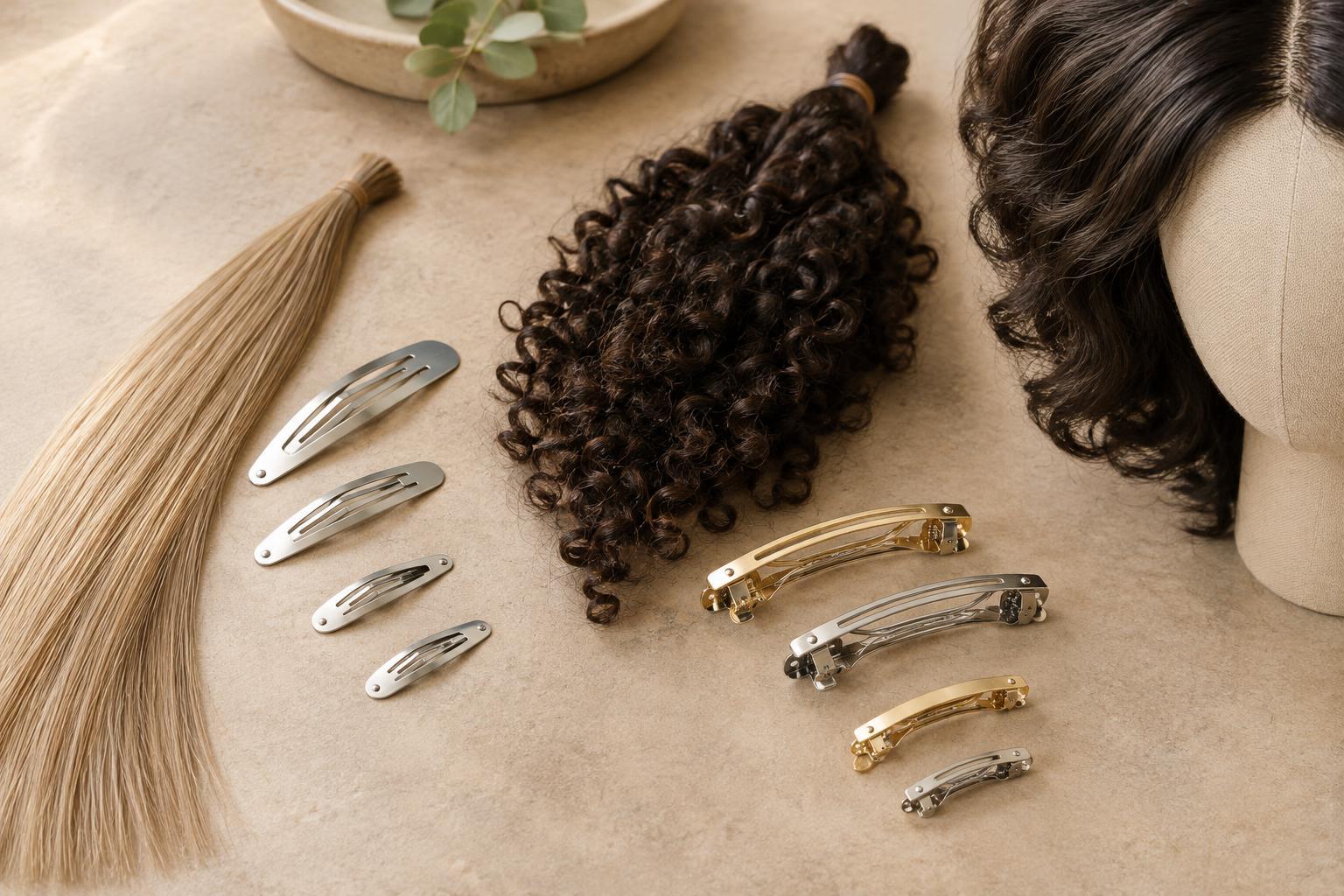
Snap clips and barrettes can serve similar styling purposes, but they hold hair in different ways. A snap clip is a curved piece of metal that bends open and clicks shut, usually close to the head. It is useful for securing a small section, such as a fringe or a strand beside the face. A barrette typically has a decorative top and a clasp underneath that closes around a section of hair. Its shape and capacity vary considerably.
When choosing either accessory, consider how much hair must fit inside it, how firmly it needs to hold, and whether it feels comfortable against the scalp. Hair thickness is part of the answer, but texture, length and the size of the section matter too. A clip that holds a few fine strands may not close over a thick twist; a roomy barrette may slip when asked to hold only a narrow section.
For fine or sparse hair, look for grip without weight
Fine hair often slides out of a smooth fastening, especially if the accessory is heavy or the section is small. A lightweight snap clip can work well for a side part or fringe if its ends lie flat and do not scrape the scalp. Try fastening it over a slightly wider section rather than adding more clips to the same small area. The hold should feel secure without needing to pull the hair tight.
For a barrette, check the space beneath the closed clasp. If there is a large gap, fine hair may not fill it, allowing the barrette to shift. A smaller clasp or one with a gentle gripping surface may be more useful. Test it by turning your head and moving naturally for a minute or two. If it slides immediately, choose a different size or fastening instead of repeatedly tightening the same section.
For thick or textured hair, allow enough room
Thick hair can make a fastening feel secure while placing strain on its hinge or clasp. Choose a barrette that closes easily around the section you intend to wear. If you have to force it shut, use less hair or try a larger design. A longer barrette is not necessarily roomier: the depth between its top and clasp is just as important. For a half-up style, you may find it easier to fasten a smaller section than to gather every layer at once.
Curly, coily or otherwise textured hair may have volume without fitting neatly beneath a narrow clasp. Avoid dragging a closed accessory through the hair, which can snag strands. Instead, position the open fastening around a gathered section and close it gently. Snap clips are often best used for smaller sections or as visible accents rather than to compress a large amount of hair.
Check comfort and finish before wearing
Run a finger over the parts that will touch your hair and scalp. Rough edges, exposed springs and sharp teeth can catch, particularly when you remove the accessory. Open and close the fastening a few times to check that it operates smoothly. A strong clasp is not automatically a better one: pressure in one spot can become uncomfortable over several hours.
Placement also changes how a clip performs. A barrette worn at the back may need to resist more movement than one used to hold a small side section. If an accessory pulls, try repositioning it or taking less hair. To remove a snap clip, open it fully before lifting it away; to remove a barrette, release the clasp and ease out any strands caught around the hinge.
Using clips with wigs and hairpieces
A wig or hairpiece adds another consideration: the accessory must hold the hair without catching or stressing its base. Avoid pushing a snap clip through lace, mesh or a delicate parting area. When using a barrette, gather the wig hair itself rather than clamping the cap beneath it. Keep styles light enough that the accessory does not tug the wig out of position.
Before wearing a new fastening for a full day, try it briefly and inspect both the hair and the accessory when you take it off. Look for trapped strands, slipping or pressure at the attachment point. The best choice is not a universal size labelled for your hair type; it is the fastening that closes without force, stays put during ordinary movement and comes away without snagging.