What is a knot in a lace wig?
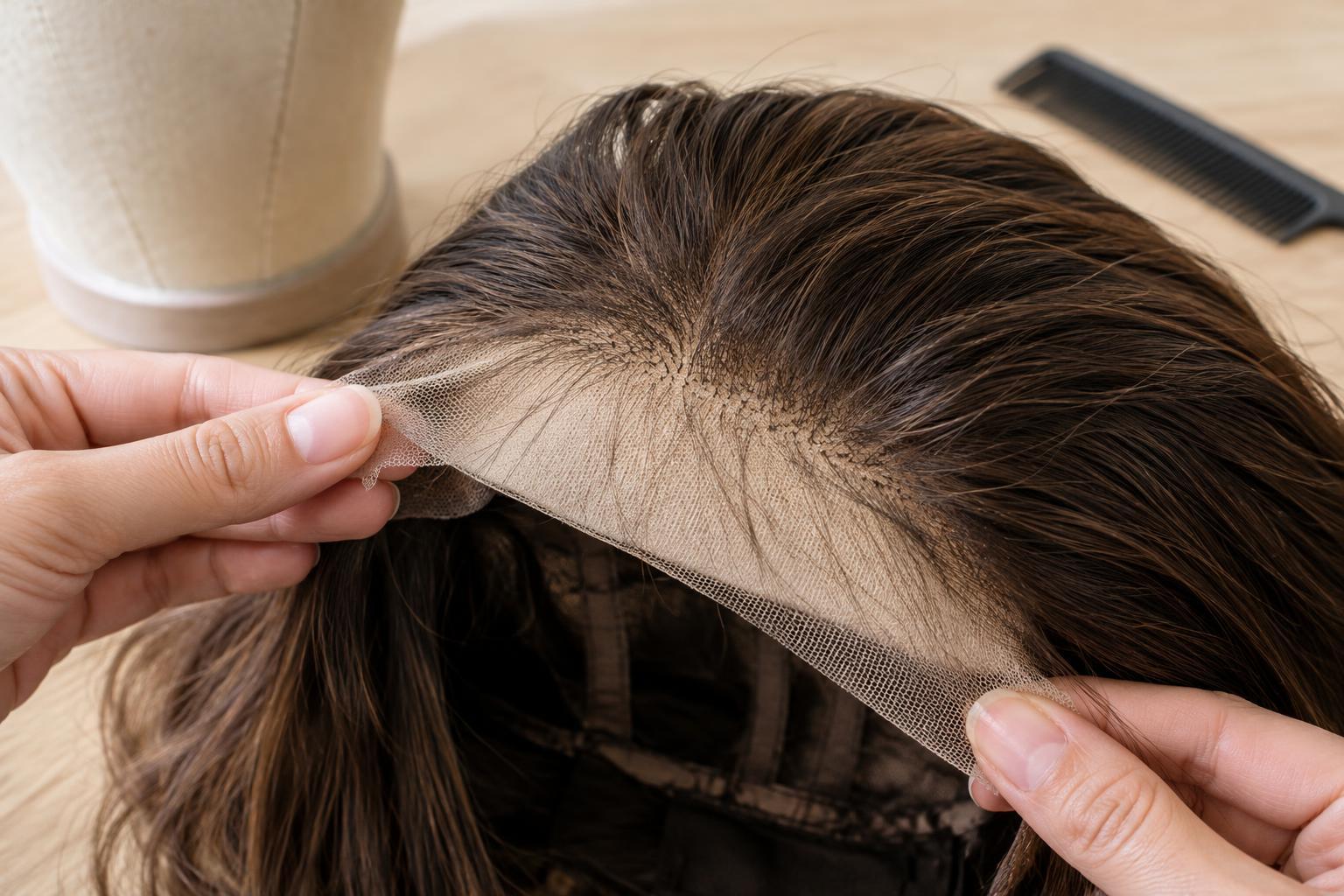
In a hand-tied lace wig, hair is secured to a mesh base by tying it around individual strands of lace. The tiny points where the hair is attached are called knots. They help keep the hair in place, but they can also be visible, especially at the front hairline or along a parting. Their appearance depends on more than the knot itself: hair colour, lace colour, density and lighting all make a difference.
Single and double knots describe ways of securing hair to the lace. Broadly, a single knot uses a simpler tie, while a double knot adds another turn for a firmer hold. Sellers do not always use these terms consistently, and a wig may combine knot types in different areas. If knotting matters to your choice, ask which areas use each type rather than relying on a product name alone.
How knot type affects appearance
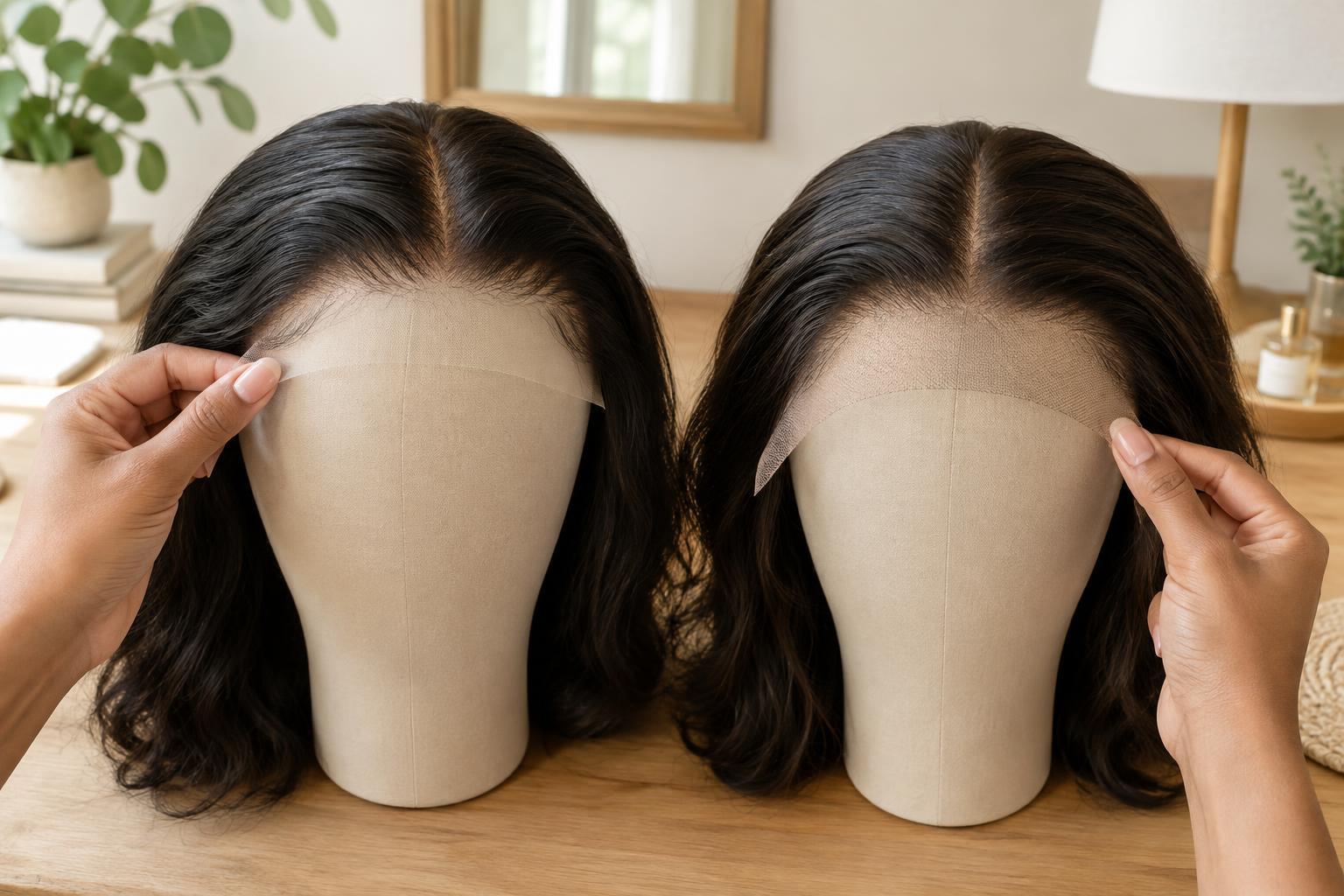
Single knots tend to make a smaller point of attachment. At a lightly populated hairline, that can help the hair appear to emerge from the lace rather than from a row of visible dots. This is one reason a maker may use single knots near the front or around a parting, where the base is more likely to be seen.
Double knots generally create a slightly larger point of attachment. On dark hair against pale lace or skin, those points may be easier to notice up close. In denser areas, however, the surrounding hair can conceal them. A carefully spaced hairline made with double knots may look more convincing than a crowded hairline made with single knots. Knot type is one detail, not a guarantee of a natural-looking result.
How knot type affects durability
A double knot can offer a more secure attachment, which may be useful in areas exposed to frequent handling or brushing. A single knot may be more prone to loosening if the hair is pulled repeatedly. That does not mean a single-knotted wig will shed quickly: construction quality, the condition of the lace and everyday care also affect how long it lasts.
The trade-off is worth considering by area rather than across the whole wig. A maker might favour less visible knots at the front and sturdier knots farther back. Neither choice protects the lace from forceful detangling, rough adhesive removal or repeated tugging at the same spot. Loose hairs can also come from ordinary fibre breakage, so not every hair left in a brush indicates a failed knot.
Where bleaching and density fit in
Some lace wigs have bleached knots, a treatment intended to make dark attachment points less noticeable. It can improve the look of a parting or hairline, but processing may weaken the hair at the knot if it is overdone. Bleaching does not turn a double knot into a single knot, and it cannot correct a hairline that is too dense for the look you want.
When comparing wigs, look at the front hairline and parting in clear, close-up images if available. Notice whether the spacing becomes gradually fuller behind the hairline and whether the knots stand out against the lace. Product photos may be styled, tinted or taken under flattering light, so they are a starting point rather than a complete test. The right density and a suitable lace shade may matter more to you than choosing one knot type throughout.
Choosing and caring for your wig
If an understated hairline is your priority, ask about single knots or a mixed-knot construction at the front. If you expect to handle a particular area often, ask how it is secured and whether double knots are used there. Also check whether the description refers to the front, the parting or the entire lace area. There is no universal best option: the useful question is how the construction serves the way you plan to wear and style the wig.
Whatever the knot type, be gentle near the base. Detangle the hair in sections, starting at the ends, and support the hair above a tangle rather than pulling against the lace. Follow the wig maker’s cleaning and adhesive-removal guidance, and let the base dry before storing it. These habits will not make knots permanent, but they can reduce avoidable stress on both the attachments and the lace.