What do “single-drawn” and “double-drawn” mean?
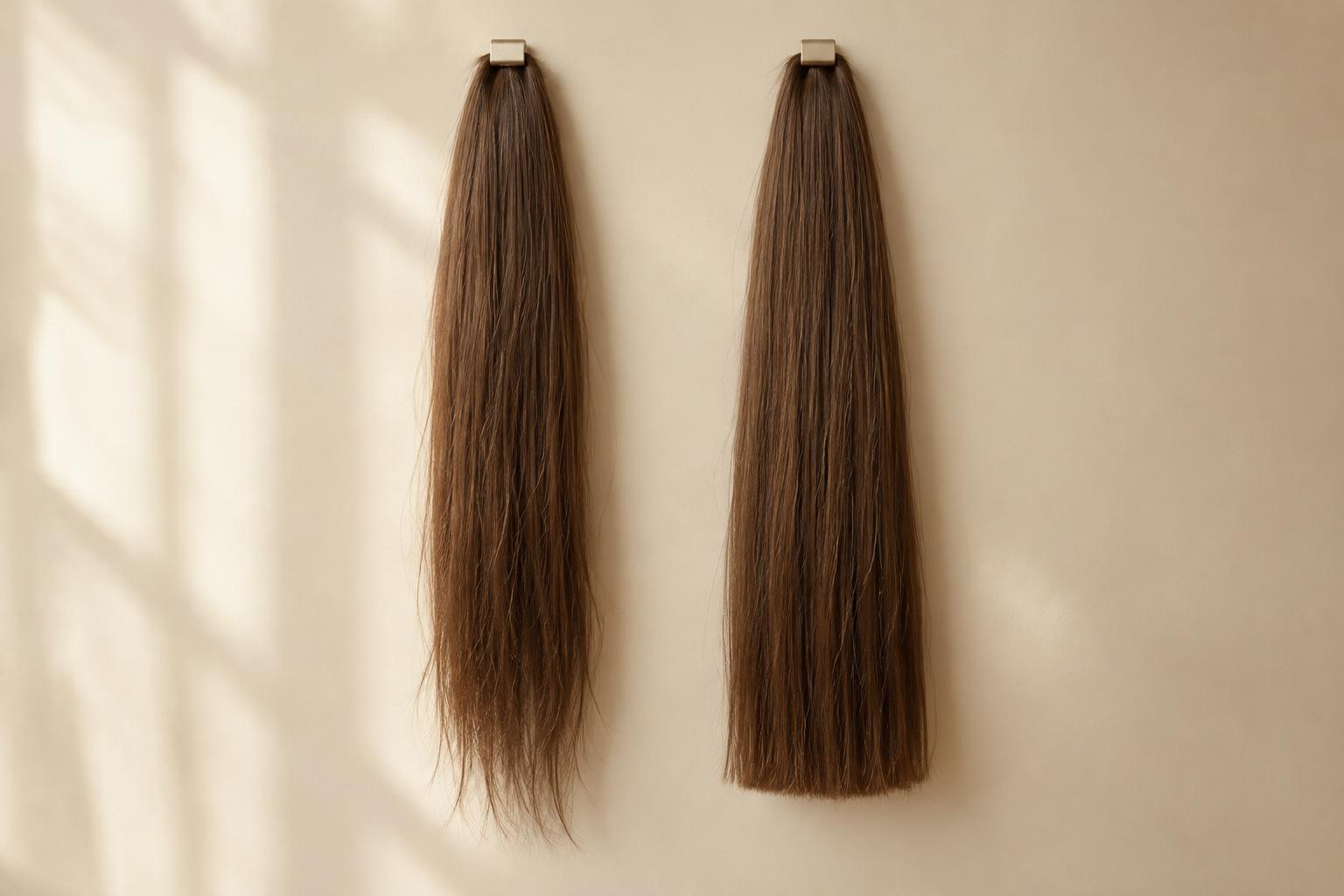
The terms single-drawn and double-drawn usually describe the mix of strand lengths in human hair prepared for wigs, hairpieces or extensions. A single-drawn bundle contains a range of lengths: many strands reach towards the stated length, while others stop sooner. Double-drawn hair has been sorted so that more strands reach close to the stated length. The result is generally a fuller-looking lower edge.
Think of the difference as a change in shape, not simply a change in how much hair is present. In single-drawn hair, the shorter strands add body higher up, but fewer continue all the way to the bottom. In double-drawn hair, more of the visible mass continues towards the ends. Neither term guarantees that every strand is the same length, and sellers may use the labels differently.
How the ends look and move
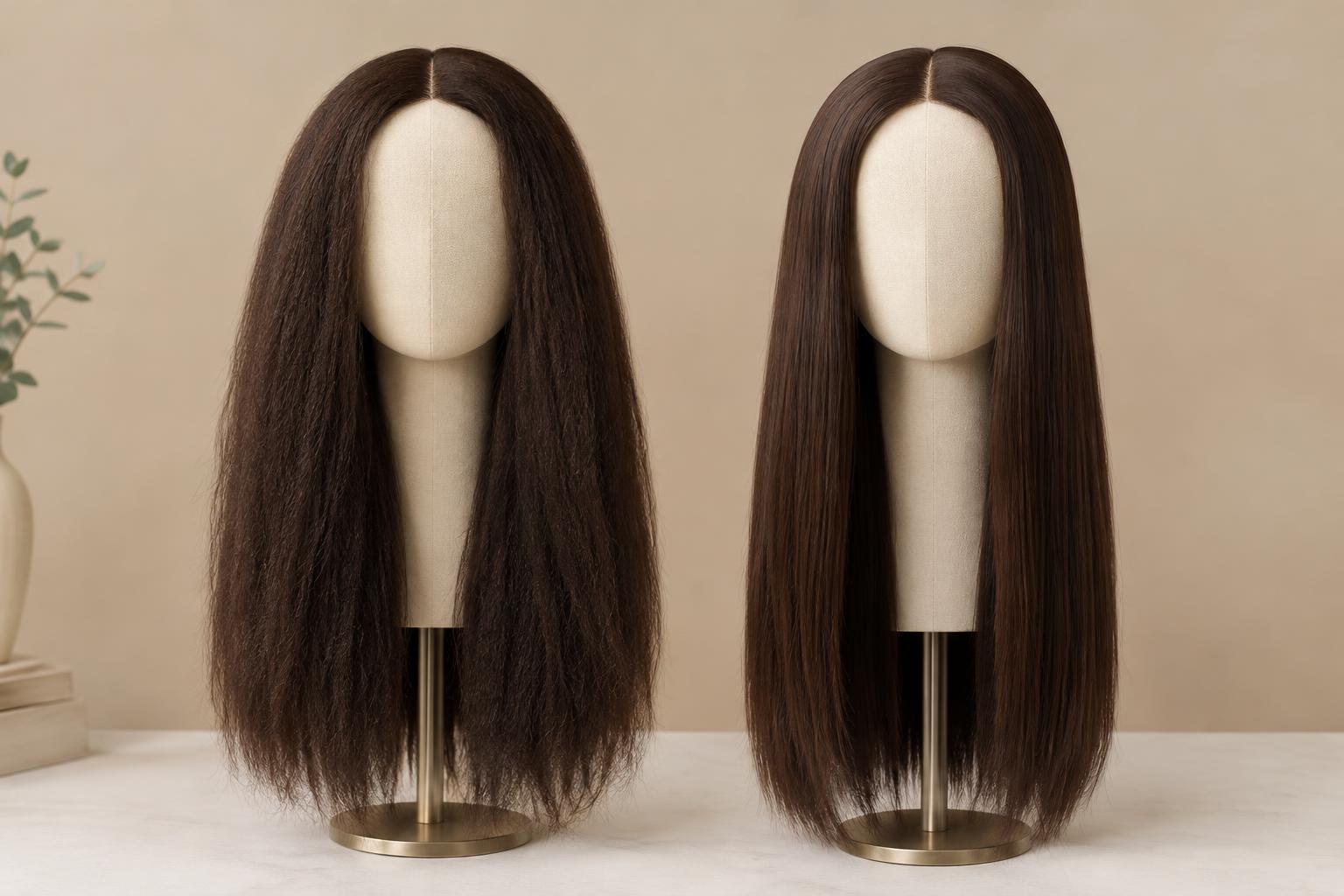
Single-drawn hair often narrows gradually towards the tips. That taper can look soft and natural, particularly in longer styles, loose waves or a cut intended to have movement. It may also make the final few centimetres look wispy when the hair is straightened or gathered into a ponytail. If you want a crisp, solid-looking hemline, you might need to trim some length away.
Double-drawn hair tends to give a denser line at the bottom. It can suit blunt cuts, sleek styles and looks where you want the ends to appear substantial without cutting back as far. It may also feel heavier or look less tapered than you expect. A haircut can soften that edge, but if you plan to add many layers, paying extra for uniformly long strands may bring less visible benefit.
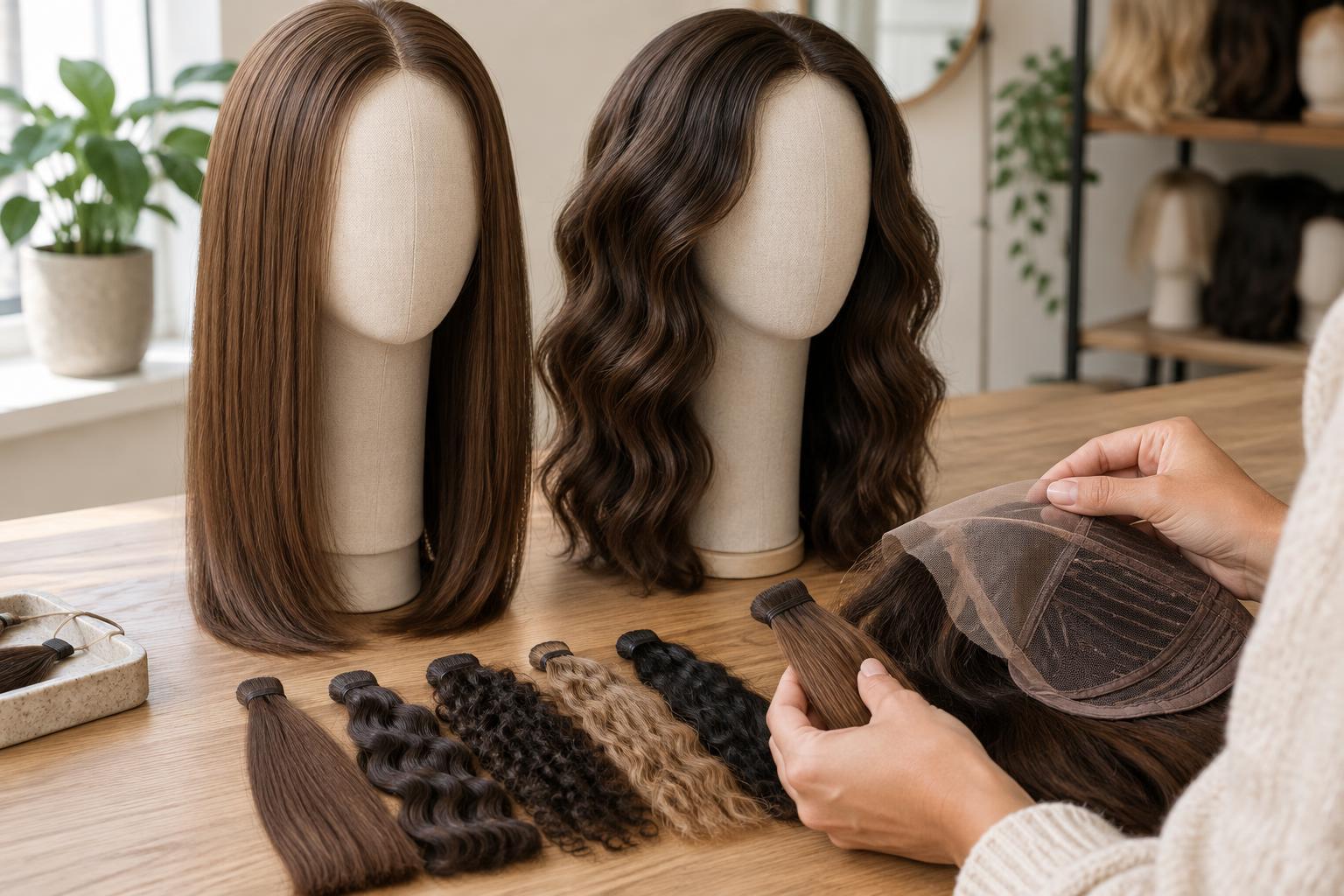
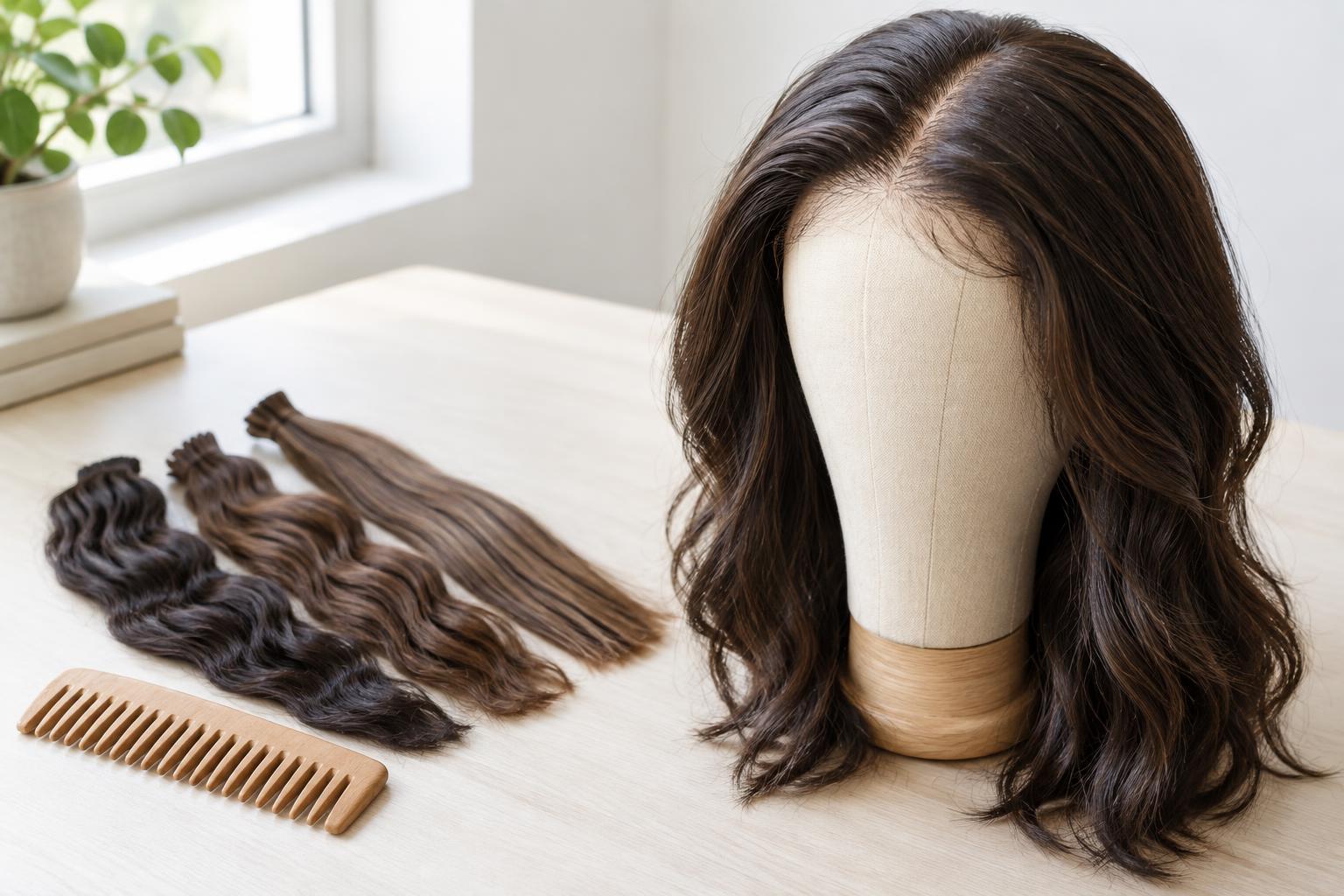
Texture changes the effect. Curls and waves can conceal a sparse lower edge or make a full edge look softer. Straight hair makes differences in strand length easier to see. For a useful comparison, look at the hair in the texture and approximate length you expect to wear, rather than judging by a bundled product photo alone.
Full ends are not the same as overall density
A wig can have full ends yet feel light at the crown, or have plenty of hair near the cap and still taper noticeably below the shoulders. The drawn designation concerns strand lengths; overall density also depends on how much hair is attached and where it is placed. The cap construction, weft spacing and any hand-tied areas can all affect how the finished piece looks.
It helps to separate three questions when comparing products: How much hair is there near the top? How much reaches the bottom? And what shape has the hair been cut into? Product descriptions do not always answer all three. Ask for a view of the hair hanging freely, including its ends, rather than relying only on a close-up of the cap or a styled image.
What the label does not promise
Double-drawn is not a general quality grade. It does not, by itself, tell you whether the hair is cuticle-aligned, how it has been processed, how securely it is attached or how it will behave after washing. Likewise, single-drawn does not mean damaged hair. Both can make a wearable piece when the construction and finish suit your needs.
A stated length can also be misleading if you are comparing different textures or measuring methods. A wave or curl appears shorter when left in its natural shape than when gently extended. Check where the seller measures from and whether the length refers to stretched hair. If a listing makes a strong claim about fullness, look for images of the actual style or ask how the ends compare with the upper lengths.
Choosing the finish that suits you
Start with the silhouette you want. If you like an airy, gradually tapered finish, single-drawn hair may give you that shape without much cutting. If your priority is a blunt line or a full-looking ponytail, double-drawn hair may be a better starting point. For either option, consider the finished length you need after any trim, not just the length printed on the listing.
Before buying, compare pieces at similar lengths and textures, and ask to see the bottom edge from the back. If you can handle the hair, let it hang freely and check how much of its fullness reaches the tips. Once you have chosen a piece, gentle detangling and care suited to its material can help preserve the ends. Those habits cannot turn a tapered bundle into a double-drawn one, so choose the shape you want at the outset.