What makes a silk top different?
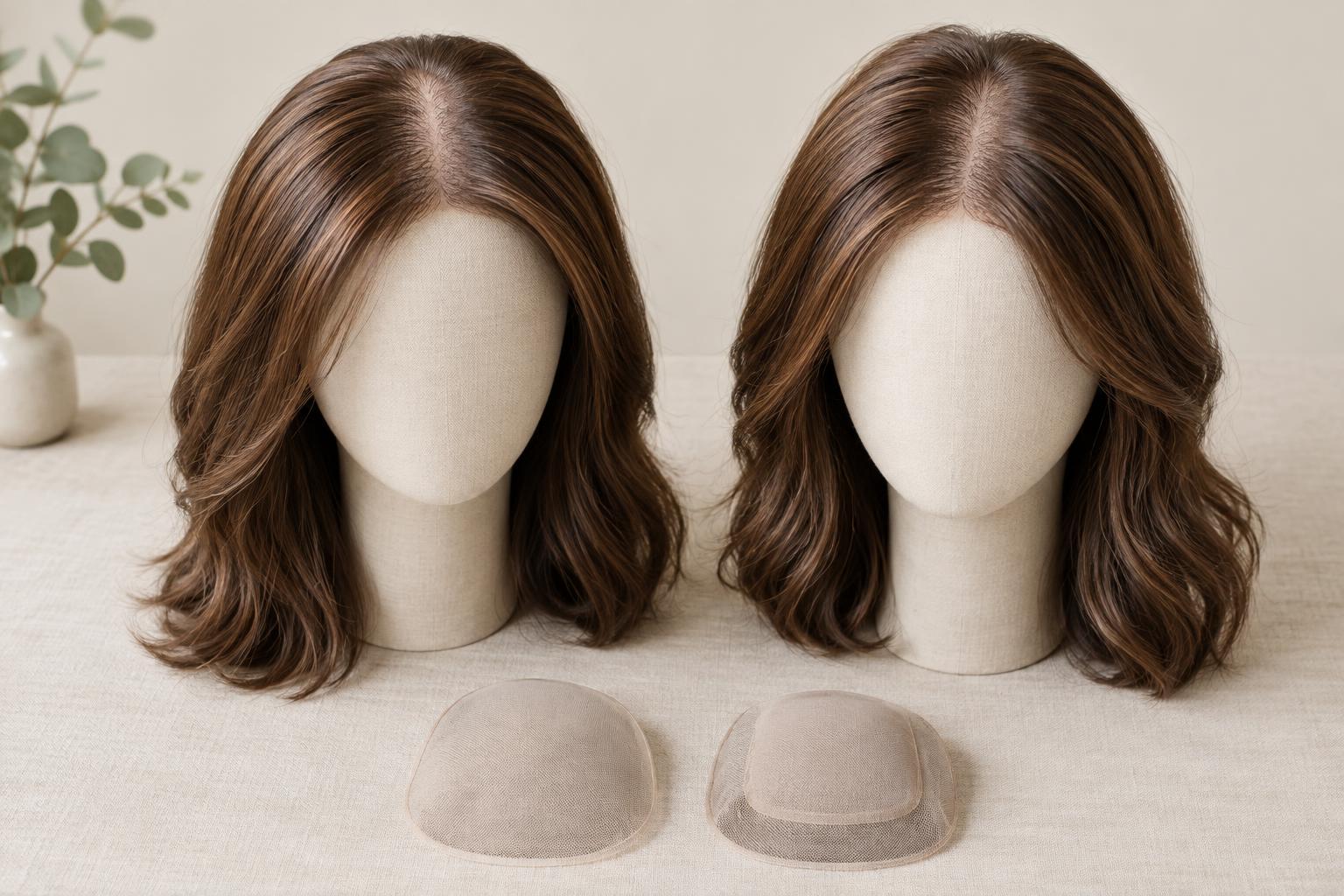
A silk-top wig has a specially constructed area, usually around the crown and parting, designed to resemble a scalp beneath the hair. The rest of the wig may use lace, a wefted cap or a combination of materials. “Silk top” describes the parting area rather than the fibre used for the hair: a wig with a silk top may have human hair or synthetic hair.
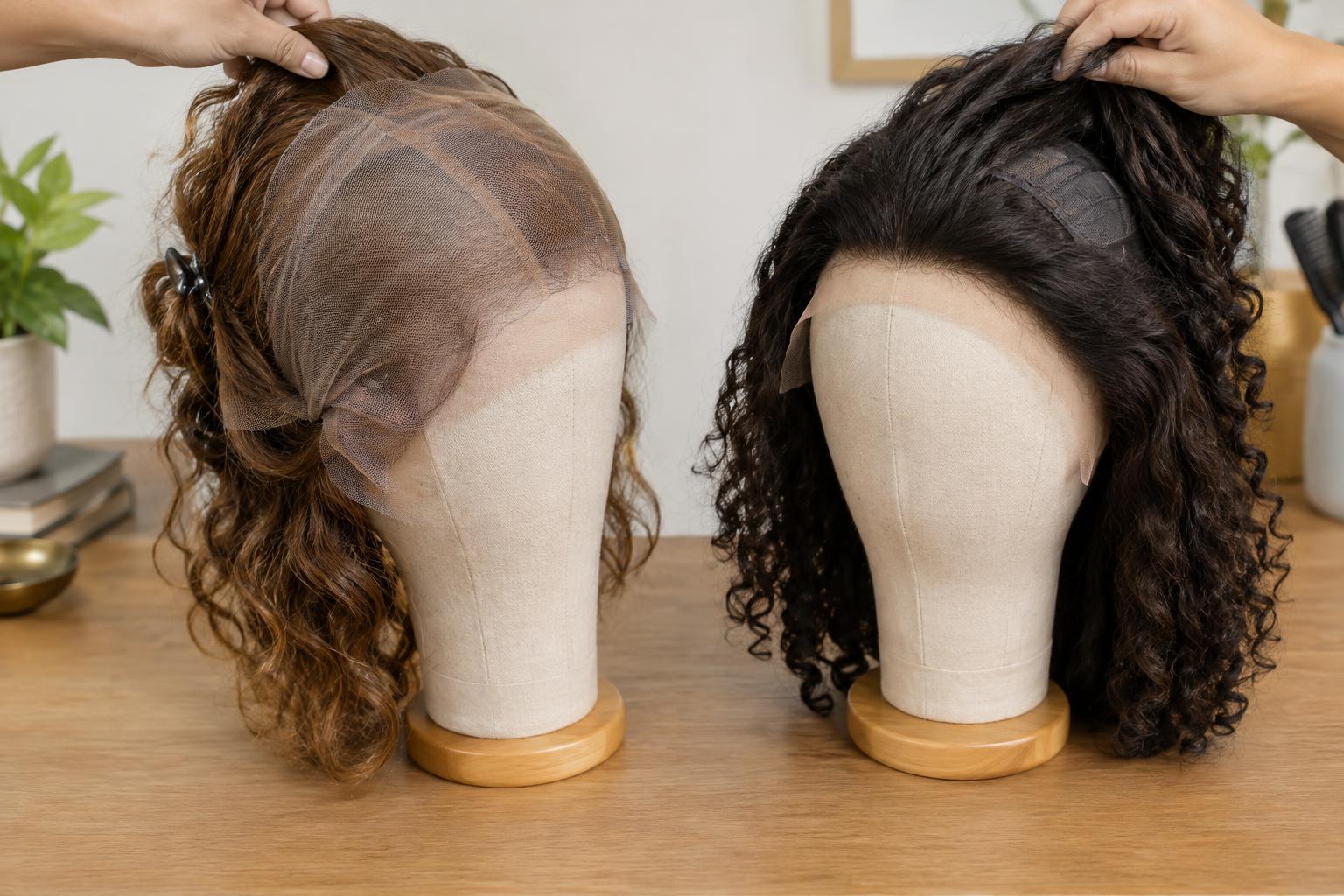
On an ordinary lace part, individual hairs are tied to a fine mesh. Those attachment knots may be visible up close, particularly when the hair and lace contrast. A silk top places a smooth, scalp-coloured layer over the knots. Hair passes through that upper layer, so the visible surface shows strands emerging from a pale base instead of knots sitting on mesh. Construction varies between makers, so the size and finish of the silk area are worth checking rather than assuming every silk-top wig looks or feels the same.
How the layered base creates the effect
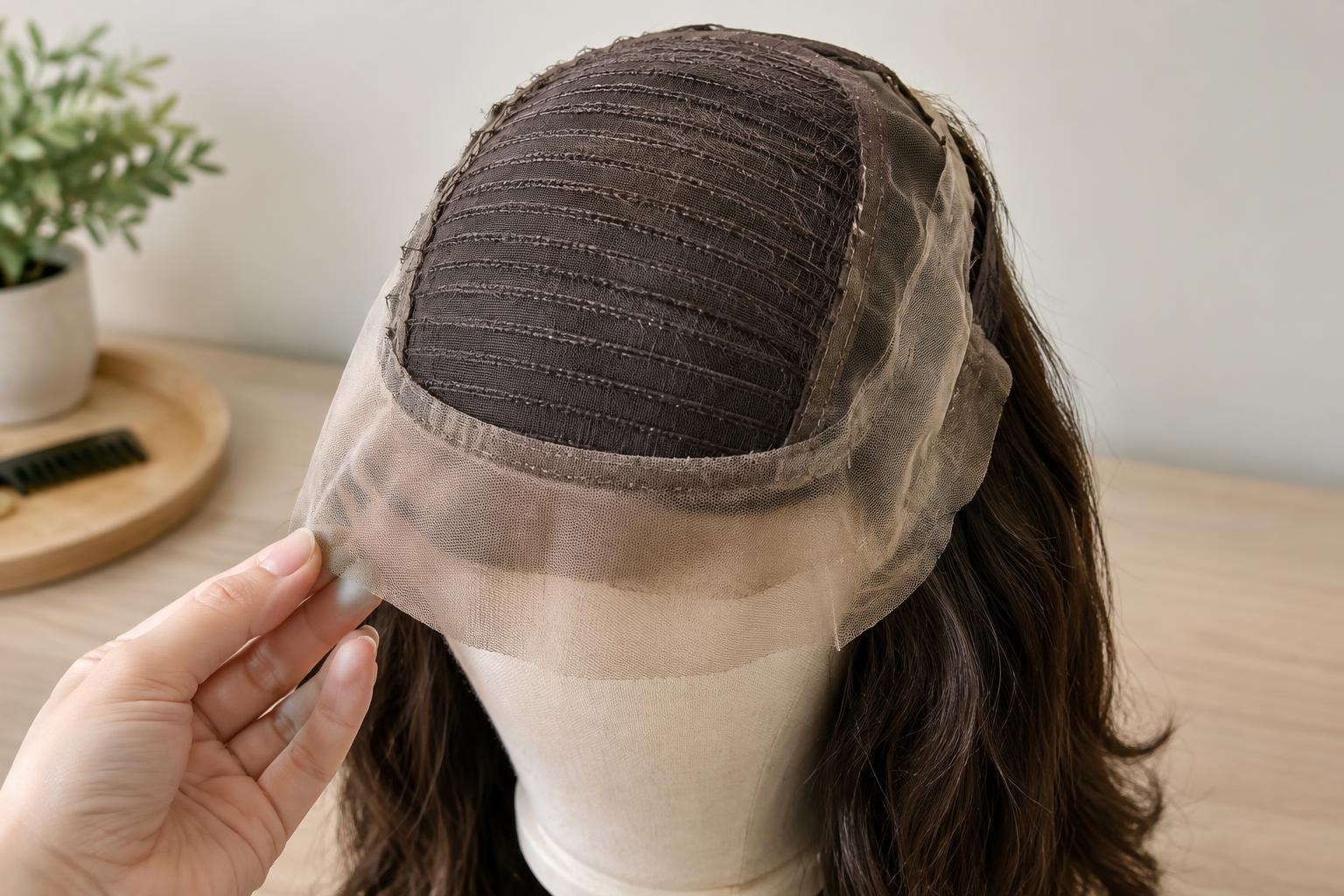
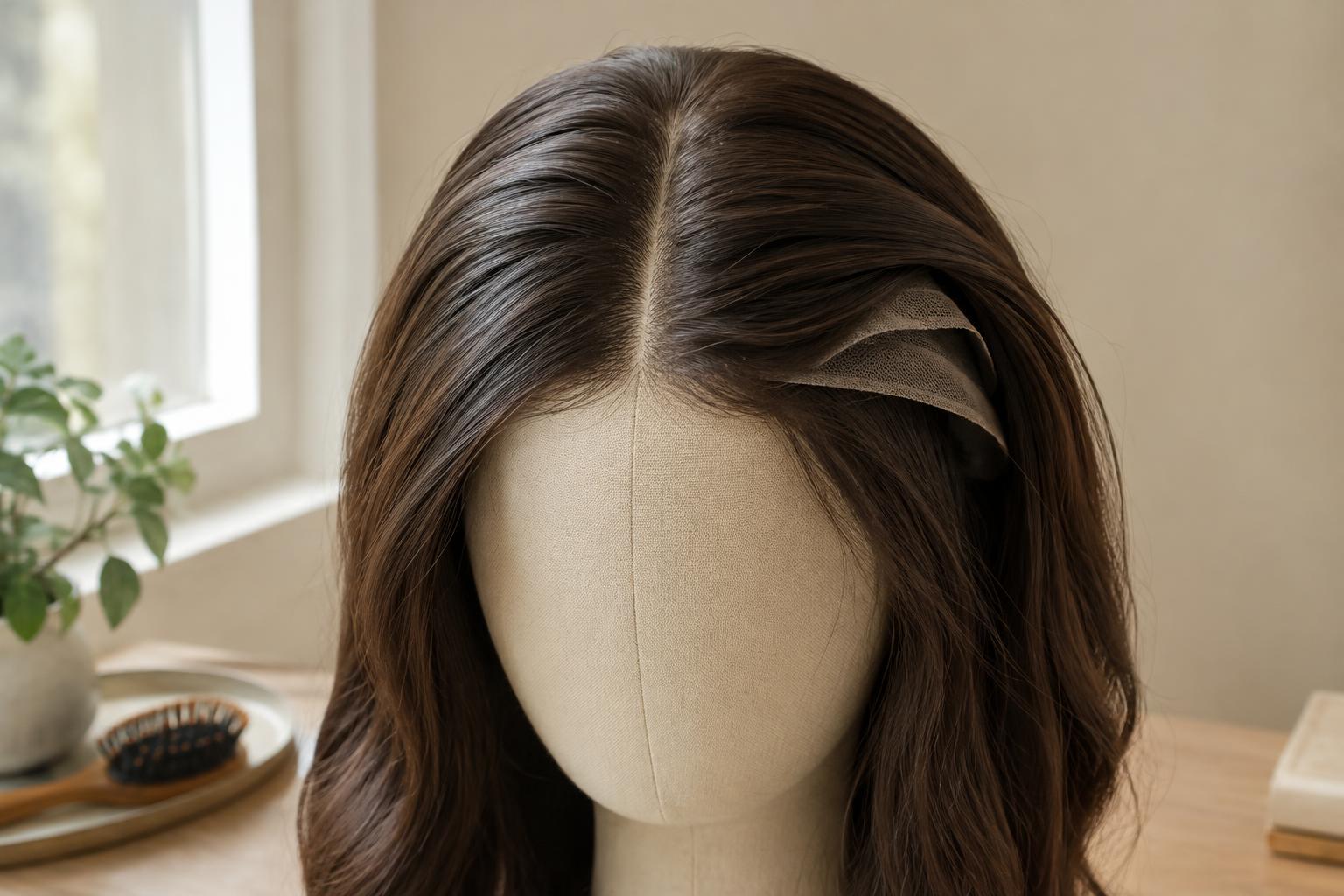
Think of the silk top as a small, layered panel. Hair is secured to a lower foundation, while a fabric layer above it conceals the attachment points. The strands are drawn through the upper layer and can be arranged into a part. Because the knots are underneath, the space between the strands can look more like skin than a conventional knotted part does.
The illusion depends on more than the layers alone. The colour of the visible panel, the density of hair around the part and the direction in which the strands lie all affect the result. A panel that is much lighter or darker than your skin may stand out, while very dense hair can make the part look narrow or difficult to see. Some wigs allow the part to move within the silk area; others have a more fixed-looking part. The available parting space ends at the edge of the panel.
The advantages and trade-offs
A silk top is appealing if you want a defined part without seeing many knots or doing much to disguise them. It can be especially useful for styles that expose the crown. Since the scalp-like appearance comes from the cap construction, you may not need to rely on powder or other cosmetic products at the parting.
The extra layers can also make the top feel thicker or less flexible than a fine lace area. Depending on the wig, the boundary of the panel may create a slight change in height or texture. A silk top does not automatically give a natural-looking hairline: if the style exposes the front edge, examine that construction separately. It also does not guarantee a cool or comfortable fit. Cap size, overall design and how securely the wig sits matter just as much.
What to check when choosing one
Start with the part you intend to wear. Look at the silk area from above and at an angle, both with the hair arranged as supplied and with it gently moved to your preferred position. Check whether the panel is wide enough for that part, whether its colour works for you and whether the hair density suits the look you want. If you expect to wear the hair away from your face, inspect the front edge as carefully as the crown.
Then consider the whole wig rather than the silk top in isolation. Compare your head measurements with the seller’s size guide, and look for information about cap construction, adjustability and hair material. Product photos may show the part at its most flattering angle, so close-up views of the cap and parting can be useful. If you can try the wig on, notice whether the top sits flat and whether you can wear it comfortably without pulling the adjusters too tight.
Styling and caring for the parting
Handle a silk part gently. Use a comb or your fingers to guide strands into place without repeatedly tugging them through the panel. If the wig is heat-friendly synthetic hair or human hair, follow its specific heat limits and care directions before changing the style. Avoid assuming that every silk top can be washed, heated or repositioned in the same way.
When cleaning, use products suitable for the wig’s hair material and rinse the top thoroughly without scrubbing the parting area. Let the wig dry in a position that supports the cap, and store it so the crown is not crushed. A silk top can provide a convincing starting point for a scalp-like part, but its best feature is a parting that works with your preferred style and feels comfortable enough to wear.