What do Remy and non-Remy mean?
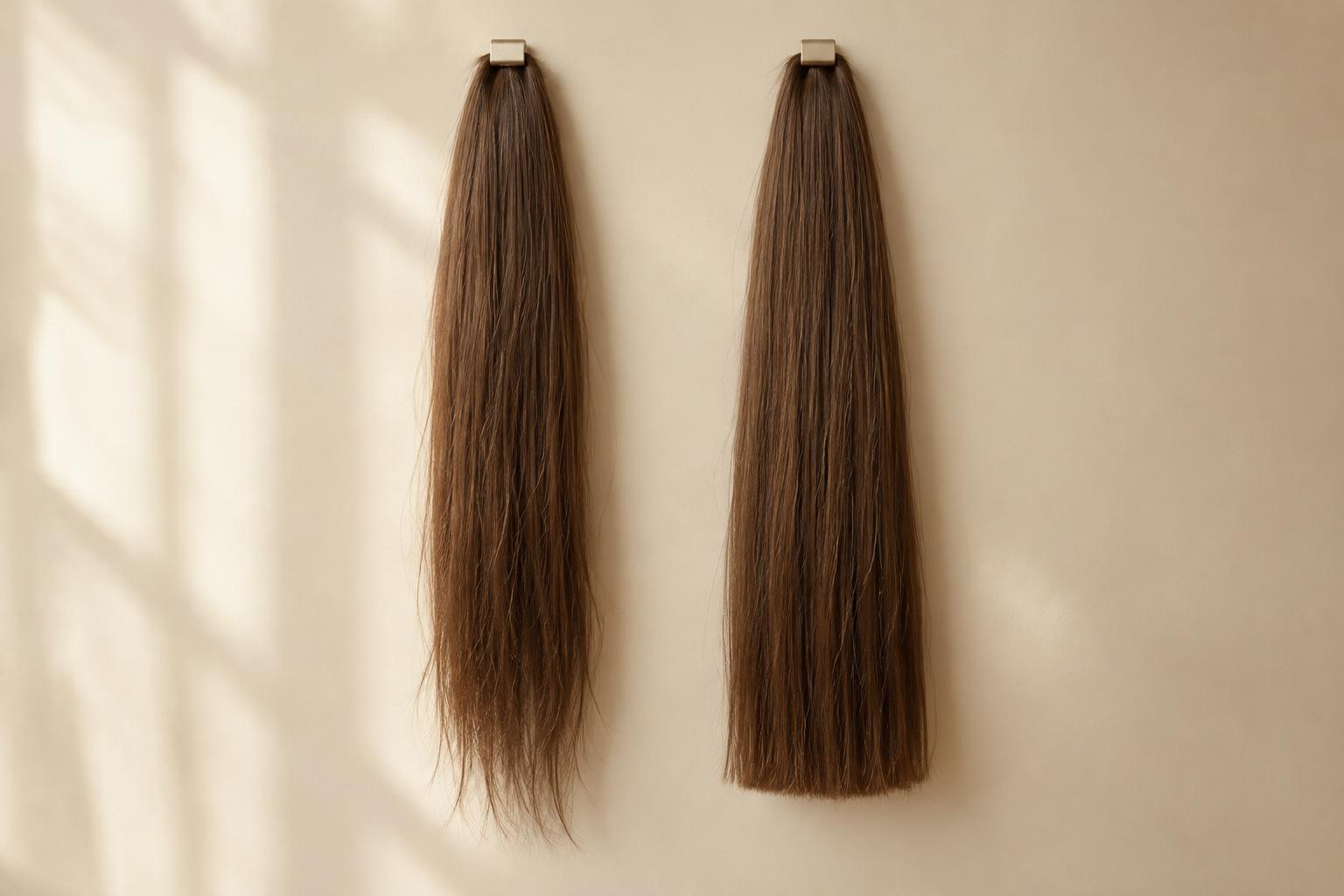
The outer layer of a hair strand is called the cuticle. It consists of overlapping scales that run along the strand from root to tip. In Remy human hair, the strands are collected and arranged so that their cuticles point in the same root-to-tip direction. Non-Remy hair may contain strands pointing in different directions.
Think of these terms as descriptions of strand arrangement, not complete verdicts on a wig’s quality. Hair strength, previous processing, construction and daily care also influence how a piece feels and wears. A well-made wig using non-Remy hair may suit someone’s needs better than a Remy wig with the wrong fit or density.
Why alignment can affect tangling
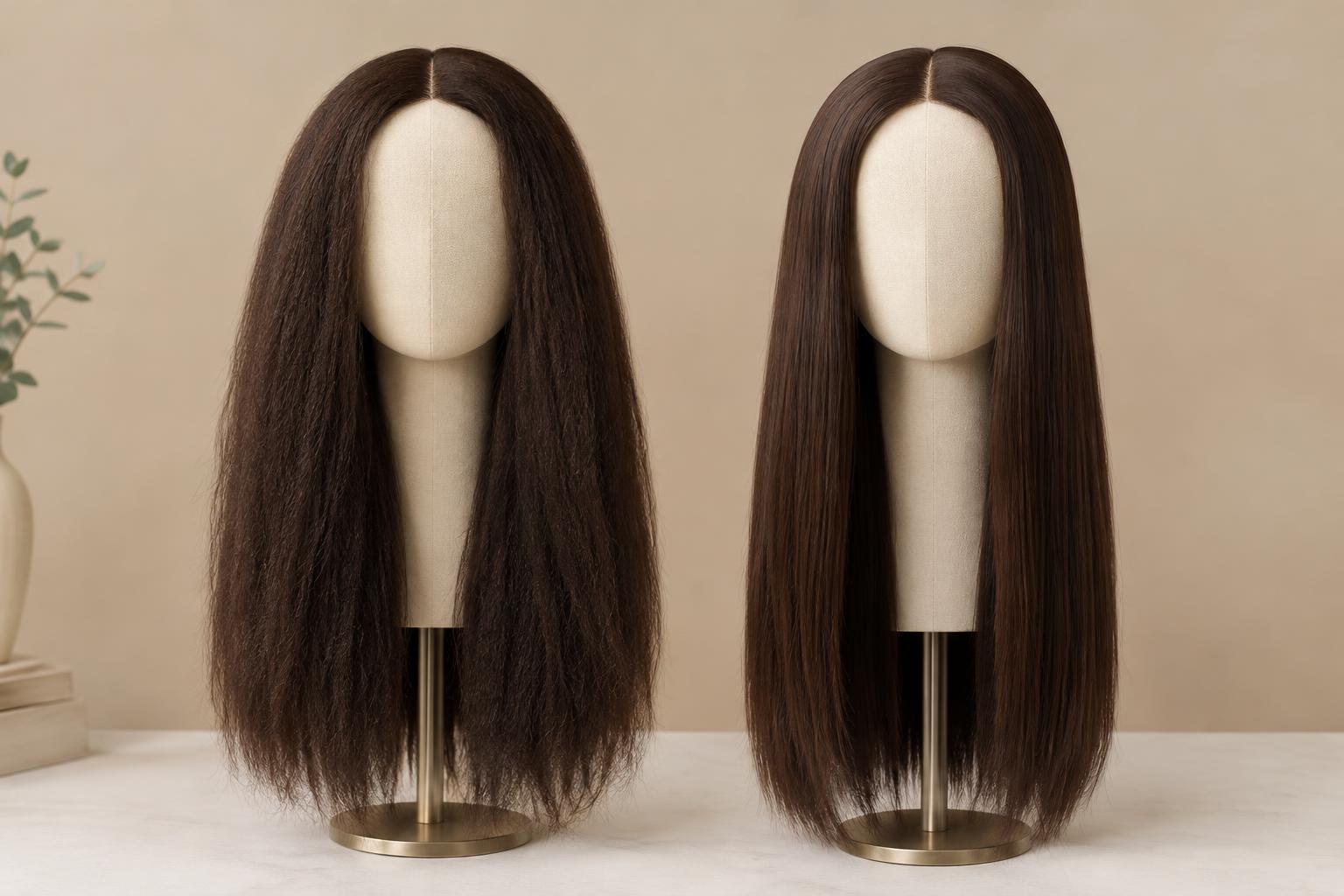
When neighbouring strands run in the same direction, their cuticle surfaces are less likely to catch against one another during movement, washing and brushing. That can make aligned hair easier to detangle and help it remain manageable with repeated wear. The benefit may be especially noticeable on longer pieces, where the lengths rub against clothing and each other.
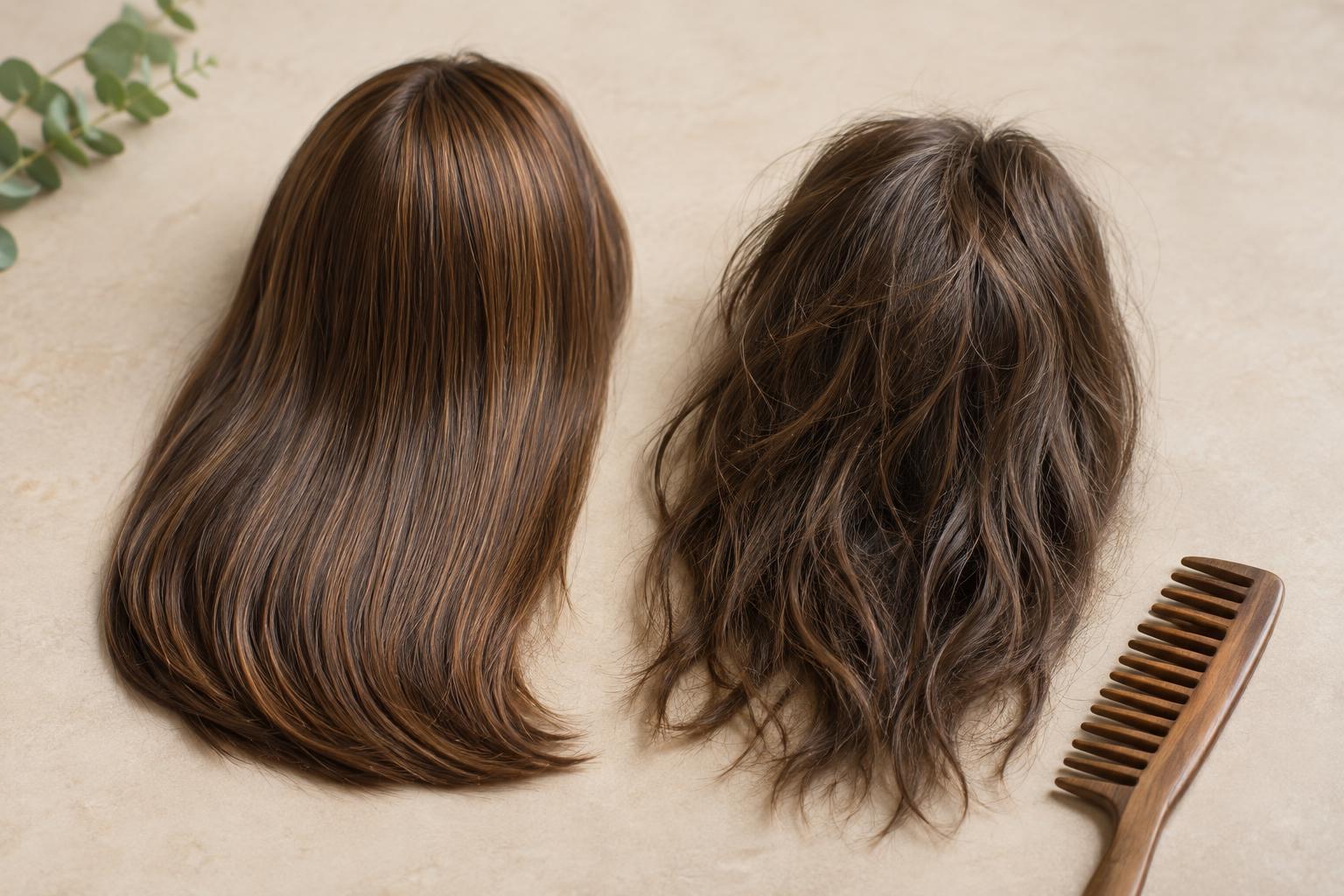
With mixed-direction strands, some cuticle scales face against others. This can increase friction and contribute to matting or a rough feel, particularly as the hair ages. It does not mean every non-Remy piece will tangle immediately: length, texture, processing and handling all matter. Even Remy hair can knot at the nape, where collars and scarves create friction.
The cuticle is only one part of the experience. A smooth piece straight from its packaging may have been treated to create that feel. How it behaves after several gentle washes is often more informative than how easily a brush passes through it on the first day.
Processing changes the comparison
Human hair for wigs and hairpieces may be coloured, lightened, heat-styled or chemically treated to achieve a particular appearance. Such processing can alter the cuticle and affect softness and durability, regardless of whether the strands were originally aligned. Some non-Remy hair is processed to reduce cuticle-related friction and may be given a surface coating for extra smoothness.
A coating can make hair feel silky at first, but that initial finish may change with washing and wear. Conversely, a Remy label does not promise unprocessed hair, intact cuticles or a particular lifespan. Terms such as “virgin,” “raw” and “premium” may appear alongside Remy in product listings, but they describe different things and are not interchangeable.
If you are comparing pieces, look beyond the headline label. Colour treatments, hair length, cap construction and the seller’s care instructions can tell you more about whether a wig will work for your routine. Ask what processing the hair has undergone if the listing does not make it clear.
How to assess a wig or hairpiece before buying
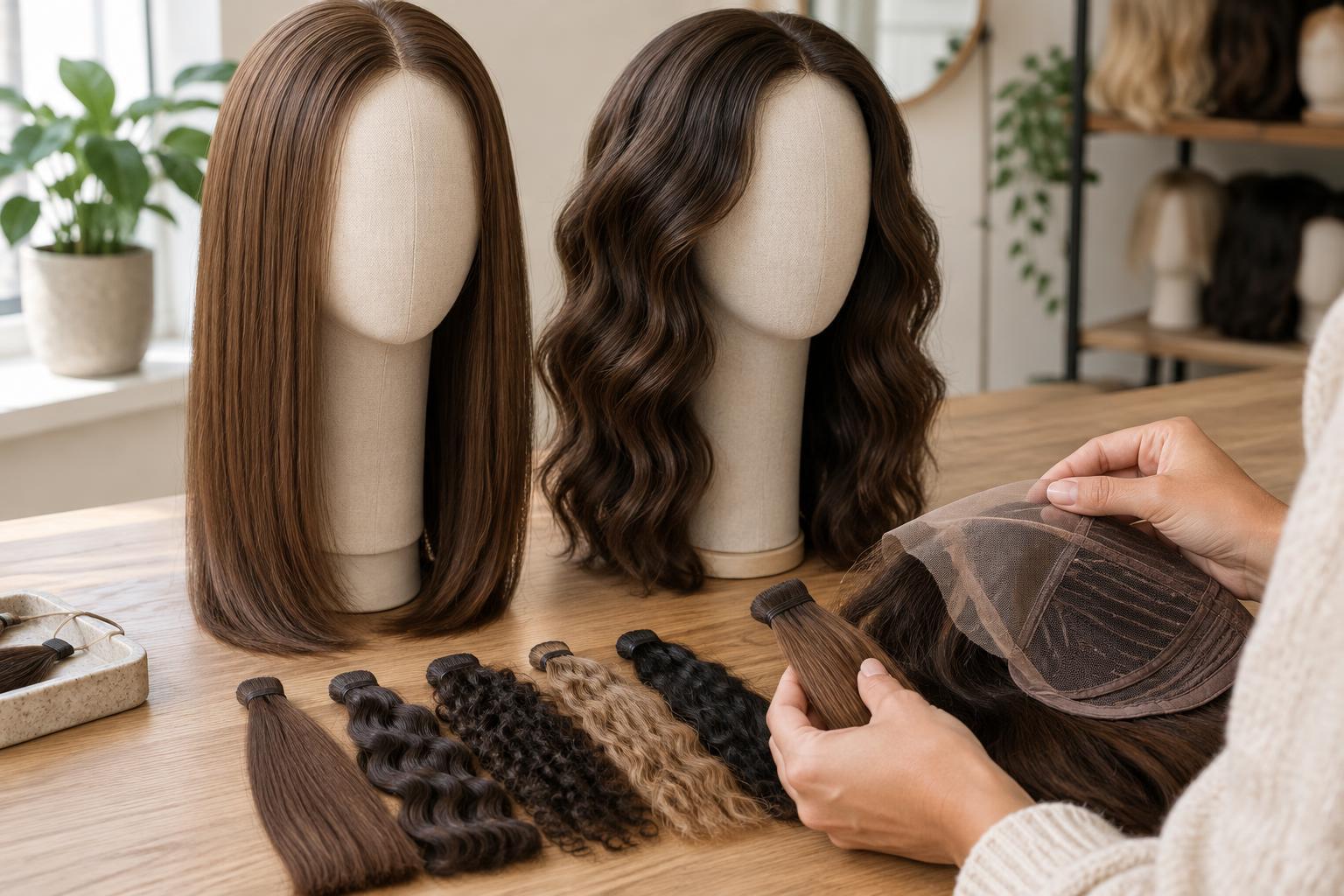
Start with the result you want. If you plan to wear a long style frequently and prefer easier detangling, cuticle alignment may be worth prioritising. If you want a shorter piece for occasional wear, the difference may matter less than fit, appearance and price. Neither label tells you whether the cap will feel comfortable or whether the density will look right on you.
Read the product description for specifics: whether it identifies the hair as Remy, whether the hair has been coloured or otherwise processed, and what care the seller recommends. If possible, inspect the piece for excessive shedding, rough-feeling ends and areas that catch when gently separated with your fingers. Photos alone cannot establish cuticle alignment, so favour clear descriptions and a returns policy you understand.
Be cautious of sweeping promises such as “tangle-free” or claims that one label guarantees years of wear. Human hair needs care, and its useful life varies with the piece and how it is used. The most helpful comparison is between the actual wigs you are considering, rather than between labels in isolation.
Care that helps either type last
Detangle gently, beginning at the ends and working upwards while supporting the hair near the cap. Follow the maker’s washing instructions, use products suitable for the piece and avoid rubbing or twisting the lengths together during washing. Letting hair dry as directed and storing the wig without crushing it can also help reduce avoidable knots.
Pay particular attention to the nape and ends, where friction and dryness often show up first. Limit heat styling to temperatures and methods appropriate for the hair and construction. Remy alignment can be an advantage, but it is not a substitute for a care routine. For either type, choosing a manageable length and a comfortable fit can make everyday wear simpler.