What is a polyurethane perimeter?
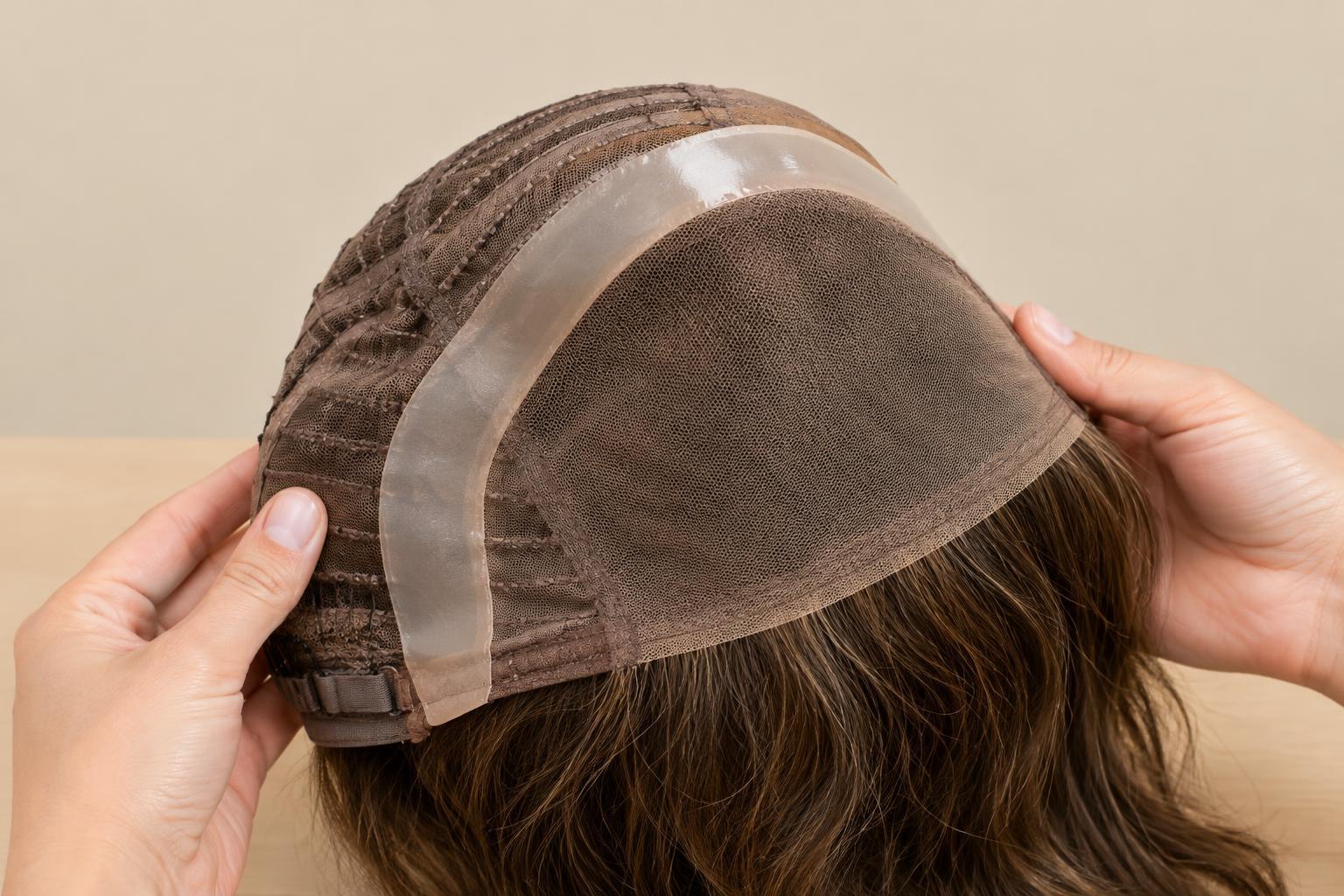
A polyurethane perimeter, often called a PU perimeter or poly strip, is a smooth plastic-like area around part or all of a wig base. It may be a separate strip joined to another cap material or a coating applied to the edge. Its main purpose is to offer a surface on which wig tape or compatible adhesive can be placed and removed. It also changes how the edge feels against the head.
“Polyurethane perimeter” describes a part of the wig construction, not the hair fibre. A wig with a PU edge may have human hair or synthetic hair, and the rest of its cap may be made from lace, monofilament or other materials. Because designs vary, it is worth checking a product’s cap diagram rather than assuming every wig labelled “poly” has the same base.
Where is PU used on a wig?
PU may run around the full perimeter, or appear only at selected attachment points, such as the temples, sides or nape. Some wigs combine a lace front with PU at the sides and back: the lace provides a fine-looking front edge, while the PU gives tape a smooth place to grip away from the visible hairline. Other designs put PU near the front as well, where the edge may need more careful placement or styling to remain discreet.
A partial perimeter can be useful if you want defined attachment areas without having PU against the skin all the way around. A full perimeter offers more places to position tape, but it also puts more of this less airy material against the head. Neither arrangement guarantees a better fit; cap size, contour and the location of the strips matter just as much.
How does PU differ from lace?
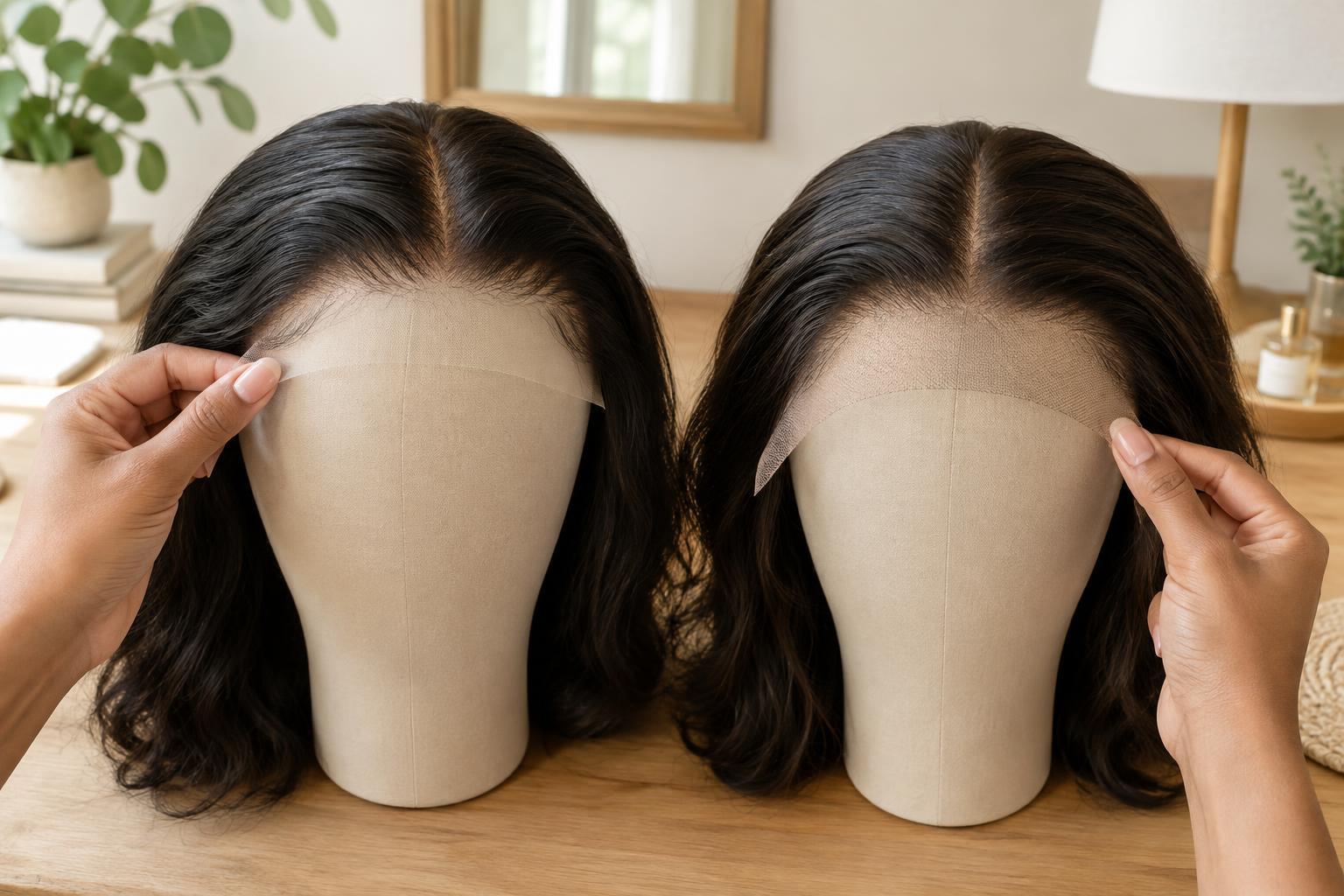
Lace is a fine mesh. Its open structure lets air pass through more readily and, when the colour and placement work well, can create a subtle-looking edge. PU is smoother and less porous. That makes it convenient for applying and lifting tape, since adhesive residue tends to sit on the surface rather than working into a mesh. PU can also feel more substantial at the edge.
The trade-off is visibility and comfort. A PU strip may catch the light or show as a defined band, particularly if it extends beyond the hairline or contrasts with the wearer’s skin. Lace can blend more softly but is delicate and can be harder to clean when adhesive reaches the mesh. PU may feel warmer, especially along a wide perimeter. These are tendencies, not guarantees: the width, thickness, colour and finish of either material affect the result.
A PU edge does not make a wig automatically secure, just as a lace edge does not require adhesive. Either cap might be worn with suitable clips, a grip band or an adjustable fit, depending on its construction and the wearer’s needs. Attachment choices should follow the wig maker’s guidance and what feels comfortable on the head.
Choosing a construction for your priorities
Start by identifying what you want the perimeter to do. If you regularly use wig tape, accessible PU attachment areas may make routine placement and cleanup simpler. If you want an exposed front hairline, look closely at the front-edge construction rather than relying on a general “lace and PU” description. Ask where the PU starts and stops, how wide it is, and whether the front edge is intended to be visible or covered by hair.
Think about how you will wear the hair, too. A fringe or a forward style may conceal an edge that would stand out in a slicked-back style. If you are sensitive to warmth or pressure, a narrower or partial PU area may be more comfortable than a continuous band. Where possible, compare cap diagrams and try the wig on: a material that sounds ideal on paper may feel different once the wig is positioned and adjusted.
Care and attachment basics
Follow the wig maker’s instructions for adhesives and cleaning products. When removing tape, work slowly rather than pulling the cap away from the skin or stretching an adjoining lace panel. Clear residue from the PU using a product appropriate for that base, then let the area dry before reattaching. Avoid assuming that a remover suitable for one wig is safe for every coating, lace join or hair fibre.
Check the joins between PU and lace during routine cleaning. Repeated tugging at these points can strain the cap, while leftover adhesive may make the edge uneven. If an adhesive causes discomfort, stop using it and check the product guidance before trying an alternative. A well-chosen perimeter should support the way you wear your wig without making attachment, removal or everyday comfort an afterthought.