What the cap construction means
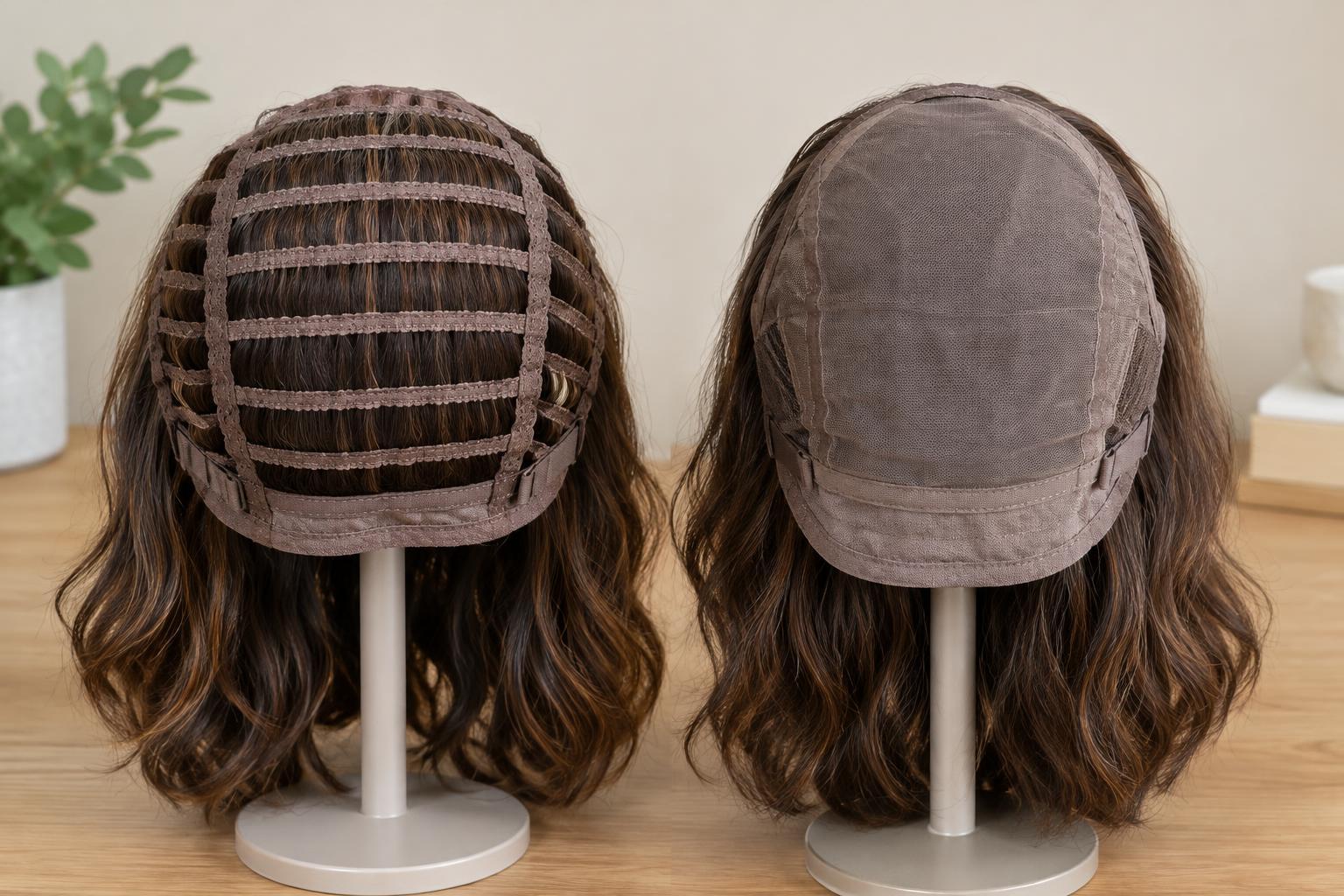
A wig cap is the base that holds the hair or fibres in place. In an open-wefted wig, rows of hair are attached to strips called wefts, with spaces between the rows. Those gaps leave parts of the base more open to the air. Sellers may call this construction open-cap, wefted or capless, although the exact design can vary.
A closed-cap wig has a more continuous base beneath the hair. Depending on the wig, that base may be fabric, lace, monofilament material or a combination. Closed-cap describes how much of the base is covered, not necessarily how thick, heavy or breathable the wig will be. It is worth looking at photos of the inside of a cap rather than relying on a single label.
Airflow and how the wig feels
The spaces in an open-wefted cap allow air to move through more readily than a solid fabric panel. If you tend to feel warm in a wig, that may be appealing. The lighter, flexible construction can also feel less enclosing, though comfort depends on the cap size, fibre weight and what you wear underneath it.
A closed cap may feel more substantial against the head. That does not mean every closed-cap wig feels hot: a fine lace or mesh area can feel quite different from a dense fabric one. A wig liner or cap can also change the experience. If you use one for grip, comfort or to keep your own hair in place, try it on with the wig when judging airflow.
Coverage, visibility and styling
A closed base provides a continuous layer beneath the hair, which some wearers prefer when they want their scalp or natural hair to be less visible through the cap. That can be useful with a light-coloured wig or when the hair shifts during the day. Coverage still depends on the base colour, hair density and the lighting, so check the wig from several angles rather than assuming the cap will be opaque.
Open-wefted wigs can also provide good visual coverage when the wefts are positioned well and the hair falls over the gaps. However, parting the hair deeply, lifting it into an updo or standing beneath strong overhead light may reveal more of the construction. If flexible parting is important to you, look closely at the top of the wig: a lace-front or monofilament-top section may offer different styling options from a fully wefted top. One wig can combine these features with open wefts at the back.
Fit matters as much as cap type
Neither construction can make up for a poor fit. A cap that is too tight may press at the hairline or behind the ears; one that is too loose may shift, regardless of how well it ventilates. Measure your head according to the seller’s size guide and check whether the wig has adjustable straps, elastic sections or other fit features. These details can differ between brands and styles.
Think about where you expect to wear the wig and for how long. For a short outing, coverage or a particular silhouette might be your main priority. For longer wear, the feel of seams, tabs and the cap edge may matter more. If you can try a wig on, move your head, look down and gently rearrange the hair. Those simple checks often tell you more than a product label alone.
A practical way to choose
Start with the feature you care about most. If airflow and a lighter-feeling base are priorities, compare open-wefted options. If a continuous layer beneath the hair feels more reassuring, examine closed-cap options. If you want both ventilation and a natural-looking area for parting, consider a mixed construction, such as a styled top with wefts elsewhere.
When shopping online, look for an inside-cap image and a clear description of the crown, sides and back. Ask how the cap is constructed if those details are missing, and check the returns policy before trying a new design. There is no universally better cap: the useful choice is the one that gives you the coverage, styling freedom and comfort you want in a fit that works for you.