What is a monofilament top?
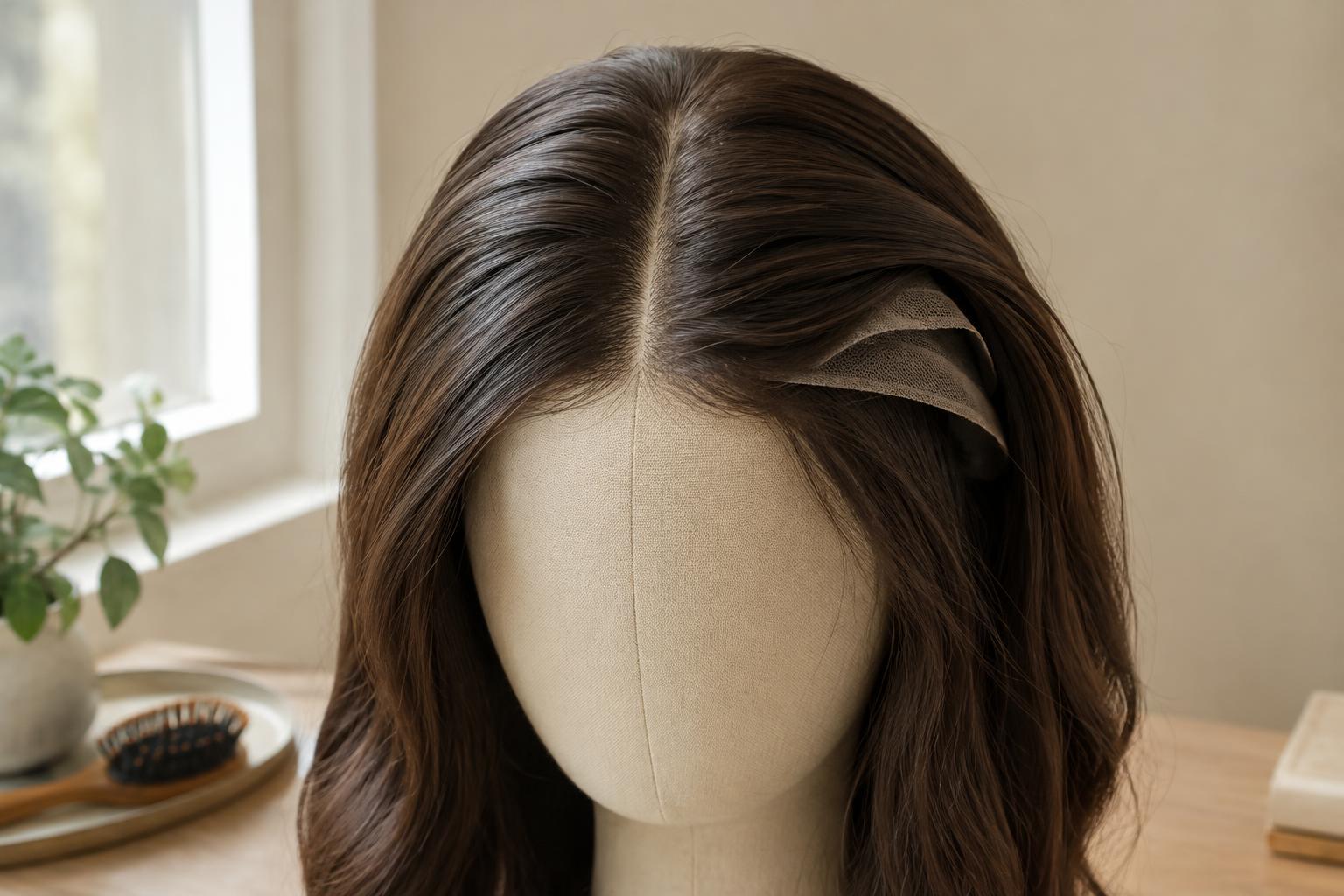
A monofilament top is a fine mesh section in the crown or upper part of a wig cap. Individual hairs are attached to the mesh, often by hand, so they can appear to emerge from the surface beneath them. Where the mesh is visible through the hair, it can create the impression of a scalp rather than a row of wefts.
“Monofilament” describes a feature of the cap, not the fibre used for the hair. A mono-top wig may have synthetic hair or human hair, and the rest of its cap may include wefts, lace or other materials. It is also worth checking how much of the top is monofilament: a full mono top offers a larger parting area than a small mono part or mono crown.
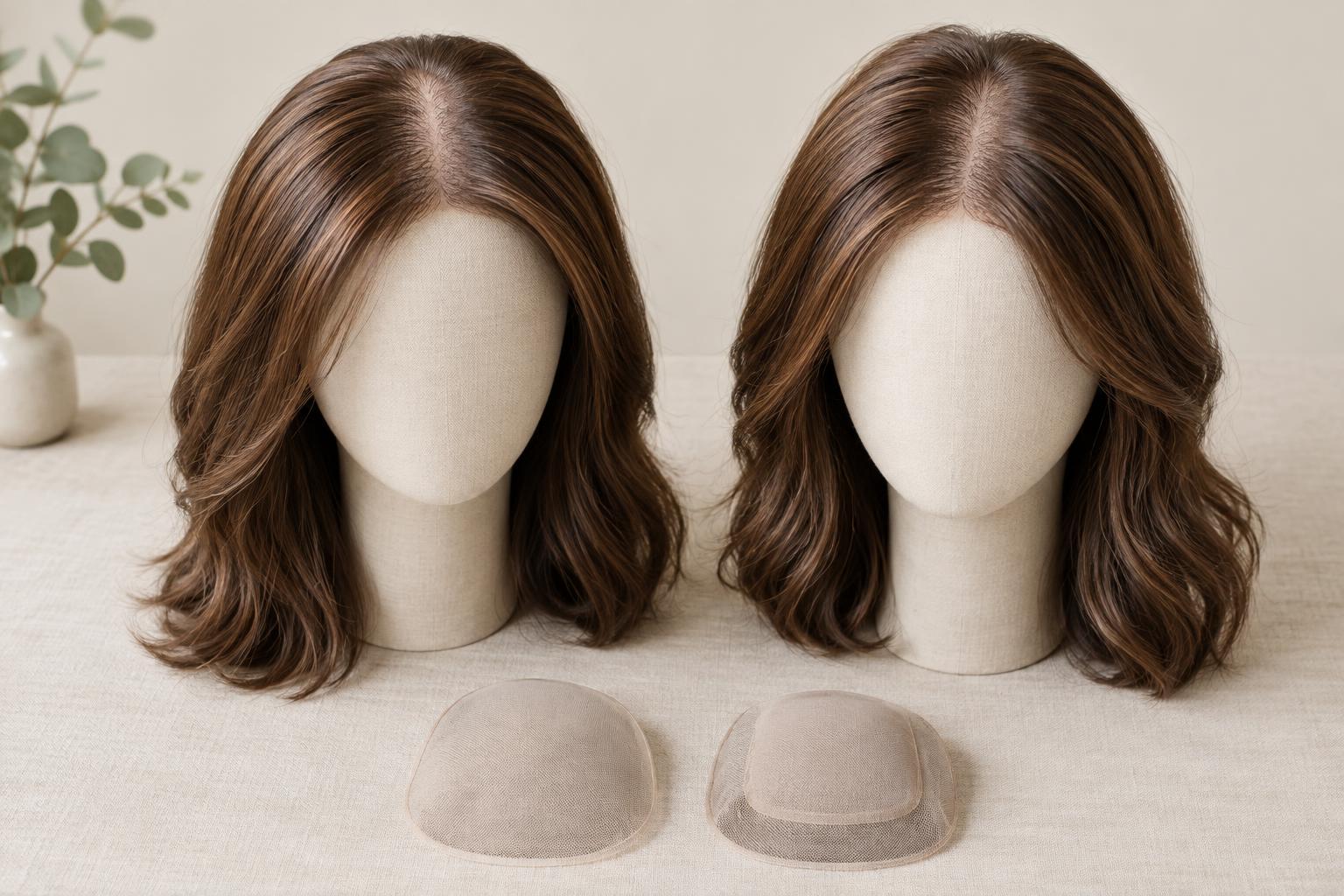
Single mono: one layer at the top
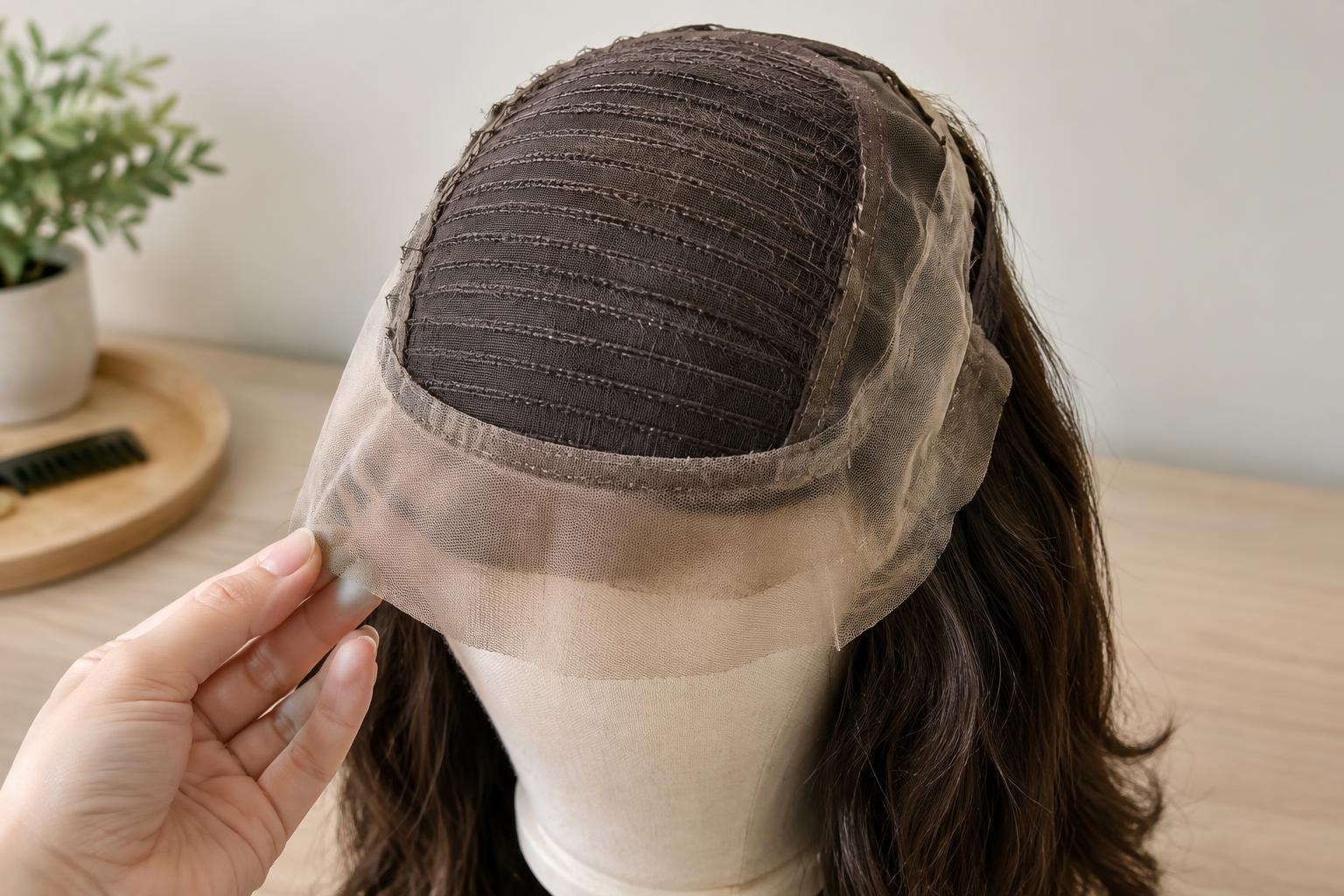
A single monofilament top has one mesh layer where the hairs are attached. Because there is no second layer beneath it, the top can feel light and allow air to pass through. The attachment knots may be visible on the inside of the cap and may be felt against the head, although how noticeable they are varies with the wig and the wearer.
The mesh can let the colour of the scalp or a wig cap show through the part. That can produce a convincing effect, but it also means the appearance may change with whatever is worn underneath. If you use a wig cap, try the wig with the cap colour you expect to wear. If you do not use one, check the part in ordinary lighting as well as under bright shop lights.
Double mono: an added layer underneath
A double monofilament top generally adds a soft layer beneath the mesh that holds the hair. This second layer covers the attachment knots on the inside and creates a smoother surface against the head. Some wearers prefer that feel, particularly if a single layer’s knots bother them. The extra layer may also give the part a more consistent scalp-like colour when the wig is worn over hair, a wig cap or a bare scalp.
Double mono is not automatically the better choice. Its additional material can make the top feel warmer or less airy to some wearers, and the colour of the layer may not resemble every skin tone. Construction and finish differ between wigs, so treat “double mono” as a useful description rather than a promise of a particular level of comfort or realism.
Parting, hairlines and other terms
The practical advantage of many mono tops is flexibility in where the hair parts. On a full mono top, you can usually move the part within the monofilament area; outside that area, the construction may show if you separate the hair. A mono part gives a similar effect along a narrower, set section. If changing your part is important, ask where the mono section starts and ends rather than relying on the word “mono” alone.
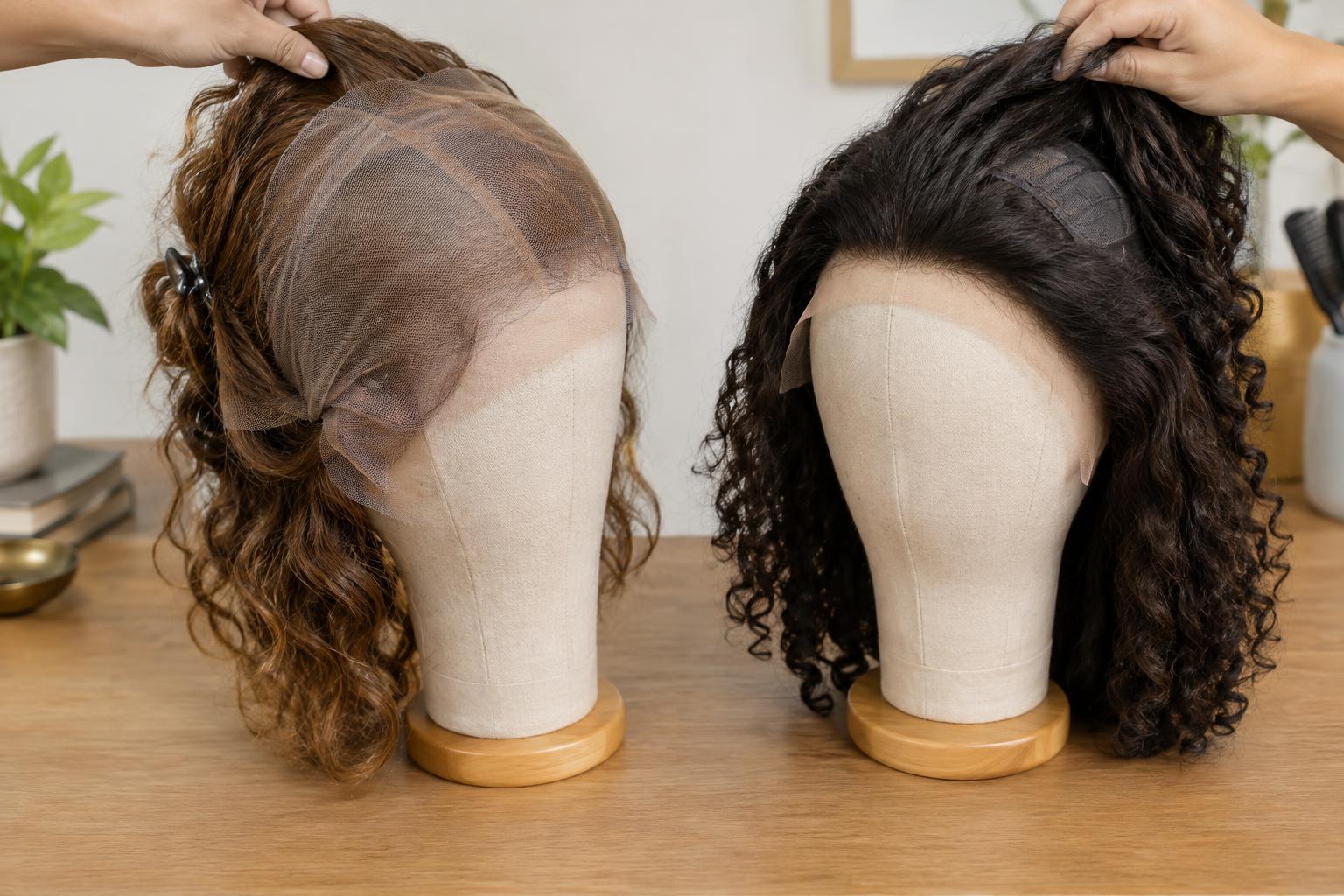
A monofilament top and a lace front serve different purposes. The mono top affects the appearance of the part and upper cap, while a lace front is designed to soften the visible front hairline. A wig can have either feature, both or neither. Listings may also use terms such as “hand-tied” and “wefted” for other parts of the cap. Look for a cap diagram or inside-out photograph to understand which features are actually included.
How to choose and care for a mono top
When comparing wigs, start with the fit and the way you plan to wear the hair. Consider whether you want to change the part, how much coverage you need at the crown and whether the inside surface feels comfortable. If possible, inspect the top while the wig is on your head: part it in a few places, look at it from above and check the appearance in more than one kind of light. A close fit matters too, because a cap that shifts can make even a carefully constructed part look less natural.
Handle a mono top gently when styling. Separate the hair with your fingers or a suitable comb rather than pulling hard at the roots, and follow the wig maker’s care guidance for its particular fibre. Let a washed wig dry as directed, and store it so the top is not crushed. Neither single nor double mono needs to be a universal rule: the most useful choice is the construction that meets your preferences for feel, appearance and everyday wear.