What a comfortable wig fit feels like
A well-fitting wig rests evenly against your head and stays in place during ordinary movement. It should feel secure when you look down, turn your head or walk around, but you should not have to tolerate pressure to keep it there. A little awareness of the cap is normal, especially if you are new to wearing wigs; pain, persistent pulling or a strong urge to take it off are not signs of an ideal fit.
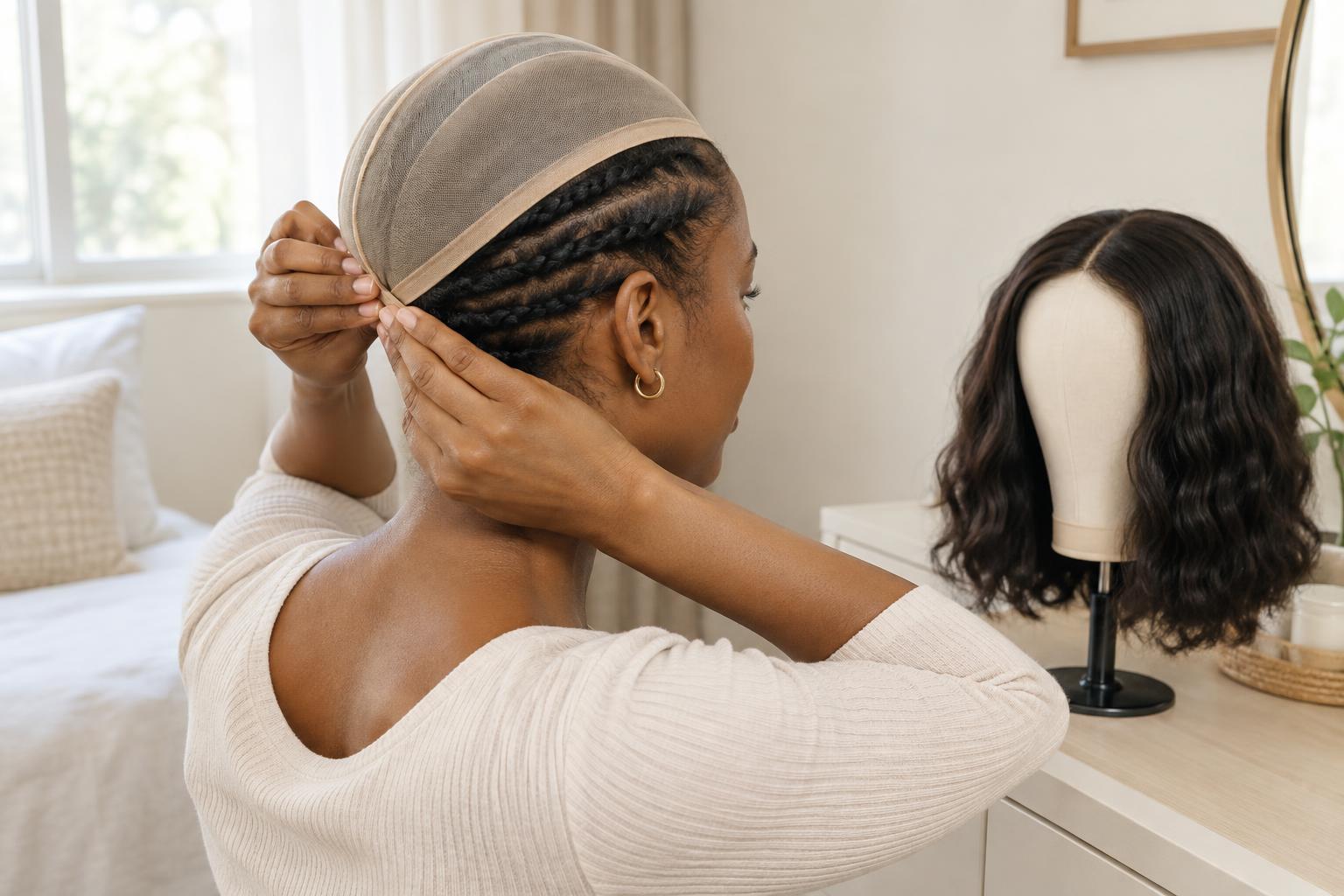
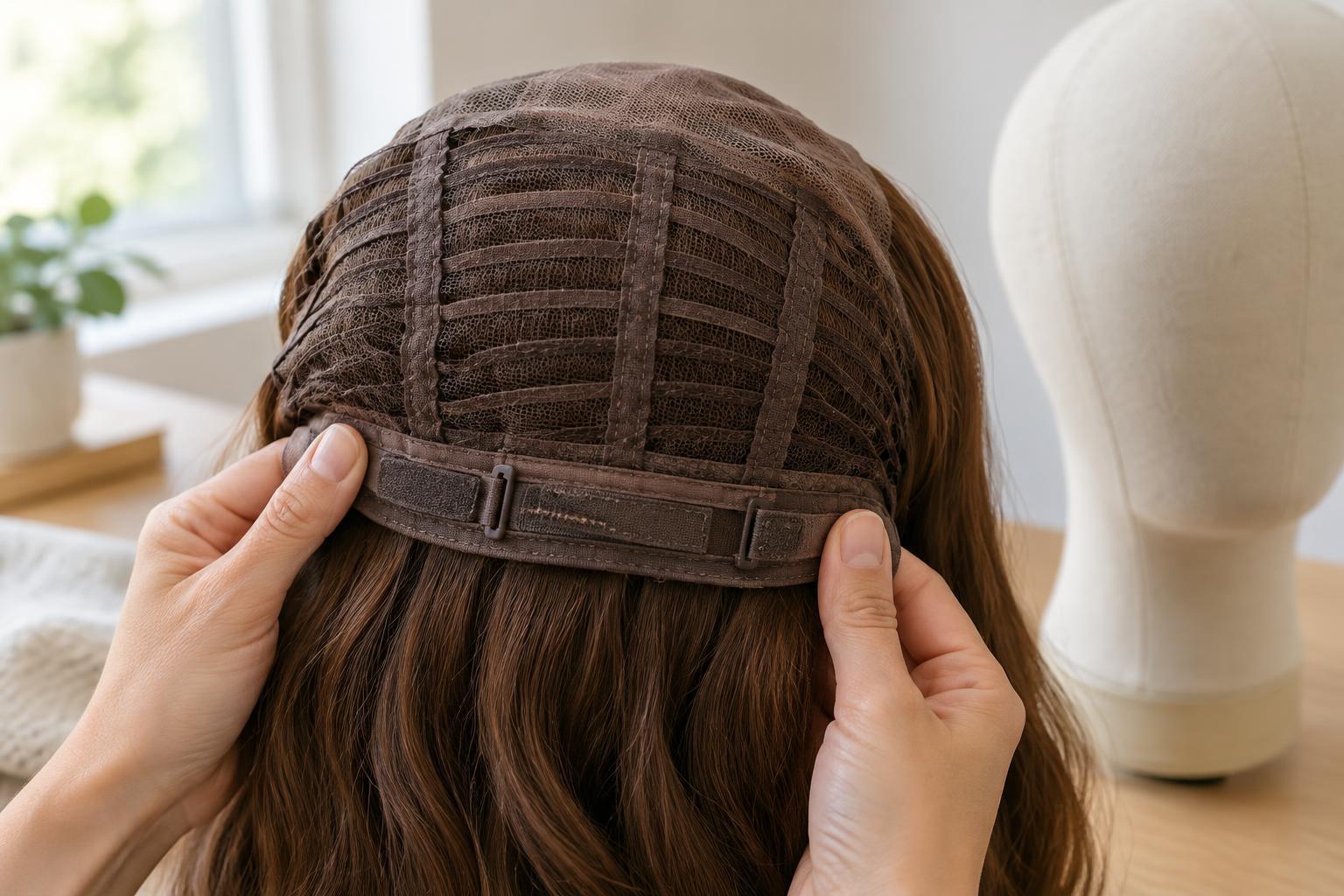
In this guide, “cap” means the base of the wig that sits on your head. A separate wig cap or liner worn underneath can also change how the wig feels. Hair tucked beneath the wig, a liner seam, clips and grip bands can all affect comfort, so check those details before deciding that the wig itself is the wrong size.
Signs the cap may be too tight
A tight cap may leave you feeling squeezed around the temples, forehead, ears or nape. You might notice a headache, soreness, rubbing, or pressure that becomes harder to ignore the longer you wear the wig. Marks that remain noticeable after removal can be another reason to reassess the fit, particularly if they appear alongside discomfort.
Check whether the cap is pulling the hairline farther back than intended or riding upward after you put it on. A wig can sometimes look small because its front edge has been positioned too low or because hair underneath is gathered into one bulky area. Try distributing your hair more evenly and setting the wig where it is designed to sit. If it still feels restrictive with any adjustable straps loosened, a larger cap size or different construction may be more comfortable. Do not rely on stretching or wearing through pain as your fit plan.
Signs the cap may be too loose
A loose cap may shift when you move, lift away at the nape, bunch behind the ears or need frequent repositioning. You may find yourself holding the wig in place when bending forward. The hairline can also creep out of position, even if the wig looked right when you first put it on.
Before sizing down, make sure the wig is seated correctly and that any adjustable straps are set evenly. Excess fabric at the back can point to a cap that is too large, but a slippery liner or poorly placed grip band can also contribute to movement. Clips, combs, tape and adhesive are optional ways to add security where suitable; they should not be used to compensate for a cap that fits badly. If an attachment pulls on your own hair or irritates your skin, remove it and consider a gentler approach.
How to check the fit before committing
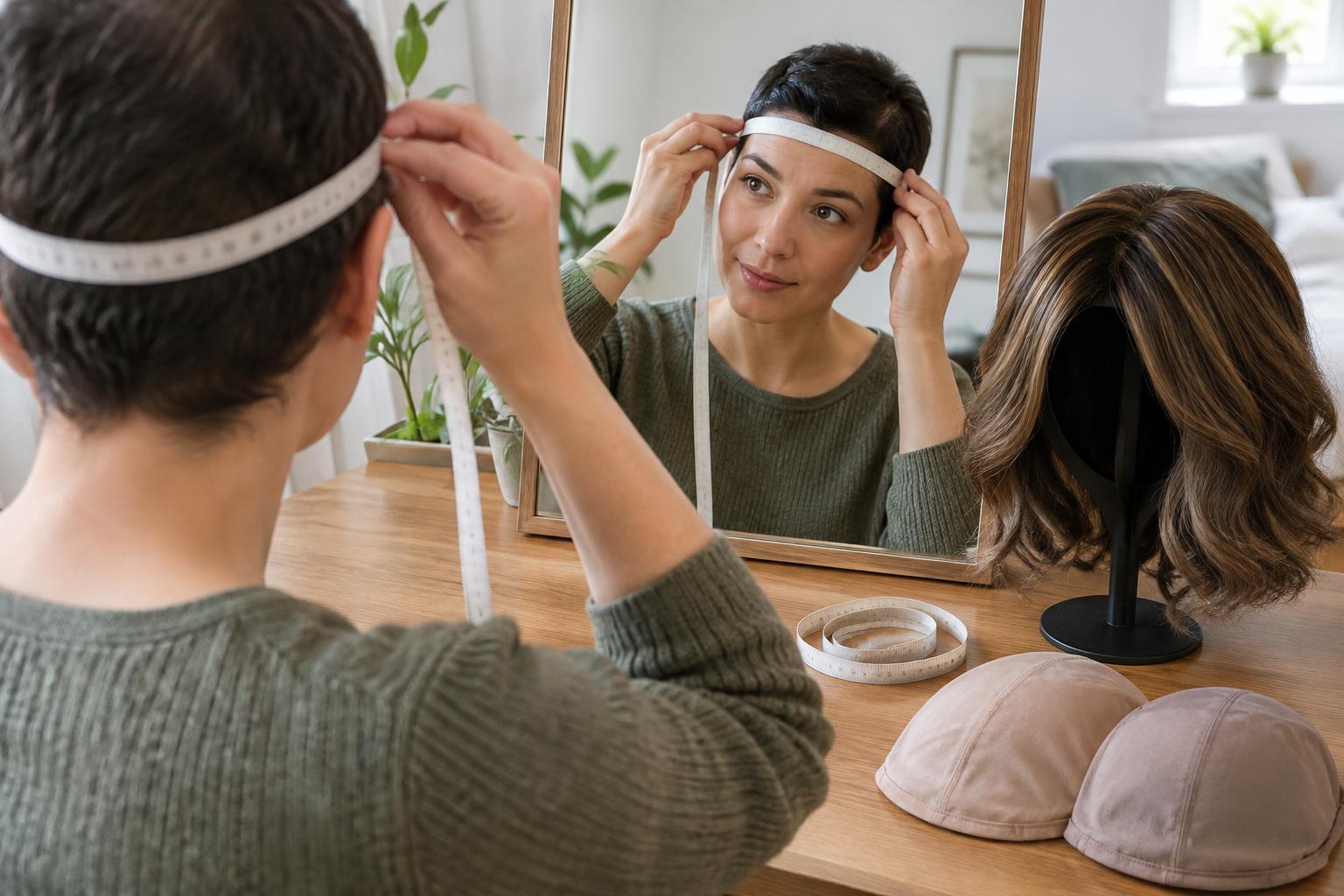
If you are shopping for a wig, follow the seller’s measuring instructions rather than assuming your usual hat size will translate directly. Circumference is a useful starting point, but front-to-back and ear-to-ear measurements can matter too. Size labels and cap shapes vary between makers, so compare your measurements with the specific wig’s size guide and read its adjustment details.
When trying a wig on, start with cleanly arranged hair or your usual liner. Place the front edge where you intend to wear it, settle the cap around the sides and nape, then adjust the straps a little at a time. Wear it long enough to notice pressure points, and gently turn your head, look down and move as you normally would. Check the fit again after adding any grip band or other accessory: each layer changes the amount of room inside the cap.
Choosing comfort over a forced fit
A wig that is slightly adjustable is easier to work with than one you must continually fight. If the cap is close to right but not quite comfortable, a different liner, a flatter arrangement of hair underneath or a small strap adjustment may help. If it remains painfully tight or visibly loose, look for another size or cap style instead. Stretch, lace placement, ear tabs and the shape of the nape all influence fit, so two wigs with the same size label may feel different.
Your preferred level of security may depend on how you use the wig, but comfort should remain part of the decision. Try on a wig with the accessories you expect to wear, and pay attention to both how it looks and how it feels. The goal is a cap that stays put without pressure, rubbing or constant checking.