What the labels actually mean
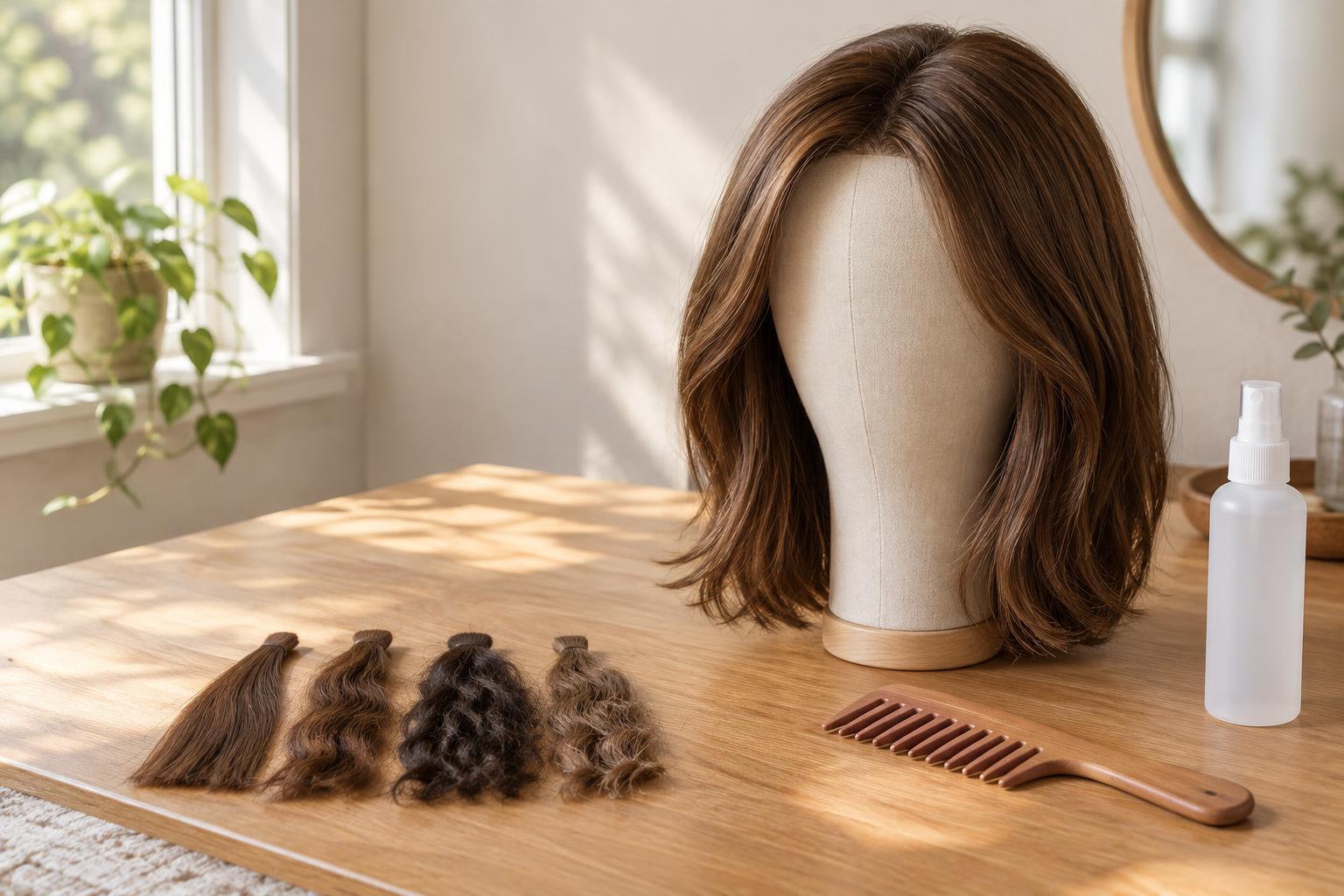
A human-hair wig is made with hair collected from people. A synthetic wig uses manufactured fibres designed to resemble hair. Either type can be made in many colours, lengths and textures, and either can look convincing. The fibre label tells you what the strands are made of; it does not, by itself, tell you whether a wig will fit comfortably or have a natural-looking hairline. Those qualities also depend on the cap, construction, density and cut.
“Human hair” covers a range of products. Hair may be coloured, textured or otherwise processed before it becomes a wig, so two human-hair wigs can feel and behave quite differently. “Remy” generally describes hair whose cuticles have been kept aligned in the same direction, although sellers may use the term inconsistently. Synthetic fibres also vary: some are designed to hold a particular shape, while others are sold as heat-resistant. Check the specific product description rather than assuming every wig in one category performs alike.
How the fibres look and move
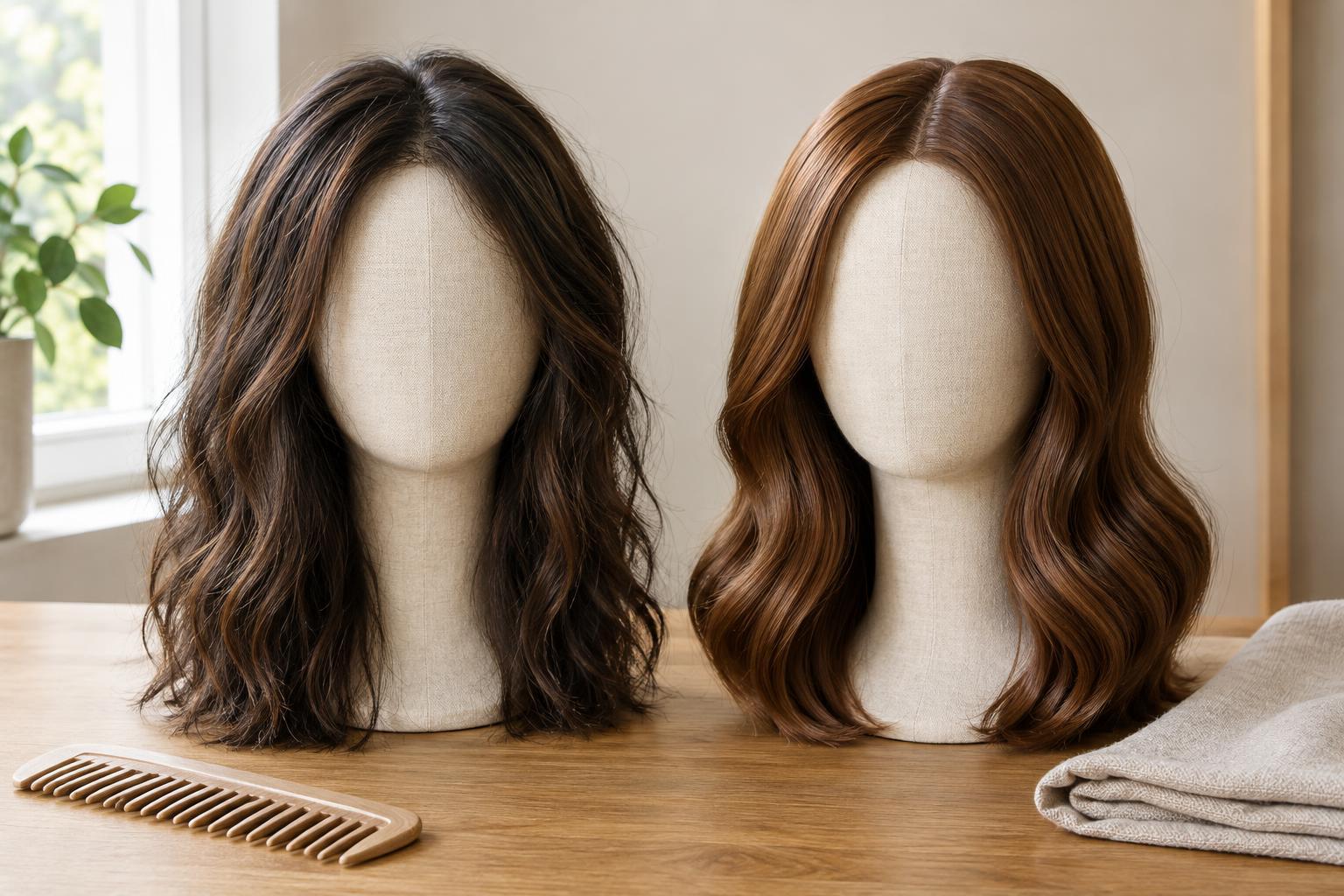
Human hair often moves and responds to styling much like the hair used to make it. It can offer subtle variation in colour and texture, but processing and product buildup may change its appearance. Synthetic fibres are manufactured to hold a consistent colour and style. That consistency can be helpful if you want the same shape each time you put a wig on, though some fibres may appear shinier than you prefer.
Appearance is not a reliable way to identify fibre on its own. A well-chosen synthetic wig can look natural, and a human-hair wig can look less convincing if its density, parting or fit does not suit the wearer. Photos can also hide differences in sheen and movement. If possible, examine a wig in more than one type of light and look at how it falls when gently moved. Pay attention to whether you like the overall effect, rather than treating one fibre as automatically more realistic.
Styling flexibility and heat
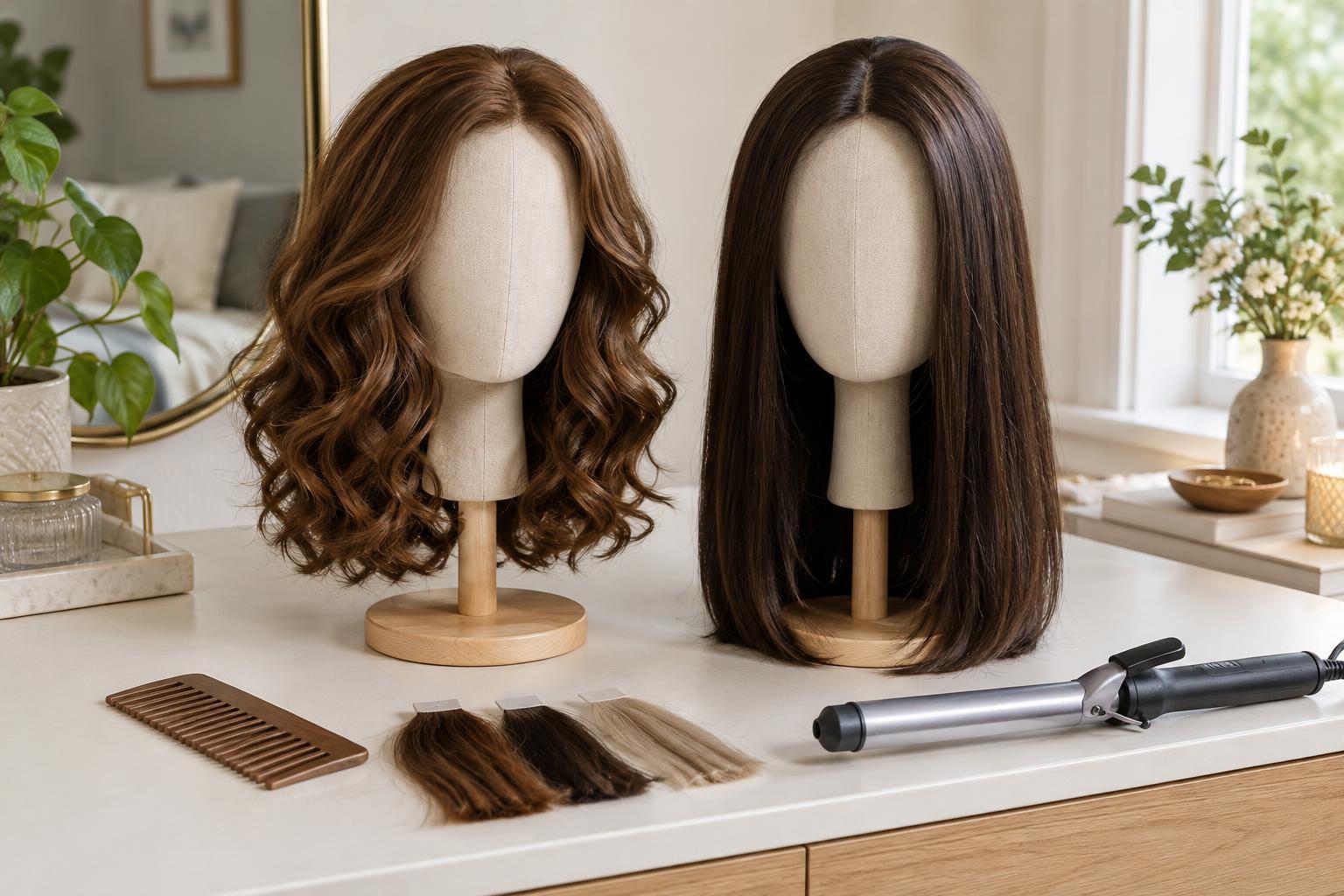
Human hair usually offers more scope for changing a style. Depending on the wig and its condition, it can be blow-dried or styled with heated tools, then will generally need restyling after washing. Heat can still dry out or damage the strands. Colouring or chemical processing is less predictable: the hair may already have been treated, so a change that works on growing hair may not turn out as expected on a wig.
Standard synthetic wigs typically keep their manufactured curl or wave pattern after washing, provided they are cared for as directed. That saves styling time but limits how much you can change the shape. Ordinary synthetic fibres may be permanently damaged by a hot tool. A wig labelled heat-resistant may allow some heat styling, but that does not mean unlimited temperatures or repeated use without wear. Follow the maker’s temperature guidance, and test cautiously on an inconspicuous strand if the instructions permit it.
Care, wear and lifespan
Both fibre types benefit from gentle detangling, appropriate washing and careful storage. Human hair generally needs conditioning and styling to keep its chosen look; it does not receive the natural oils that growing hair gets from a scalp. Synthetic hair often needs less daily styling, but friction against collars, scarves or chair backs can make the ends look worn or tangled, particularly on longer styles. Washing may freshen a wig, but it will not necessarily reverse fibre damage.
There is no single reliable lifespan for either type. Frequency of wear, length, friction, product use and care all matter. Human-hair wigs often cost more upfront, while synthetic wigs can be a more accessible way to try a colour or style. Compare the upkeep you are willing to do as well as the purchase price. A wig that is easy for you to wear and maintain may be better value than one whose theoretical styling options you rarely use.
Choosing a fibre that suits your routine
Start with the role the wig will play. If you want a ready-made style that needs little reshaping, synthetic fibre may suit you. If you enjoy changing your part, curl pattern or finish, human hair may offer more freedom. Neither choice determines your personal style: you can find understated and expressive options in both. A blend of human and synthetic fibres is another possibility, though its heat and care requirements depend on the particular product.
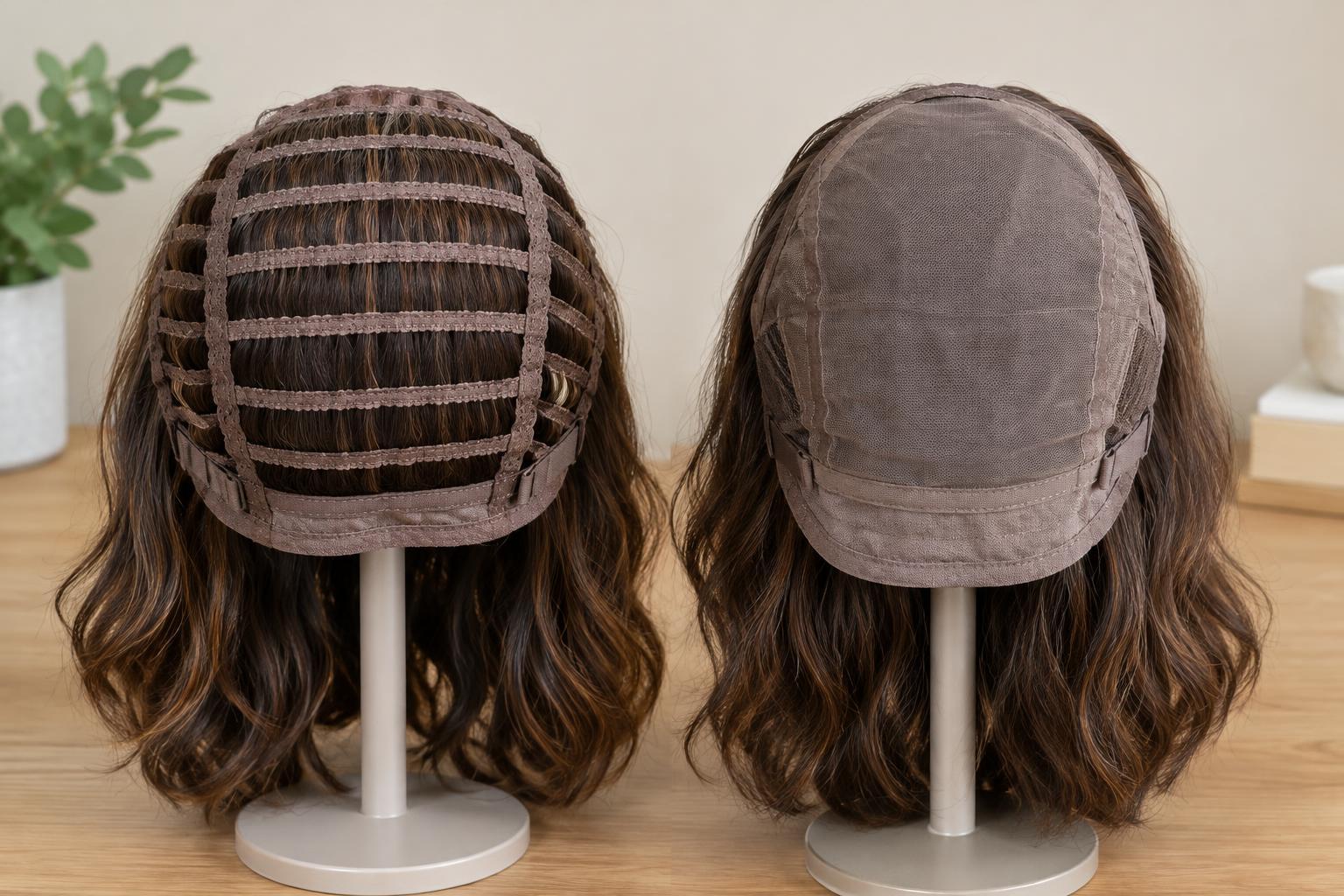
Before buying, check the fibre content, heat guidance, washing instructions and return terms. Then consider the features that sit beyond the fibre: cap size, adjustability, hairline construction, length and weight. If you are comparing two wigs, picture the ordinary tasks of wearing, taking off, detangling and storing each one. The most useful distinction is not which fibre is “best”, but which set of trade-offs fits your preferences and routine.