What makes a wig a blend?
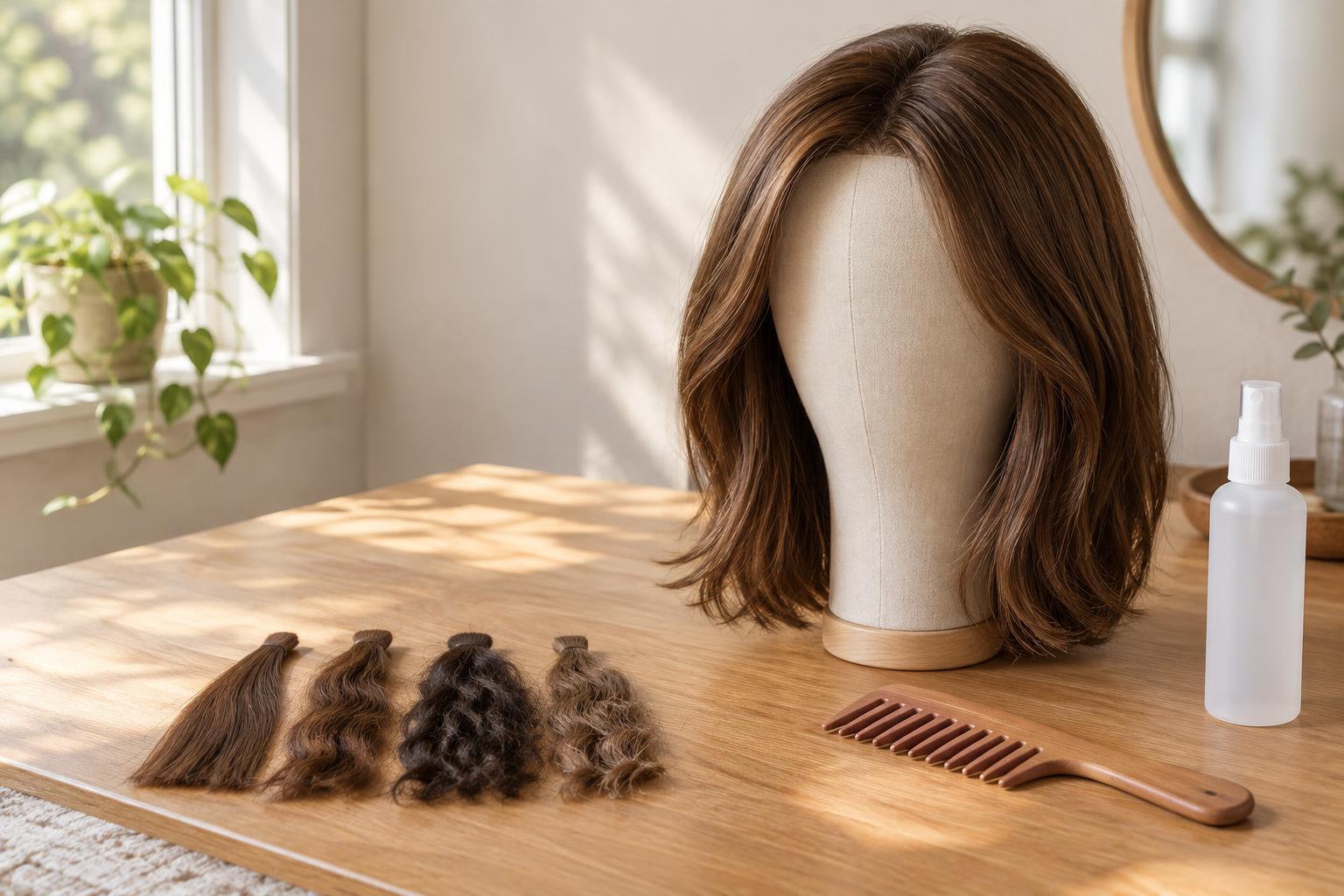
A human-hair and synthetic-blend wig contains both types of fibre in the hair attached to its cap. The fibres may be mixed throughout the piece or placed in different areas. Some blends have a small amount of human hair; others contain much more. The word “blend” alone does not tell you the proportions, the synthetic fibre type or how the wig will behave.
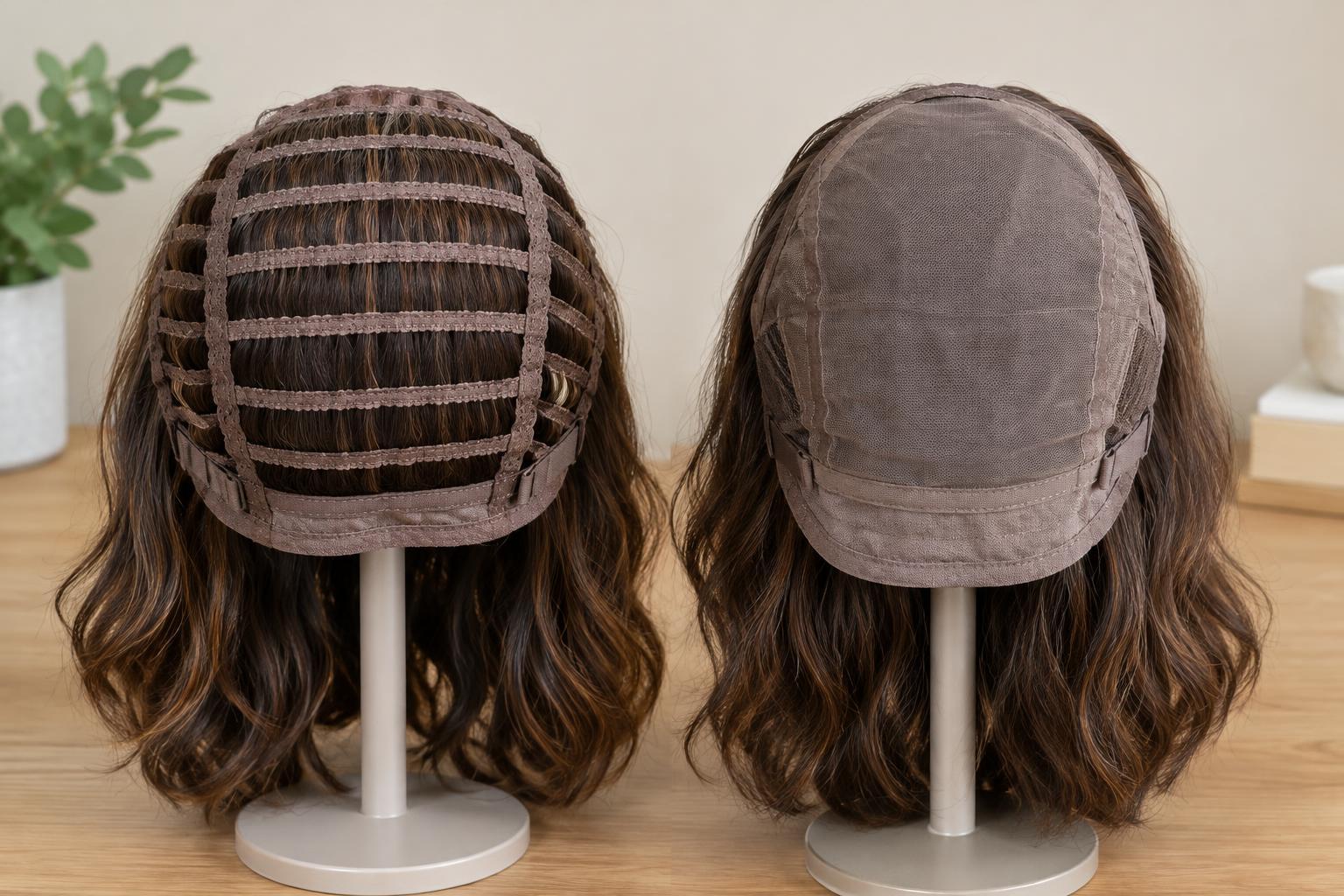
The cap construction is a separate choice. A blend might be attached to a lace-front, monofilament, wefted or other cap. Those details affect how the wig sits and how natural its part or hairline may look, while the fibre mix affects much of its movement, styling and upkeep. When comparing pieces, check both the fibre description and the cap description.
How mixed fibres affect appearance and feel
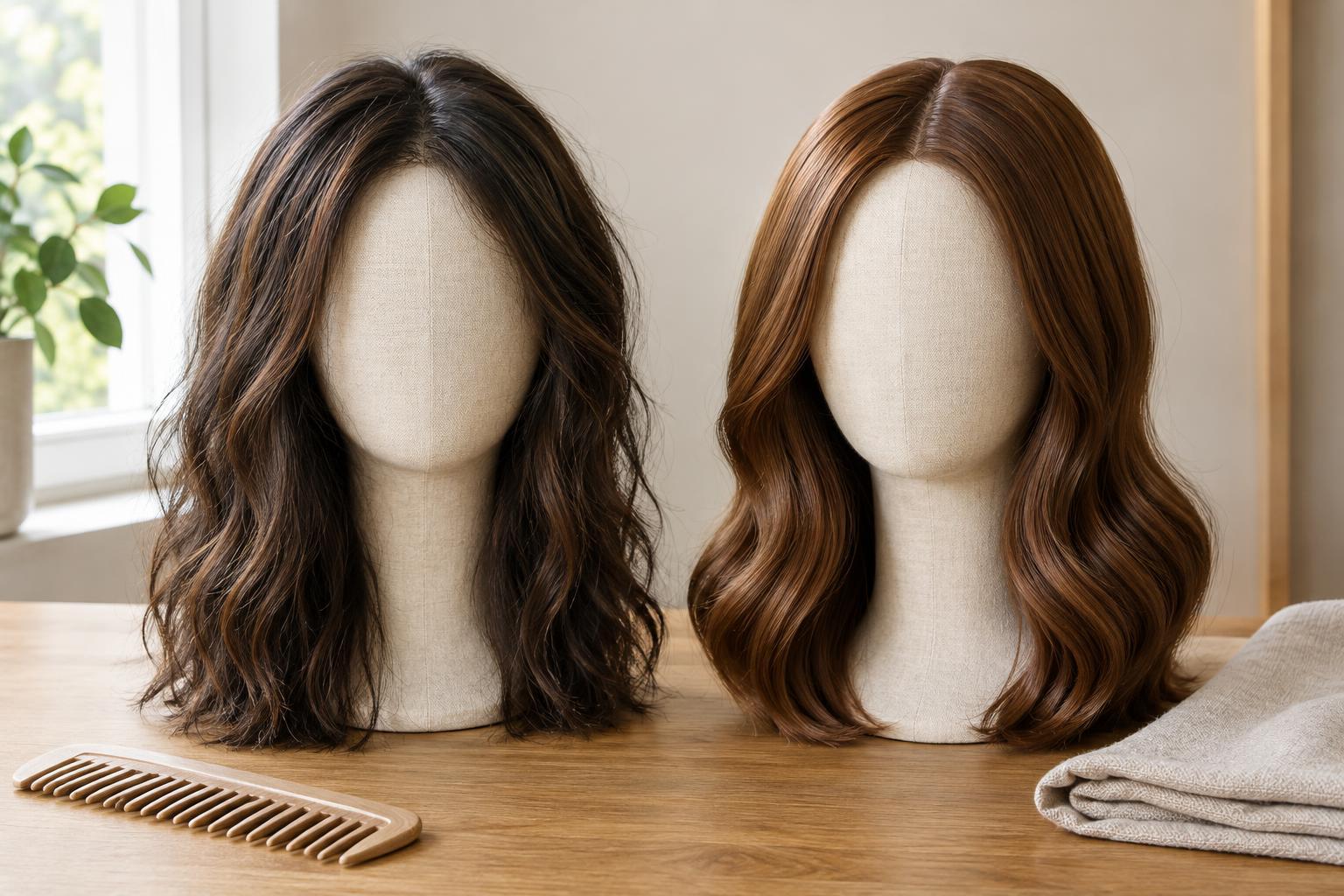
Human hair and synthetic fibres do not always reflect light in the same way. In a well-matched blend, the difference may be subtle; in another, some strands may appear shinier or feel smoother than their neighbours. Colour can also look slightly different across fibre types, especially in bright light. If you can examine a piece in person, look at it from several angles and gently move the hair rather than judging it only while it is still.
A blend may hold a ready-made shape more readily than an all-human-hair wig, because synthetic strands often retain their manufactured style after washing. The human-hair portion may move or respond to moisture differently. As a result, a curl pattern or smooth finish can become less uniform with wear. This is not necessarily a flaw, but it matters if you want every strand to behave alike.
Length, cut and density also shape the overall effect. A shorter style with deliberate layers may make differences between fibres less noticeable than a long, sleek style. Ask yourself how the wig looks during ordinary movement, not just whether it looks appealing on a stand or in a product photograph.
Styling limits depend on the whole blend
Do not assume that a blend can take heat because it contains human hair. The synthetic portion may be damaged by temperatures that human hair could tolerate. Some synthetic fibres are labelled heat-friendly, but their permitted temperature and handling instructions vary. Follow the wig maker’s guidance for the entire piece, including any stated limit and whether tools should be used on dry hair only.
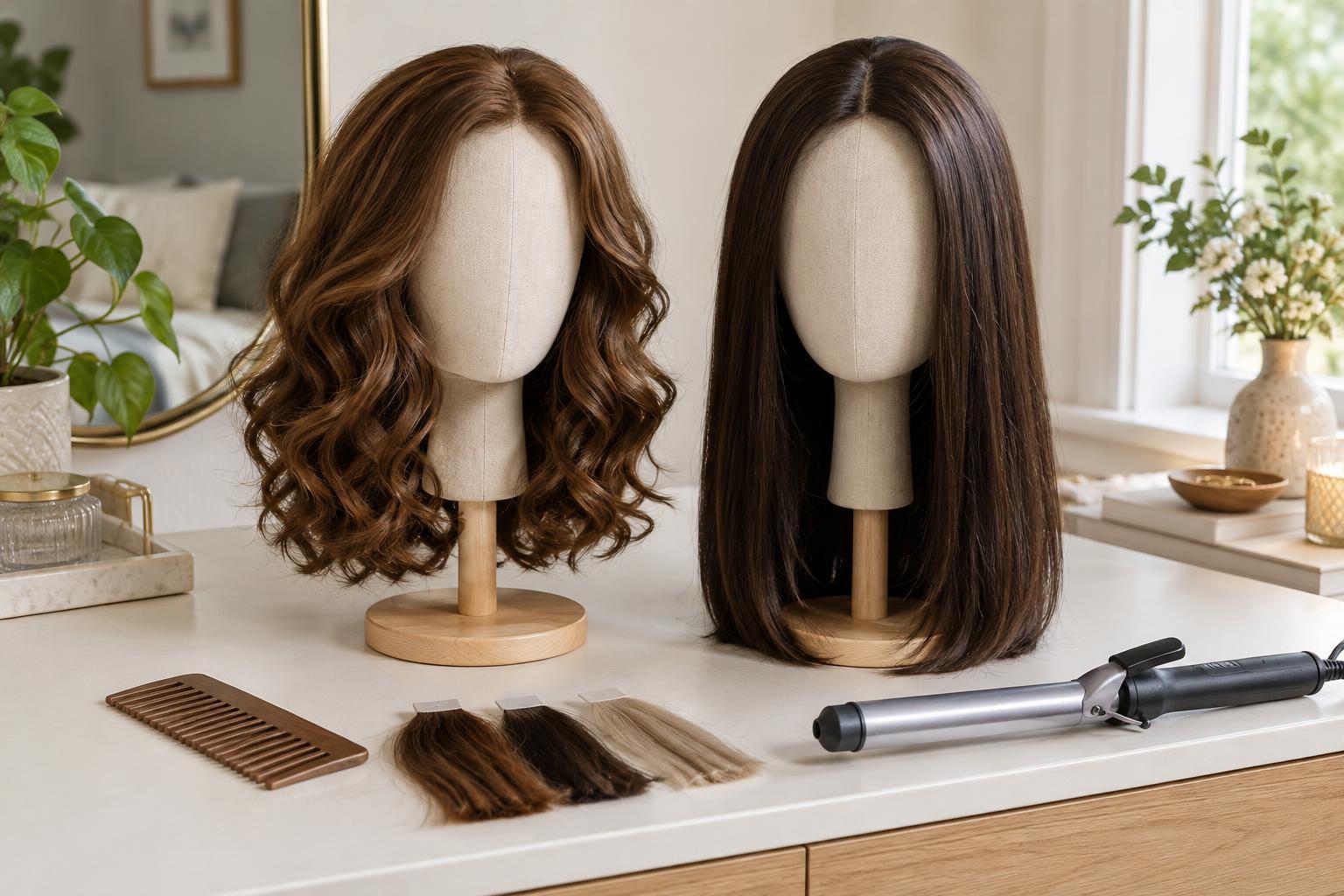
Even when heat styling is permitted, the two fibres may take a curl or straighten at different rates. Start with a small, inconspicuous section and use the lowest setting allowed by the maker’s instructions. Avoid repeatedly working the same area to force a perfectly uniform result. For a low-effort change, try adjusting the part where the cap allows it or using accessories that do not pull tightly on the fibres.
Colouring is another area where the mix matters. Human-hair dye generally will not colour synthetic strands in the same way, so an even result cannot be assumed. If a particular shade is important to you, choosing it at purchase is usually simpler than planning to change a blend later.
Care for the most delicate fibre in the piece
Use the product and washing instructions supplied for your wig rather than treating it as either fully human hair or fully synthetic. Gently remove tangles before washing, working from the ends upward while supporting the hair near the cap. Avoid vigorous rubbing, twisting or brushing while wet if the maker advises against it. After washing, let the piece dry as directed, away from heat sources unless the instructions specifically permit them.
Pay particular attention to friction at the nape, where hair can rub against collars and scarves. If strands begin to tangle, deal with them gently rather than pulling through knots. Store the wig in a way that supports its shape and keeps it from being crushed or snagged. How long it stays wearable will depend on the fibres, construction and your pattern of use, so maintenance promises are best treated cautiously.
Questions to ask before choosing a blend
Look for a clear fibre breakdown, not just a name such as “human-hair mix.” Ask what kind of synthetic fibre is used, whether heat tools are allowed, and which care products and methods are recommended. Check whether the colour and style shown in photographs match the specific option you are considering. A stated percentage is helpful, but it cannot tell you everything about feel or performance without those other details.
Finally, assess fit as carefully as fibre. A comfortable cap, suitable size and secure adjustment can matter more to daily wear than a higher human-hair percentage. If possible, compare the wig’s movement, texture and cap feel in person. The best blend is not a fixed formula: it is the piece whose appearance, care requirements and styling limits suit the way you plan to wear it.