Start with the fit you want to preserve
Natural hair takes up space inside a wig. If it is gathered into one thick bun or piled on top of your head, it can lift the wig, shift its hairline or make a correctly sized cap feel too tight. The aim is not to flatten your hair at any cost. It is to distribute it comfortably so the wig can sit in the position intended.
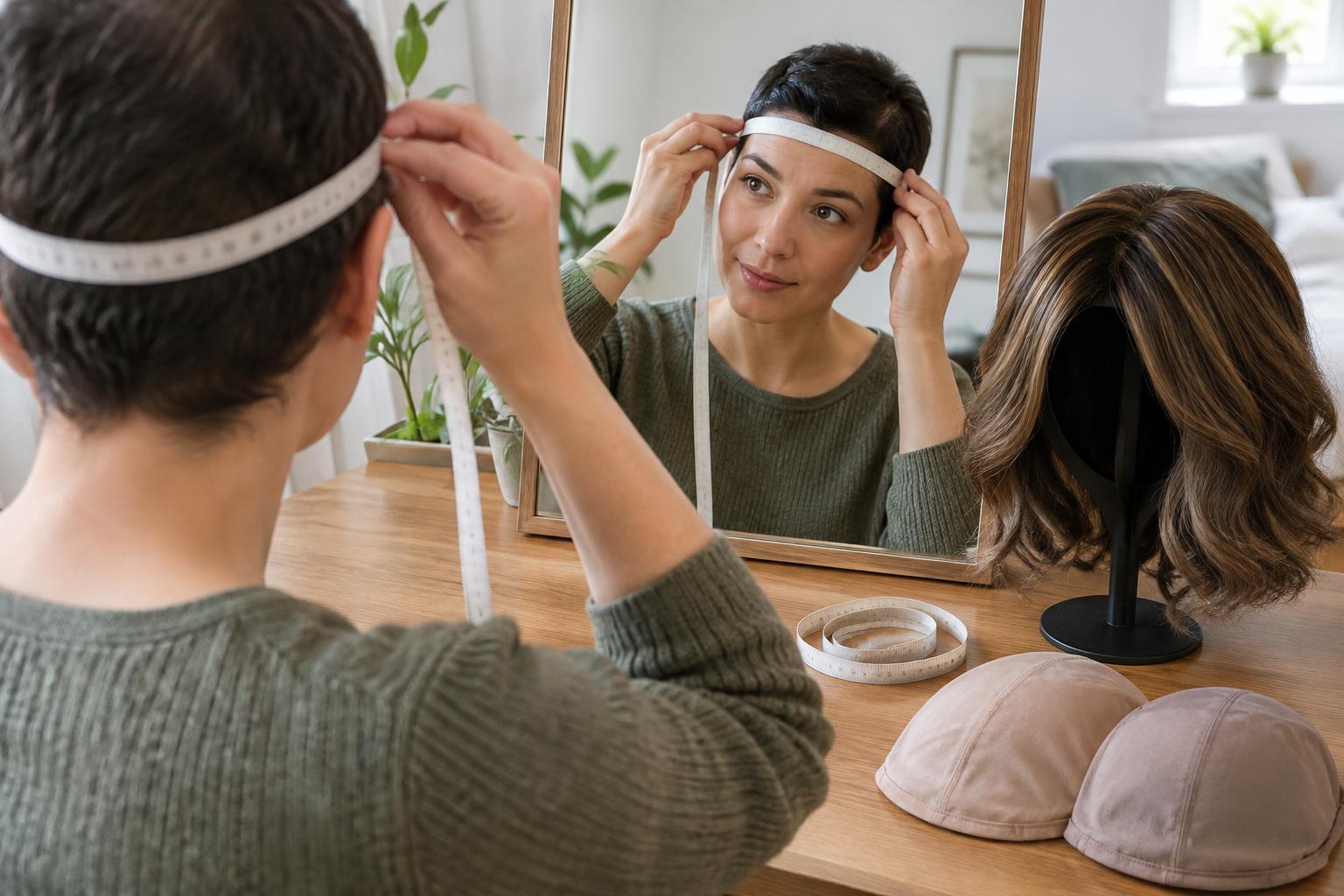
Before putting on a wig, gently detangle and make sure your hair is dry. A smooth base is easier to arrange, while damp hair enclosed beneath a cap may feel uncomfortable. If you are choosing a new wig, measure your head with your hair arranged much as you expect to wear it. A measurement taken over a bulky style may lead you to choose more room than you need once that style changes.
Spread the volume rather than concentrating it
For longer hair, two or more low, loose braids can be easier to distribute than a single ponytail. Bring the braids around the sides or back of the head and secure their ends flat. If braiding is not your preference, try dividing the hair into sections, gently twisting each section and pinning it down. Use as few pins as you need, with their ends tucked away from the scalp and the wig cap.
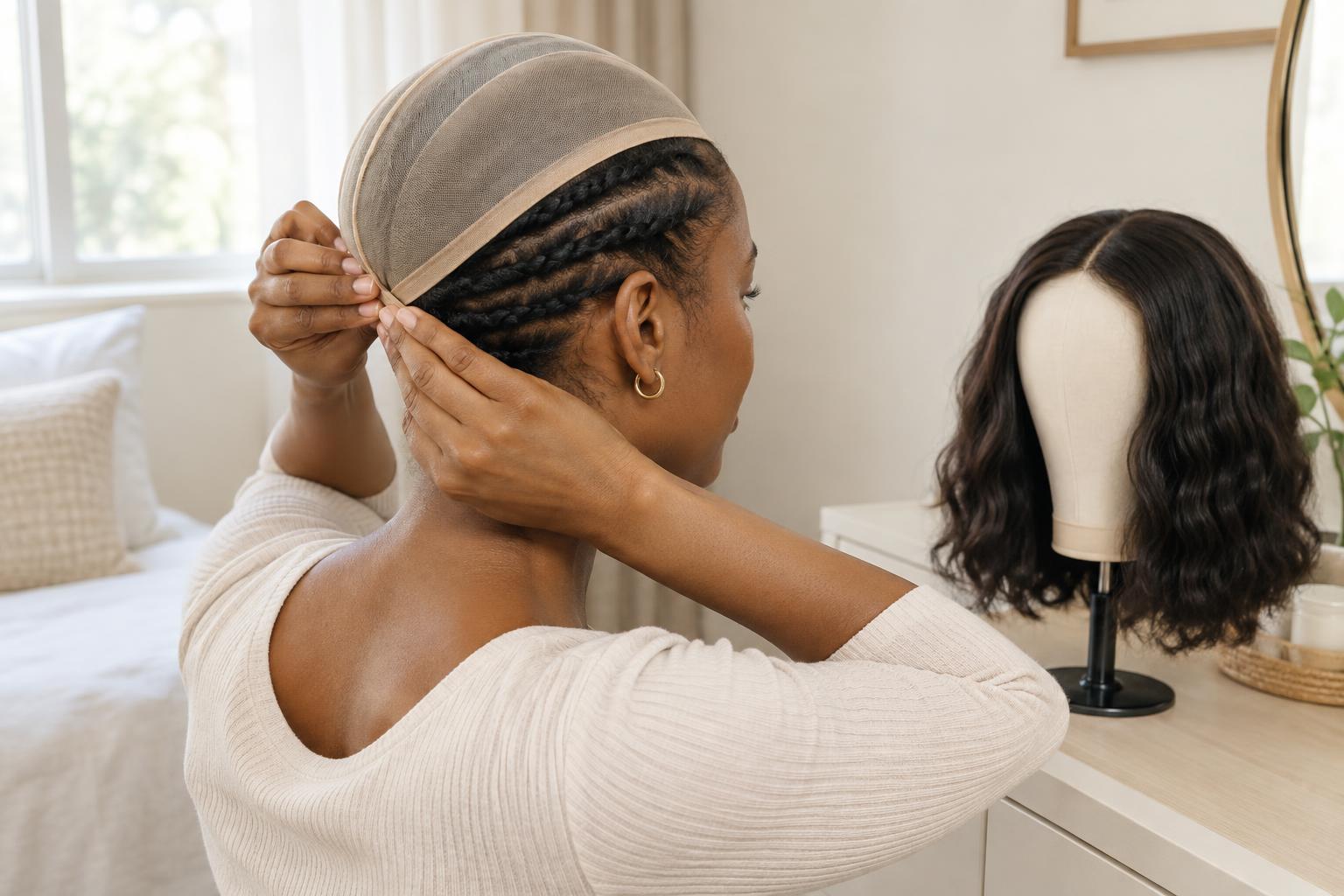
For dense or textured hair, the most comfortable method may depend on its length, shrinkage and the cap’s available space. Several relaxed plaits, twists or flat sections can make a more even foundation. Avoid pulling sections tight simply to reduce their height: tension at the hairline or scalp is a sign to loosen them. Short hair may only need to be brushed into a comfortable direction and held with a wig cap, if you use one.
Check the shape from the side as well as the front. A small ridge at the back can tilt the wig forward; extra height at the crown can make it sit above the ears. Rearrange the hair underneath before adjusting the wig itself.
Decide whether a wig cap helps
A separate wig cap can help hold loose strands in place and give the wig a smoother surface to slide over. It does not, however, remove bulk. If your hair is folded into a lump, the cap will usually hold that lump in place. Arrange your hair first, then pull the cap over it without dragging your edges or changing the position of your sections.
Caps vary in stretch, thickness and feel. A cap that rolls up, leaves a pronounced band or makes your scalp feel squeezed may be working against the fit. You may prefer a different cap style or, if the wig’s construction and your hair arrangement allow it, no separate cap at all. Keep any cap clean according to its care instructions, particularly if you wear it regularly.
Put the wig on and check its position
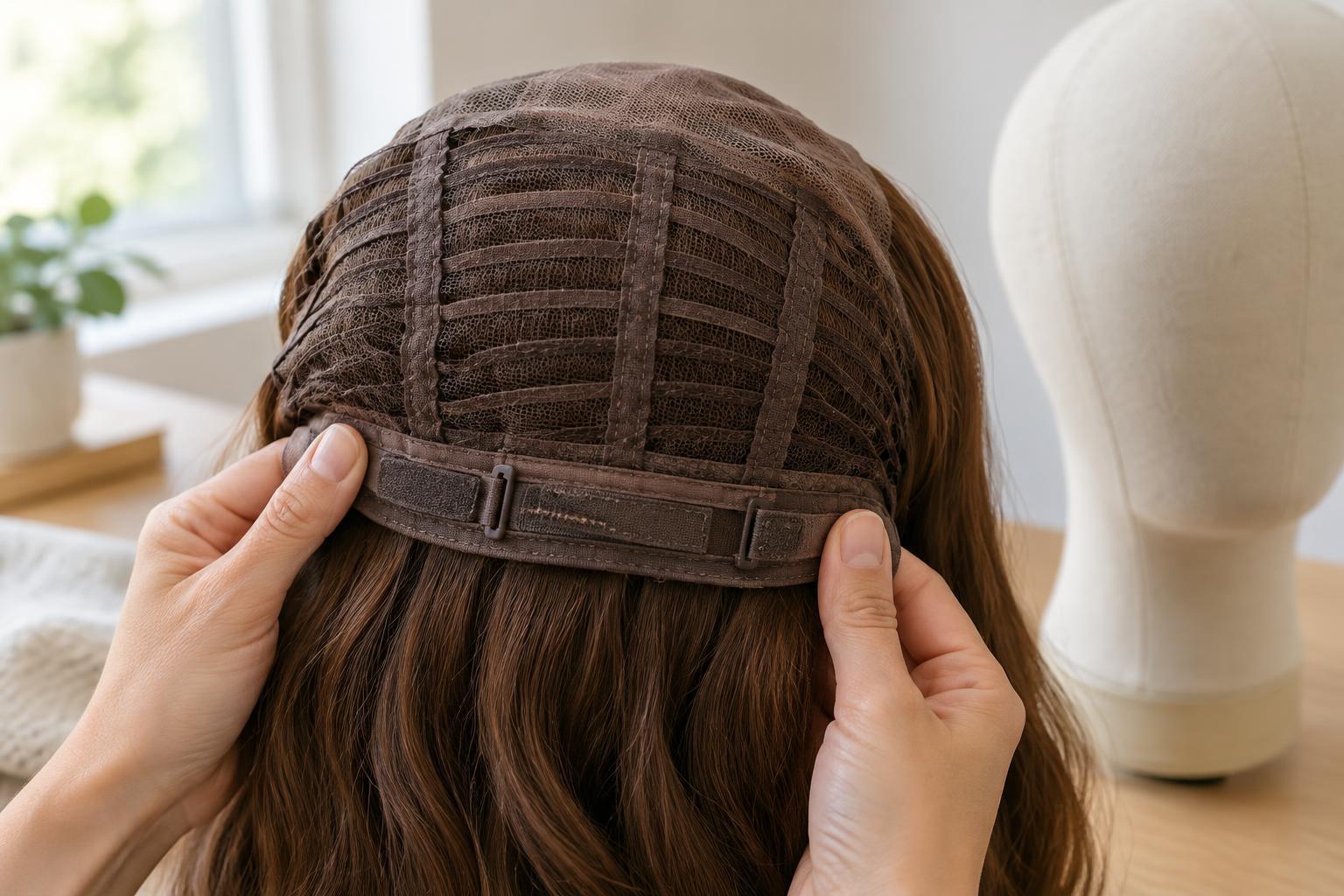
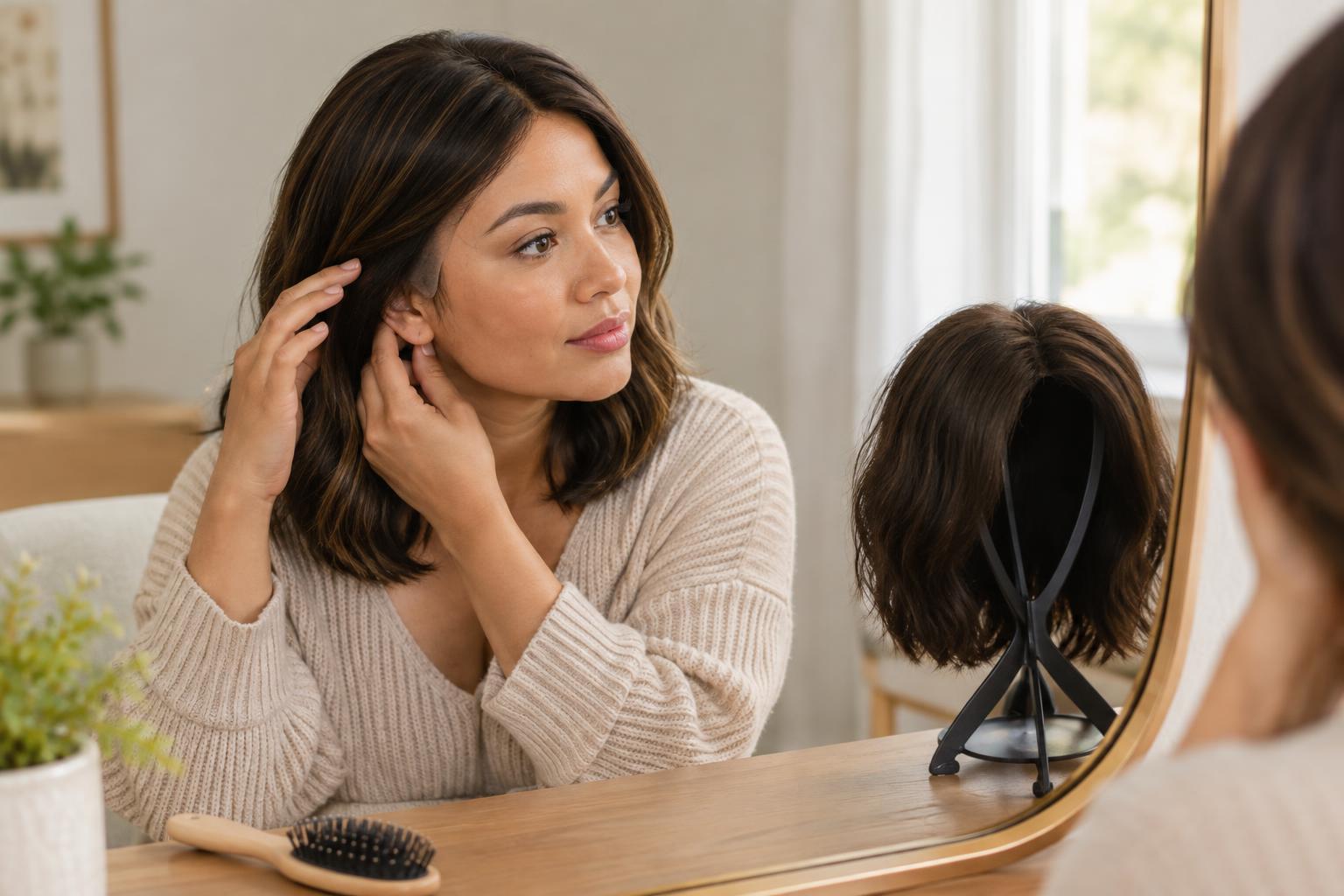
Place the wig over your prepared hair and align it with your preferred hairline, then check that the ear tabs sit evenly. The cap should feel secure without relying on painful pressure. If it rides up, rocks from side to side or leaves a gap at the nape, take it off and check for trapped hair before tightening any adjustable straps.
Adjustable straps can fine-tune a fit, but they cannot reliably compensate for a mound of hair beneath the cap. Likewise, clips, combs or other attachment methods should not be used to force an uncomfortable wig into place. If the wig fits well with one hair arrangement but not another, compare where the volume sits. If it feels too small with several low-profile arrangements, revisit the wig’s measurements and construction rather than pulling your hair tighter.
Make comfort part of the routine
Try wearing the wig at home for a short period before relying on a new arrangement for a longer outing. Notice whether pins press into your scalp, braids shift or the cap edge rubs. You can often fix a pressure point by moving a section or changing a fastener rather than rebuilding the entire style.
Your natural hair arrangement can change as your hair grows or you switch styles, so a method that works now may need adjusting later. Give yourself time to take down and redo the base when it feels uncomfortable. A good fit should accommodate the hair you have without requiring you to ignore persistent pulling, pinching or soreness.