Why hats can change the look of a wig
A hat presses on the parts of a wig it touches most: usually the crown, parting and hair around the ears. On a voluminous style, that pressure can leave a temporary flat area when the hat comes off. Movement adds another effect. As the hat shifts, its lining can rub against the fibres, encouraging tangles or a fuzzy appearance, particularly at the nape and sides.
Neither effect means you must avoid hats. The aim is to reduce pressure and movement while leaving enough room for the wig beneath. A short, sleek wig may need little adjustment; a curly or high-volume style may benefit from a roomier hat and more careful handling afterward. Human-hair and synthetic wigs can both be flattened, though the best way to restyle them depends on the fibre and the wig maker’s care guidance.
Choose a hat that makes room for the wig
Try a hat on over the wig you plan to wear with it, rather than judging the fit on your head alone. It should sit securely without squeezing the wig cap, pushing the hairline backward or leaving a strong band-shaped dent. If you are between sizes, an adjustable hat or a style with a more generous crown may be easier to manage than a close-fitting one.
Pay attention to the inside as well as the outside. A smooth lining is less likely to catch fibres than an exposed rough seam or fastening. A removable, smooth hat liner can also provide a gentler contact surface, provided it does not make the hat too tight. Check for hook-and-loop fasteners or decorative fittings where hair might snag. Beanies and other stretchy hats can work, but their snug fit may compress curls or lift and shift a wig when you take them off.
Hat shape matters too. A structured brim can offer a defined position above the hairline, while a soft hat may settle farther down over the crown. Neither is automatically better: choose the one that stays in place with the least pressure on your particular wig.
Prepare and position the wig before adding a hat
Start with a comfortably fitted wig. If it already feels loose, a hat may hide the movement without preventing it. Use the wig’s adjustable features as intended, and consider a suitable wig grip or other securing method if you normally need one. Avoid tightening everything at once; the combined pressure of cap, grip and hat can become uncomfortable.
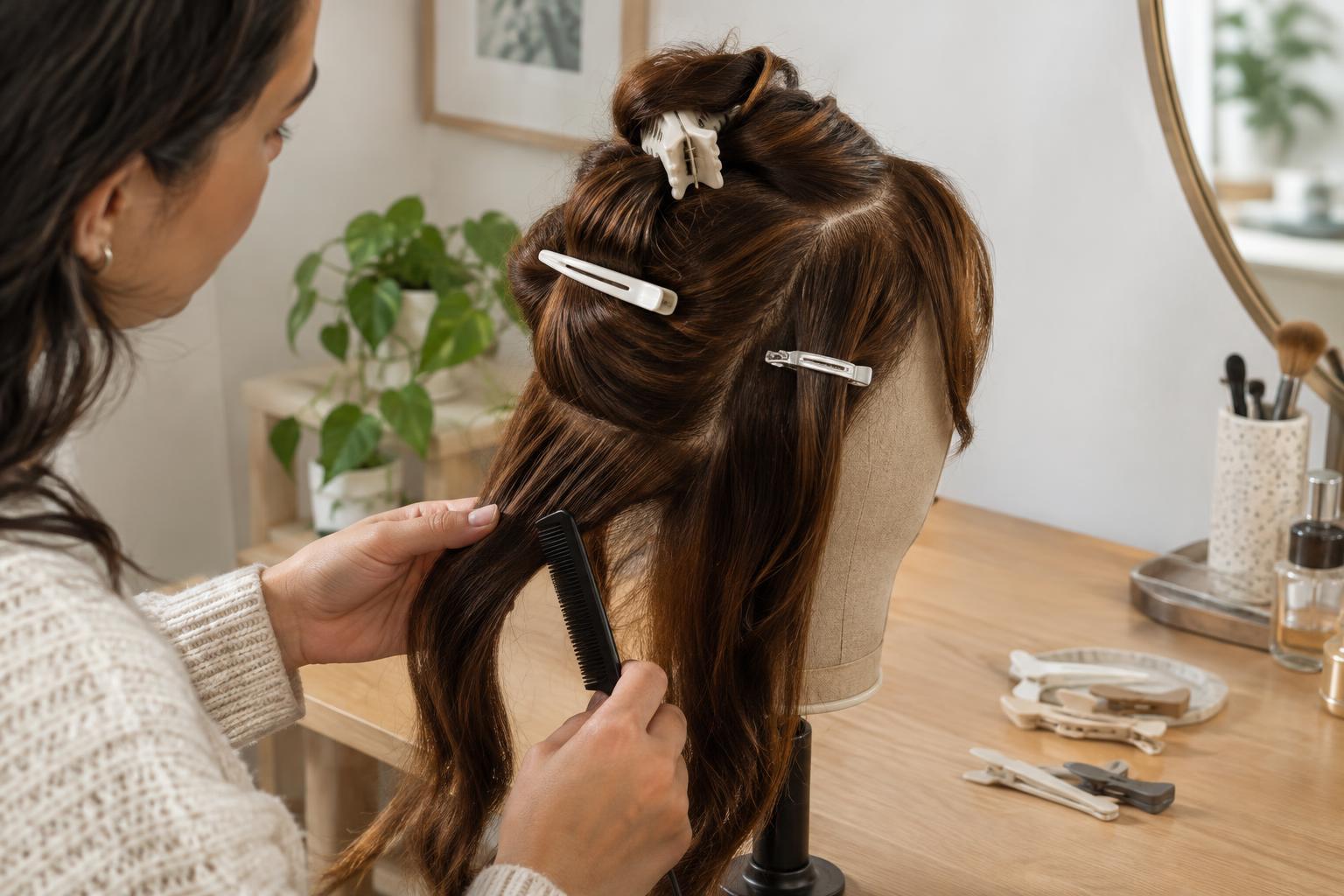
Detangle the hair gently before putting on the hat, following the method recommended for the fibre. Arrange the parting and any face-framing pieces first, then lower the hat into place rather than dragging it across the wig. If the style has long lengths, bring them forward or guide them clear of the collar and hat edge so they are not trapped underneath.
To remove the hat, lift it up and away while steadying the wig with your other hand. This small step helps prevent the hat from pulling at the hairline. If you expect to take it on and off often, a style with less height at the crown may be simpler to maintain throughout the day.
Refresh flattened or ruffled fibres
After removing the hat, let the wig settle before trying to restore its shape. Use your fingers to lift the roots gently and separate compressed sections. For a straight style, careful brushing with a tool suitable for the wig may be enough. For curls, finger-shaping is often a better first step than brushing, which can pull apart the curl pattern.
If the fibres need more help, follow the wig maker’s care instructions. A light mist of water or a wig-compatible product may help some styles reshape, but avoid soaking the base just to fix a small flat spot. Heat is not a universal solution: some synthetic fibres are heat-sensitive, and even heat-friendly fibres have limits. Check the label before using a dryer or styling tool, and test any new approach on an inconspicuous section where possible.
Do not pull hard at fuzzy areas or repeatedly brush a snag. Work slowly from the ends toward the base, supporting the hair as you go. Persistent matting at a point where the hat rubs may be a sign that a different hat or liner would be more useful than frequent restyling.
Build an easy hat-and-wig routine
For regular wear, keep the inside of the hat clean and check it for rough spots. Oils, styling products and loose fibres can collect there, so follow the hat’s own cleaning instructions. Give the wig a gentle check after each wear, especially around the nape, temples and any area that sat beneath an edge or seam.
When you are not wearing the wig, store it according to its care guidance so the hat’s flattened shape does not become its resting shape. You can also reserve a lower-volume wig or simpler style for days when a hat will stay on for hours. The most useful combination is not necessarily the most elaborate one: a comfortable fit, a smooth point of contact and a quick refresh routine often make wearing both feel more straightforward.