Check the wig before it gets wet
Synthetic wig fibres can catch on one another when they are rubbed, twisted or moved against the direction of the hair. Washing gently matters as much as choosing a suitable product. Start by checking the wig’s care label, if it has one: the maker’s instructions should take priority, particularly for heat-friendly fibres, curls, waves or a delicate lace front.
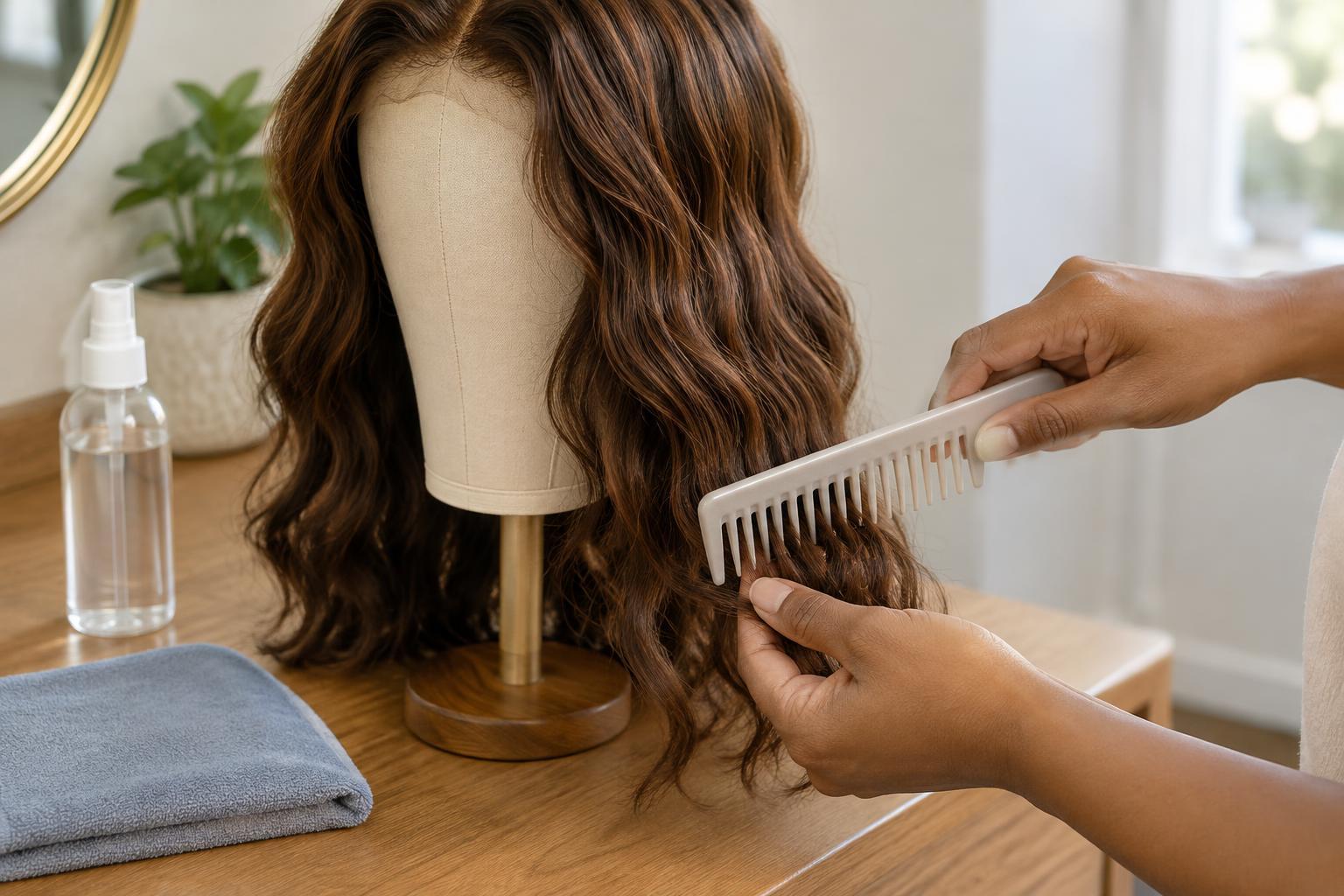
Before washing, remove clips or accessories and look for knots, especially at the nape and where the hair rests against clothing. Hold a small section above a tangle to avoid pulling on the cap, then ease the knot apart with your fingers. If the wig’s instructions allow brushing, use a wig brush or wide-tooth comb and work from the ends upwards in short sections. Do not force a comb through a stubborn knot. Detangling first is easier than trying to separate fibres once the whole wig is wet.
Prepare a gentle wash
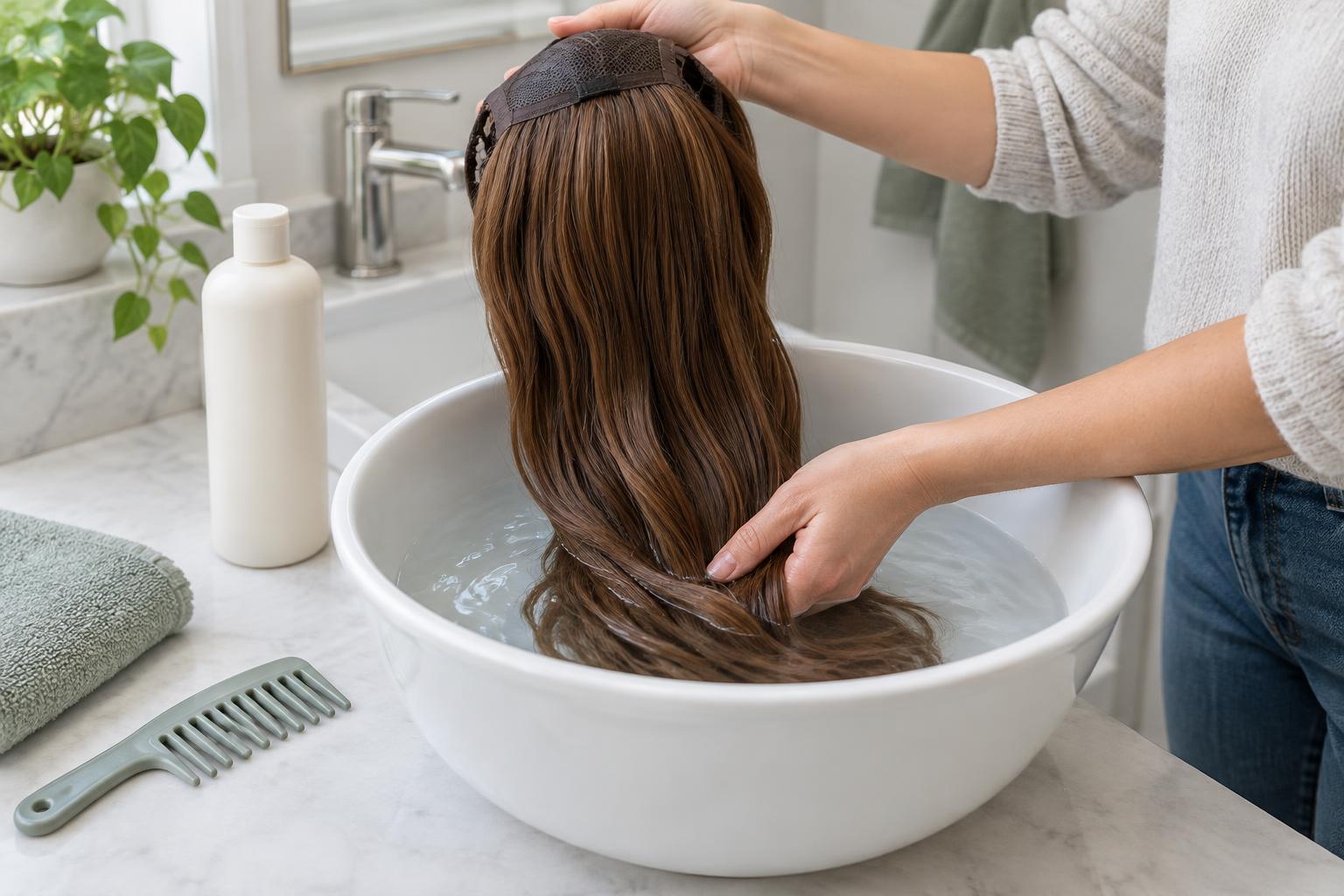
Fill a clean basin with cool water, or use the temperature specified on the care label. Hot water may affect the shape or texture of some synthetic fibres. Add a small amount of shampoo labelled for synthetic wigs and mix it through the water before placing the wig in the basin. More shampoo is not necessarily better: excess product can take longer to rinse out.
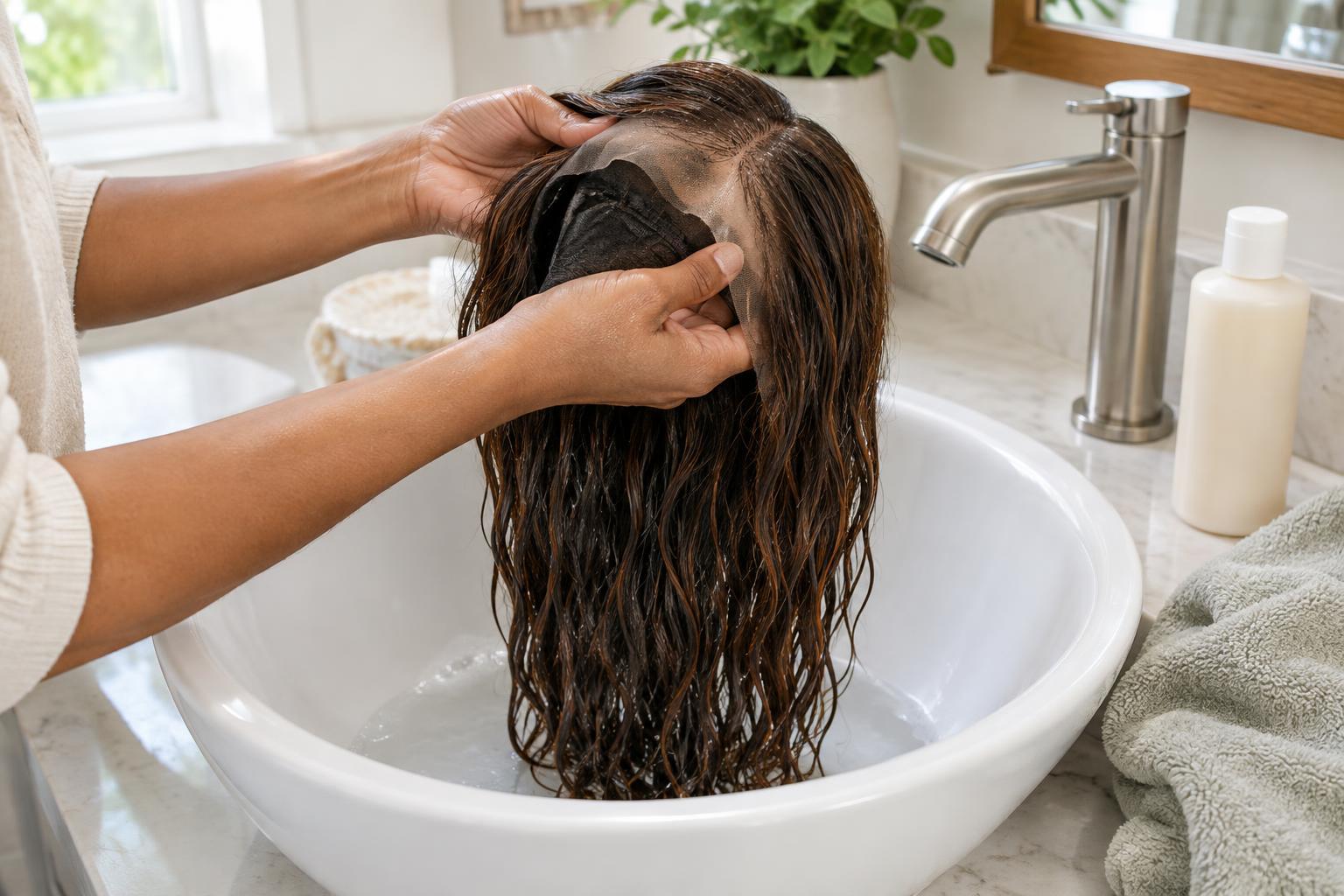
Lower the wig into the water and let it soak briefly if the product instructions recommend it. You can move it slowly through the water to reach the cap and lengths, but avoid scrubbing, swirling vigorously or rubbing sections of hair together. To clean an area with visible residue, such as the inside edge of the cap, use light pressure with your fingertips rather than bunching up the fibres. Treat a lace front particularly carefully so you do not tug at its hairline.
Rinse without roughing up the lengths
Lift the wig from the basin with both hands, supporting the cap and the weight of the wet hair. Drain the soapy water, then rinse with fresh cool water. Let the water travel from the cap down towards the ends, either in the basin or under a gentle stream. Keeping the lengths aligned helps prevent them from wrapping around one another.
Continue rinsing until the water runs clear and the hair no longer feels slippery with shampoo. If you use a conditioner or detangling product, choose one intended for synthetic wigs and follow its directions; some are leave-in products, while others must be rinsed away. Ordinary conditioner is not automatically suitable for synthetic fibre. Avoid wringing the wig to remove water. Instead, hold it over the basin and gently press along the lengths.
Dry it in its natural shape
Lay the wig on a clean towel and blot it by pressing the towel around the hair. Do not rub it back and forth or roll it tightly into a bundle. Place the wig on a ventilated wig stand, if its care instructions permit, and arrange the lengths so they fall freely. A stand can help air circulate, but it should not stretch the cap; a smaller stand or a clean, towel-covered surface may be better for some wigs.
Allow the wig to air-dry fully before styling or storing it. Keep it away from radiators, direct high heat and hairdryers unless the maker explicitly says those methods are safe. Even a heat-friendly synthetic wig has temperature limits, and heat tolerance does not mean every drying or styling tool is suitable. Once dry, separate the hair gently with your fingers and use an approved brush or comb if needed. For a curled style, finger-arranging may preserve the curl pattern better than brushing.
Keep tangles from returning
A careful wash helps, but everyday friction also affects tangling. After each wear, check the nape and ends and gently release small knots before they tighten. If the wig feels coated with styling product or no longer moves naturally, it may be time to wash it; a fixed schedule is less useful than paying attention to how often and where you wear it.
Store the wig only when it is completely dry. Depending on its style and the space available, you might use a suitable stand or place it loosely in a clean, breathable storage bag. Keep long lengths aligned rather than stuffing them into a small space. The aim throughout washing and storage is the same: support the cap, minimise friction and handle the fibres in the direction they naturally fall.